Reviewed · STREET ART
Madrid: Street Art Tour with Local Graffiti Hunter
Madrid’s street art is not confined to one grand wall. It appears in quick stencils, layered stickers, legal murals, painted shutters, and improvised pieces that can vanish beneath the next coat of paint. This two-hour walk through Lavapiés, Embajadores, and La Latina gives you a street-level look at that changing scene, guided by someone who works within it.
I like the direct access to La Tabacalera’s painted walls and the chance to see places such as Esta es una Plaza that you could easily miss alone. I also like the guides’ mix of art knowledge and neighborhood insight. Julien, Esther, Santiago, Javier, and other guides have been praised for clear English, humor, and an easy way with questions. The main consideration is that this is a walking tour outdoors, and rain does not necessarily cancel it, so bring suitable shoes and clothing.
Key points to know before you book
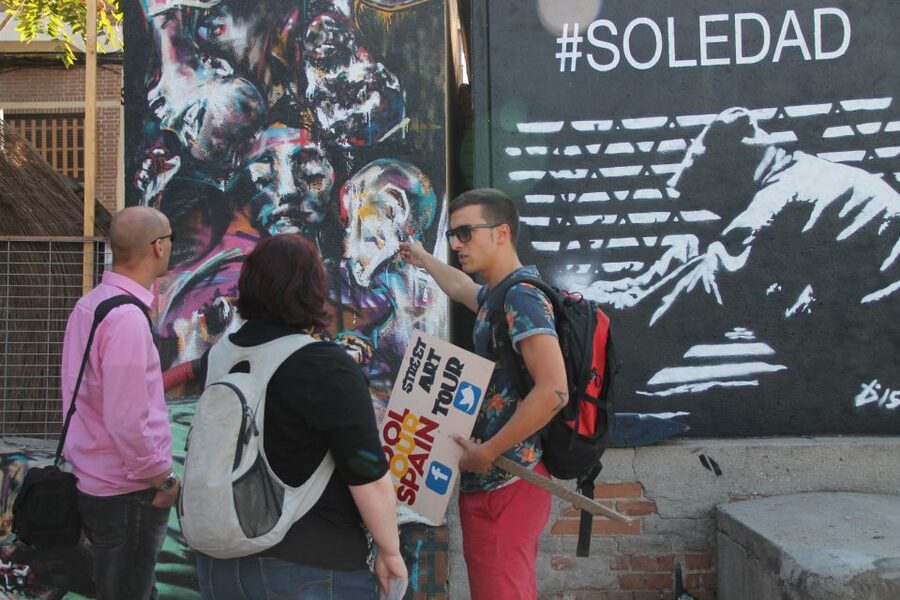
- La Tabacalera adds social context: The former tobacco factory is more than a backdrop for murals, with free workshops in photography, dance, yoga, cycling, longboarding, and other activities.
- The art changes over time: Street art is temporary, so the exact pieces can differ from one visit to the next.
- Small-group energy is part of the appeal: The guides often leave room for questions, discussion, and photo stops rather than rushing from wall to wall.
- You get more than graffiti: The route also explains Lavapiés, Embajadores, and La Latina, including how art affects shared public spaces.
- The pace suits most walkers: The tour lasts two hours and is described as a casual stroll, with no need to race between stops.
- English is the tour language: The live guide speaks English, and comfortable shoes are a sensible choice.
Why Lavapiés is the right place for this walk
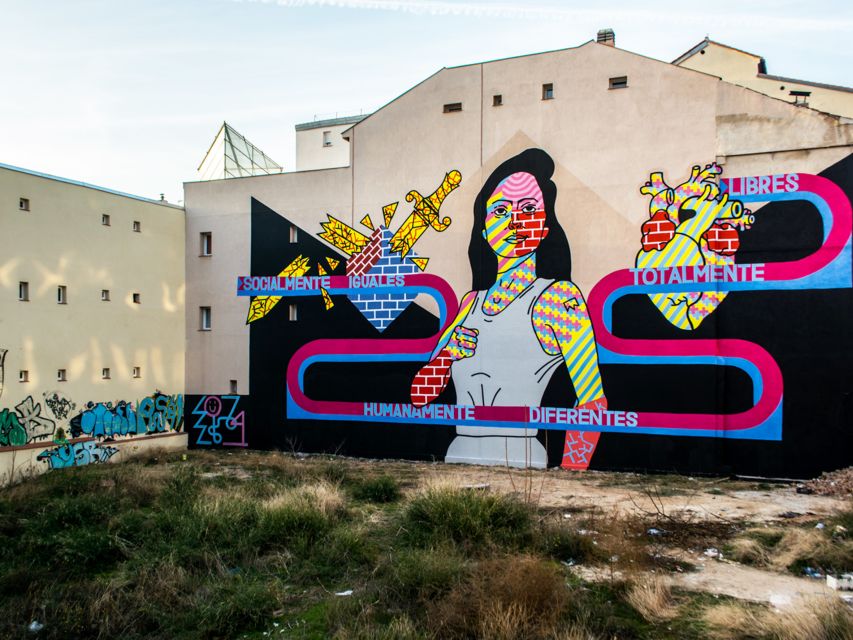
Lavapiés gives the tour its character. It is a multicultural part of central Madrid where public art sits beside ordinary neighborhood life. You are not simply looking at prepared panels in a gallery. You are seeing work on walls, corners, doors, and shared spaces that residents use every day.
That setting helps explain why the guide’s role matters. A picture of a stencil can be interesting on its own, but it becomes more useful when you understand its technique, local setting, and place in Madrid’s art scene. The guides bring that extra layer. Esther has explained both graffiti technique and the story of the neighborhood, while Julien has helped people who already love street art as well as those seeing it for the first time.
The tour is also a good way to get beyond Madrid’s grand museums. After the Prado or Thyssen-Bornemisza, this walk shows a different side of the city’s creative life. You will still be in central Madrid, but the focus shifts from signed paintings in quiet rooms to work exposed to weather, cleaning crews, changing tastes, and public debate.
More Street Art Tours in Madrid:
- Street Art Guided Tour in Madrid
★ 5.0 · 175 reviews - Madrid: Street Art Bike Tour
★ 4.5 · 21 reviews - Madrid Hidden Street Art Tour
★ 5.0 · 12 reviews
Starting at Teatro Valle-Inclán
The meeting point is outside the entrance of Teatro Valle-Inclán at Calle de Valencia, 1. Lavapiés is the nearest metro station, which makes the start fairly simple to reach.
Bring your passport or identity card, as requested for the activity, and wear shoes you can walk in comfortably. The route is wheelchair accessible, but the experience remains an outdoor street walk, so you may want to check the conditions and route details when booking if you have specific mobility needs.
At the start, expect an introduction to the guide and to the way street art is read. The tour is led by an English-speaking guide, often a graffiti writer or working artist. Past guides have included Julien, Esther, Santiago, Javier, Hector, Ana, Mario, and others connected to Madrid’s urban art scene.
That variety matters because the guide is not just reciting a list of artist names. The best parts of the experience come from seeing how a person active in the scene looks at lettering, stencils, legal murals, stickers, and the use of public walls.
Reading the streets of Lavapiés
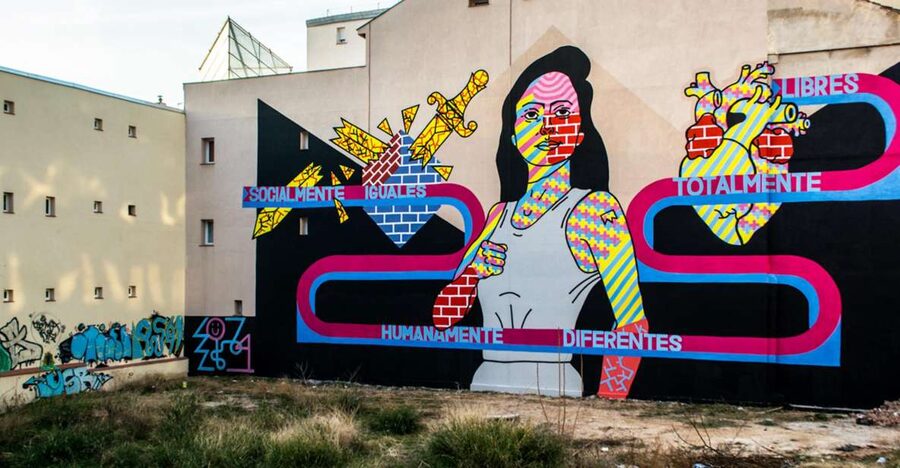
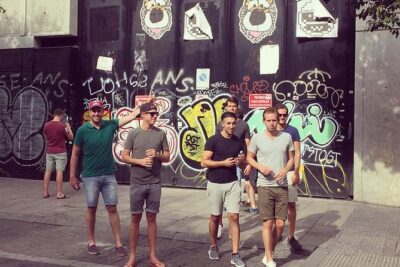
The first stretch takes you through Lavapiés, where the art is woven into the neighborhood rather than gathered in one formal gallery. You might see several styles within a short walk: large painted work, quick tags, small stickers, stencil images, and pieces that have been partly painted over.
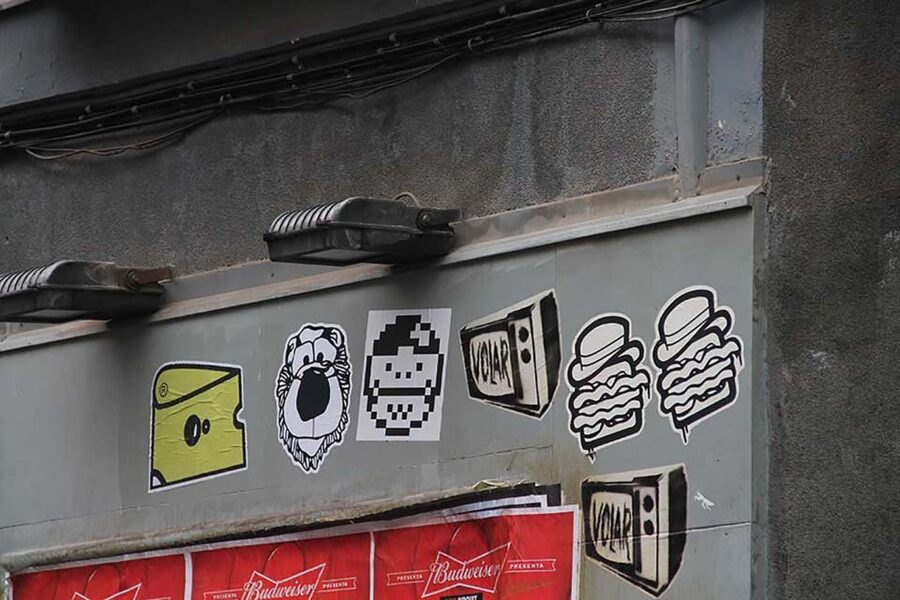
The guide can help you separate the techniques. A stencil depends on a cut shape and repeated placement. Stickers can be made and distributed quickly. Large murals require planning, permission, and time. Graffiti writing has its own lettering traditions and codes. For someone new to urban art, these distinctions make the walls much easier to read.
I especially like that the tour does not treat every painted wall as the same. The route looks at artists, methods, and the social role of the work. A piece may be decorative, political, playful, personal, or deliberately difficult to interpret. You are encouraged to think about who made it, who can see it, who controls the wall, and how the neighborhood responds.
The pace is one of the tour’s strengths. It is long enough to cover a good range of work but short enough to keep the walk manageable. Guides such as Victoria’s Julien were praised for avoiding both extremes: the group is not rushed, but it is not left standing for long lectures either.
Calle Argumosa and Calle de Embajadores
The route continues along Calle Argumosa and Calle de Embajadores. These streets help connect the small-scale pieces of Lavapiés with larger examples of organized urban art.
You will have time to stop for photographs, but this is not simply a photo hunt. The guide gives meaning to the locations and points out how art changes the feel of a street. At times, the most interesting detail may be small and easy to overlook. A sticker beside a doorway or a stencil on a narrow wall can say as much about the local scene as a huge mural.
The guides also take care to keep the group from blocking pavements or disrupting local life. That is important in a residential area. Good street art touring requires some awareness: look closely, but leave room for people going about their day. One guide was specifically praised for managing this well and for keeping responsible tourism in mind.
You may also hear practical suggestions about Madrid beyond the art itself. Julien has shared nightlife tips and Saturday evening addresses with the group. These extras are not the main reason to book, but they can help you connect the walk with the rest of your time in the city.
More Madrid Tours:
- Madrid: Tour Bernabéu Entry Ticket
★ 4.5 · 21,573 reviews - Madrid: Prado Museum Entry Ticket
★ 4.6 · 17,509 reviews - Madrid: “Emociones” Live Flamenco Performance
★ 4.8 · 12,866 reviews - Madrid: Panoramic Route City Tour
★ 4.1 · 12,259 reviews
La Tabacalera, a former tobacco factory with active walls
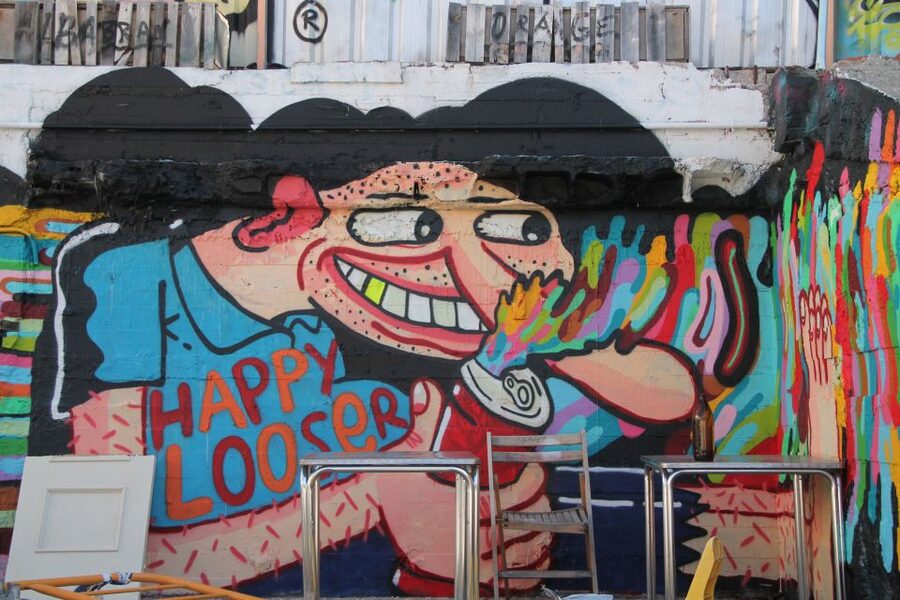
One of the main stops is La Tabacalera, the former tobacco factory on Calle de Embajadores. Its walls provide some of the strongest visual moments on the route, with large-scale urban art that is easier to appreciate from a guide’s viewpoint.
The building’s role adds useful context. This is not just a blank wall chosen for a mural. La Tabacalera is also associated with free workshops in photography, dance, yoga, cycling, longboarding, and more. The result is a place where art, leisure, learning, and community use meet.
That connection makes the stop more than a quick look at painted surfaces. You can consider how a former industrial site has become a place for shared activity, and how its walls communicate something about Madrid’s current creative culture.
The art here can also show the difference between a legal mural and an unauthorized piece. Large commissioned or permitted work allows artists to plan with scale, color, and durability in mind. Other pieces may be quicker, rougher, or more temporary. A good guide will not force you to choose one as better. Instead, the tour helps you understand why each form exists and what it does in the city.
One practical warning: street art changes. Murals may be repainted, covered, damaged, or replaced. The broad route and main locations are consistent, but the exact works may not be identical to those seen by an earlier group.
Esta es una Plaza and Plaza del Sombrerete
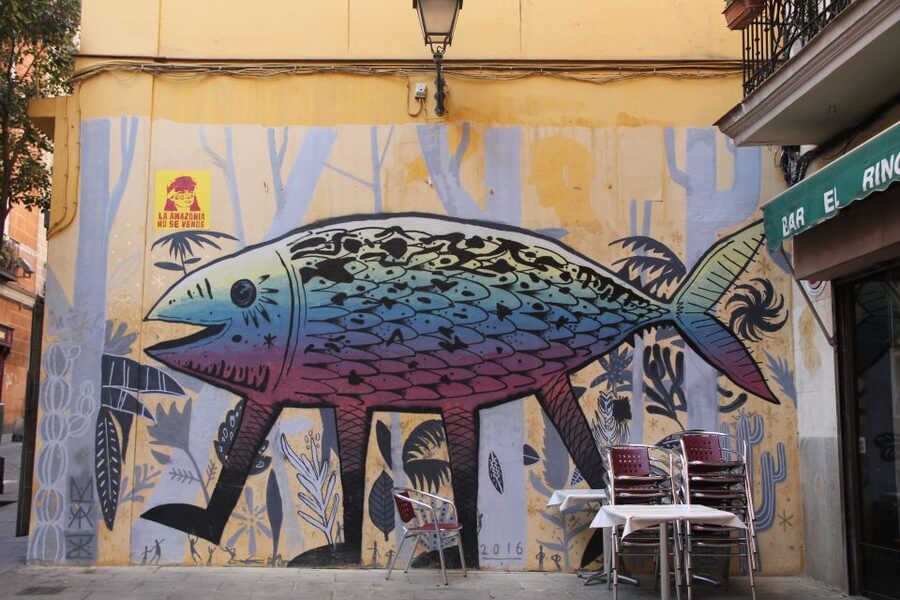
The walk includes Esta es una Plaza, a community-minded public space where the guide can explain the work of established artists as well as newer voices. It is a useful contrast to the more formal feel of a large mural wall.
Here, pay attention to the relationship between art and the space around it. The pieces are not isolated objects. They sit among places where people gather, pass through, and spend time. That makes the discussion of public art more practical. Who is a wall for? Can a public artwork belong to a neighborhood? What happens when a piece becomes popular but the area changes around it?
The route also reaches Plaza del Sombrerete, where the guide points out both veteran artists and newer talent. This stop is valuable if you want to understand that Madrid’s street art scene is not one single style or generation. Some artists have been working for years, while others bring fresh approaches and different visual languages.
You might find this section more engaging if you enjoy discussion rather than simply collecting famous sights. The guides ask questions and invite reactions, which can make the walk feel like a moving art class without turning it into a classroom lecture.
Madrid’s biggest mural in the central district
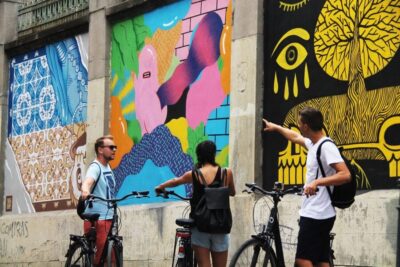
Another highlight is the chance to see what is described as the biggest mural in Madrid’s Center District. Large work gives you a useful sense of scale. You can see how composition changes when an artist must work across a broad wall rather than a small panel or sticker.
The mural also provides a good point for discussing permission, public visibility, and the role of major legal pieces in Madrid. A big wall can become a local marker and a photo stop, but it may also change how a street is understood. The guide’s job is to connect the image with the surrounding place rather than treating it as an oversized decoration.
Do not book this walk expecting a fixed museum collection. Its appeal is precisely that the city is part of the exhibit. The route may include a striking new work, a familiar piece that has weathered, or an unexpected encounter with an artist working nearby. On one tour, the group happened to meet TeTous while he was painting a new mural. That sort of meeting is luck, not a guaranteed feature, but it shows the value of seeing the scene in use.
What the guides add
The strongest part of this experience is the guide. The listed connection with CALLE Lavapiés, Urvanity, and Muros Tabacalera street art festivals gives the walk a link to Madrid’s organized urban art scene, while several guides also work as artists themselves.
Julien has been praised for his clear voice, fluent English, humor, and ability to keep both beginners and experienced art fans involved. Esther brings together graffiti technique and neighborhood history. Santiago has been described as warm and interactive, while Hector’s background as an accomplished street artist gave his groups a direct sense of how the work is made.
Guide assignments can change, so you should not book on the promise of one particular person unless the provider confirms it. Still, the repeated pattern is encouraging: the guides are presented as active, enthusiastic people who welcome questions rather than simply reciting prepared facts.
The small-group format is another plus when available. It gives you more space to ask about an artist, stop for a photo, or discuss the ethics of painting public walls. The experience is less useful if you want to walk silently and take pictures without conversation, since interaction is a central part of the tour.
Is $29 a fair price?
At $29 per person, the value is strong if you want context rather than a self-guided list of walls. You are paying for two hours with an English-speaking local guide who can explain artists, methods, neighborhood life, and the changing role of public art.
You could walk through Lavapiés on your own for free. That is the main comparison. Without a guide, you may still see attractive work, but you are less likely to know which pieces matter, how techniques differ, or where the legal and community projects fit into Madrid’s wider scene.
The price also compares well with the time involved. Two hours is enough to make this a substantial part of a morning or afternoon without consuming your whole day. Beverages are not included, so plan to buy your own drink before or after if needed.
The 4.8 rating from 270 reviews supports the idea that the tour delivers consistently, but your enjoyment will depend on your interest in street art and walking. If you prefer major monuments, indoor collections, or a tightly scripted sightseeing route, this may feel too informal. If you like seeing how a city expresses itself outside museums, the cost is easy to justify.
Who should book this Madrid street art tour?
I would choose this for first-time visitors who want to see a less polished side of central Madrid, repeat visitors looking for a new neighborhood angle, and anyone who enjoys art but does not want another museum afternoon.
It also suits families with older children and teenagers. The questions around art, ethics, community space, and public ownership can give young people something real to discuss, rather than asking them to admire a wall without context.
Photography fans should enjoy the variety of scale and texture, but remember that the tour is about interpretation as much as images. Art students, working artists, and people already interested in graffiti may appreciate the technical explanations and artist connections. Beginners are equally welcome, since the guides explain the basics without assuming prior knowledge.
This is less suitable for anyone with only one hour in Madrid, anyone unwilling to walk outdoors in uncertain weather, or anyone who wants a guaranteed list of specific artworks. The route is accessible, but you should still consider your own walking needs and check the conditions before setting out.
Practical details and cancellation
The tour lasts two hours and operates in English. It meets at Teatro Valle-Inclán, Calle de Valencia, 1, near Lavapiés metro station.
You can cancel up to 24 hours before the start for a full refund, and the reserve-now, pay-later option lets you keep your plans flexible. Rain may not cancel the tour, so bring a light rain layer if the forecast looks poor. Comfortable shoes are essential, and you should carry the requested passport or ID card.
Should you book it?
Book this tour if you want Madrid explained through its walls, not just photographed. The route gives you La Tabacalera, Esta es una Plaza, Plaza del Sombrerete, major murals, small stickers, and neighborhood streets in one focused walk.
I would especially recommend it early in your Madrid stay. The guide can help you understand Lavapiés and Embajadores, and you may leave with ideas for nightlife, local streets, and further art stops. Skip it only if you dislike outdoor walking or want a fixed museum-style display. For most curious visitors, $29 buys a useful, lively introduction to one of Madrid’s most distinctive creative scenes.
FAQ
How long does the Madrid street art tour last?
The tour lasts two hours.
What language is the tour conducted in?
The tour is operated in English with a live English-speaking guide.
Where does the tour meet?
It meets at the entrance of Teatro Valle-Inclán, Calle de Valencia, 1, 28012 Madrid. The nearest metro station is Lavapiés.
Which Madrid neighborhoods does the tour visit?
The route covers Lavapiés, Embajadores, and La Latina.
Is the tour wheelchair accessible?
Yes, the activity is listed as wheelchair accessible.
What should I bring?
Bring comfortable shoes and a passport or identity card. Since the tour takes place outdoors and may operate in rainy weather, suitable clothing is also sensible.
Just added around Madrid
- Visit the National Archaeological Museum in Madrid★ 4.4 · 6 reviews
- From Madrid: Parque Warner Beach Water Park & Transport★ 3.9 · 14 reviews
- Madrid Wine Tasting, Flamenco Class and Pub Crawl★ 4.5 · 6 reviews
- Virtual Reality Experience Fun And Tickets & Imageen★ 5.0 · 12 reviews
- Visit to the Prado Museum★ 4.9 · 6 reviews
- Tuktuk historical tour of Madrid 1 Hr in a fun and original way★ 3.7 · 3 reviews
- Prado Museum VIP tour with an art Expert, tickets included★ 5.0 · 11 reviews
- Tuk Tuk Tour with Wine Test in Madrid★ 3.8 · 6 reviews