Reviewed · STREET ART
Street Art Guided Tour in Madrid
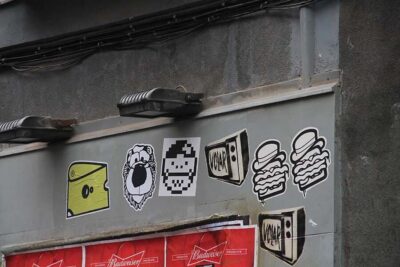
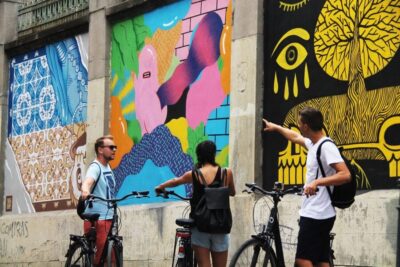
Madrid’s street art is not confined to a gallery. It covers old warehouses, basement walls, neighborhood gardens, and public spaces shaped by local residents. This two-hour walk takes you through Lavapiés, with stops at La Tabacalera and the community garden Esta es Una Plaza, while explaining how Madrid’s artists use paint to comment on law, politics, and daily life.
I like the way the tour connects art to the neighborhood, rather than treating murals as isolated photo stops. I also like the chance to see work by artists such as Himen, Ze Carrión, and Laguna626, with guides including Santi and Julia bringing a personal link to the scene. The main consideration is that street art changes, and access to some spaces, especially La Tabacalera and the garden, can depend on the day and opening hours.
Key points at a glance

- La Tabacalera’s old tobacco warehouse: See exterior festival walls, basement stencils, and layers of unauthorized street art.
- Lavapiés beyond the murals: Learn how this multicultural district shaped Madrid’s current street-art culture.
- Esta es Una Plaza: Visit a community garden and its painted walls when the space is open.
- A local artist’s perspective: Guides such as Santi and Julia explain technique, politics, and neighborhood life.
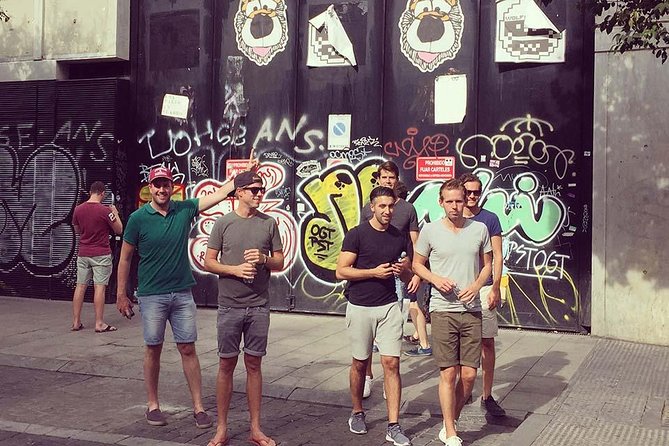
- Small group format: The tour has a maximum of 13 people, useful when you need to hear explanations on a busy street.
- A practical two-hour walk: It begins near Teatro Valle-Inclán and ends at Plaza de Cascorro, close to La Latina and Tirso de Molina Metro stations.
Why Lavapiés is the right place for this walk
Lavapiés gives you a better setting for street art than a simple gallery visit. The district is multicultural, densely built, and full of walls that show several layers of Madrid’s creative life. You are not just looking at finished murals. You are seeing how art fits into a working neighborhood.
The walk also gives you a useful introduction to the politics of public art in Spain. At La Neomudéjar, a former power plant near Atocha, artists have used the space to protest Article 626, a law aimed at penalizing graffiti creators. The tour information places La Neomudéjar among its main highlights, although the detailed route focuses more directly on La Tabacalera, Esta es Una Plaza, and Lavapiés.
That difference matters when you book. The exact stops can depend on the day, opening hours, and the route being used. If seeing La Neomudéjar is especially important to you, confirm the current route before paying.
More Street Art Tours in Madrid:
- Madrid: Street Art Tour with Local Graffiti Hunter
★ 4.8 · 270 reviews - Madrid: Street Art Bike Tour
★ 4.5 · 21 reviews - Madrid Hidden Street Art Tour
★ 5.0 · 12 reviews
Starting near Teatro Valle-Inclán
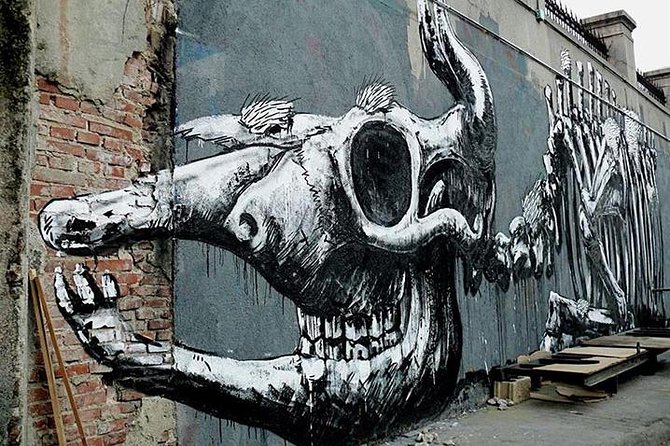
The meeting point is Teatro Valle-Inclán at Plaza de Ana Diosdado. The start time listed is 11:15 in the morning, and the tour lasts about two hours. It is a city-center starting point, so you can fit it into a morning of sightseeing without arranging a long ride across Madrid.
The walk begins in the direction of La Tabacalera and the streets of Lavapiés. The broader route description also mentions passing near Atocha Station, including the big-headed baby sculptures and the art center located around the station’s Mediodía Metro area. These early details help set up the main theme: Madrid’s art scene often occupies spaces built for something else.
You should wear comfortable shoes. This is a walking tour on city streets, and it operates in all weather. Bring protection from sun or rain as needed, since there is no promise of indoor shelter for the full route.
La Tabacalera and its changing walls
La Tabacalera is one of the strongest stops because the building itself carries the story. It was once a 19th-century tobacco warehouse where more than 1,000 workers chopped, shredded, and rolled tobacco. Today, it serves as a space for exhibitions, performance, painting, dance, and other creative projects.
The first part of the visit focuses on the exterior graffiti walls. Your guide points out the artists, the messages, and the techniques used. This is more useful than simply being told that a wall is colorful. You learn to look at lettering, stencils, scale, layering, and the difference between a planned mural and a quick piece made in passing.
La Tabacalera is also tied to an important local street-art festival. If your timing is lucky, you might see recently completed festival murals or artists working on new pieces. One tour group happened to meet artists painting work for the annual CALLE Lavapiés festival, an unusual bonus that cannot be promised but shows how active the area can be.
Inside, the basement adds another layer. Hundreds of street-art projects and stencils cover its walls. The basement can feel less polished than a standard exhibition hall, and that is part of its appeal. You see art in a setting that still feels connected to the building’s working past.
The drawback is timing. La Tabacalera has restricted weekday hours, so the indoor portion may be limited or unavailable on some visits. The exterior walls and surrounding neighborhood remain useful stops, but you should not book this expecting guaranteed access to every room.
Esta es Una Plaza and the value of local space
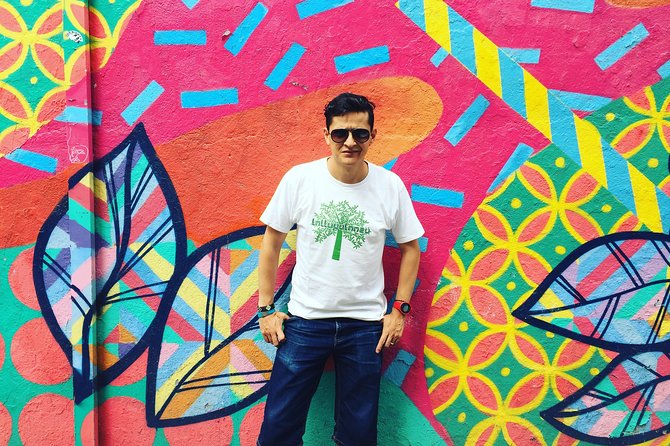
Esta es Una Plaza is an urban garden with painted walls and a community purpose. Its name means This Is a Plaza, and the space offers a good counterpoint to the more famous art buildings. Here, creativity is tied to neighborhood use rather than only to exhibitions or festivals.
The garden’s walls are included when the location is open. That condition is important. You might see the surrounding area and hear about the project, but entry is not guaranteed every time. If the garden is open, the stop gives you a look at how residents have turned an urban space into somewhere for planting, meeting, and shared activity.
This part of the route helps explain why Madrid’s street art cannot be separated from community organizing. The work is not only about individual artists seeking attention. Some of it grows out of residents reclaiming neglected or underused places.
More Madrid Tours:
- Madrid: Tour Bernabéu Entry Ticket
★ 4.5 · 21,573 reviews - Madrid: Prado Museum Entry Ticket
★ 4.6 · 17,509 reviews - Madrid: “Emociones” Live Flamenco Performance
★ 4.8 · 12,866 reviews - Madrid: Panoramic Route City Tour
★ 4.1 · 12,259 reviews
Walking through Lavapiés
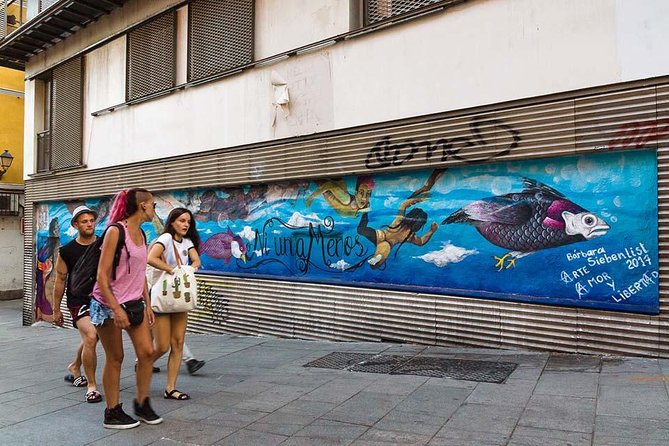
About an hour of the tour is spent walking through Lavapiés itself. That is a good use of time because the district is the main setting, not just a path between attractions. Your guide explains the neighborhood’s history while pointing out graffiti and murals along the way.
The area’s multicultural character is part of the lesson. Art appears beside ordinary shops, apartment blocks, public spaces, and older streets. You get a sense of how artists respond to the people and buildings around them.
Guides such as Santi have been praised for making the walk personal and easy to follow. Santi is an active street artist, and his connection to the area can add useful context when you stop beside his work or discuss how a piece was made. Julia has also led the tour and is described as informative, friendly, and especially good with families.
A good guide makes a major difference here. Street art can be hard to read without context, especially when a mural is partly covered or has faded. The guide helps you separate a festival commission from unsanctioned graffiti and explains why the distinction matters.
From sanctioned murals to protest art
One of the tour’s most useful ideas is that not all street art carries the same status. Some murals are approved through local festivals. Others appear without permission. The tour presents both forms, rather than pretending that Madrid’s public art is a neat collection of official projects.
At La Neomudéjar, artists such as Himen, Ze Carrión, and Laguna626 have used the former power plant as a place for work from Spain and beyond. Some pieces respond directly to Article 626 and the legal pressure placed on graffiti artists.
That political angle gives the art more weight. You may still enjoy the color, humor, and technique, but you also learn why artists choose walls instead of traditional galleries. The guide can explain the tension between public expression, private property, city regulation, and community control.
The art is temporary. A piece may be painted over, damaged, or replaced by the next festival. That can be frustrating if you arrive hoping to see a particular mural from an online photo. It also means the walk reflects Madrid at a particular moment rather than presenting a fixed museum collection.
Campo de Cebada and the wider idea of shared space
The broader description of the experience includes Campo de Cebada, a former swimming-pool site turned community gathering place. It grew from Spain’s 15-M Movement, when people reclaimed public streets and squares for communal use.
The space has been used for films, music, community gardening, and neighborhood gatherings. It shows how the tour’s subject extends beyond paint. Street art is part of a larger question: who gets to use a city, and who gets to shape its public spaces?
The detailed route places the finish at Plaza de Cascorro, while Campo de Cebada appears in the wider route description. Because locations can change, confirm the ending and planned stops if this site is a priority. In either case, the walk finishes in a part of central Madrid where you can continue exploring on foot.
What the guide adds to the experience
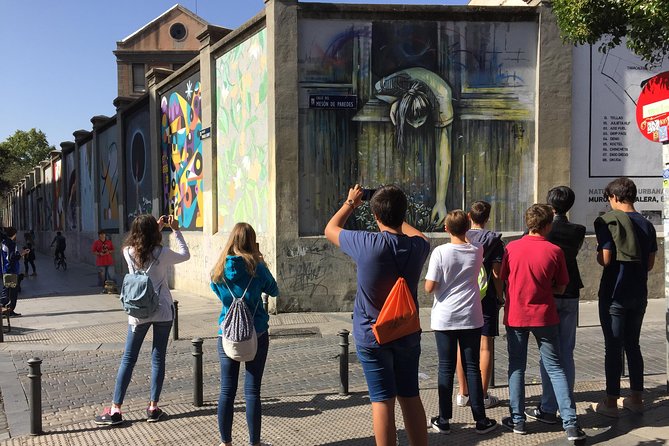
This tour depends more on the guide than a standard sightseeing walk. The best guides explain what you are seeing without turning every wall into a long lecture. They also respond to the group’s interests, which is useful if you care more about stencils, politics, local history, or artistic technique.
The tour has received especially strong feedback for guide enthusiasm and personal connection. Santi is repeatedly singled out for being friendly, engaging, and passionate about the area. Julia has also led the route successfully. The guide may even offer a chance to try spray painting, though that should not be treated as a guaranteed part of every departure.
There is one practical issue to keep in mind. One participant found it difficult to hear every explanation while also looking around at the art. With a maximum of 13 people, the group is small by city-tour standards, but you should still stay close during explanations and ask the guide to repeat anything lost to traffic or street noise.
Is $30.38 a fair price?
At about $30.38 per person, the tour is reasonably priced for a two-hour guided walk with a local guide and access to the Muros La Tabacalera portion when open. You are paying for interpretation, not admission to a major museum or a long list of ticketed attractions.
The value is strongest if you are curious about how Madrid’s art scene works. A self-guided walk can show you plenty of painted walls, but it will not necessarily explain the artists, the legal issues, the role of festivals, or the history of the neighborhood. The guide turns scattered images into a story.
The value is weaker if you want a guaranteed collection of famous murals or polished gallery art. Street art is unpredictable. Some walls may look less impressive than photographs online, and a piece you hoped to see may have changed.
The group limit helps. You avoid the feel of a large coach excursion, and you have a better chance to ask questions. Food and drinks are not included, and there is no hotel pickup or drop-off, but those omissions make sense for a short central walking tour.
Who should book this Madrid walk?
I would choose this tour if you have already seen Madrid’s major museums and want a different way to understand the city. It also suits anyone interested in photography, design, graffiti technique, community projects, or modern Spanish politics.
Families can participate, and most people can manage the route. Service animals are allowed. Since the route works in all weather and includes outdoor walking, you should dress for the forecast and avoid treating it as a rainy-day indoor activity.
It is less suitable if you need a tightly fixed schedule or want guaranteed access to every named location. La Tabacalera’s weekday restrictions and the garden’s opening conditions can alter the experience. I would also choose a private tour if you need a slower pace or want uninterrupted time with the guide.
The free-cancellation policy is practical: cancel at least 24 hours before the local start time for a full refund. Changes or cancellations inside that window are not accepted for a refund.
My verdict on the Street Art Guided Tour
I recommend this tour for an affordable, personal look at Madrid’s street-art culture. The best parts are the connection between art and neighborhood life, the old industrial setting of La Tabacalera, and the chance to learn from guides with real links to the scene.
Book it with the right expectations. You are not guaranteed a fixed museum-quality display, and some locations may be closed or changed. If you can accept that street art is temporary, this walk gives you a thoughtful way to see Lavapiés, read Madrid’s walls more closely, and find a part of the city you might otherwise skip.
FAQ
How long does the Street Art Guided Tour in Madrid last?
The tour lasts approximately two hours.
What is the price of the tour?
The listed price is $30.38 per person.
Where does the tour begin?
It begins at Teatro Valle-Inclán, Plaza de Ana Diosdado, in Madrid.
Where does the tour end?
The detailed meeting information places the end at Plaza de Cascorro, near La Latina and Tirso de Molina Metro stations.
What time does the tour start?
The listed start time is 11:15 am.
Is the tour offered in English?
Yes. The experience is offered in English, and multilingual guide service is listed in English, French, and Spanish.
What places are included on the walk?
The route includes La Tabacalera, Esta es Una Plaza when it is open, and the Lavapiés district. The wider route description also includes La Neomudéjar and Campo de Cebada, so confirm the exact stops for your departure.
Is admission included?
The local guide and the visit to Muros La Tabacalera are included. Food, drinks, and hotel pickup and drop-off are not included.
Can I cancel for a full refund?
Yes. You can cancel at least 24 hours before the experience’s start time for a full refund. Cancellations or changes made less than 24 hours before the start are not refunded.
Just added around Madrid
- Visit the National Archaeological Museum in Madrid★ 4.4 · 6 reviews
- From Madrid: Parque Warner Beach Water Park & Transport★ 3.9 · 14 reviews
- Madrid Wine Tasting, Flamenco Class and Pub Crawl★ 4.5 · 6 reviews
- Virtual Reality Experience Fun And Tickets & Imageen★ 5.0 · 12 reviews
- Visit to the Prado Museum★ 4.9 · 6 reviews
- Prado Museum VIP tour with an art Expert, tickets included★ 5.0 · 11 reviews
- Tuk Tuk Tour with Wine Test in Madrid★ 3.8 · 6 reviews
- Tuktuk historical tour of Madrid 1 Hr in a fun and original way★ 3.7 · 3 reviews