Reviewed · STREET ART
Madrid Hidden Street Art Tour
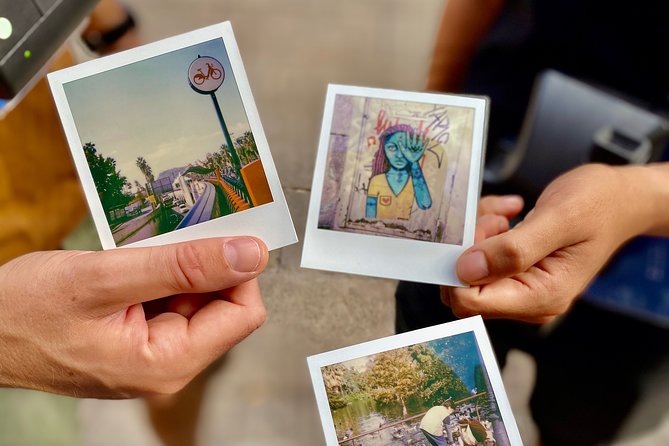
Madrid’s street art is best understood on foot, and this tour takes you into Lavapiés, a neighborhood where large murals share walls with tiny details you could easily miss. Guide Roberto adds the political and cultural background that turns painted walls into part of the city’s conversation.
I like the mix of major public artworks and small local pieces, plus the closing visit to an emerging gallery. I also like the limited group size, capped at 12, which should leave room for questions. The main drawback is that the experience depends on good weather and a minimum number of bookings, so plans can change.
Key points
- Lavapiés street art: Explore one of Madrid’s best-known neighborhoods for public art and local culture.
- Roberto’s approach: Hear about the history and politics behind this changing art form.
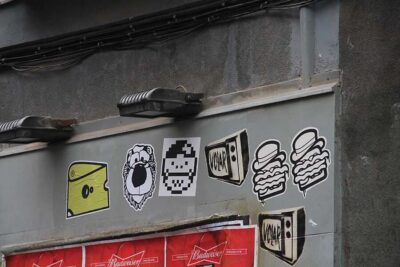
- Details you might miss: Look beyond big murals to the smaller marks and works made by the local art community.
- Gallery finish: Visit an emerging gallery and meet the two women who run it.
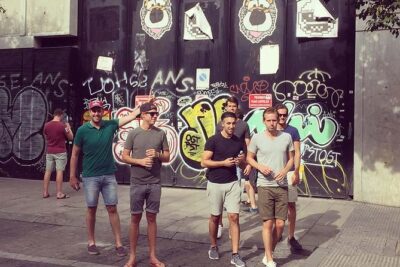
- Small group size: The tour accepts no more than 12 people.
- Two-hour format: A compact introduction that fits easily into a day of sightseeing.
Why Lavapiés makes a smart setting for street art
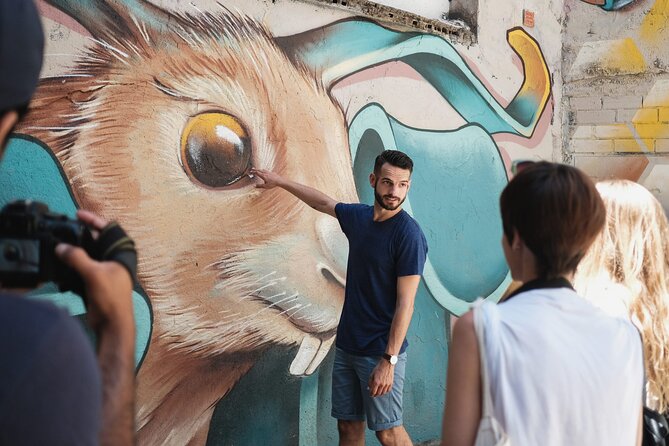
Lavapiés gives this experience a clear sense of place. You are not simply being shown a collection of painted walls. You are walking through one of Madrid’s most storied neighborhoods and using its streets to understand how public art fits into daily life.
The tour description presents Lavapiés as a neighborhood celebrated by Time Out as the coolest in the world. That label is subjective, of course, but it signals the area’s strong cultural identity. This is a part of Madrid where art is not confined to a formal museum. It appears on walls, in side streets, and in the small visual details that a guide can point out as you walk.
That guidance matters. Large murals are easy to spot, but smaller pieces can blend into the street. A quick glance may reveal only a painted door, a patch of color, or a mark on a wall. Roberto’s job is to help you notice how these works fit together and to explain why they matter.
I find this more useful than a simple list of famous artists. You leave with a way of looking at Madrid. After the tour, you may pay closer attention to walls and building fronts across the city, even outside Lavapiés.
More Street Art Tours in Madrid:
- Madrid: Street Art Tour with Local Graffiti Hunter
★ 4.8 · 270 reviews - Street Art Guided Tour in Madrid
★ 5.0 · 175 reviews - Madrid: Street Art Bike Tour
★ 4.5 · 21 reviews
Starting at Portomarín on Calle de Valencia
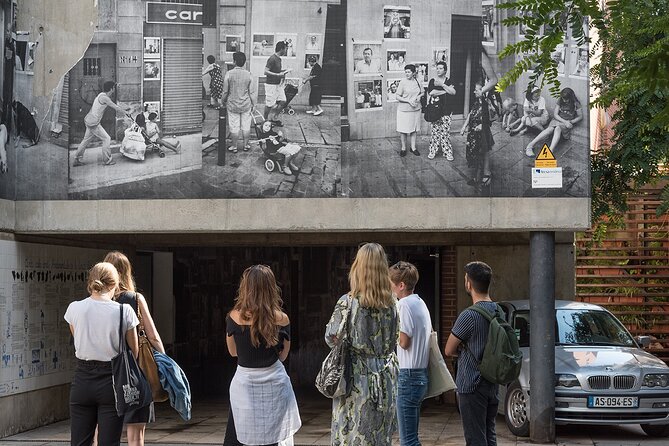
The tour begins at Portomarín, at Calle de Valencia, 4, in Madrid’s Centro district. The meeting point is near public transportation, which makes it reasonably practical to reach from other parts of the city.
You should allow enough time to find the exact address. The experience is only about two hours, so arriving late could mean missing the first explanations or having to catch up with the group. A mobile ticket is provided, which keeps the booking process simple, but you should have the confirmation easy to access on your phone.
The start point also places you near the edge of the neighborhood you will explore. From there, the walk leads into Lavapiés and ends within the same general area, at Lavapiés, Centro. That means you are not being taken far across Madrid by vehicle. The experience is built around walking, looking, and listening.
The available information does not give a detailed route map or name each street. I would not book this expecting a fixed checklist of every famous mural in Madrid. It is better understood as a guided introduction to the art and character of Lavapiés.
Reading the large murals in Lavapiés
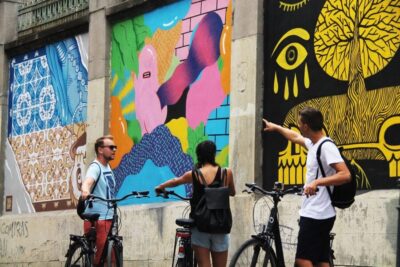
The first major part of the experience focuses on public murals, including pieces by internationally acclaimed artists. These large works provide the obvious visual anchors of the walk. They are the paintings most likely to stop you in the street, and they give the tour an immediate sense of scale.
A good street art tour should do more than point at a wall and name the artist. Roberto brings in the history and politics of the art form, according to the information provided about the experience. That context is important because public art often carries ideas about identity, power, community, and who gets to shape a neighborhood’s image.
You should expect the conversation to go beyond technique. The tour is designed to explain how street art relates to the people who live in Lavapiés and to Madrid’s wider culture. That makes the art easier to read, even if you do not already know much about murals or contemporary art.
The large works are also a good introduction for anyone who normally feels unsure in an art gallery. You do not need specialist terms or a background in art history. You can start with the basic questions: What do I notice first? Who is represented? What mood does the work create? Why was this wall chosen?
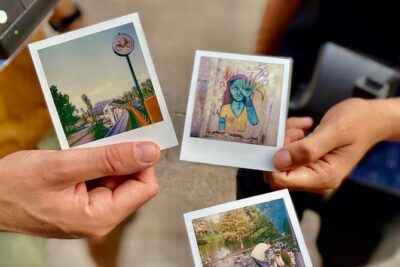
Roberto’s role is to connect those first impressions with wider ideas. That is where the tour gets much of its value. A photograph records the image, but the explanation gives you a reason to remember it.
The small details most people walk past
The most distinctive promise of this experience is its attention to small-scale work. The tour points out details created by the local art community that you might not notice without someone showing you where to look.
This is a useful change of pace after the big murals. Large public paintings are designed to command attention. Smaller pieces reward patience. They may sit in less obvious places and require you to inspect a wall rather than simply admire it from across the street.
I like this part because it reflects how street art actually works in a city. You are not visiting a gallery where every work has a label and a clean border. You are seeing art in an active public setting, mixed with ordinary buildings and daily routines.
The drawback is that street art can change. Pieces may be painted over, damaged, or removed, and the exact selection can vary. The supplied information does not promise a permanent list of works, so you should come for the way of seeing Lavapiés rather than for one guaranteed mural alone.
That uncertainty is not necessarily a weakness. It is part of the medium. A street art tour can show you a moment in the neighborhood, while also teaching you how to notice new work later.
More Madrid Tours:
- Madrid: Tour Bernabéu Entry Ticket
★ 4.5 · 21,573 reviews - Madrid: Prado Museum Entry Ticket
★ 4.6 · 17,509 reviews - Madrid: “Emociones” Live Flamenco Performance
★ 4.8 · 12,866 reviews - Madrid: Panoramic Route City Tour
★ 4.1 · 12,259 reviews
Roberto and the story behind the paint
Roberto received specific praise for his guiding on this experience. The available feedback describes him as a strong guide who explained both public murals and the history and politics of street art.
That combination is worth noting. Some art walks focus mainly on visual appeal. Others turn into a lecture. This tour appears to aim for a middle ground: you see plenty of work, but you also learn why the art matters.
Roberto’s value will be especially clear if you are new to street art. You can enjoy a striking mural without context, but the political and social background helps you understand why some images appear in public spaces and why the form can be controversial or powerful.
The tour also has a personal quality built into its small size. With a maximum of 12 people, it is not designed as a large procession. That gives you a better chance to hear explanations clearly and ask a question when a piece catches your eye.
One unusual situation has also occurred: when only one person was booked, the provider offered the option to continue for a small extra fee instead of canceling. That is not a standard feature you should assume will apply to every booking, but it suggests some flexibility when group numbers are low. If you are booking close to the date, it is sensible to watch for any message about the minimum number of participants.
The gallery visit gives the walk a second act
The tour does not finish after the outdoor art. It ends at an emerging gallery that is making a name in Madrid’s art scene. There, you meet the two women who run it and share a drink.
This closing stop adds something that a standard mural walk often lacks. You move from public art on neighborhood walls to art presented in a gallery setting. That contrast helps you think about how artists work in different spaces and how new creative projects find an audience.
The gallery visit is also more personal than a quick exterior stop. Meeting the people who run the space gives you a chance to connect the street art scene with Madrid’s wider contemporary art world. The available details do not name the gallery or describe its current exhibitions, so you should not book this expecting a particular artist or show.
What you can reasonably expect is an informal finish, a drink, and a conversation with the gallery’s founders. That makes the ending feel social rather than purely instructional.
If you prefer tours that stay outdoors from start to finish, this change of setting may feel less essential. For me, it is a strong addition because it gives the two-hour walk a clear ending and introduces a different side of the city’s art scene.
Is $32.10 a fair price?
At $32.10 per person, this tour sits in a reasonable range for a small-group experience lasting about two hours. The value depends on what you want from a street art walk.
If you only want to locate murals for photographs, you may find the price harder to justify. You could walk through Lavapiés on your own, though you would miss the smaller pieces and the explanations about the art’s history and politics.
The price makes more sense if you value interpretation. You are paying for Roberto’s guidance, the neighborhood focus, the search for details that are easy to overlook, the gallery visit, and the drink at the end. The group limit of 12 also matters. A smaller group generally makes it easier to follow the guide and take part in the conversation.
The gallery stop gives the tour more content than a basic two-hour walk. It also gives you a chance to learn about an emerging art space rather than only seeing established public works.
I would see the price as fair for someone interested in contemporary culture, especially if this is your first time exploring Madrid’s street art. If you are looking for a cheap orientation walk with no interest in art or neighborhood context, there are less expensive ways to stroll around Lavapiés.
Who will get the most from this experience?
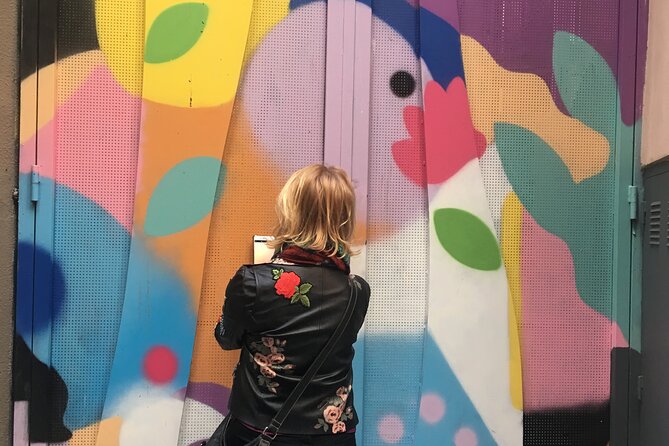
This tour suits you if you enjoy cities through their visual culture. It is a good match for art fans, curious first-time visitors, and anyone who wants an alternative to Madrid’s major museums for a couple of hours.
You do not need to be an expert. In fact, the tour may be most useful if you often see street art but are unsure how to interpret it. Roberto’s explanations give you a starting point without requiring prior study.
It also suits people who prefer a local neighborhood walk to a large sightseeing circuit. The focus stays on Lavapiés, its residents, its public art, and one emerging gallery. You get a concentrated experience rather than a broad survey of Madrid.
The two-hour length is practical. You can fit it between other plans, although you should avoid scheduling something immediately afterward because walking tours can run a little over. The exact route and pace are not specified, so leave yourself some breathing room.
Most people can participate, and service animals are allowed. Since the tour requires good weather, check your plans around the forecast. There is no promise of an indoor substitute if rain affects the route.
What to know before you reserve
The experience is available with a mobile ticket, and confirmation is provided when you book. It is near public transportation, with the start at Portomarín on Calle de Valencia, 4, and the finish in Lavapiés.
The group maximum is 12 people. That is small enough to feel more personal than a large walking tour, while still allowing some group energy.
The tour requires a minimum number of participants. If that number is not reached, you can be offered another date or experience, or receive a full refund. Poor weather can also lead to a new date or a full refund.
You can cancel for a full refund if you do so at least 24 hours before the start time. Cancellations or changes made within 24 hours are not accepted for a refund. The cut-off follows Madrid local time, so keep that in mind if you are booking from another time zone.
The experience is booked, on average, 13 days ahead. You do not have to reserve that far ahead, but it is a useful sign that leaving it until the last minute may not be wise if your Madrid dates are fixed.
Should you book the Madrid Hidden Street Art Tour?
I would book this tour if you want to see Lavapiés with more purpose than a casual walk can provide. The strongest reasons are the mix of major murals, small local details, Roberto’s discussion of the politics behind street art, and the visit to an emerging gallery with a drink.
The main caution is simple: this is weather-dependent and not built around a guaranteed list of named artworks. If you need a fully fixed itinerary, or if your interest is limited to taking photographs of famous murals, it may not be the best fit.
For most people interested in Madrid’s contemporary culture, the $32.10 price is sensible. You get a compact neighborhood walk, personal guidance in a group of no more than 12, and a gallery visit that gives the experience a more human finish. With a perfect rating from 12 reviews and a 100 percent recommendation rate, it has a strong record so far, though the weather and minimum-booking conditions are worth keeping in mind.
FAQ
Where does the Madrid Hidden Street Art Tour start?
It starts at Portomarín, Calle de Valencia, 4, Centro, 28012 Madrid, Spain.
Where does the tour end?
The tour ends in Lavapiés, Centro, 28012 Madrid, Spain.
How long does the tour last?
The experience lasts approximately two hours.
How much does the tour cost?
The listed price is $32.10 per person.
Is the tour conducted in Lavapiés?
Yes. The walk focuses on street art in the Lavapiés neighborhood of Madrid.
Does the tour include a gallery visit?
Yes. The experience finishes at an emerging art gallery, where you meet the two women who run it and have a drink.
Who is the guide?
The guide identified in the available information is Roberto.
How many people can join the tour?
The tour has a maximum group size of 12 people.
Is the tour available with a mobile ticket?
Yes. A mobile ticket is available, and confirmation is provided at the time of booking.
Can I cancel for a full refund?
Yes. You can cancel at least 24 hours before the start time for a full refund. Cancellations or changes made less than 24 hours before the start time are not refunded.
What happens if the weather is poor?
Because the experience requires good weather, poor conditions can lead to a different date or a full refund.
Are service animals allowed?
Yes. Service animals are allowed on the experience.
Just added around Madrid
- Visit the National Archaeological Museum in Madrid★ 4.4 · 6 reviews
- From Madrid: Parque Warner Beach Water Park & Transport★ 3.9 · 14 reviews
- Madrid Wine Tasting, Flamenco Class and Pub Crawl★ 4.5 · 6 reviews
- Virtual Reality Experience Fun And Tickets & Imageen★ 5.0 · 12 reviews
- Visit to the Prado Museum★ 4.9 · 6 reviews
- Tuk Tuk Tour with Wine Test in Madrid★ 3.8 · 6 reviews
- Tuktuk historical tour of Madrid 1 Hr in a fun and original way★ 3.7 · 3 reviews
- Prado Museum VIP tour with an art Expert, tickets included★ 5.0 · 11 reviews