
Reviewed · TOLEDO TOURS
Tour of the Inquisition and Witchcraft in Toledo
Toledo’s most unsettling stories begin in Plaza de Zocodover, where public acts of faith and repentance took place under the Spanish Inquisition. This 90-minute walk follows those stories through old prisons, religious buildings, the Jewish Quarter, and streets linked with witchcraft and heresy.
I like the clear historical focus and the low $10 price. I also like that the route explains how the Inquisition worked, from accusation and interrogation to punishment, instead of relying only on spooky legends. Guide Vanessa has been praised for her warmth, energy, and sensitivity when discussing Jewish history.
The main concern is reliability. The tour needs at least six people, and two recent bookings were canceled less than an hour before departure because there were not enough reservations. Plan a little flexibility into your Toledo day.
Key points to know before you go
- Zocodover is the starting point: Meet at Calle Armas 3, opposite the Rodilla café, near the beginning of the square, and look for the guide’s small colored flag.
- The tour is about history more than horror: You’ll hear about witchcraft accusations and local legends, but the main subject is the real machinery of the Inquisition.
- The route covers important court and prison sites: Stops include Posada de la Hermandad, San Pedro Mártir, the Cathedral area, the Jewish Quarter, and San Vicente.
- It is conducted in Spanish: The guide is local and official, but no English-language guiding is offered.
- The $10 price is strong value: You receive a 90-minute guided walk without extra ticket costs or other expenses.
- A six-person minimum matters: Confirm that the tour is running, especially if you are organizing your day around it.
Starting at Zocodover, where public repentance became a spectacle
You meet on Calle Armas 3, opposite the Rodilla café at the beginning of Plaza de Zocodover. The guide carries a small colored flag, which is useful in a busy square and saves you from wandering around asking every flag-bearing person if they are leading the tour.
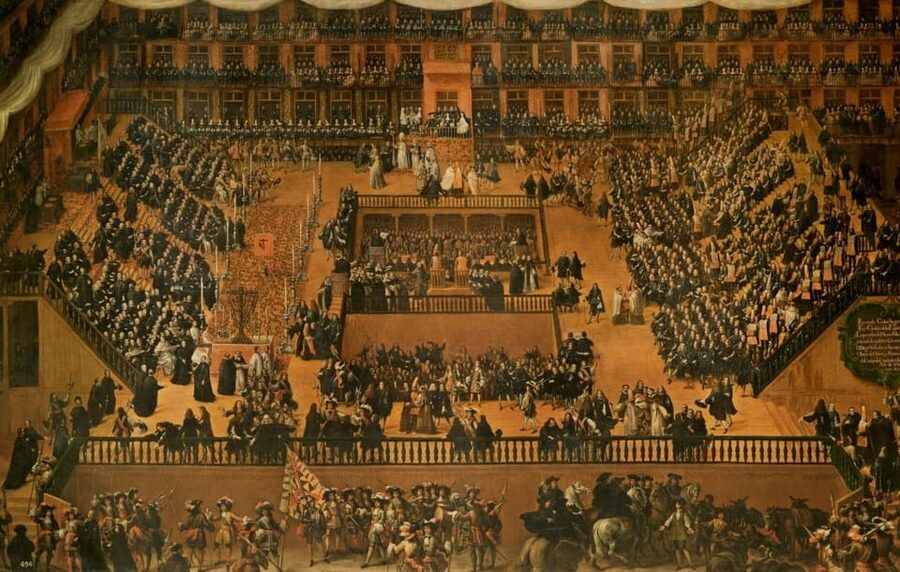
Zocodover is a fitting starting point. During the Inquisition, it hosted many autos de fe, public ceremonies in which people accused of religious offenses formally confessed, rejected their supposed errors, and sought reconciliation with the Catholic Church. These events were not simply private court hearings. They were public statements designed to display the power of the institution and warn the wider population.
That distinction helps set the tone for the walk. This is not presented as a haunted Toledo story with a few historical names added on top. The focus is on how fear became a public tool. You learn about accusations, religious conformity, and the process by which a suspected offense could become a formal case.
The opening stop also gives you useful city orientation. Zocodover sits near the upper part of Toledo and is an easy place to reach before exploring the old city. Since the whole tour lasts only an hour and a half, the meeting point is practical for fitting the walk into a morning or afternoon of sightseeing.
More Madrid Mysteries and Legends Tours:
- Toledo: Mysteries and Secrets Tour in Spanish
★ 4.7 · 106 reviews - Night Walking Tour of Toledo to learn about Secrets and Legends
★ 4.5 · 56 reviews - Madrid: Spanish Inquisition and Legends Evening Walking Tour
★ 4.7 · 1,396 reviews
Posada de la Hermandad and the reality of punishment
The route continues toward Posada de la Hermandad, where the guide discusses prisons, punishments, and torture methods associated with the Holy Inquisition. This is likely to be one of the more serious sections of the walk, since the subject is not merely what the Inquisition believed, but how it treated people under suspicion.
The useful thing here is the attention to procedure. The tour explains how an accusation moved through the system and how punishment could include confiscation of property, public penance, and execution in the most extreme cases. Witchcraft was treated as a form of heresy, so people accused of sorcery could face arrest, interrogation, and torture intended to force a confession.
I appreciate this part of the route because it gives you a framework for the darker stories. Without that framework, tales of witches and secret meetings can turn into spooky entertainment. With it, you can see how rumor, superstition, religious authority, and legal punishment worked together.
The subject is grim, and the guide’s approach matters. Vanessa has been praised for being friendly and for handling the material with sensitivity, including when someone of Jewish background was part of the group. That is particularly important in Toledo, where Christian, Jewish, and Muslim traditions are closely tied to the city’s identity.
The Cathedral and the ancient Jewish Quarter
The itinerary includes Toledo Cathedral and the old Jewish Quarter. The route does not list a separate admission ticket, and the experience is a walking tour with no additional expenses, so you should understand these stops mainly as part of the guide’s historical commentary rather than as paid interior visits.
The Cathedral matters because the Inquisition operated within a deeply religious society. Its presence helps you understand the authority that church courts claimed and the religious setting in which accusations of heresy were judged. The guide connects the wider city, its institutions, and its religious buildings to the events being discussed.
The Jewish Quarter adds another important layer. Toledo’s past cannot be reduced to a single Christian narrative. The neighborhood brings questions of religious identity, conversion, suspicion, and persecution closer to the streets where people lived. The route is especially useful if you want to understand how the Inquisition affected different communities rather than treating it as an abstract institution.
This is also where the guide’s tone can make a real difference. The subject includes Jewish history, religious persecution, and painful memories. A careful explanation is more valuable than dramatic language. The positive comments about Vanessa’s sensitivity suggest that, when she leads the route, she takes that responsibility seriously.
Do not expect a full architectural tour of the Cathedral or a long neighborhood walk through every corner of the Jewish Quarter. The tour has only 90 minutes and several stops. You are getting a focused historical route, not a general introduction to all of Toledo.
San Pedro Mártir and the machinery of the Holy Office
At the Convento de San Pedro Mártir, the guide discusses one of the first autos de fe held in Toledo, said to have involved more than 700 people. The scale of that event gives you a sense of how public and organized the process could become.
This stop shifts attention from individual accusations to the institution itself. You learn about the Inquisition’s hierarchy and the stages that followed a suspected crime, from detection to investigation, trial, sentence, and execution. That organizational detail is one of the strongest reasons to choose this walk instead of a general ghost tour.
The word Inquisition can sound like a single official acting alone. In practice, the tour presents it as a system with ranks, procedures, and public rituals. You come away with a better understanding of how authority was arranged and how the court turned religious suspicion into an official process.
San Pedro Mártir also helps connect the city’s religious buildings to the administration of the court. Toledo’s convents and churches were not just scenic backdrops. They formed part of the setting in which religious power was expressed, debated, and enforced.
Because the walk is conducted in Spanish, this portion will be most rewarding if you can follow historical explanations in that language. The guide is described as an official local guide, but the activity does not offer English interpretation or written translation.
More Toledo Tours:
- Three Cities in One Day: Segovia, Avila and Toledo from Madrid
★ 5.0 · 8,402 reviews - Madrid: Segovia and Toledo Tour, Alcazar, and Cathedral
★ 4.7 · 7,797 reviews - Toledo Tour from Madrid: Cathedral, Synagogue & St. Tome’s Church
★ 5.0 · 6,784 reviews - Toledo Half or Full Day Tour with Optional Lunch from Madrid
★ 4.5 · 5,807 reviews
Calle de la Espadería, San Vicente, and the end of the Inquisition
The final part of the route brings you near the old Church of San Vicente and Plaza de San Vicente. Here, the guide discusses the end of the Inquisition in Spain and tells stories of some of Toledo’s most famous prisoners.
That ending is important. A tour about persecution can feel trapped in the worst years of the institution, but learning how the Inquisition eventually ended gives the story a wider timeline. The Spanish Inquisition began in the 15th century and continued until the 19th century. Its decline and abolition show that institutions once treated as permanent can change, even if the process takes a long time.
The stories of famous prisoners add a human scale to the institutional history. You are no longer hearing only about court structure and punishments. You are also hearing about people who were caught inside that system and about the labels placed on them.
Calle de la Espadería and the surrounding old streets contribute to the atmosphere, but the tour does not promise theatrical reenactments or supernatural effects. One positive assessment specifically noted that the guide concentrated on history rather than mystery and myths. If you expect dramatic ghost stories, you may find the walk restrained. If you want the difference between folklore and documented persecution explained, that approach is a benefit.
You return to Calle Armas 3 after the final stop. The compact route means you can still have much of the day available for Toledo’s other sights.
What the $10 price really gives you
At $10 per person, this is an inexpensive way to add historical context to a Toledo visit. The price covers the official local guide and the 90-minute walk. There are no listed admission charges or extra expenses during the route.
The value is strongest if you already plan to walk through central Toledo and want someone to explain what happened in the places around you. You are paying for the guide’s structure and interpretation, not for entry to a major monument or a long museum visit.
The tour is also a good choice for a short stay. Toledo can feel confusing because the streets twist, the historic districts overlap, and many important events took place in buildings that now look like ordinary parts of the old city. A focused route can help you connect the places instead of reading disconnected facts from a guidebook.
The small-group rule is less clear in practical terms. Groups of more than six friends or family members are not accepted, and at least six people are required for the tour to take place. That means a small private party cannot simply assume the walk will operate. Two recent cancellations happened less than an hour before the scheduled start because there were not enough bookings, so I would avoid placing a fixed restaurant reservation or paid activity immediately afterward.
Free cancellation is available up to 24 hours before the tour for a full refund, and you can reserve while paying later. If you cannot attend, cancel the booking rather than leaving the guide waiting.
Who will get the most from this Toledo walk
I would choose this tour if you want Toledo’s Inquisition history explained in a direct, organized way. It suits adults and older children who can handle difficult subjects such as torture, public punishment, religious persecution, and execution.
It is especially useful for you if:
- You are interested in the history of religious courts and social control.
- You want to understand the difference between witchcraft folklore and historical persecution.
- You are visiting the Jewish Quarter and want more context about religious identity in Toledo.
- You prefer a walking route with several connected stops rather than one long monument visit.
- You speak Spanish and want a local guide’s explanation of the city.
I would think twice if your main goal is a spooky evening of legends, theatrical scares, or tales of ghosts. Witchcraft and sorcery are discussed, but the tour’s center is history, institutions, and documented practices.
The walk is wheelchair accessible, which is useful in a city with many challenging streets. Still, Toledo’s historic center can be demanding underfoot, and the activity remains a walking route through old streets. The supplied details confirm accessibility, but they do not describe the exact surfaces or slope of every section, so ask the operator if you need route-specific information.
Should you book the Inquisition and Witchcraft tour?
Book it if you want a low-cost, Spanish-language introduction to one of Toledo’s most difficult subjects. The strongest parts are the clear route through Zocodover, the explanation of the Inquisition’s hierarchy and procedures, and the effort to treat Jewish history and witchcraft accusations with care. Vanessa, when leading, has been singled out for warmth, energy, and sensitivity.
The main warning is the six-person minimum and the record of late cancellations. Check that the tour is confirmed, keep your plans flexible, and do not rely on it as the only fixed activity of your day.
For $10, the value is very good if you want serious historical context in a short time. Just arrive expecting a sober Spanish walking lecture through Toledo’s old streets, not a haunted-house performance.
FAQ
Where does the tour meet?
Meet at Calle Armas 3, opposite the Rodilla café at the beginning of Plaza de Zocodover. The guide carries a small colored flag.
How long does the tour last?
The tour lasts 1.5 hours.
What language is the tour conducted in?
The live tour guide speaks Spanish.
What is the price?
The listed price is $10 per person.
What places does the route include?
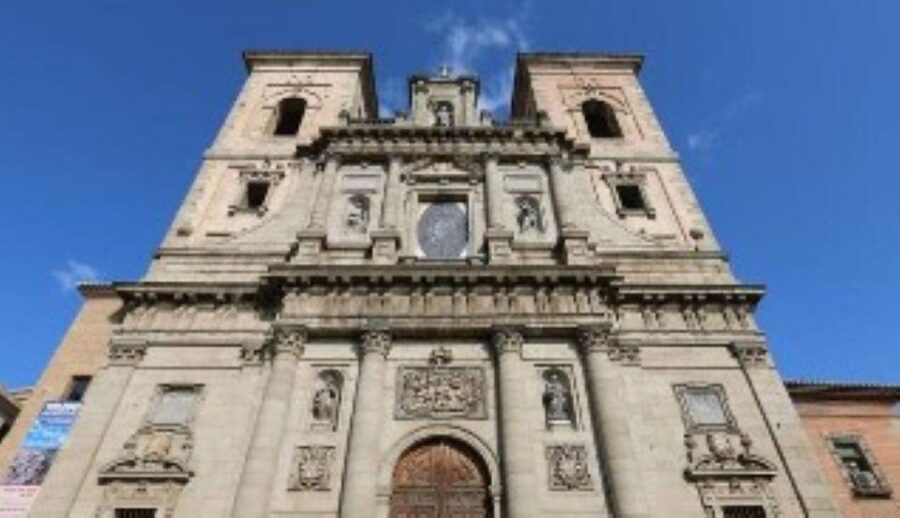
The route begins and ends at Calle Armas 3 and includes Posada de la Hermandad, Toledo Cathedral, the ancient Jewish Quarter, the Convento de San Pedro Mártir, Iglesia de los Jesuitas, and Plaza de San Vicente.
Does the tour include monument admission tickets?
The tour does not require payment for tickets or additional expenses.
What is the minimum number of people required?
At least six people are required for the tour to take place.
Are large group bookings accepted?
Large group reservations are not accepted. The maximum allowed per family or friends group is six people.
Can I cancel for a refund?
You can cancel up to 24 hours in advance for a full refund. If you cannot attend, cancel the reservation so the guide is not left waiting.
Just added around Toledo
- Hot Air Balloon over Toledo with optional transfers from Madrid★ 4.5 · 23 reviews
- Visit to the Toledo Underground★ 4.5 · 45 reviews
- Private Jewish Walking Tour in Toledo★ 5.0 · 95 reviews
- Underground Visit★ 5.0 · 35 reviews
- Toledo Underground Tour Visit Thermae and Private Basements★ 5.0 · 50 reviews
- Toledo, City of the Three Cultures★ 4.5 · 11 reviews
- Toledo Historical Small Group Tour with Cathedral & Monuments★ 5.0 · 49 reviews
- Toledo Templars Evening Walking Tour★ 5.0 · 24 reviews
Toledo Tours, compared.
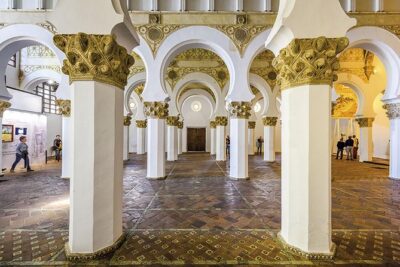
Toledo Tour from Madrid: Cathedral, Synagogue & St. Tome’s Church
Read our review →
Toledo Half or Full Day Tour with Optional Lunch from Madrid
Read our review →
Toledo & Segovia Full Day Guided Tour with Alcázar
Read our review →


Segovia and Toledo Day Tour from Madrid with Optional Alcazar
Read our review →
Browse the lists this tour appears in