
Reviewed · MADRID TAPAS TOURS
Spanish Cooking Class Paella Tapas and Sangria in Madrid
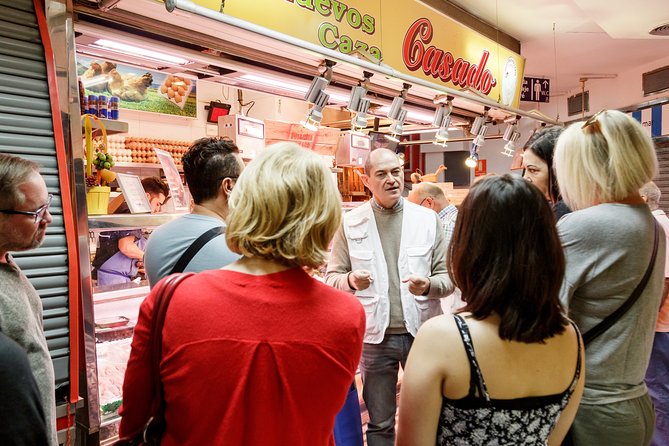
The best part of this Madrid class is that you do the cooking. You’ll shop for ingredients in a local market on the morning option, then work in pairs to make dishes such as paella, gazpacho, sangria, or a spread of tapas. Angel, Teresa, Elisa, and Eduardo are among the chefs who lead the sessions, each bringing a friendly, practical teaching style.
I like the small maximum of 12 people, which gives you room to ask questions and actually use a knife, pan, and spoon. I also like the generous meal at the end, since you are not just watching a chef perform. The main thing to watch is the booking choice: the morning class focuses on paella, while the evening class focuses on tapas and does not necessarily include paella.
Key points to know before booking
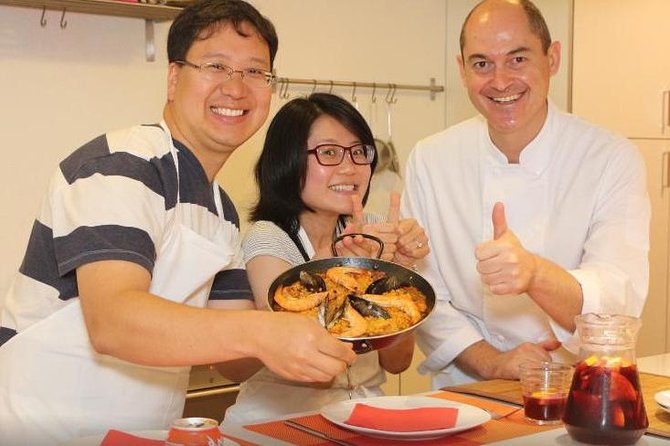
- Morning class means paella and a market visit: You may shop for fresh ingredients before making paella, gazpacho, and sangria.
- Evening class means a full tapas menu: Expect dishes such as tortilla, garlic shrimp, chorizo in cider, patatas bravas, tomato bread with ham, crema Catalana, and sangria.
- You get real hands-on work: Ingredients are prepared in advance, but you still take part in the cooking rather than only watching a demonstration.
- The group is capped at 12 people: You’ll cook in pairs, and solo participants are matched with a cooking partner.
- Dietary needs can be accommodated: Tell the provider about allergies or dietary requirements when booking.
- The class ends with food and recipes: You eat together at the cooking school and take home a recipe booklet.
Two Spanish cooking classes, not one mixed menu
This experience gives you two distinct ways to spend a half-day or evening in Madrid. The morning session is built around paella. The evening session is a tapas class. Both include sangria, but the dishes and rhythm differ.
That distinction matters. If your main goal is to learn paella, book the morning class. If you want a broad introduction to small Spanish dishes, choose the evening option. One participant expected tapas and paella in the same class and found the menu confusing, so read the class name carefully before paying.
The class costs $102.79 per person and lasts about four hours. That is not a cheap lunch, but the price covers instruction, drinks, ingredients, the cooking session, and a substantial meal. You are also paying for the chance to ask questions about Spanish food and local eating habits, not just for a plate of paella.
For someone who already plans to eat out several times in Madrid, this offers a different kind of value. You learn how dishes are made, meet a small group, and leave with recipes you can try at home. For a quick meal or a low-cost food stop, it is too expensive.
More Madrid Cooking Classes:
- Madrid: Paella and Sangria Workshop in the City Center
★ 4.9 · 1,264 reviews - Paella Cooking Class in Madrid with Bottomless Wine Pairing
★ 5.0 · 985 reviews - Paella Workshop with Bottomless Sangria in Central Madrid
★ 5.0 · 763 reviews
Starting at Cooking Point in central Madrid
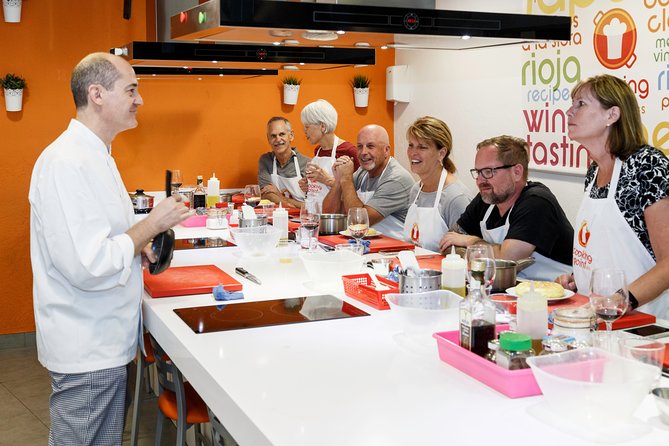
The meeting point is Cooking Point at C. de Moratín, 11, in Madrid’s Centro district. The location is near public transportation, and the activity begins and ends at the same place. There is no hotel pickup or drop-off, so plan to make your own way there.
The class runs for roughly four hours. The morning option is especially useful if you enjoy seeing how food is bought before it reaches the kitchen. The evening option skips the market visit and puts the emphasis on preparing and sharing tapas.
Bring an appetite. The menu is broad, and the meal can be more plentiful than expected. Some people have had enough food to take leftovers with them, though you should not assume that leftovers will always be available.
The maximum group size is 12. That is small enough for the chef to keep an eye on several pairs without turning the class into a private lesson. If you come alone, you will be matched with a cooking partner.
The morning market walk and paella class
The morning option begins with a visit to a local market to choose fresh ingredients. This is more than a shopping errand. The chef explains Spanish produce, seafood, meat, local eating habits, and how ingredients are sourced and used.
That market stop gives the paella lesson some useful context. You see the raw materials before they become lunch, and you can ask why one ingredient is selected over another. The chef may also explain different types of paella and the food traditions connected with the dish.
After the market, you return to the cooking space and work through the menu. The sample morning menu includes paella, gazpacho, and sangria. You may help prepare each part, rather than waiting for the chef to do the important steps.
This is where the class earns its keep. The ingredients are prepared in advance to keep the session moving, but you still cook. You might chop, stir, season, assemble, and follow the timing of the recipes under the chef’s direction. The result is a meal you helped make, not a staged demonstration.
The paella lesson is also a good fit for beginners. The instructors explain the steps clearly and help when needed, while more experienced cooks can ask about technique and ingredient choices. The supplied recipe booklet means you have something practical to use after returning home.
The evening tapas menu
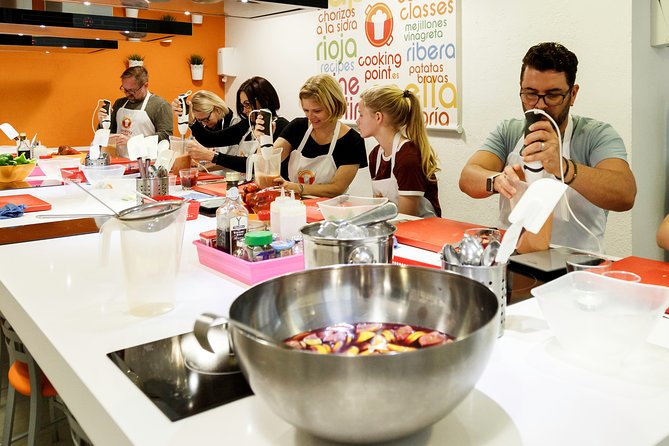
The evening class follows a different path. Instead of concentrating on one large rice dish, you prepare several small plates that show off different Spanish flavors and methods.
The sample menu includes Spanish potato omelet, garlic shrimp, chorizo in cider, patatas bravas, tomato bread with ham, crema Catalana, and sangria. That is a lot of food for one session, but the dishes are suited to group cooking because each pair can take responsibility for part of the menu.
The class can teach several useful techniques in one evening. You may work with potatoes and eggs for the tortilla, prepare a sauce for patatas bravas, handle shrimp, and learn how cider is traditionally poured. Crema Catalana adds a dessert lesson, so the class is not limited to savory food.
The tapas session suits you if you want a wider taste of Spanish cooking or plan to spend the rest of your trip ordering small plates. It also works well for a group with mixed interests because the menu offers several flavors and cooking tasks.
The drawback is that a broad menu can feel less focused than the morning paella session. You will touch many dishes, but you may not spend as much time on any one recipe. Choose the class based on what you most want to learn, not simply on the time of day.
More Madrid Tapas Tours:
- Madrid: Small Group of Prado Museum Tour & Optional Tapas
★ 4.6 · 2,437 reviews - Madrid: Tapas & Wine Tasting Tour with Local Guide
★ 4.8 · 2,171 reviews - Madrid Tapas & Wine Tour with Rooftop Views and Local Guide
★ 5.0 · 2,047 reviews - Madrid by Night Small Group Tour: Stories, Sights and Tapas Bites
★ 5.0 · 1,956 reviews
The chefs make the class personal
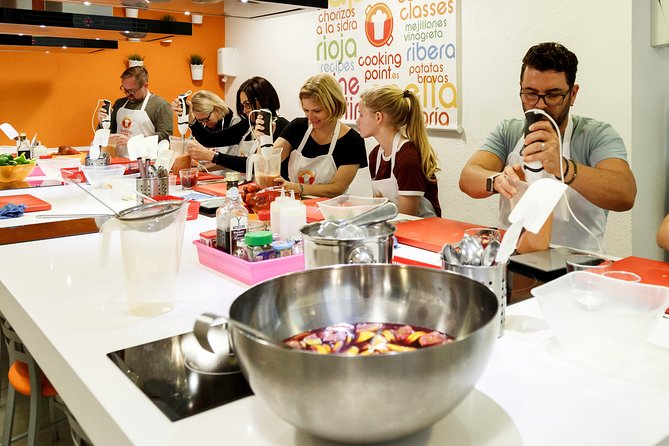
The teaching style is a major part of the experience. Angel is described as witty, patient, and good at explaining both the cooking steps and the background of paella. Teresa brings energy, humor, and clear instructions, with a strong interest in Spanish culture.
Elisa is noted for being personable, funny, and helpful, while Eduardo is praised for knowing when to offer advice and when to let people create. These details point to a class that relies on conversation and guidance rather than a rigid lecture.
The chefs also answer questions about local food customs. You can ask about the dishes in front of you, Spanish eating habits, ingredient choices, or the origins of a recipe. That makes the class useful early in a Madrid visit, when you are still learning what to order in restaurants and markets.
The pace should suit most beginners, but this is not a private chef lesson. You work in a group and in pairs, so you will share tasks and counter space. If you want complete control over every recipe, the format may feel limiting. If you enjoy meeting people and learning by doing, the group setup is a plus.
Food, drinks, and the meal at the end
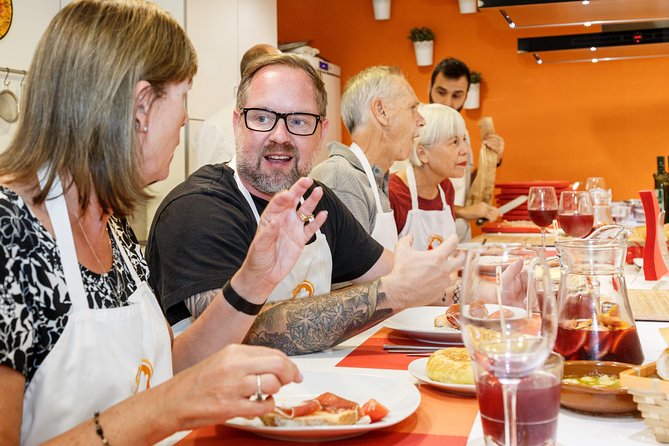
Sangria is included, and the class includes drinks with the meal. The sangria is prepared as part of the session, so you learn the process rather than simply receiving a glass at the table.
The meal is the payoff, but it is also part of the lesson. You sit down with the other participants and eat the dishes you prepared. This creates time for conversation about travel, food, and Madrid.
The food has received especially strong praise. Paella, gazpacho, tapas, and sangria are repeatedly described as delicious, and the meal is often filling. The facility has also been described as immaculate, an important point when you are spending several hours cooking.
The minimum drinking age is 18. Since alcohol is part of the experience, this is not the right choice for someone who cannot or does not want to drink, even though the central activity is cooking.
Dietary requirements and family suitability
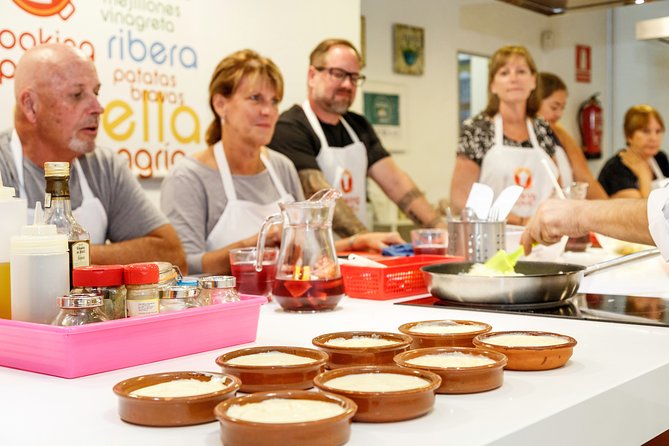
The provider says dietary needs can be accommodated, but you must give notice when booking. Do not wait until you arrive. State allergies, vegetarian requirements, or other restrictions in advance so the menu can be planned properly.
The class can suit families. A six-year-old has taken part successfully, and a family with two daughters enjoyed the market visit and paella lesson. Still, four hours of group cooking requires attention and cooperation, so very young children may need close help from an adult.
The class also works well for couples, friends, and solo participants. Couples can be paired together, while solo participants are matched with a cooking buddy. The shared meal makes it easy to talk with other people without the forced feel of a formal group tour.
What the $102.79 price really buys you
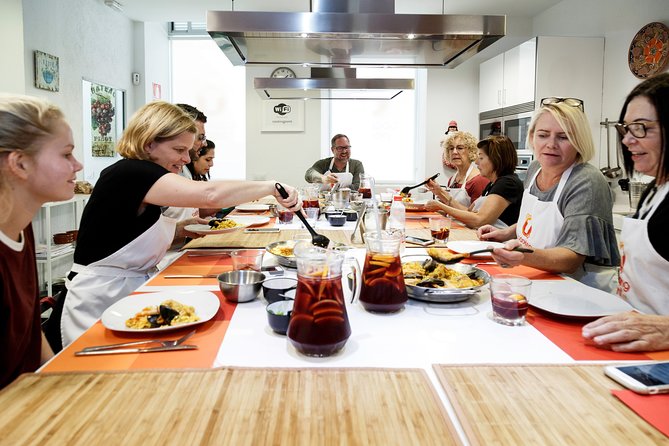
At $102.79, this experience costs more than simply ordering paella or tapas in Madrid. The comparison is not quite fair, though. Your fee includes a four-hour activity, a local chef, ingredients, a market visit on the morning class, drinks, the meal, and a recipe booklet.
The strongest value comes if you plan to cook Spanish food again. Learning how to make gazpacho, tortilla, patatas bravas, or paella gives the class lasting use. The recipe booklet helps, though the real benefit is remembering the timing and small corrections the chef provides while you cook.
The value is weaker if you mainly want an inexpensive lunch. You could eat well in Madrid for less money, and the class requires a large block of your day. It is best seen as a food experience with a meal attached, not a restaurant replacement.
The fact that it is often booked about 37 days ahead is a useful planning clue. If you have a fixed schedule, reserve early, especially if you want a specific morning or evening session. Confirmation is normally sent at booking, though reservations made within one day of the start time are subject to availability.
Who should book this Madrid cooking class?
I would recommend it to first-time visitors who want an introduction to Spanish food before eating their way through the city. It is also a strong choice for families, couples, solo participants, and small groups of friends who prefer an active food experience to a tasting where someone else does all the work.
Choose the morning class if paella is the priority, or if you like the idea of seeing a local market and selecting ingredients. Choose the evening class if you want a wider range of tapas and a dessert as part of the menu.
You may want to skip it if you dislike group activities, do not want to drink, or are looking for a short and inexpensive meal. The four-hour length is part of the appeal for food lovers, but it can feel long if cooking is not high on your Madrid list.
Cancellation is flexible up to 24 hours before the start time for a full refund. Changes or cancellations made less than 24 hours ahead are not accepted, so keep that deadline in mind.
My booking advice
Book the class that matches your food goal. The morning paella session offers the more complete cultural outing because it combines a market visit, ingredient shopping, cooking, and lunch. The evening tapas session gives you a broader menu and a livelier small-plate format.
The most important detail is simple: do not assume both paella and tapas are included in one class. Check the selected option, tell the provider about dietary needs, and arrive ready to cook rather than merely watch.
For an active, social food lesson in central Madrid, I think the price is fair. You get a generous meal, practical recipes, and a better understanding of dishes you are likely to see throughout Spain. If that sounds more appealing than another restaurant reservation, this is a good booking.
FAQ
Where does the cooking class meet?
The class meets at Cooking Point, C. de Moratín, 11, Centro, 28014 Madrid, Spain.
How long does the experience last?
The activity lasts approximately four hours.
Is the class offered in English?
Yes. The class is offered in English with a local English-speaking chef.
How many people can join the class?
The maximum group size is 12 participants.
Are morning and evening classes available?
Yes. You can choose a morning or evening class, subject to availability.
What does the morning class include?
The morning class focuses on paella and may include a local market visit to shop for fresh ingredients. The sample menu includes paella, gazpacho, and sangria.
What does the evening class include?
The evening class focuses on tapas. The sample menu includes Spanish potato omelet, garlic shrimp, chorizo in cider, patatas bravas, tomato bread with ham, crema Catalana, and sangria.
Is sangria included?
Yes. Sangria is included and is prepared as part of the cooking experience. The minimum drinking age is 18.
Can dietary requirements be accommodated?
Yes. Dietary requirements can be accommodated, but you should provide the details when booking.
What is included in the price?
The price includes the cooking class, drinks, local guide, ingredients for the class, the meal you prepare, and a recipe booklet. Hotel pickup and drop-off are not included.
Can I cancel for a full refund?
Yes. You can cancel at least 24 hours before the experience start time for a full refund. Cancellations or changes made less than 24 hours before the start time are not accepted.
Does the class return to the meeting point?
Yes. The experience ends back at Cooking Point, the original meeting point.
Just added around Madrid
- Visit the National Archaeological Museum in Madrid★ 4.4 · 6 reviews
- From Madrid: Parque Warner Beach Water Park & Transport★ 3.9 · 14 reviews
- Madrid Wine Tasting, Flamenco Class and Pub Crawl★ 4.5 · 6 reviews
- Virtual Reality Experience Fun And Tickets & Imageen★ 5.0 · 12 reviews
- Visit to the Prado Museum★ 4.9 · 6 reviews
- Tuk Tuk Tour with Wine Test in Madrid★ 3.8 · 6 reviews
- Tuktuk historical tour of Madrid 1 Hr in a fun and original way★ 3.7 · 3 reviews
- Prado Museum VIP tour with an art Expert, tickets included★ 5.0 · 11 reviews
Madrid Tapas Tours, compared.

Small Group of Prado Museum Tour & Optional Tapas
Read our review →
Madrid Tapas & Wine Tour with Rooftop Views and Local Guide
Read our review →
Madrid by Night Small Group Tour: Stories, Sights and Tapas Bites
Read our review →
Highlights Guided Vintage Bike Tour and Tapas Option
Read our review →
Royal Palace Expert Guided Tour with Optional Tapas
Read our review →
Madrid Historic Centre Food Tour with Authentic Tapas & Wines
Read our review →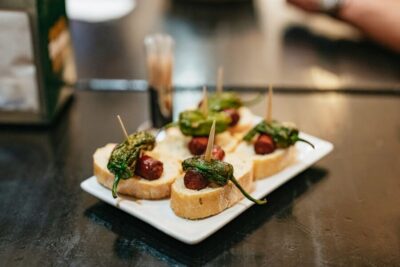
Browse the lists this tour appears in