
Reviewed · PRADO MUSEUM TOURS AND TICKETS
Private Visit to the Prado Museum
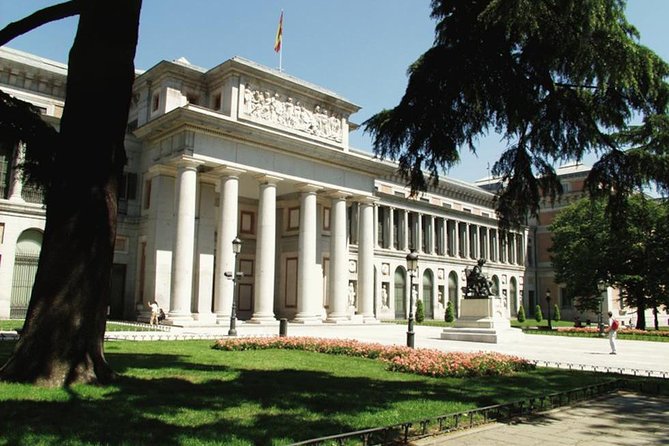
Madrid’s Prado Museum is not a place to wander into without a plan. Its rooms hold far more major paintings than you can sensibly see in a single visit. This private two-hour tour gives you a clear route through Flemish, Italian, and Spanish art, with special attention to the masters who made the Prado famous.
I like the small private format, since your group alone receives the guide’s attention. I also like the historical structure of the visit: you begin with artistic influences from northern Europe and Italy, then connect them to Spain’s Golden Age and its leading painters.
The catch is important: museum admission is not included in the $305.53 group price. You must arrange your own entrance ticket, and two hours will cover selected highlights rather than the whole museum.
Key points to know before booking
- Private group of up to seven: The guide works only with your party, rather than placing you in a large shared group.
- A two-hour art route: Expect a focused introduction to Flemish, Italian, and Spanish schools, not a complete museum tour.
- English is offered: The experience is listed in English, with a tour guide included.
- Tickets cost extra: The advertised price pays for the guiding service, not entry to the Prado.
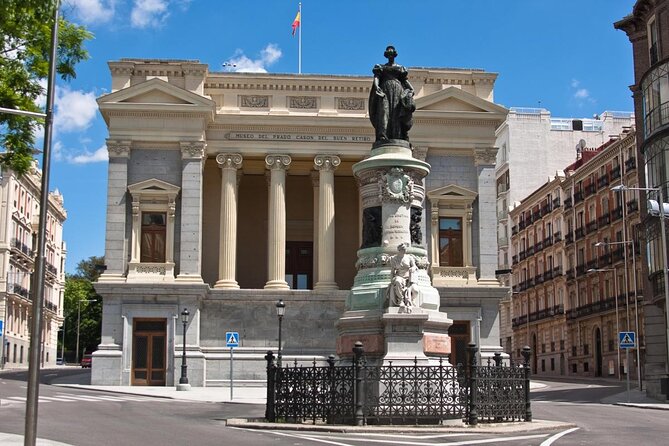
- Meet at the Goya Monument: The 10:00 a.m. meeting point is at C. de Felipe IV, near the museum and Retiro.
- Plan your own highlights: The Prado’s first version of the Mona Lisa, major Spanish paintings, and any temporary exhibition need careful time management.
Why a private Prado tour can make sense
The Prado is one of the world’s major painting museums, but its size can work against you. A free museum map and a short guide to the masterpieces can help, yet neither replaces a person who can explain why one painting matters beside another.
This visit gives you a basic art story instead of a random room-by-room walk. The route begins with the early Flemish painters, moves through the Italian school, and then turns toward the great Spanish masters. That order helps you see how Spanish painting developed through outside influences while gaining its own force and character.
I especially like that the route includes the connection to Spain’s Golden Age. This was not simply a period of famous names and grand religious paintings. It shaped the way Spanish artists handled faith, royal power, ordinary people, light, and human weakness. In a short visit, a strong guide can make those links easier to see.
The format is private, so you can ask questions without holding up a bus-sized group. If one painting catches your attention, you may be able to spend a little more time there. The description does not promise a custom route or named specialist guide, so I would not book it expecting a personal art seminar. Think of it as a guided introduction with room for some conversation.
More Prado Museum Tours and Tickets:
- Madrid: Prado Museum Entry Ticket
★ 4.6 · 17,509 reviews - Madrid: Small Group of Prado Museum Tour & Optional Tapas
★ 4.6 · 2,437 reviews - Madrid: Prado Museum Guided Tour with Skip-the-Line Ticket
★ 4.5 · 2,018 reviews
Meeting the guide at the Goya Monument
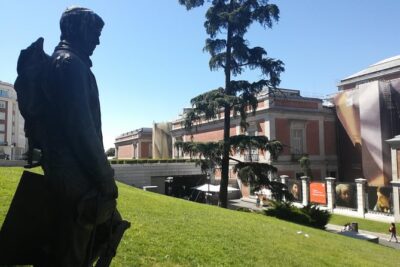
The tour starts at 10:00 a.m. at the Monument to Goya, C. de Felipe IV, s/n, in the Retiro area of Madrid. The meeting point is close to the Prado and near public transportation, which makes it practical for a morning visit.
Arrive with enough time to find the monument and handle your museum ticket before the tour begins. The museum entrance process includes formalities and entrance control. Since admission is not part of the tour price, you should have your ticket arranged before meeting the guide.
The stated end point is the same meeting point. That matters if you have a train, lunch reservation, or another timed activity afterward. The tour lasts about two hours, but museum entry procedures and the size of your group may affect how much gallery time remains. I would avoid scheduling anything immediately after it.
The Goya meeting point also gives the visit a fitting start. Goya is central to the Prado’s Spanish story, and beginning near his monument sets up the transition from older European influences to Spain’s own artistic voice.
The opening route through Flemish painting
The first part of the proposed route takes a quick look at the early Flemish painters, described in the program as the primitive Flemish school. This is a useful beginning because the Prado’s collection is not only a showcase of Spanish art.
Flemish painting is known for close attention to surface, detail, objects, and devotional feeling. In a museum packed with famous Spanish names, these earlier works can be easy to pass by. A guide can help you understand why they are included and how their approach influenced later European art.
The word brushstroke in the route description is telling. This is not meant to be a long survey of every room. You get a short orientation, enough to establish the artistic sources before moving toward the Italian and Spanish sections.
That approach suits a first-time visitor who wants context without spending half a day on one school. It may feel too quick if Flemish art is your main interest. The tour is built around a broad progression, so you should not expect a specialist visit devoted only to northern Europe.
The Italian school and the bridge to Spain
The route then turns to the Italian school. This section helps explain the visual ideas that shaped European painting, including the role of Italian models in Spain’s own artistic development.
The Prado is famous for Spanish painters, but you will appreciate those works more when you understand the artistic conversation around them. The Italian rooms provide that bridge. Instead of treating each painting as an isolated masterpiece, the guide can show you how subjects, compositions, and artistic methods traveled across borders.
The tour description promises attention to the sources and contributions of each school. That is a useful promise for visitors who know individual paintings but lack a clear timeline. You are not simply being told that a work is important. You are being given a reason for its place in the museum’s larger story.
Still, two hours is a firm limit. The guide cannot give equal time to Flemish, Italian, and Spanish painting. If the Spanish masters are your priority, the opening sections will necessarily be brief. If you want a full treatment of Italian art, choose a longer museum visit instead.
More Museums in Madrid:
- Madrid: Reina Sofía Museum Entrance Ticket
★ 4.5 · 6,889 reviews - Madrid: Prado Museum Guided Tour With Fast Access
★ 4.8 · 1,785 reviews - Prado Museum Small Group Tour with Skip the Line Ticket
★ 5.0 · 1,738 reviews - Royal Palace & Prado Museum Skip the Line Guided Tour
★ 4.5 · 1,347 reviews
The Spanish masters and the Golden Age
The main event is the section on the great Spanish school. This is where the visit should feel most connected to Madrid and to Spain’s cultural past.
The route links these painters to the Golden Age and to their influence across Europe. That gives you more than a list of celebrated works. You can look for the ways Spanish artists turned local concerns into subjects with broad appeal, from royal portraits to religious scenes and everyday human drama.
The Prado is particularly rewarding when you stop trying to see everything. A guide-led route helps you accept that a handful of paintings can make a stronger impression than a hurried march through every room.
The exact works included are not specified, so I would ask the guide at the start which Spanish paintings will receive the most attention. You may want to request a focus on the museum’s major names, on Goya, or on works connected to the Golden Age. The private format makes that question worthwhile.
One useful tip is to decide your priorities before arrival. The museum’s first version of the Mona Lisa is singled out as a highlight worth finding. You might also want to reserve time for works outside the most famous names. The Prado’s modern or less expected pieces can add range to the visit, but only if you make room for them.
What you can realistically see in two hours
Two hours sounds generous until you enter a museum of this scale. The time includes movement between rooms, stops for explanation, questions, and the possibility of crowds or entrance delays.
A sensible visit might look like this:
- A short introduction to the museum and the route
- A quick look at the early Flemish school
- Selected works from the Italian school
- The largest share of time with Spanish masters
- A few final recommendations for exploring alone
That is an example of how the time may be used, not a guaranteed schedule. The official route allows the guide to begin with Flemish and Italian art, then focus on Spain. The exact balance depends on your interests and on how the museum is operating that day.
I would not book this experience if your aim is to see every major gallery. You will need a second visit or several more hours for that. I would book it if you want a strong starting framework, especially if the Prado feels intimidating or if your group includes people with different levels of interest in art.
The tour can also help you spend the rest of your museum time wisely. Once the guided portion ends, you can return to a painting you want to study or follow the free map toward another section. The experience ends back at the starting point, so any extra independent visit is your own plan.
Ticket costs and the real value of $305.53
The price is $305.53 per group of up to seven people. That works out to about $43.65 per person if all seven places are filled, before museum admission. For a full private group, that can be reasonable for two hours of focused guiding.
For one or two people, the cost feels much higher. You are paying for the private format, not simply for a ticket and an audio guide. If your party is small, compare the price with a standard group tour or a museum audio option.
The value also depends on how much you want explanation. Someone who already knows the Prado well may prefer to buy admission and explore alone. Someone who wants help with the museum’s structure, schools, and Spanish art may get more from the guide than from a self-guided visit.
Do not overlook the extra admission cost. The $305.53 does not include entrance tickets, and the itinerary specifically states that admission is not included. You should add that expense when comparing this tour with other Prado options.
Some museum visitors use the free entry period, but the practical tradeoff can be long lines. One reported visit involved waiting about an hour for a free ticket. That may save money, but it can eat up a large part of a two-hour guided experience. I would check the Prado’s current ticket and free-entry rules before booking, then choose a paid timed ticket if your schedule matters.
Noise, facilities, and other practical limits
The museum itself is exceptional, but your experience will depend partly on conditions inside. Temporary exhibitions can become noisy, especially near documentary screenings or crowded entrances. If you want to hear every word, stay close to the guide and ask for quieter positioning when possible.
Basic facilities can also be uneven. A complaint about poorly maintained toilets is a reminder not to expect every practical detail to match the quality of the paintings. This is not a reason to skip the Prado, but it is useful to know before you arrive.
The museum has a restaurant and cafeteria, which can make a longer visit easier. The tour itself lasts only about two hours, and the supplied details do not say that food, drinks, or a break are included. Treat those facilities as separate options after the tour.
The tour is near public transportation, and most people can participate. No special accessibility details are provided, so if anyone in your group has specific mobility needs, ask the provider before booking. The private format may make communication easier, but it does not guarantee a particular route or accommodation.
Who will get the most from this visit
This tour suits a first-time Prado visitor who wants a well-ordered introduction. It is also a good fit for a family or friend group of up to seven that prefers to stay together rather than join strangers.
You will probably like it if:
- You want an English-speaking guide
- You prefer a private group
- You care about context, not only famous paintings
- You have about two hours for the museum
- You want help choosing what to see next
- You are especially interested in Spanish painting and the Golden Age
It is less suitable if you want unlimited museum time, a specialist lecture on one painter, or the cheapest possible entry. The guide’s name and art specialization are not provided, so ask about the person leading your visit if that matters to you.
The rating is 4.6 from eight reviews, which suggests a generally strong response but is still a small sample. The repeated positives are easy entry, the museum’s quality, its central setting, and the sheer importance of the collection. The practical cautions are also clear: tickets require planning, the museum is too large to finish in one visit, and some facilities or crowded areas may disappoint.
Should you book the private Prado visit?
Book it if you want a short, private introduction to one of Madrid’s essential museums and your group can share the cost. The route from Flemish and Italian art to Spain’s Golden Age gives the visit a useful shape, while the private setting lets you ask questions and set priorities.
Skip it if your main goal is low-cost entry or a long, independent museum day. In that case, buy your own ticket, use the free map, and allow more than two hours.
Before paying, confirm your entrance tickets, decide which Spanish masters or famous works matter most to you, and allow extra time for the museum beyond the guided portion. Cancel at least 24 hours before the 10:00 a.m. start if your plans change, since later cancellations are not refunded.
FAQ
Where does the Prado tour start?
It starts at the Monument to Goya, C. de Felipe IV, s/n, Retiro, 28014 Madrid, Spain.
What time does the experience begin?
The start time is 10:00 a.m.
How long does the private Prado visit last?
The visit lasts approximately two hours.
Is museum admission included in the price?
No. Entrance tickets to the Prado are not included and must be arranged separately.
How much does the experience cost?
The listed price is $305.53 per group, for up to seven people.
Is the tour private?
Yes. Only your group participates in the activity.
What language is offered?
The experience is offered in English.
Where does the tour finish?
It ends back at the meeting point, the Monument to Goya.
Can I cancel for a full refund?
Yes, if you cancel at least 24 hours before the experience start time. Cancellations made less than 24 hours in advance are not refunded, and late changes are not accepted.
Just added around Madrid
- Visit the National Archaeological Museum in Madrid★ 4.4 · 6 reviews
- From Madrid: Parque Warner Beach Water Park & Transport★ 3.9 · 14 reviews
- Madrid Wine Tasting, Flamenco Class and Pub Crawl★ 4.5 · 6 reviews
- Virtual Reality Experience Fun And Tickets & Imageen★ 5.0 · 12 reviews
- Visit to the Prado Museum★ 4.9 · 6 reviews
- Prado Museum VIP tour with an art Expert, tickets included★ 5.0 · 11 reviews
- Tuk Tuk Tour with Wine Test in Madrid★ 3.8 · 6 reviews
- Tuktuk historical tour of Madrid 1 Hr in a fun and original way★ 3.7 · 3 reviews
Prado Museum Tours and Tickets, compared.

Small Group of Prado Museum Tour & Optional Tapas
Read our review →
Prado Museum Guided Tour with Skip-the-Line Ticket
Read our review →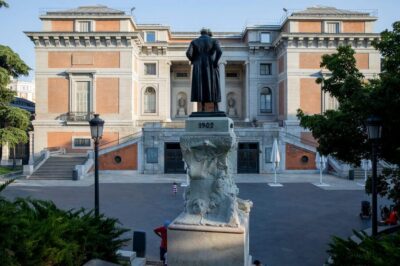
Prado Museum Small Group Tour with Skip the Line Ticket
Read our review →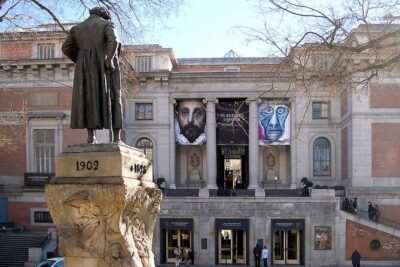
Royal Palace & Prado Museum Skip the Line Guided Tour
Read our review →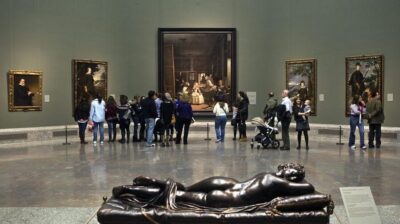
Prado Museum Guided Tour with Skip-the-Line Ticket
Read our review →Browse the lists this tour appears in