
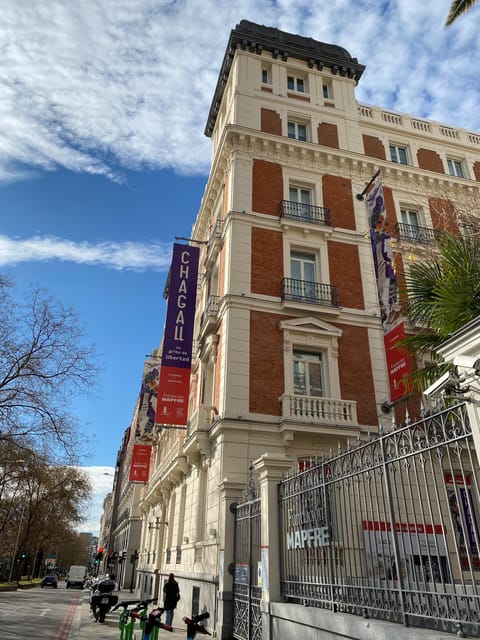
Reviewed · MUSEUMS
Mapfre Foundation Madrid – Photography Exhibitions
Fundación MAPFRE gives you two very different ways to look at the modern world: Anders Zorn’s portraits, nudes, and scenes of Swedish life, and Helen Levitt’s quiet photographs of New York streets. The contrast is the main attraction. One artist works with paint, watercolors, and prints; the other finds poetry in chalk drawings, children, and ordinary city corners.
I like the strong mix of painting and photography, and I like that the exhibitions cover both famous public figures and everyday people. The free audio guide is useful, too, especially when you want context without joining a group. One thing to watch: pricing information can be confusing, so check the current ticket terms before paying. One recent booking complaint said the visitor was charged for an exhibition believed to be free.
- See Anders Zorn through several stages of his career, from early watercolors to Parisian Impressionist influence, American portraits, and Swedish scenes.
- Explore nearly 200 Helen Levitt photographs arranged in nine sections, including her early street work and film-related projects.
- Use the free audio guide in English or Spanish with a QR code, your phone, and headphones.
- Compare two forms of artistic observation, one based on paint and printmaking, the other on fast, sensitive street photography.
- Visit until May 17, 2026, when both current temporary exhibitions are scheduled to be available.
- Plan for a self-guided museum visit, not a timed tour with a named guide or live commentary.
Two artists, two ways of seeing
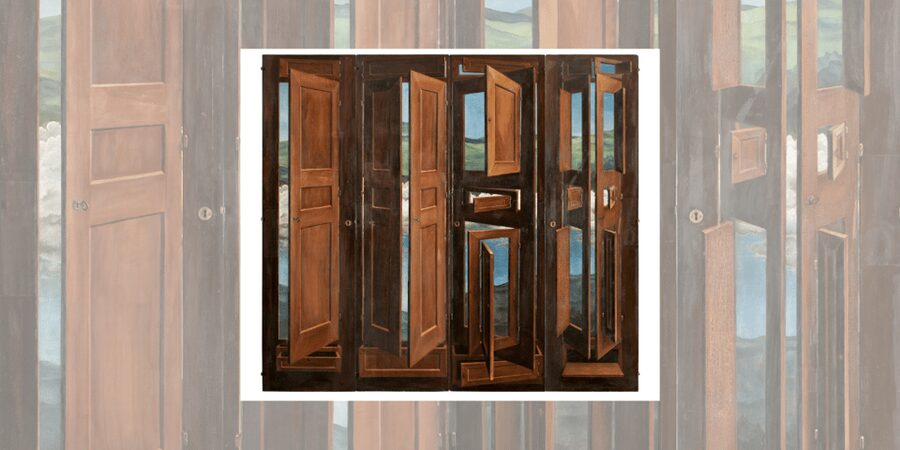
The current program pairs Anders Zorn, a Swedish painter born in 1860, with Helen Levitt, an American photographer born in 1913. Their lives and methods were different, but both paid close attention to people and place.
Zorn became known for portraits of kings, presidents, and public figures. He also painted nudes, worked in watercolor, and made prints. His career took him from Sweden to England, Paris, the United States, Spain, and back to Mora, the Swedish town connected with his later work.
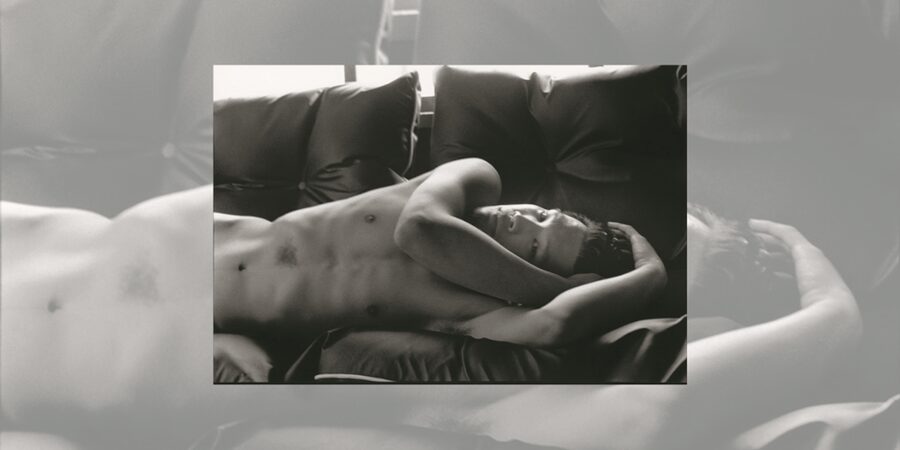
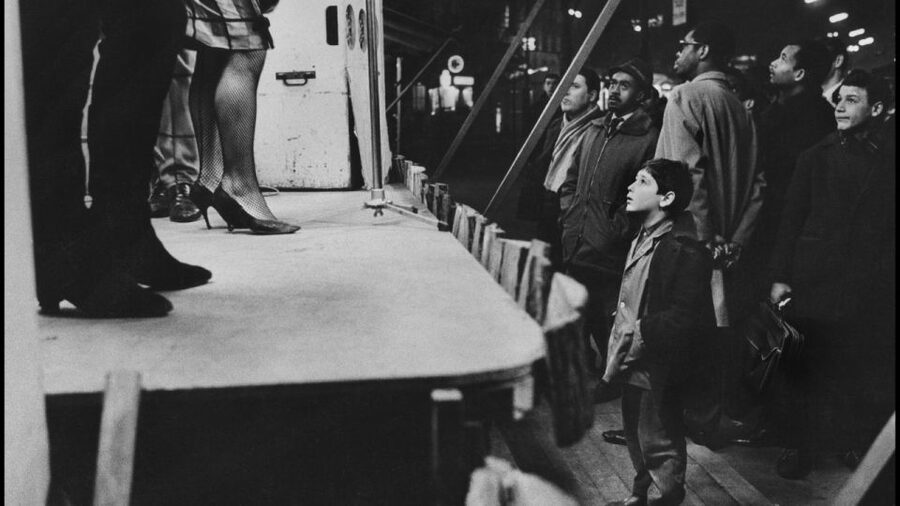
Levitt spent more than seven decades developing a personal view of urban life. Her New York photographs focus on children at play, gestures, chalk drawings, and working-class neighborhoods. The pictures are often small moments rather than grand events, which makes the exhibition a good match for anyone who enjoys noticing details.
I like the pairing because it keeps the visit from becoming visually repetitive. Zorn’s paintings ask you to look at color, surface, and technique. Levitt asks you to pause over timing, body language, and what is happening just outside the frame.
Anders Zorn from Mora to international fame
The Zorn exhibition follows his career rather than presenting a random group of works. That gives you a useful path through his development.
You begin with his early watercolors and his period in England. Watercolor is important here because it shows a different side of an artist better known for confident oil painting. Look for the way he handles light, movement, and changing conditions with a limited, direct touch.
Paris was a major step in Zorn’s career. There, he came under the influence of Impressionism and built the reputation that carried him across Europe. His work from this period helps explain why he was welcomed as a portraitist of high society. He could make a formal portrait feel alive rather than stiff.
His American travels add another chapter. Zorn painted powerful people, including presidents and other public figures, but the exhibition does not stop at official portraiture. It also includes celebrated nudes and scenes that show his interest in the human body, light, and quick visual effects.
The return to Mora changes the mood. Zorn became more focused on everyday Swedish life, local customs, and familiar settings. This shift gives the exhibition a human scale after the international portraits and polished Parisian work.
The Spanish connection is another useful thread. The exhibition includes his Spanish works and links his artistic interests with Joaquín Sorolla. If you already know Sorolla’s bright, light-filled paintings, this comparison can add a welcome Madrid connection to a show centered on a Swedish artist.
One featured work is Midnight, from 1891, held by the Zornmuseet in Mora. It is a helpful example of why Zorn matters: his pictures can feel immediate and atmospheric while still showing careful control of the medium.
More Museums in Madrid:
- Madrid: Prado Museum Entry Ticket
★ 4.6 · 17,509 reviews - Madrid: Reina Sofía Museum Entrance Ticket
★ 4.5 · 6,889 reviews - Madrid: Small Group of Prado Museum Tour & Optional Tapas
★ 4.6 · 2,437 reviews
Helen Levitt’s New York in nearly 200 photographs
Helen Levitt’s exhibition brings together nearly 200 works across nine sections. That size matters. You are not getting a quick sample of her street photography, but a sustained look at how her eye developed over time.
Levitt began photographing in the late 1930s. Her subjects were often children, neighbors, workers, and people caught in unplanned moments. Chalk drawings and children’s games appear as part of the street environment, not as separate museum subjects. You see a city made up of small actions and passing scenes.
Her photographs are not built around famous landmarks. That is one of the show’s strengths. You may find yourself paying attention to a hand gesture, a child’s stance, a face half turned away, or the arrangement of people in a narrow street. Levitt makes ordinary life worth a second look.
The nine sections also include her cinematic explorations. This broadens the picture beyond still photography and shows that her interest in urban life was not limited to a single format. Her vision could move between a frozen instant and a sequence that suggests movement.
A photograph identified as New York, c. 1940 gives you a sense of the period at the heart of the exhibition. Levitt’s early work is especially valuable for anyone interested in documentary photography, social observation, or the visual record of city neighborhoods.
I would allow time to revisit photographs rather than rushing from one image to the next. Levitt’s pictures often work best after a few seconds of looking. The first impression may be simple. The second can reveal a relationship, joke, tension, or bit of visual order.
Why the two exhibitions work well together
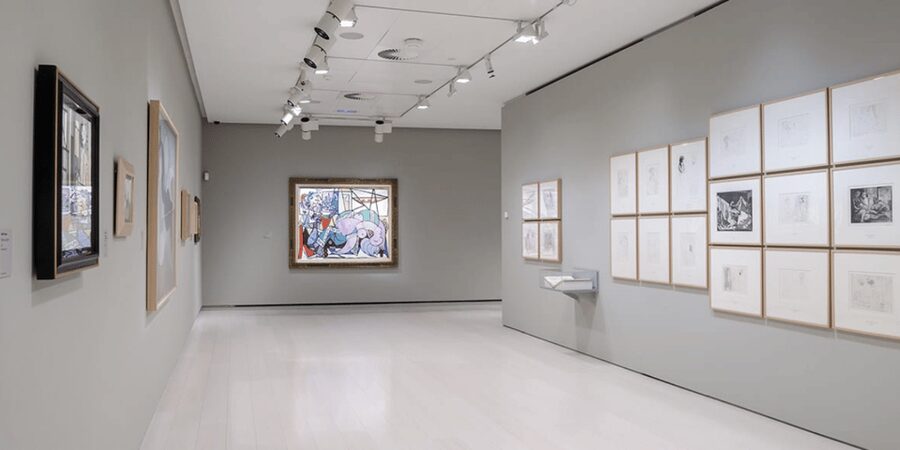
A single exhibition can sometimes ask you to admire technique without giving you a reason to care. This pairing offers a clearer comparison.
Zorn usually begins with an intentional subject: a portrait, a nude, a scene prepared for paint, or a place he chose to study. Levitt often begins with what is already happening around her. Zorn shapes the image through brushwork and printmaking. Levitt waits, frames, and presses the shutter.
Both artists are interested in human presence, but their settings differ. Zorn moves between elite commissions and Swedish daily life. Levitt stays close to the street and finds interest in people who might otherwise go unnoticed.
The contrast also helps you understand the period from the late 19th century into the 20th century. You can see changing ideas about modern life, public identity, private moments, and the role of the artist. The foundation also includes painting, photography, and sketches, so the visit is not limited to one medium.
The free audio guide and how to use it
The standard ticket includes an audio guide in English and Spanish. You access it through a QR code available in the exhibition rooms, so bring a mobile device with active internet access.
If your phone has no mobile data, free Wi-Fi is available in the space. You need headphones to avoid disturbing other people. Bringing your own pair is the sensible choice, since headphones can also be bought at the ticket counter for €1, subject to availability.
This setup gives you freedom. You can listen to selected entries, move at your own pace, or skip commentary when you want to look quietly. It is not the same as having a specialist beside you, but it keeps the visit flexible and avoids the fixed rhythm of a group tour.
Remember to charge your phone before arriving. The audio guide is delivered through your own device, and a dead battery would remove one of the included features.
More Madrid Photo Tours and Shoots:
- Photographic tour of Madrid with a professional photographer
★ 5.0 · 104 reviews - Madrid: Private Photoshoot at the Retiro Park
★ 4.9 · 76 reviews - Photoshoot in Madrid
★ 5.0 · 44 reviews - Vacation photographer. Madrid Photo Shoot. Take home more than just a selfie!
★ 5.0 · 40 reviews
Price, value, and the free-entry confusion
The listed price is $5 per person, which is low for access to two major temporary exhibitions and an audio guide. If you want a focused art stop in Madrid rather than a full-day museum marathon, the cost is easy to justify.
The value is strongest if you care about photography, modern painting, or both. The Helen Levitt display alone offers nearly 200 works, while the Zorn exhibition gives you a broad look at a major European artist rather than a narrow single-period display.
Still, check the current price and entry conditions before booking. One recent Spanish-language booking review complained about being charged when the visitor believed admission was free. The supplied information lists a $5 ticket, but exhibition policies can change, and separate sales channels may show different terms. Confirm what your voucher covers and exchange it at the ticket desk.
The booking terms allow cancellation up to 24 hours before the visit for a full refund. You can also reserve now and pay later, which helps if your Madrid schedule is still shifting.
Timing your one-day visit
The experience is valid for one day, but the information provided does not give a fixed visit length or a specific starting time. Check availability when selecting your date.
Because this is a self-guided exhibition visit, you can set your own pace once inside. The two displays require different kinds of attention. Zorn rewards time spent comparing mediums and periods. Levitt rewards slow looking at individual photographs.
If you have limited time, start with the exhibition that most interests you. Photography fans should begin with Levitt and then use Zorn as a change of pace. Painting fans can start with Zorn, then appreciate Levitt’s sharper, more immediate street scenes afterward.
The foundation is wheelchair accessible. You exchange your voucher at the ticket desk, so allow enough time for that step before entering the galleries.
Who will enjoy Fundación MAPFRE most
I would recommend this visit to:
- People who like photography exhibitions with a clear social focus.
- Art lovers interested in the period from the late 19th century to the mid-20th century.
- Visitors who enjoy comparing painting, watercolor, prints, sketches, and photography.
- Anyone looking for a short, affordable cultural stop in Madrid.
- Couples or friends who prefer to explore independently rather than follow a live guide.
- Visitors who want English or Spanish commentary without paying extra for it.
It may be less suitable if you want a highly interactive attraction, a live guide, or a full museum covering many centuries. This is a focused art visit, and much of its success depends on your willingness to stop and look.
A past exhibition featuring Leonora Carrington was praised for its organization and lighting, and for the way several works could create a larger visual impression when seen together. That detail is worth keeping in mind when you visit Fundación MAPFRE: presentation matters here. Give the displays room to work rather than treating the foundation as a quick checklist stop.
Should you book this Madrid art visit?
Book it if you want two contrasting exhibitions at a modest price, especially before May 17, 2026. Anders Zorn gives you international portraiture, nudes, watercolors, prints, and Swedish life. Helen Levitt gives you nearly 200 photographs of New York streets, children, and everyday gestures.
I would book with two practical checks in mind: confirm the current ticket price and bring headphones. The audio guide is included, the site is wheelchair accessible, and the free cancellation window gives you some flexibility.
If your Madrid plans already include large museums and you are not especially interested in photography, this may feel less essential. But for a compact visit with real variety, Fundación MAPFRE offers a thoughtful pairing and a chance to see art that looks beyond the usual famous names.
FAQ
Where is Fundación MAPFRE’s photography and art exhibition experience?
It is in Madrid, in the Community of Madrid, Spain.
How much does admission cost?
The listed price is $5 per person. Check the current price and ticket conditions before booking, since admission terms can change.
Which exhibitions are available until May 17, 2026?
The temporary exhibitions are Anders Zorn. Traveling the World, Remembering the Land and Helen Levitt.
Who was Anders Zorn?
Anders Zorn was a Swedish painter born in 1860 who became known for portraits, watercolors, prints, nudes, and scenes of Swedish life.
Who was Helen Levitt?
Helen Levitt was an American photographer born in 1913. She photographed New York street life, including children at play, everyday gestures, and working-class neighborhoods.
How many Helen Levitt works are included?
The exhibition includes nearly 200 works arranged across nine sections.
Is an audio guide included?
Yes. The standard ticket includes a free audio guide in English and Spanish.
How do I access the audio guide?
You scan a QR code available in the exhibition rooms using a mobile device with internet access. Free Wi-Fi is available if you do not have mobile data.
Do I need headphones?
Yes. Headphones are required. You can bring your own or buy jack-type headphones for €1 at the ticket counter, subject to availability.
Is the venue wheelchair accessible?
Yes, the experience is wheelchair accessible.
Just added around Madrid
- Madrid Wine Tasting, Flamenco Class and Pub Crawl★ 4.5 · 6 reviews
- Visit the National Archaeological Museum in Madrid★ 4.4 · 6 reviews
- From Madrid: Parque Warner Beach Water Park & Transport★ 3.9 · 14 reviews
- Virtual Reality Experience Fun And Tickets & Imageen★ 5.0 · 12 reviews
- Visit to the Prado Museum★ 4.9 · 6 reviews
- Tuk Tuk Tour with Wine Test in Madrid★ 3.8 · 6 reviews
- Tuktuk historical tour of Madrid 1 Hr in a fun and original way★ 3.7 · 3 reviews
- Prado Museum VIP tour with an art Expert, tickets included★ 5.0 · 11 reviews
Museums, compared.

Small Group of Prado Museum Tour & Optional Tapas
Read our review →
Prado Museum Guided Tour with Skip-the-Line Ticket
Read our review →
Prado Museum Small Group Tour with Skip the Line Ticket
Read our review →
Royal Palace & Prado Museum Skip the Line Guided Tour
Read our review →
Browse the lists this tour appears in