
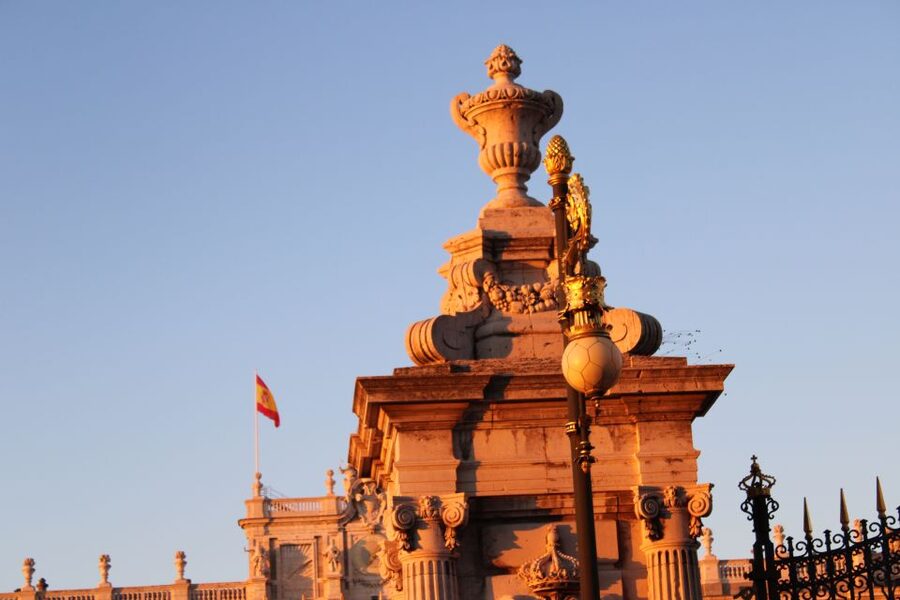
Reviewed · ROYAL PALACE OF MADRID TOURS
Madrid: Royal Palace Private Tour with Entry Ticket
Madrid’s Royal Palace is at its best when someone helps you read the rooms. This tour takes you through Carlos III’s apartments, the ornate Throne Room, and a chamber covered in porcelain, while explaining how royal taste changed over the centuries. You get the grand interiors without wasting time at the ticket line.
I like the small-group format, limited to four people, and the chance to ask questions as you go. I also like the guide’s personal touch: Rubén has helped visitors with mobility needs, answered questions about daily life in Madrid, and suggested wheelchair-friendly restaurants.
The main consideration is time. Two hours gives you a clear introduction, not a full palace study. The Royal Armory may also be closed for repairs, and palace hours can change, so check before setting your plans in stone.
Key points at a glance

- Carlos III’s royal rooms: See the apartments of the king known as the Illustrated King, including highly finished stucco and Rococo decoration.
- A porcelain-covered room: One of the tour’s most unusual sights, and a good example of the palace’s lavish interior design.
- A guide-led palace visit: Learn about royal power, Madrid, mythological symbols, furniture, clocks, jewelry, and artwork as you walk.
- Skip-the-line entry: Your ticket is included, which matters at a major sight where waiting can eat into a short visit.
- A genuinely small group: The experience is limited to four participants, while the listed price covers a group of up to two.
- A flexible finish: The guided portion ends near the Royal Armory, which you can visit on your own if it is open.
Why the Royal Palace is worth a guided visit

Madrid’s palace is not just a large parade of gold, mirrors, and polished floors. It is a record of changing monarchs and changing tastes. The building’s rooms show how Spanish rulers used decoration to project wealth, order, military strength, and ties to the rest of Europe.
That can be hard to grasp if you walk through alone. You may notice a chandelier or a painted ceiling, but miss why one room feels Italian, another French, and another more restrained. A good guide gives those details a place in the larger story of Madrid and the Spanish monarchy.
This tour is built around that kind of explanation. You walk rather than sit through a formal lecture, and the guide can pause for questions. With no more than four people, you should have a better chance to hear clearly and look closely than you would in a large group.
The tour lasts two hours. That is enough for a strong first visit, especially if the palace is one stop among several in Madrid. It is not enough to inspect every object or spend long periods in every room. I see that as a useful tradeoff for most visitors. The palace can become tiring when every stop is treated as equally important.
More Royal Palace of Madrid Tours:
- Madrid: Royal Palace Expert Guided Tour with Skip-the-Line
★ 4.7 · 6,986 reviews - Madrid Essential: Historic Center, Plaza Mayor & Royal Palace
★ 5.0 · 6,416 reviews - Madrid: Royal Palace Skip-the-line Guided Tour
★ 4.9 · 3,146 reviews
Meeting at Plaza de la Armería
You meet next to the San Peter statue in Plaza de la Armería. Look for the guide carrying a light blue umbrella. This is a clear meeting point, but give yourself enough time to locate the statue and find the guide before the start.
The guide takes you inside with the included entry ticket. Since the tour includes skip-the-ticket-line access, you avoid spending part of your visit waiting to buy admission. That does not mean every security or entrance procedure disappears, but it makes the arrival more efficient.
The experience is offered in English or Spanish. Rubén is the guide most often associated with this booking, and the feedback about his work is especially strong. He is described as attentive, friendly, and careful about palace rules. One group with a wheelchair user found his early arrival and practical help particularly useful.
That detail matters. Accessibility is listed as available, but grand historic buildings can still require patience and planning. If someone in your party uses a wheelchair, tell the provider what you need when booking and ask about the current route. Rubén has helped a group enjoy the visit at a comfortable pace, but the exact conditions inside can change.
The first rooms: decoration with a purpose

Once inside, expect a succession of formal spaces filled with paintings, wall hangings, jewelry, clocks, stucco work, and furniture. The point is not simply to count expensive objects. Your guide helps connect the decoration to royal life and political image-making.
My favorite part of a guided palace visit is learning how to compare rooms. Look at the materials, color, and level of ornament. A room filled with elaborate stucco and bright finishes tells you something different from one dominated by neoclassical lines or French furniture.
The palace’s decoration was not completed in one period. Charles III shaped much of the main floor, while Charles IV and Ferdinand VII added neoclassical groups and French furnishings. A later renovation under Alfonso XII in 1879 helped create the historical appearance seen today.
Those dates are more useful when you can see the changes around you. Instead of hearing a long list of monarchs, you watch royal fashion shift from ornate Rococo taste to more orderly neoclassical design, then notice later updates.
The guide also explains the meaning of mythological elements connected with the monarchy. In a royal palace, gods and heroes were not random decoration. They helped associate the ruler with strength, wisdom, victory, or divine favor. That context gives the painted and sculpted details more weight.
Carlos III’s apartments and the palace’s grandest interiors
The apartments of Carlos III are the main prize of this visit. Carlos III is presented here as the Illustrated King, and his rooms preserve decoration directed by Sabatini across the main floor.
The rooms are important not only because they are luxurious. They show a consistent decorative plan. Stuccoed walls, carefully arranged furnishings, and ornate finishes create a controlled setting for court life. Your guide can point out how the decoration works as a whole instead of treating each object as an isolated treasure.
The Throne Room is one of the palace’s most representative interiors. It reflects the exuberant Italian form of Rococo associated with Carlos III. This is the room where the palace’s theatrical side is most obvious, with decoration designed to impress before anyone says a word.
The Gasparini Chamber is another major stop. Its Rococo style is similarly elaborate, and it helps explain the taste of Carlos III better than a basic description of his reign ever could. You may find that the sheer quantity of detail makes it difficult to know where to look first. That is precisely where a guide earns the fee.
The palace also contains an unusual room covered in porcelain. It is the kind of stop that makes the tour memorable because it breaks up the expected sequence of paintings, gilded decoration, and chandeliers. I would pay close attention to the walls and surfaces here. The room is not merely a pretty curiosity. It shows how far royal interiors could go when decoration itself became a display of status.
More Madrid Tours:
- Madrid: Tour Bernabéu Entry Ticket
★ 4.5 · 21,573 reviews - Madrid: Prado Museum Entry Ticket
★ 4.6 · 17,509 reviews - Madrid: “Emociones” Live Flamenco Performance
★ 4.8 · 12,866 reviews - Madrid: Panoramic Route City Tour
★ 4.1 · 12,259 reviews
Watches, artwork, furniture, and chandeliers
The palace’s objects tell another part of the story. You will see pictorial works, luxurious watches, jewelry, and furniture among the room decoration. These details help turn the palace from a series of grand shells into a place where royal households lived, displayed possessions, and received important people.
The collection of French chandeliers in bronze and crystal is particularly useful for understanding later royal taste. They belong to the decorative changes connected with Charles IV and Ferdinand VII, when French furniture and neoclassical design became more important.
Do not rush past the ceilings and walls while focusing only on portable objects. The stucco work is one of the palace’s key visual features, especially in Carlos III’s apartments. Raised decoration can be easy to overlook in a crowded room, but it often explains the style more clearly than a small artifact does.
A small group helps here. If the guide is explaining a clock or a decorative panel, you can ask for a moment to look at it. Rubén has been praised for finding quieter gaps between larger groups, giving people room to examine details and hear more of the explanation.
That does not guarantee an empty room. The palace is a major Madrid sight, and other groups may be moving through the same spaces. The advantage is that your guide can help you use the available openings instead of delivering every explanation while people press around you.
The Royal Armory and the tour’s finishing point
The guided route finishes in the courtyard near the Royal Armory. The armory is described as one of Europe’s most important collections, connected with the Habsburgs and first installed near the old Alcázar by Philip II. It moved to the current pavilion in 1891.
If it is open, you can visit it on your own after the guided portion. That arrangement gives you flexibility. You can continue looking at armor and related objects if you still have energy, or stop after two hours if the palace has filled your attention.
There is one important warning: the Royal Armory is sometimes closed for repairs. Do not book this tour solely because you expect guaranteed access to that collection. The palace tour remains the main product, and the armory is an optional extra at the end.
This is also a sensible point to ask your guide any final questions. The visit has taken you from royal decoration to military history, from Carlos III’s apartments to the broader story of Madrid. If you want more time with the armory, ask how to make the most of it before separating.
What $211 means for the value
The listed price is $211 for a group of up to two people. For two people, that works out to $105.50 each. That is not the cheapest way to enter the palace, but you are paying for a private or very small-group guide, included admission, and a more personal pace.
For a couple who wants context and does not enjoy large tours, the price can make sense. You are not simply buying a ticket. You are buying two hours of focused attention in a building where the decoration can be overwhelming without direction.
The value is less convincing if you are happy to read labels, use your own guidebook, and move at your own speed. You should also be clear about the group arrangement. The price is stated for up to two people, while the activity is described as limited to four participants. If you are a group of three or four, confirm the final price and setup before booking.
The reserve-now, pay-later option and free cancellation up to 24 hours before the tour add useful flexibility. Palace hours can change, so flexibility is practical here rather than just a nice extra.
Who will enjoy this palace tour most
I would choose this experience for:
- A couple wanting a private-feeling introduction to the palace.
- First-time visitors who want the monarchy and Madrid explained in plain language.
- Anyone who prefers questions and conversation over a large scripted group.
- Visitors interested in architecture, royal furniture, clocks, porcelain, or decorative arts.
- A group that needs a guide willing to adjust the pace for a wheelchair user.
- People with only two hours who want the major interiors without spending time arranging admission.
I would think twice if you want a long, detailed study of every collection. The tour is compact, and the Royal Armory is not guaranteed to be open. You may prefer a self-guided visit if you want to linger for a long time in one room or return to a favorite detail.
Families and mixed-interest groups may also find the format useful, since a live guide can answer different questions. Still, the supplied information does not promise a children’s program, so do not assume the commentary is designed specifically for young visitors.
Practical tips for a smoother visit
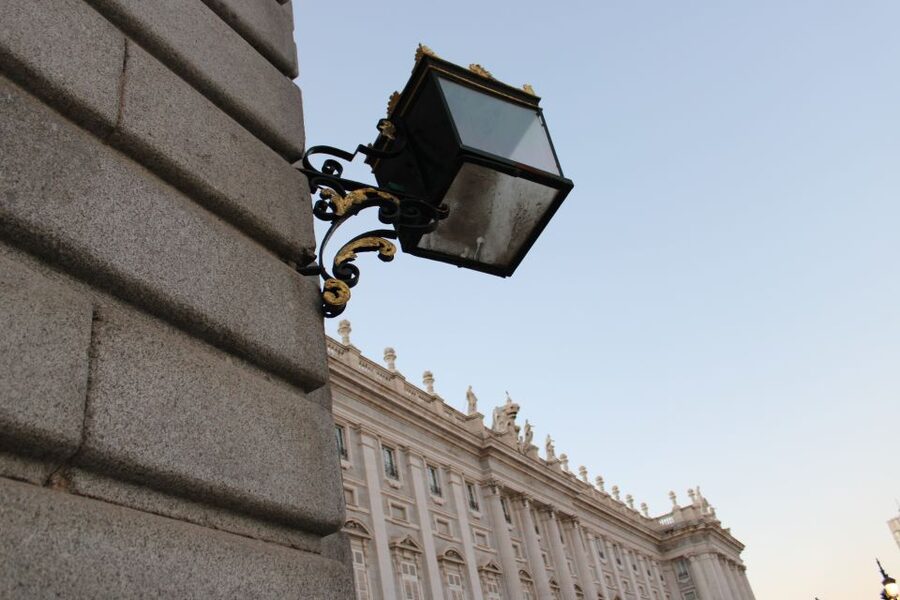
Meet at the San Peter statue in Plaza de la Armería and look for the light blue umbrella. I would arrive early enough to orient yourself, especially if you have mobility needs or are unfamiliar with the plaza.
Wear shoes suited to two hours of walking and standing. The tour is wheelchair accessible, but historic palace routes and temporary closures can change. Ask about the current path in advance if access is important for your party.
Keep the Royal Armory as a possible extra, not a fixed part of the plan. Repairs can close it, and palace opening hours can change. If seeing the armory is essential, verify its status before the day of your visit.
If you are hoping for Rubén, request him when possible. His approach has been praised for clear explanations, friendly answers, respect for palace rules, and thoughtful help with a wheelchair user. A particular guide cannot always be guaranteed, but asking is sensible.
FAQ
How long does the Royal Palace tour last?
The guided tour lasts two hours.
What is included in the price?
Entry tickets to Madrid’s Royal Palace and a guide are included.
Where do I meet the guide?
Meet next to the San Peter statue in Plaza de la Armería. The guide will have a light blue umbrella.
Is the tour offered in English?
Yes. The live tour is available in English and Spanish.
How many people can join the tour?
The experience is described as a small group limited to four participants. The listed price covers a group of up to two people.
Can I visit the Royal Armory?
The guided tour ends near the Royal Armory, and you can visit it on your own if you wish. It is sometimes closed for repairs, so access is not guaranteed.
Should you book this Royal Palace tour?
Book it if you want the palace explained rather than simply photographed. The strongest reasons are the small group, included skip-the-line ticket, focus on Carlos III’s rooms, and the chance to ask a guide about details that are easy to miss.
I would especially consider it for a couple, a first visit, or anyone traveling with a wheelchair user who wants attentive help. Rubén appears to be an excellent choice when available, particularly if you value patient answers and practical Madrid advice.
Skip it if you prefer complete independence, want to spend most of the day in the palace, or are mainly booking for the Royal Armory. For everyone else, two focused hours provide a useful, well-paced introduction to one of Madrid’s most impressive interiors.
Just added around Madrid
- From Madrid: Parque Warner Beach Water Park & Transport★ 3.9 · 14 reviews
- Madrid Wine Tasting, Flamenco Class and Pub Crawl★ 4.5 · 6 reviews
- Visit the National Archaeological Museum in Madrid★ 4.4 · 6 reviews
- Virtual Reality Experience Fun And Tickets & Imageen★ 5.0 · 12 reviews
- Visit to the Prado Museum★ 4.9 · 6 reviews
- Tuk Tuk Tour with Wine Test in Madrid★ 3.8 · 6 reviews
- Tuktuk historical tour of Madrid 1 Hr in a fun and original way★ 3.7 · 3 reviews
- Prado Museum VIP tour with an art Expert, tickets included★ 5.0 · 11 reviews
Royal Palace of Madrid Tours, compared.
Royal Palace Expert Guided Tour with Skip-the-Line
Read our review →
Madrid Old Town & Royal Palace Walking Tour Skip the Line Ticket
Read our review →
Royal Palace Guided Tour with Skip the Line Ticket
Read our review →
Royal Palace & Prado Museum Skip the Line Guided Tour
Read our review →
Guided Tour of the Royal Palace with Fast Access
Read our review →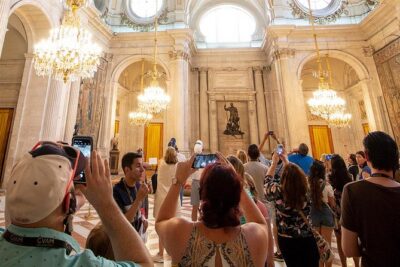
Royal Palace Expert Guided Tour with Optional Tapas
Read our review →Browse the lists this tour appears in