
Reviewed · ROYAL PALACE OF MADRID TOURS
Madrid: Guided Visit to the Royal Palace
Madrid’s Royal Palace is a grand, working monument to Spain’s monarchy, with marble stairways, painted ceilings, royal apartments, and a throne room made for ceremony. This 1.5-hour tour takes you through the palace’s most important rooms and adds the political and personal stories that help the decoration make sense.
I like the separate entrance, which can save you from the palace’s longer public queue, and I like the chance to see major rooms with a guide instead of wandering past them without context. The small groups reported on some departures, including one group of eight, can also make it easier to hear and ask questions.
The main drawback is time. Ninety minutes is brisk for a palace with more than 300 rooms, and bilingual departures may move quickly. You must also meet away from the palace entrance, so allow time to find Isabel II Square and the guide’s white umbrella.
Key points
- The meeting point is Isabel II Square: You walk from the statue to a separate palace entrance with the group.
- The tour covers the ceremonial highlights: Expect the grand staircase, reception rooms, royal apartments, banqueting hall, chapel, porcelain room, and throne room.
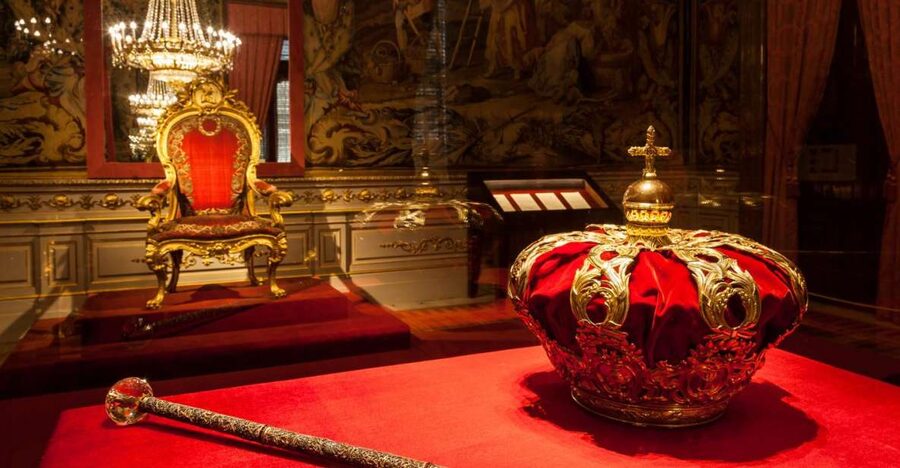
- The throne room is the visual high point: Giovanni Battista Tiepolo painted its ornate ceiling.
- Skip-the-line entry has real value: It helps avoid standing in the regular entrance queue.
- English and Spanish tours are offered: In exceptional cases, a tour may be bilingual.
- Plan for palace rules: Large bags go in lockers, food and drinks are not allowed, and a one-euro coin may be needed for the locker.
Why the Royal Palace is worth your morning or afternoon
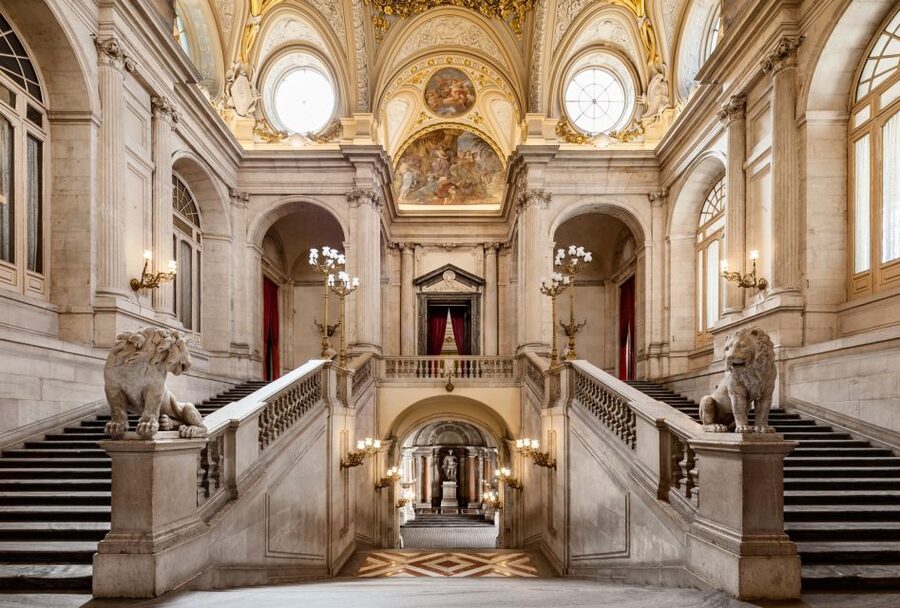
The Royal Palace of Madrid is not simply a large old residence. It is the official residence of Spain’s kings, although the royal family does not use every room as an everyday home. The building is also a setting for state receptions, formal meetings, ceremonies, and royal display.
I find the palace most rewarding when you pay attention to how each room was designed to communicate power. The marble, mahogany, frescoes, porcelain, tapestries, and gilded decoration were not chosen at random. Together, they told diplomats and visitors that Spain’s monarchy had money, artistic taste, and authority.
This guided visit focuses on the grand rooms open to the public. You will not see all of the palace’s more than 300 rooms, so it is best to think of the tour as a carefully chosen introduction rather than a complete inspection of the building.
More Royal Palace of Madrid Tours:
- Madrid: Royal Palace Expert Guided Tour with Skip-the-Line
★ 4.7 · 6,986 reviews - Madrid Essential: Historic Center, Plaza Mayor & Royal Palace
★ 5.0 · 6,416 reviews - Madrid: Royal Palace Skip-the-line Guided Tour
★ 4.9 · 3,146 reviews
Meeting at Isabel II Square

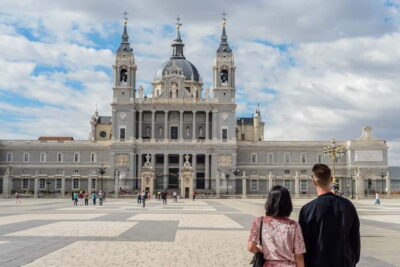
The tour starts at Isabel II Square, near the statue of Isabel II at Plaza de Isabel II, 5. This is not the same place as the Royal Palace entrance, an important detail that can easily cause confusion.
Look for a guide carrying a white umbrella. Give yourself extra time to find the square, especially if you are unfamiliar with central Madrid or arriving by taxi. One past departure had a long wait in the cold because of confusion at the entrance, so I would arrive early rather than cut it close.
The square is a practical place to gather because it is near the palace, but you still need to walk with the group to the side entrance. Do not head straight to the main palace entrance and expect the guide to be there.
At the end, the tour returns to the meeting point. That makes it easy to continue around central Madrid, though you should not plan another tightly timed activity immediately afterward if you expect delays at security or the start.
The separate entrance and palace security
One of the strongest practical reasons to book this tour is the separate entrance. The palace is a popular sight, and avoiding the standard line can matter, particularly during busy periods such as Holy Week.
Skip-the-line access does not mean skipping all security. You still pass through the palace’s security procedures, and large bags must be left in the locker room next to the Hall. Food and drinks are not permitted inside.
A small but useful tip: a one-euro coin may be required for the lockers, with the coin refunded when you collect your belongings. Bring one if you can. It is the sort of minor detail that prevents an unnecessary scramble before the tour begins.
The palace is wheelchair accessible, but the route includes a notable staircase and several steps. If you are visiting with a pram or trolley, expect some awkwardness. Ask the tour provider for current route details if stairs are a concern.
Climbing Sabatini’s grand staircase
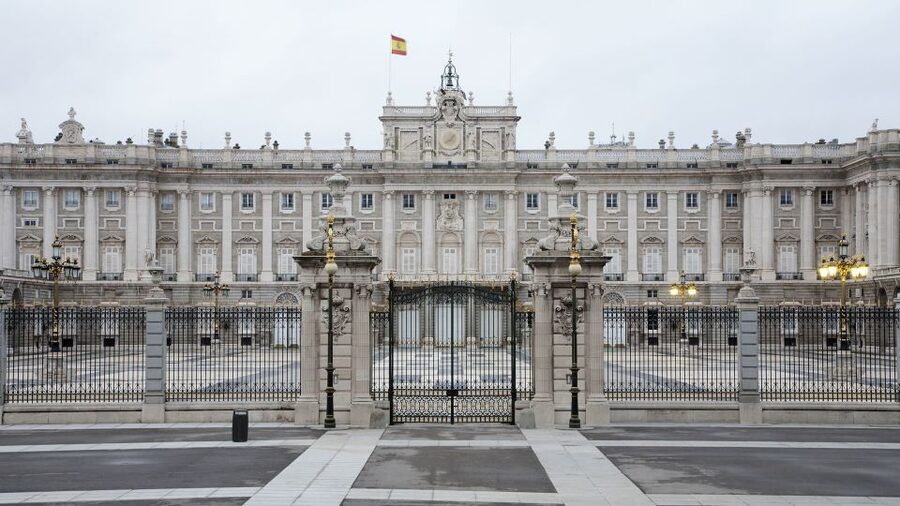
The first major interior moment is the staircase designed by Francesco Sabatini. It gives the tour an immediate sense of scale. Rather than entering a modest historic house, you move into a royal setting built for formal arrivals and public ceremony.
The staircase is made to be seen from below and above. Its size helped turn a simple act, climbing to the reception rooms, into a statement of rank. Your guide can connect this architectural choice with the way kings and queens received ambassadors and important visitors.
This is also where a guide adds real value. Without explanation, you may notice marble, columns, and a high ceiling. With context, you begin to understand why the route from entrance to reception room mattered and how palace design shaped royal theater.
Families should note that the staircase is not the easiest part of the visit for small children or prams. The palace is visually impressive, but it is not arranged like a modern museum with a simple, level path.
More Madrid Tours:
- Madrid: Tour Bernabéu Entry Ticket
★ 4.5 · 21,573 reviews - Madrid: Prado Museum Entry Ticket
★ 4.6 · 17,509 reviews - Madrid: “Emociones” Live Flamenco Performance
★ 4.8 · 12,866 reviews - Madrid: Panoramic Route City Tour
★ 4.1 · 12,259 reviews
Reception rooms and the business of monarchy

The tour continues through rooms used for official meetings and state functions. One reception room is associated with international meetings hosted by King Felipe VI, giving you a link between the historic palace and Spain’s current monarchy.
This is one of the more useful parts of the tour because it shows that the palace is not only a preserved relic. Some rooms still have a formal public role. The polished surfaces and carefully arranged furnishings are part of an ongoing national institution, not just old decoration behind a rope.
Your guide will also explain the succession of Spanish monarchs and their contributions to the country’s history. One of the tour’s strongest features is this connection between rooms and rulers. Instead of memorizing names, you can see how different reigns left their mark through changes in style, decoration, and use.
The quality of the guide matters here. Guides named Pacho and Tamar have led departures associated with this experience, though your guide may be different. The best guides keep the political background clear and add small details without drowning you in dates.
Royal apartments and private rooms

The route includes private rooms associated with the king and queen. These spaces feel different from the huge state rooms because they show how royal life was organized behind the public ceremonies.
Do not expect a full tour of every private chamber. The palace is too large for that within 90 minutes. Instead, you get selected rooms that help you compare private royal life with the grand spaces used for entertaining and government.
The contrast is useful. A banqueting hall was designed to impress a crowd, while a private room had a more personal purpose. The guide’s explanations help you notice furniture, wall decoration, and the changing role of the monarch rather than treating every room as another ornate interior.
The pace can become fast at this point. One 90-minute departure felt rushed because the guide had to explain the material in both Spanish and English. If your tour is bilingual, expect less time for questions and a quicker walk through the rooms.
The great banqueting hall
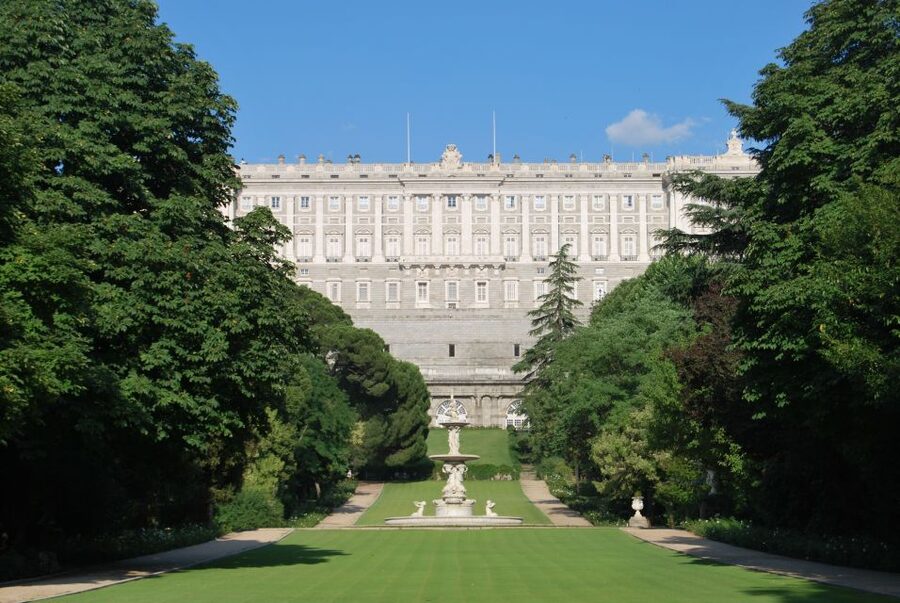
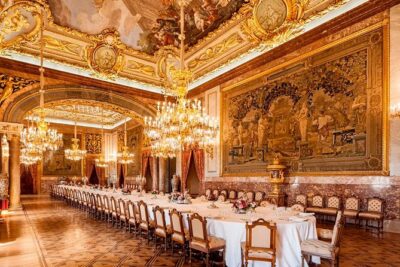
The great banqueting hall is among the palace’s largest and most ceremonial spaces. It was designed for formal meals and major occasions, so the room’s scale matters as much as its individual objects.
Look upward and around you rather than focusing only on the table. The decoration, ceiling, doors, windows, and wall treatments work together to make the room feel like a stage for monarchy. This is the kind of place where a guide can explain the order of a royal dinner and why seating, access, and decoration carried political meaning.
The hall can also be crowded. On especially busy days, you may need to stay close to your group and move when instructed. A smaller group is easier to follow, but group size can vary.
The porcelain room and royal chapel
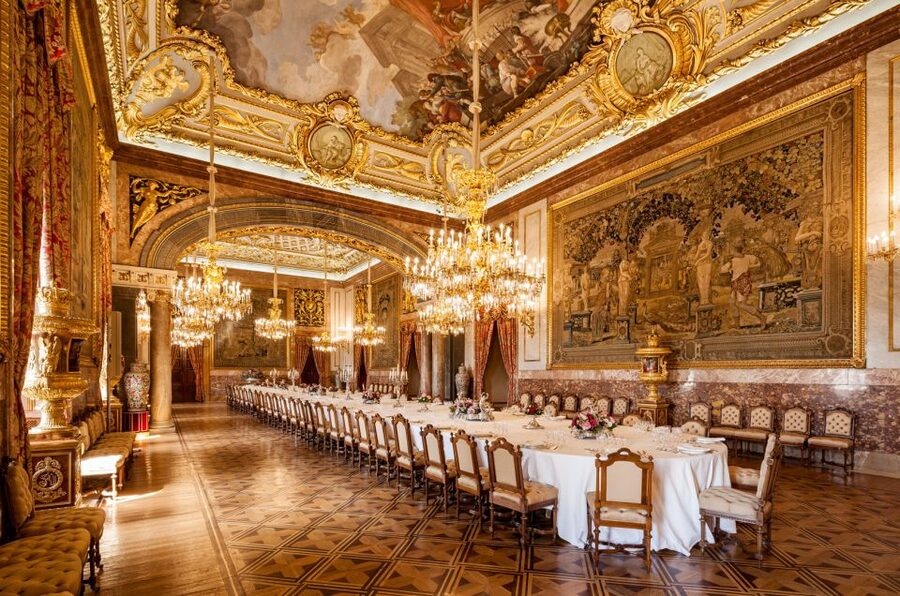
The porcelain room brings a change in mood. Its decorative surfaces are more intimate and highly detailed than the broad ceremonial rooms. It rewards a slower look, but the tour’s fixed duration may not allow much lingering.
The royal chapel contains an important fresco by Corrado Giaquinto. This is a good example of why the palace works best with a guide. You can see the painting on your own, but the artist, setting, and religious role of the chapel give it greater meaning.
The chapel also reminds you that the palace served spiritual as well as political needs. Royal life was built around ceremony, and religious observance formed part of that structure.
The interiors throughout the palace include frescoes by well-known artists, a collection of stringed instruments, tapestries, mahogany doors and windows, and extensive marble work. The tour does not treat these as separate museum displays. You encounter them as parts of a functioning royal residence.
The throne room and Tiepolo’s ceiling
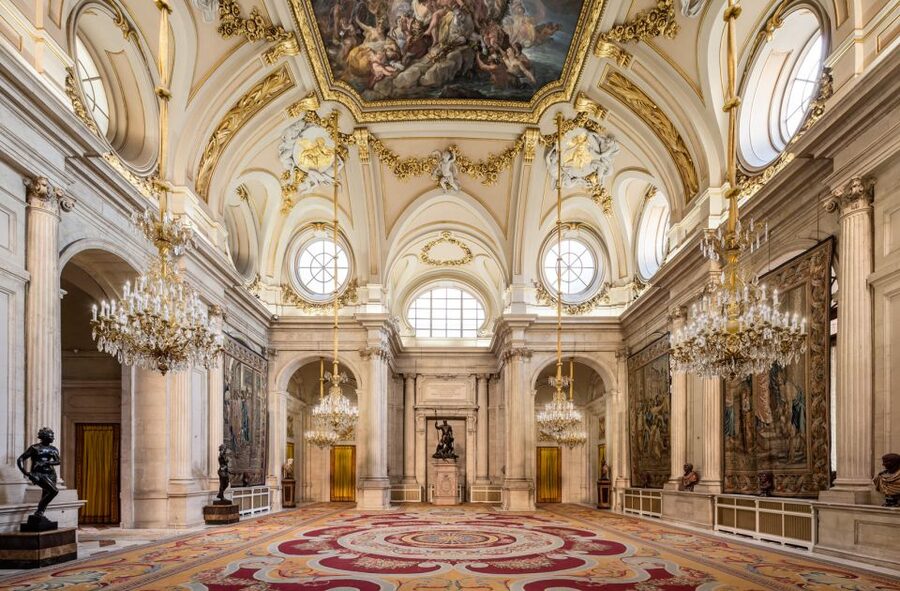
The throne room is the tour’s grandest stop. Its ceiling was painted by Giovanni Battista Tiepolo, and it is worth tilting your head back for a careful look. The painting is not a small framed work. It dominates the room and turns the ceiling into part of the ceremony.
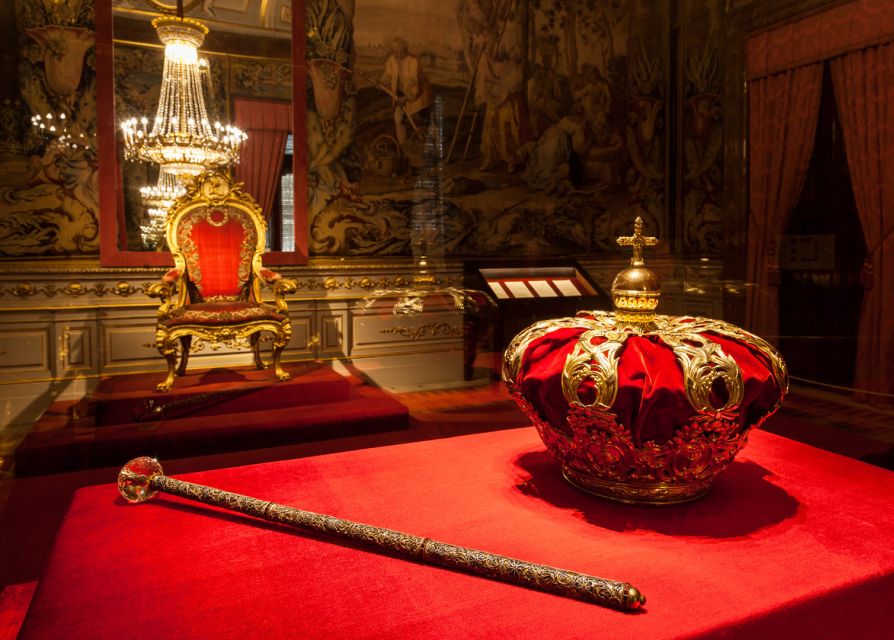
The throne room’s value comes from the whole setting: the ceiling, throne area, marble surfaces, doors, windows, and formal arrangement. The room was designed to make authority visible. Even if you have seen grand European palaces before, the combination of scale and decoration gives this chamber a clear purpose.
This is also where expectations matter. Some people accustomed to visiting many palaces and fortresses may find the Royal Palace less surprising than expected, especially because only selected rooms are open. I would not book the tour expecting an empty, untouched residence or access to every corner.
If you enjoy art, architecture, court ceremony, and royal politics, the throne room should justify the visit. If you want a quiet, complete look at domestic royal life, the short route may feel limited.
How much does the $40 price buy you?
At $40 per person, this is not the cheapest way to enter the Royal Palace. You are paying for admission, a live guide, and access through a separate entrance, not just for a ticket.
I think the price makes the most sense if you value context and want to avoid the regular queue. The building contains too many rooms, artists, monarchs, and symbols for a quick self-guided visit to explain everything. A good guide can turn decorative detail into a story about how the Spanish monarchy worked.
The value is less clear if you prefer to wander slowly or have already visited several European palaces. The 1.5-hour limit keeps the tour focused, but it also means you cannot pause for long at every painting or room.
Small groups improve the calculation. One reported group had only eight people, and another departure ended up with a guide and one participant. Group size is not guaranteed, but a smaller party makes it easier to hear and ask questions.
The tour allows free cancellation up to 24 hours before the start, and you can reserve now and pay later. Those terms help if your Madrid schedule is still changing, but the main value question remains simple: do you want a guided overview and queue advantage, or more time on your own?
Who should book this palace visit?
I would choose this tour for a first visit to the Royal Palace, especially if you have limited time in Madrid and want the major rooms explained in a clear sequence. It also suits anyone who dislikes standing in entrance lines or finds royal history difficult to follow without a human guide.
It is a good fit for art and architecture fans who want to hear about Tiepolo, Giaquinto, frescoes, instruments, tapestries, and palace design while seeing the rooms in person. The guide can help you connect the objects rather than treating them as isolated decorations.
Families may appreciate the compact length, but the stairs and formal pace require some planning. Visitors with prams should be ready for steps, and anyone carrying a large bag should expect to use the lockers.
I would be more cautious if you have already seen many major palaces in Spain and Portugal and are looking for a completely different experience. The Royal Palace is impressive, but the public route is limited, and the visit can feel hurried.
Practical tips for a smoother visit
- Arrive early at Isabel II Square, not at the palace door.
- Look for the guide carrying a white umbrella.
- Bring a one-euro coin for the locker, even though it should be returned.
- Leave food and drinks behind.
- Wear shoes suitable for stairs and standing.
- Stay near the guide in crowded rooms.
- If you need English, confirm that you are joining the English departure.
- Treat 90 minutes as a highlights tour, not a full palace exploration.
- If you have time afterward, consider visiting the armory building. One past participant found it nearly as interesting as the palace itself, though it is not part of this guided route.
Should you book the Royal Palace guided tour?
Book it if you want the palace’s key rooms, royal stories, and skip-the-line access in one organized visit. The strongest reasons are the grand staircase, royal chapel, porcelain room, banqueting hall, and Tiepolo’s throne room, along with the guide’s explanation of how the monarchy used these spaces.
Skip it if you want to explore at your own pace, see far more than the public highlights, or have already visited several similar palaces. For most first-time visitors, though, the guide and separate entrance make the $40 price reasonable, as long as you accept the brisk pace and take the meeting-point instructions seriously.
FAQ
How long does the Royal Palace guided tour last?
The tour lasts 1.5 hours, or 90 minutes. Check availability for the exact starting time.
Where does the tour meet?
Meet at Isabel II Square, near the Isabel II statue, at Plaza de Isabel II, 5, 28013 Madrid. The guide carries a white umbrella.
Does the tour start at the Royal Palace entrance?
No. The meeting point is away from the palace entrance. The guide takes the group to a separate entrance.
Is skip-the-line entry included?
Yes. The activity includes access through a separate entrance intended to avoid the regular line.
Which languages are available?
Tours are offered in English and Spanish. In exceptional cases, a tour may be bilingual.
Is the tour wheelchair accessible?
Yes, the activity is listed as wheelchair accessible. The route also includes stairs, so confirm current access details if you have specific mobility needs.
Can I bring food or drinks inside?
No. Food and drinks are not permitted inside the Royal Palace.
What happens to large bags?
Large items and bags must be left in the locker room next to the Hall. A one-euro coin may be needed for the locker and is refunded when you leave.
Just added around Madrid
- Visit the National Archaeological Museum in Madrid★ 4.4 · 6 reviews
- From Madrid: Parque Warner Beach Water Park & Transport★ 3.9 · 14 reviews
- Madrid Wine Tasting, Flamenco Class and Pub Crawl★ 4.5 · 6 reviews
- Virtual Reality Experience Fun And Tickets & Imageen★ 5.0 · 12 reviews
- Visit to the Prado Museum★ 4.9 · 6 reviews
- Tuk Tuk Tour with Wine Test in Madrid★ 3.8 · 6 reviews
- Tuktuk historical tour of Madrid 1 Hr in a fun and original way★ 3.7 · 3 reviews
- Prado Museum VIP tour with an art Expert, tickets included★ 5.0 · 11 reviews
Royal Palace of Madrid Tours, compared.
Royal Palace Expert Guided Tour with Skip-the-Line
Read our review →
Madrid Old Town & Royal Palace Walking Tour Skip the Line Ticket
Read our review →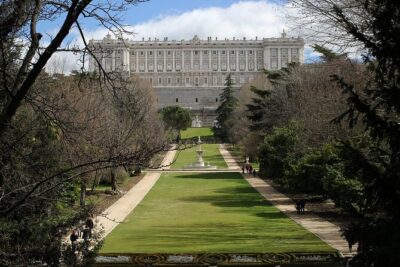
Royal Palace Guided Tour with Skip the Line Ticket
Read our review →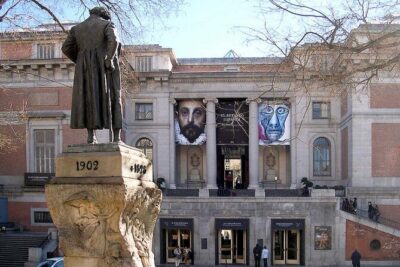
Royal Palace & Prado Museum Skip the Line Guided Tour
Read our review →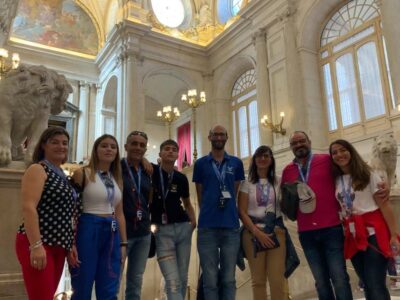
Guided Tour of the Royal Palace with Fast Access
Read our review →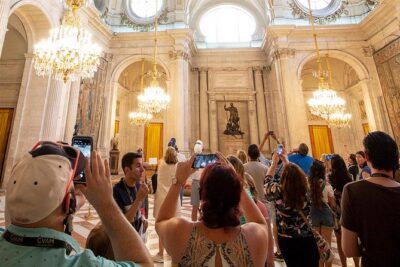
Royal Palace Expert Guided Tour with Optional Tapas
Read our review →Browse the lists this tour appears in