
Reviewed · HISTORICAL TOURS
Madrid City Tour: Culture and History
Madrid’s Habsburg quarter is best understood on foot, where a short walk links royal buildings, medieval squares, churches, and the busy heart of the modern city. This tour follows that story from Puerta del Sol to the Royal Palace, with stops that show how Madrid grew from a medieval town into Spain’s capital.
I like the route’s focus on architecture and local context, not just a checklist of sights. I also like that the tour includes practical advice from a Madrilenian guide, which can help you make better choices for the rest of your stay.
The main consideration is that two hours goes quickly. You see many important places from outside, but entrance fees are not included, and the walking route requires comfortable shoes. The tour also needs at least three participants to run, so check availability before you build your day around it.
Key points
- Starts at the bear statue in Puerta del Sol, an easy meeting point in central Madrid.
- Follows the Habsburg-era center, connecting royal buildings, churches, and old squares.
- Includes the Royal Palace, Royal Theater, Almudena Cathedral, and Plaza de la Villa from the outside.
- Reaches Plaza de la Paja, a key medieval square with a different feel from the grand royal streets.
- Uses a route designed by Madrilenian architects, with attention to history and building design.
- Runs in Spanish or German, with local tips included in the two-hour walk.
Starting at the bear statue in Puerta del Sol
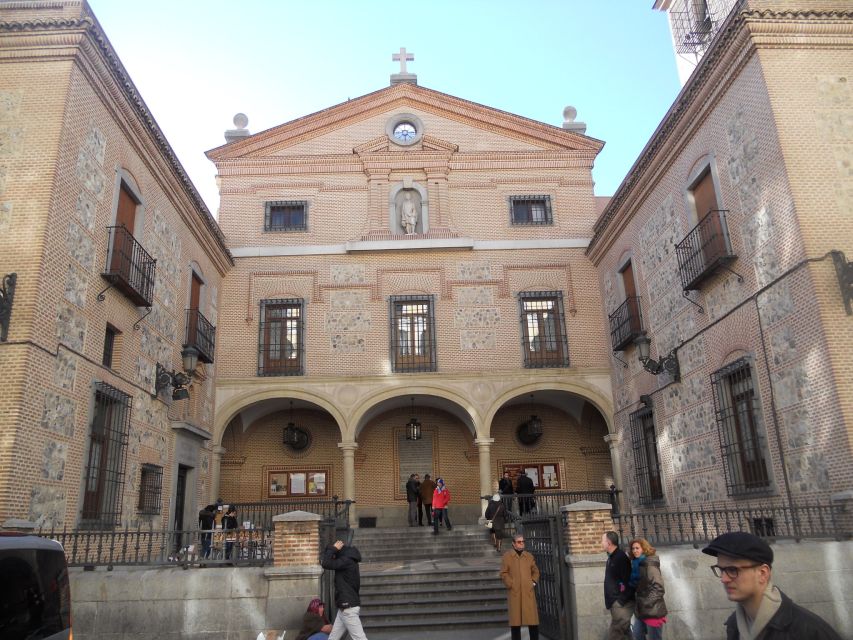
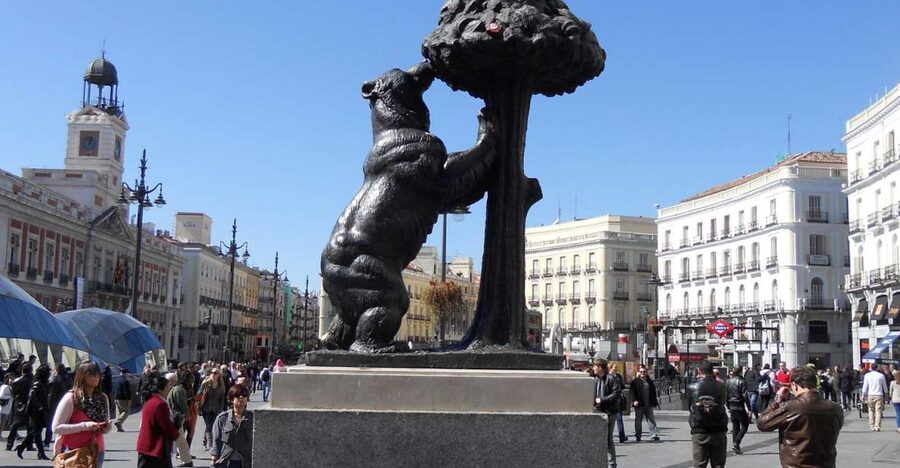
Puerta del Sol is the right place to begin a Madrid history walk. It is one of the city’s central gathering points, and the tour uses the familiar bear statue as its meeting place. Look for the statue of the bear beside the madroño tree, a symbol associated with Madrid.
You begin here with the city’s past and present in the same view. Sol is not a quiet historic square. It is a central urban space, so you get an immediate sense of modern Madrid before turning toward the older streets of the Habsburg quarter.
That contrast gives the tour a useful shape. Madrid is not presented as a museum frozen in time. You start in the active capital and then follow the streets into the royal and medieval center.
Your guide speaks Spanish or German. If you need a tour in English, this is not the right choice based on the listed languages. The German option is especially useful for visitors who prefer detailed explanations in German rather than relying on a multilingual group tour.
More History Tours in Madrid:
- Madrid Essential: Historic Center, Plaza Mayor & Royal Palace
★ 5.0 · 6,416 reviews - Madrid Historical Tour with Local Guide in Eco Tuk Tuk Private
★ 5.0 · 876 reviews - Madrid Historic Centre Food Tour with Authentic Tapas & Wines
★ 5.0 · 814 reviews
Walking into Habsburg Madrid
The phrase Habsburg Madrid refers to the period when the Habsburg dynasty shaped the city’s politics, buildings, and royal identity. You do not need a specialist’s knowledge to follow the story. The point of the route is to show you how the city’s power was expressed through churches, palaces, theaters, and public squares.
I like this approach because it gives you a reason for each stop. Instead of hearing isolated facts about one building after another, you can see how the central district fits together. The guide explains the historical importance of the buildings and the architectural value of the streets along the way.
The route was designed by Madrilenian architects. That matters because the walk is not simply a line between famous attractions. It takes account of the city’s history, culture, and built environment. You should expect the guide to point out details you might otherwise pass without noticing.
This is a walking tour, not a sightseeing bus ride. You need to be ready to cover central streets and squares for two hours. Comfortable shoes are essential, especially if you plan to continue exploring on foot afterward.
San Ginés and the Royal Theater
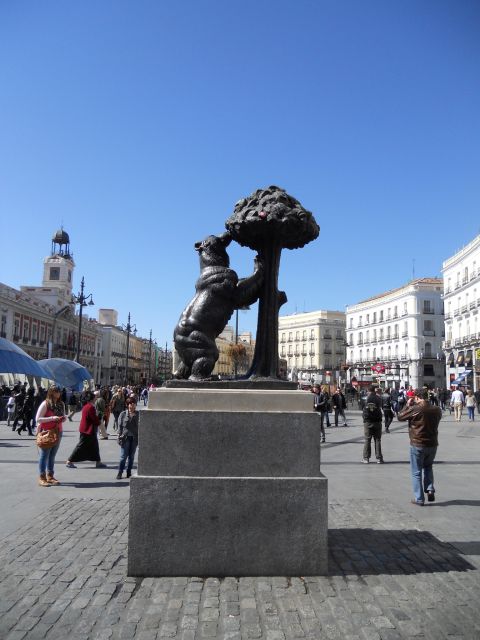
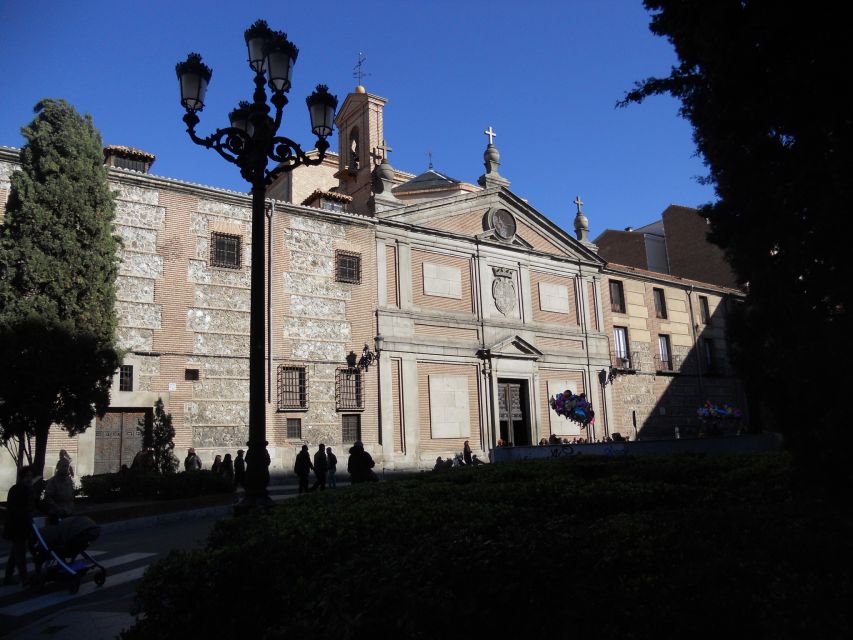
One of the first notable stops is the monastery of San Ginés. The church is near the center of Madrid and adds a religious layer to the route, which otherwise moves toward royal and civic landmarks.
San Ginés helps show how compact the old center can be. A few minutes of walking can take you from the energy of Puerta del Sol to a much older setting. Your guide can connect the monastery to the surrounding streets and explain why religious buildings were such an important part of Madrid’s historic core.
The route then reaches the Royal Theater, one of Madrid’s major cultural buildings. Its location near the Royal Palace is significant. This is an area where royal power, public ceremony, and the performing arts came together.
You should think of this stop as an exterior lesson in the city’s cultural life rather than a theater visit. Entrance fees are not included, and the tour is designed as a sightseeing walk. If you want to see the inside of any attraction, you will need to arrange that separately and allow extra time.
The benefit is efficiency. In a short period, you see the theater in relation to the palace and the surrounding streets. That context can be more useful than visiting each building alone without understanding its place in the city.
The Royal Palace and Almudena Cathedral
The Royal Palace of Madrid is the grandest landmark on the route. From the outside, it gives you a clear sense of royal scale and ceremony. The palace is one of the main reasons this walk works well for a first visit to Madrid, since it places the city’s political and architectural story in one memorable setting.
The tour does not include palace admission. That is important if you want a full interior visit, since you will need a separate ticket and more time. Still, an exterior explanation can help you decide if the palace deserves a return visit during your stay.
Nearby Almudena Cathedral adds another major architectural point. The cathedral and palace form a powerful pair, with religious and royal authority placed close together. Your guide can help you read the relationship between the two buildings instead of treating them as unrelated photo stops.
I find this part of the walk especially useful for orientation. After hearing the story here, you will have a clearer idea of where the royal center fits within Madrid. You may also find it easier to return later for a palace visit, a cathedral visit, or further walks through the surrounding streets.
Because the schedule is only two hours, the guide must keep the group moving. You should expect explanations at key points rather than a long lecture at every building. That pace suits you if you want a strong introduction, but it may feel brisk if you prefer extended time for photographs.
More Madrid Tours:
- Madrid: Tour Bernabéu Entry Ticket
★ 4.5 · 21,573 reviews - Madrid: Prado Museum Entry Ticket
★ 4.6 · 17,509 reviews - Madrid: “Emociones” Live Flamenco Performance
★ 4.8 · 12,866 reviews - Madrid: Panoramic Route City Tour
★ 4.1 · 12,259 reviews
Plaza de la Villa and Madrid’s civic past
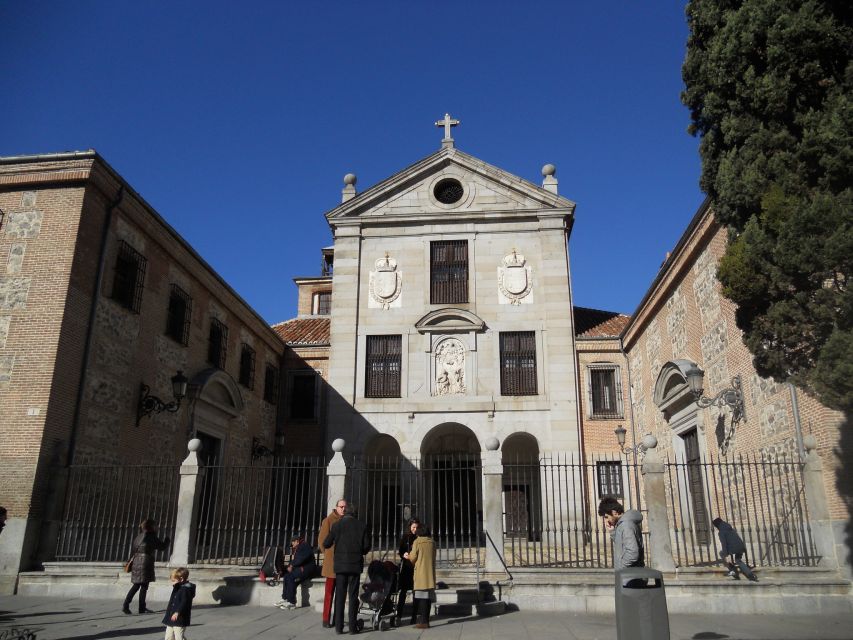
Plaza de la Villa is one of the most attractive historic squares on the route. Its buildings help you see Madrid as a civic center, not just a royal capital. The square has a more contained, old-town character than Puerta del Sol or the broad spaces near the palace.
A guide can make a square like this more meaningful by pointing out its architectural details and explaining how it functioned in the city. Without that context, you might take a quick photograph and move on. With the history in place, the square becomes part of Madrid’s wider development.
This is one of the tour’s strengths: it includes famous landmarks but also gives time to historic spaces that are easy to overlook. The route does not rely only on the biggest names in Madrid. It links grand monuments with smaller places that help explain daily civic life and the city’s older street pattern.
You will not be entering every building on the square. The value comes from the guide’s interpretation and from seeing the buildings in their setting. If your priority is indoor sightseeing, you may want to pair this tour with a separate palace, cathedral, or museum visit.
Plaza de la Paja and the medieval city
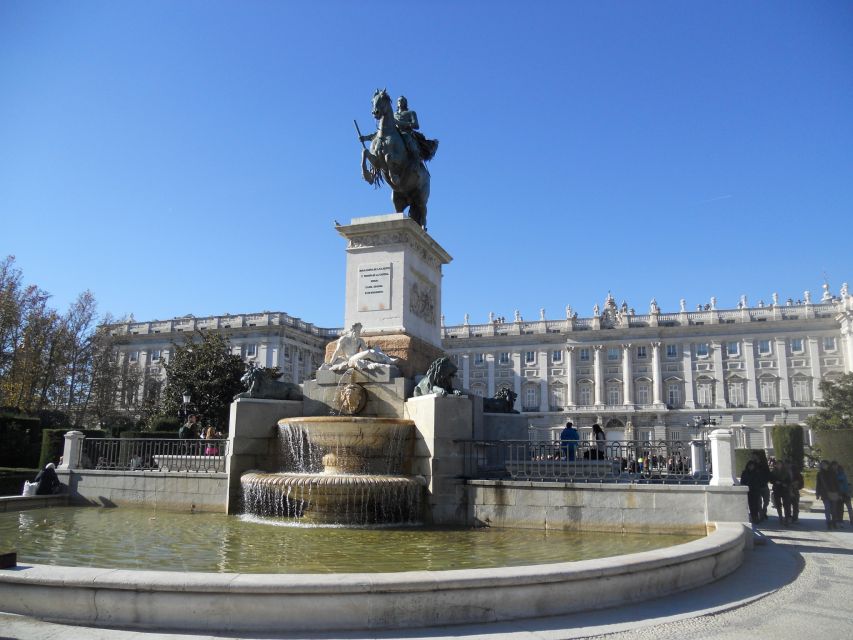
Plaza de la Paja was the most important square in Madrid during medieval times. Its inclusion broadens the story beyond the Habsburg period and shows that the city’s roots reach back well before the royal buildings that dominate many visitors’ itineraries.
This stop helps you picture an earlier Madrid, before the capital’s grand avenues and palace-centered identity took shape. The square offers a useful change of scale and mood after the Royal Palace, Almudena Cathedral, and Royal Theater.
I particularly like the way this part of the route keeps the tour from becoming a parade of royal monuments. Madrid’s history is easier to understand when you see the layers together: medieval commerce and public life, Habsburg power, religious institutions, and the modern capital.
The route’s architectural focus is also useful here. Your guide may draw attention to the shape of the square, the surrounding façades, and the way older public spaces differ from later royal planning. You do not need to memorize dates to benefit from the comparison.
What the guide adds to the walk
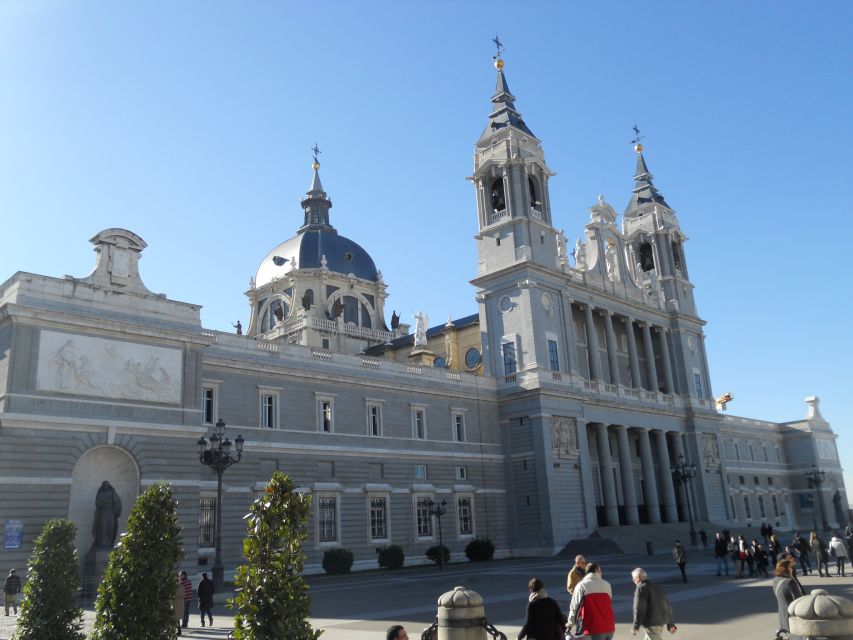
The guide is central to the value of this experience. The route itself is compact enough to follow on a map, but the historical connections are harder to see without explanation. A good guide turns a sequence of buildings into a story about how Madrid changed.
The strongest indication of the guide quality comes from the specific feedback about Jenny. She led a small group on a very rainy day and still made the walk feel warm and informative. That is useful to know because weather can affect a walking tour, especially in winter or during a wet spell.
Other feedback also points to friendly, helpful guiding and personal recommendations. You should make use of that final part of the tour. Ask about places to eat, areas to walk, and how to spend the rest of your time in Madrid. The insider tips are included in the price, and they may be as useful as the formal history.
Group size can vary. The activity requires at least three participants, although a past tour had only two people and still went ahead. Since the current requirement says three, you should confirm that your chosen departure has enough participants before counting on it.
Is $47 a fair price?
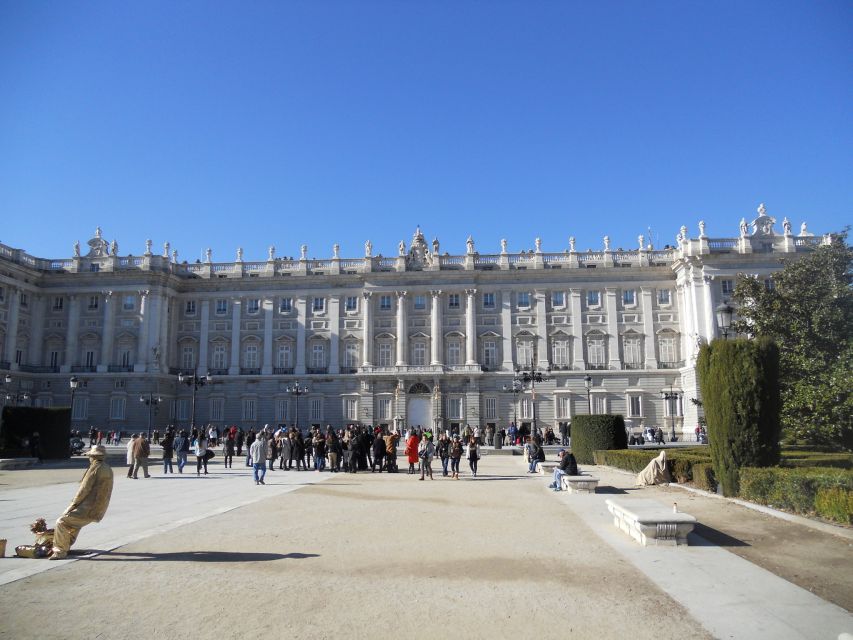
At $47 per person, this is not the cheapest way to see Madrid’s center. You can walk from Puerta del Sol to the palace and several squares without paying for a guide. The question is what you want from those two hours.
For a first visit, the price can be fair if you value a structured introduction and want historical context as you walk. You are paying for the guide, the planned route, and local advice, not for admission to attractions or transportation. There are no transfer costs included because the experience is a walking tour.
The price makes less sense if you already know the Habsburg quarter well or prefer to explore independently with a guidebook. You may also prefer a longer tour if you want detailed time inside the Royal Palace or cathedral. This experience is best viewed as an orientation walk rather than a full-day cultural program.
The two-hour length is part of the value. It leaves room in your schedule for lunch, a museum, or a separate palace visit. I would consider booking it near the start of a Madrid stay, when the guide’s recommendations can shape the rest of your plans.
Who should book this Madrid walk?
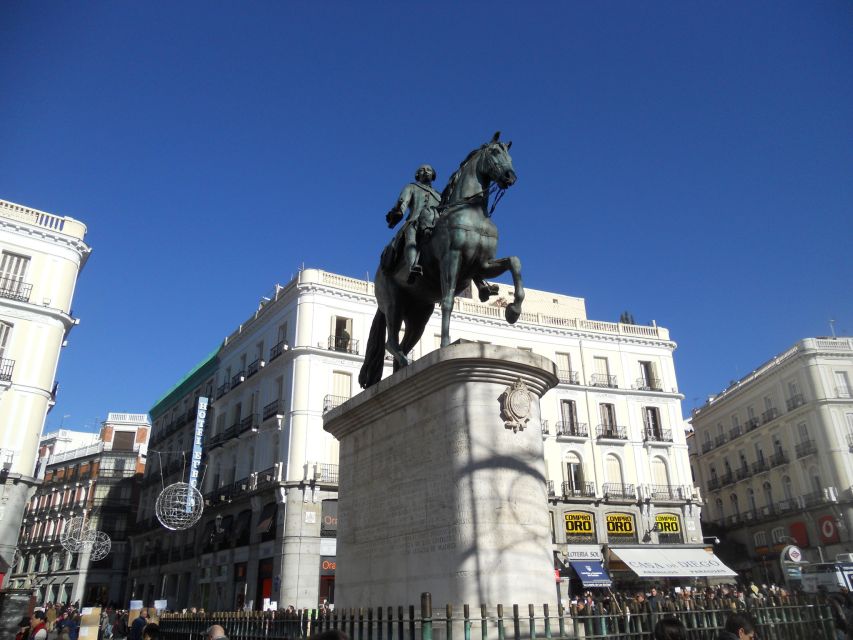
I would choose this tour for a first-time visitor who wants to understand central Madrid quickly. It suits you if you enjoy architecture, public squares, royal history, and short explanations that connect one place to the next.
It is also a good fit for German-speaking visitors, since German is one of the available tour languages. Spanish-speaking visitors can join as well. If you need English, you should choose another experience.
The walk suits couples, solo visitors, and small groups who want a personal introduction rather than a large sightseeing operation. The feedback about a small group and the positive mention of Jenny suggest that intimate guiding can be part of the experience, though you should not assume every departure will have the same size.
You should think twice if walking for two hours is difficult, if you want extensive interior visits, or if your Madrid schedule is so tight that a fixed meeting time creates stress. You should also wear comfortable shoes. This is simple advice, but it matters on Madrid’s central streets.
Practical details before you reserve
You meet at the bear statue by Puerta del Sol. Arrive with enough time to identify the meeting point, since the square can be busy and the tour begins on foot.
The duration is two hours, and starting times vary. Check the available departure when you book. The tour includes a guide and sightseeing, but not entrance fees, transfers, or personal expenses.
Cancellation is free up to 24 hours before the activity for a full refund. You can also reserve now and pay later, which helps if your Madrid plans are still changing. The tour needs a minimum of three participants, so confirm that the departure is operating.
Bring comfortable shoes and dress for the weather. One highly praised walk took place on a rainy Madrid day, but rain can still make any outdoor tour less comfortable. A small umbrella or rain layer is a sensible addition when the forecast looks uncertain.
Should you book it?
Book this tour if you want a short, guided introduction to Habsburg Madrid with the Royal Palace, Almudena Cathedral, Royal Theater, San Ginés, Plaza de la Villa, and Plaza de la Paja in one connected route. The local advice and architect-designed itinerary add value beyond simply following a map.
Skip it if your main goal is entering major attractions, touring in English, or exploring entirely at your own pace. For everyone else, $47 is a reasonable price for a focused two-hour orientation, especially near the beginning of a Madrid visit. Check the language, meeting time, and minimum group requirement, then let the walk give you a useful framework for the city.
FAQ
Where does the Madrid city tour meet?
The meeting point is at the bear statue by Puerta del Sol in Madrid.
How long does the tour last?
The walking tour lasts two hours.
What languages are available?
The live guide speaks Spanish or German.
What landmarks are included?
The route includes Puerta del Sol, the Royal Palace of Madrid, Plaza de la Villa, the monastery of San Ginés, the Royal Theater, Almudena Cathedral, and Plaza de la Paja.
Are entrance fees included?
No. Entrance fees are not included in the activity price.
Are transfers included?
No. Transfers are not included. The experience is a sightseeing walking tour.
What should I bring?
Bring comfortable shoes for the two-hour walking route.
How many participants are needed for the tour to run?
A minimum of three participants is required for the tour to take place.
Just added around Madrid
- Visit the National Archaeological Museum in Madrid★ 4.4 · 6 reviews
- From Madrid: Parque Warner Beach Water Park & Transport★ 3.9 · 14 reviews
- Madrid Wine Tasting, Flamenco Class and Pub Crawl★ 4.5 · 6 reviews
- Virtual Reality Experience Fun And Tickets & Imageen★ 5.0 · 12 reviews
- Visit to the Prado Museum★ 4.9 · 6 reviews
- Tuk Tuk Tour with Wine Test in Madrid★ 3.8 · 6 reviews
- Tuktuk historical tour of Madrid 1 Hr in a fun and original way★ 3.7 · 3 reviews
- Prado Museum VIP tour with an art Expert, tickets included★ 5.0 · 11 reviews
Historical Tours, compared.
Madrid Historical Tour with Local Guide in Eco Tuk Tuk Private
Read our review →
Madrid Historic Centre Food Tour with Authentic Tapas & Wines
Read our review →
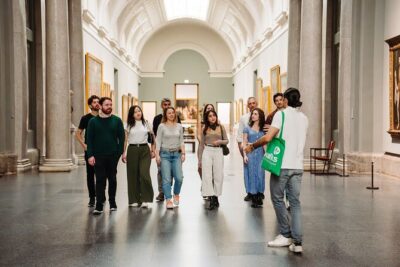
Madrid in a Day Tour:Royal Palace, Historic Center & Prado Museum
Read our review →
Madrid Local’s Tapas Tour Dinner with a side of History
Read our review →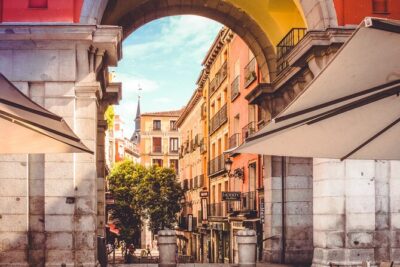
Guided Tour of Madrid of the Austrias and the Historic Center
Read our review →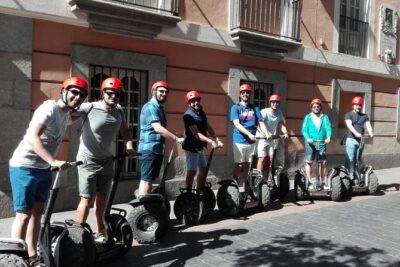
Segway Private Tour in the Historic Center of Madrid
Read our review →
Browse the lists this tour appears in