Reviewed · GUIDED
Guided tour of the Madrid of spies
Madrid once served as a meeting ground for agents, diplomats, informers, and secret negotiators. This two-hour walk follows that world from the former British Embassy to the Neptune Fountain, using ordinary streets and grand hotels to explain how espionage worked during the two world wars.
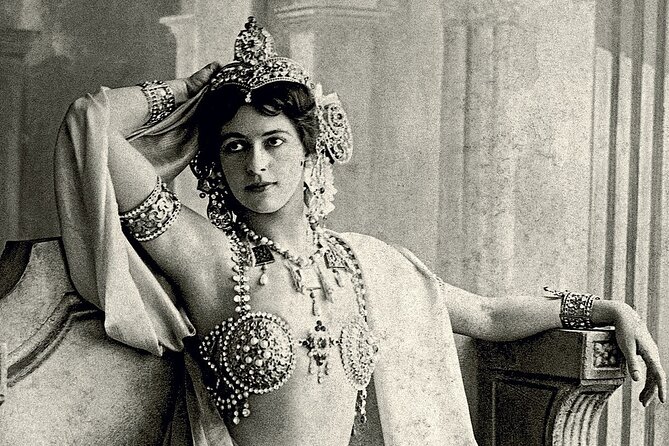
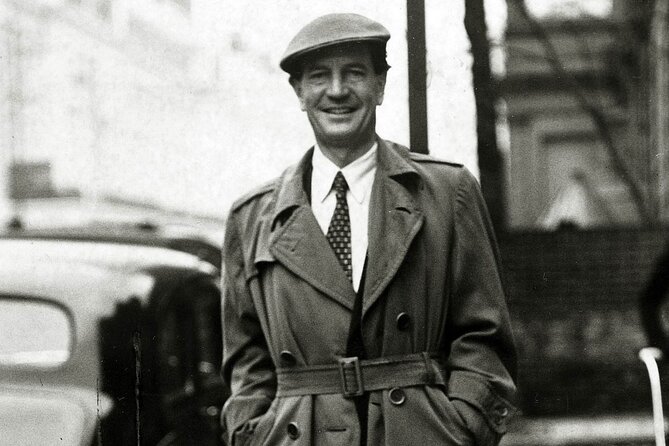
I like the clear route through central Madrid and the chance to hear about figures such as Mata Hari, Garbo, the Countess of Romanones, and Philby. I also like that guide Carlos welcomes questions and can point you toward films that keep the subject going after the walk. The main drawback is that this is an outdoor history walk, so you need moderate physical fitness and enough interest in political history to enjoy two hours of story and sightseeing.
Key points about Madrid’s spy walk
- A two-hour route through six espionage sites, beginning at the former British Embassy and ending at the Neptune Fountain.
- Carlos leads the experience, with a strong focus on spy networks, wartime settings, and the people behind them.
- You see historic meeting places, including the Café Lion, Horcher, and the Mandarin Oriental Ritz.
- The route works in English or Spanish, with English departures on Monday, Tuesday, and Saturday.
- Small groups are capped at 20 people, giving you a better chance to ask questions.
- The price is unusually low at $3.44, making this an inexpensive way to add historical context to a Madrid sightseeing day.
Why Madrid became a spy city

The tour opens with a useful idea: espionage was not confined to dark alleyways or fictional safe houses. In Madrid, spies could meet in embassies, restaurants, churches, cafés, and luxury hotels, often within a short walk of one another.
That setting gives the route its appeal. You are not simply hearing names and dates in a classroom. You are looking at the buildings and streets where diplomatic work, secret operations, and private meetings took place. The guide connects the physical setting with the people who used it.
The focus is the period around the two world wars, when Madrid became a capital of espionage. The stories include foreign agents and Spanish figures, along with the hidden work that took place behind official diplomacy.
Carlos is the guide, and the experience depends heavily on his storytelling. He is prepared to answer questions about the agents, the wars, and the spy networks that shaped the city. That matters because espionage stories can become a blur of code names and competing loyalties. A guide who can explain the setting and answer follow-up questions makes the walk much easier to follow.
More Madrid Tours:
- Madrid: Tour Bernabéu Entry Ticket
★ 4.5 · 21,573 reviews - Madrid: Prado Museum Entry Ticket
★ 4.6 · 17,509 reviews - Madrid: “Emociones” Live Flamenco Performance
★ 4.8 · 12,866 reviews
Starting at the former British Embassy
The meeting point is at C. de Fernando el Santo, 16, in the Chamberí district. The first stop is the former British Embassy, described as the center of British espionage in Spain during World War II.
This is a strong opening because it puts official diplomacy and secret activity in the same frame. You begin with the building associated with Britain’s presence in Madrid, then hear how a formal embassy could also support hidden operations.
Plan to spend about 20 minutes here. The stop is outside, with no admission fee listed, so the value comes from the explanation rather than an interior visit. You will want to pay attention to the guide’s account of how British operations functioned in wartime Spain.
The starting point is near public transportation, which helps if you are coming from another part of Madrid. Check the exact meeting instructions before leaving, since a former embassy can be easy to confuse with a nearby official building.
The old embassy and the secret British operation
The second stop is at the site now associated with Robuchon Madrid. This was another old embassy location and is presented as a British clandestine operations center, sometimes described as the secret embassy.
You spend around 10 minutes here. The short stop works best as part of the larger story, since the guide can show how British activity extended beyond the main embassy building. It also gives you a useful reminder that espionage rarely depended on one room or one headquarters.
This is the kind of stop you might overlook while sightseeing on your own. The building may look like part of Madrid’s normal urban fabric, but the tour gives it a second meaning. You begin to see how a restaurant, office, or diplomatic address could take on a role in wartime intelligence.
The German Peace Church
The route continues to the Comunidad Evangélica de Habla Alemana, also known as the Friedenskirche or Peace Church. It is described as the only preserved building from the former German Embassy.
The stop lasts about 10 minutes and adds a German side to the route. After hearing about British activity, you get a different perspective on how Germany’s presence in Madrid was represented and remembered.
This is also one of the more visually distinctive locations on the walk because it is a preserved building connected to the former embassy. You do not need to enter a museum or pay an admission charge. The guide uses the site itself to explain what happened around it.
If you enjoy architecture as much as spy stories, this stop may be especially worthwhile. If your interest is limited to famous agents, it may feel less dramatic than the later café and hotel stops. Still, it helps build the political setting before the tour moves into the more personal stories.
More Guided Tours in Madrid:
- Madrid: Royal Palace Expert Guided Tour with Skip-the-Line
★ 4.7 · 6,986 reviews - From Madrid: Guided Day Trip to Toledo by Bus
★ 4.1 · 5,280 reviews - Madrid: Toledo & Segovia Full Day Guided Tour with Alcázar
★ 4.6 · 4,394 reviews - From Madrid: Toledo Guided Day Trip
★ 4.3 · 3,501 reviews
The Café Lion and Spain’s most important spy
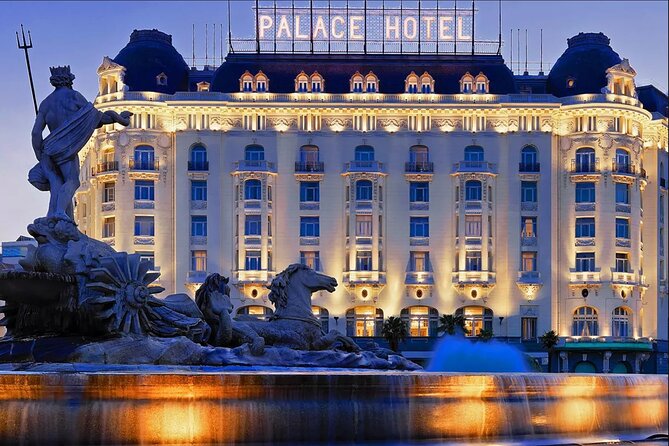
At C. Alcalá, 57, the former Café Lion becomes the scene of a more personal part of the tour. It was a meeting point for German spies and the place where the story of what is described as Spain’s most important spy began.
The stop lasts about 10 minutes. Cafés are natural places for secret meetings because people can talk, watch the room, and leave without attracting much attention. The guide uses this location to show how a public social space could become part of an intelligence network.
This is likely to be one of the most memorable stops because it connects a specific person to a specific place. Instead of hearing only about governments and wartime strategy, you get the beginning of an individual spy story.
The experience does not list the spy’s name in advance, so if this is the part that interests you most, ask Carlos to explain the person’s background and role. He is willing to answer questions, and the format leaves room for that kind of conversation.
Horcher and the spy hunter
Next comes Horcher, identified as a meeting point for the German elite. Here the subject shifts toward the person described as the most prolific spy hunter.
That change in focus keeps the walk from becoming a simple list of agents. Espionage depends on both sides: the people passing information and the people trying to find them. At Horcher, Carlos explains the setting used by powerful German figures and the work of the spy hunter who pursued them.
You spend about 10 minutes at this stop. The restaurant setting also adds social detail to the story. Espionage was not always carried out in anonymous rooms. At times, it took place around meals, formal gatherings, and the public life of Madrid’s elite.
You should expect the visit to remain a walking and storytelling experience rather than a restaurant visit. Admission is free, and the route does not include a meal. That is useful to know if you are hoping to dine at Horcher as part of the tour.
The Ritz and secret negotiations
The final major stop is the Mandarin Oriental Ritz, Madrid. This grand hotel is presented as a site of secret negotiations and a residence for some of the era’s greatest spies.
It is a fitting final stop because hotels bring several strands of the tour together. Diplomats, wealthy visitors, agents, and intermediaries could all pass through the same place. A hotel offered privacy, status, and a steady flow of people, all useful conditions for covert meetings.
The stop takes about 10 minutes. You will hear about negotiations and the agents connected with the hotel, then continue toward the Neptune Fountain.
The route ends at the fountain on Plaza de Cánovas del Castillo, near the center of Madrid. Ending here gives you an easy place to continue sightseeing. You are close to the Prado area and central streets, although the tour information does not promise an additional museum visit or entry to the Ritz.
What the guide adds to the experience
Carlos is central to the value of this walk. The best parts of the tour are not simply the addresses. They are the explanations of how the network worked across different periods and how the backgrounds of the agents shaped their actions.
You can ask questions as you go. That is important for a subject with many names, countries, and overlapping events. A prepared guide can clarify who worked for whom, why a location mattered, and how the political setting affected the people involved.
Carlos also provides a list of films connected to the subject. That is a thoughtful extra because spy history often makes more sense after you have seen the period represented on screen. The list gives you a way to continue learning after the two-hour walk without extending the booking itself.
The group limit is 20 people. That is not a private tour, but it is small enough to make questions practical. If you prefer a silent, self-guided walk, this is not the right format. If you like asking about details and hearing the story develop, the group size should work well.
Timing, languages, and physical demands
The experience lasts about two hours and covers six stops. The listed schedule is English on Monday, Tuesday, and Saturday, and Spanish on Wednesday, Friday, and Sunday. Confirm the language and start time when booking, since the schedule changes by day.
The route involves walking between locations in central Madrid. You should have moderate physical fitness, and comfortable shoes make sense. The information does not describe the exact distance, seating, or accessibility of each stop, so do not assume that the entire route is suitable for anyone who cannot walk for two hours.
Service animals are allowed. The route is near public transportation, making it practical to reach the starting point and leave from the Neptune Fountain.
The mobile ticket is convenient for a city day. Keep it available on your phone, and arrive with enough time to find the former embassy at Fernando el Santo, 16.
Is $3.44 good value?
At $3.44 per person, this is a very inexpensive guided activity. The value comes from the guide’s interpretation, not from paid admissions, since the listed stops are free and the walk does not include food, drinks, or museum entry.
For that price, the tour can fill a useful gap in a Madrid itinerary. You get two hours of organized sightseeing, a clear route, wartime context, and access to stories you would be unlikely to connect on your own. The low cost also makes it easy to pair with a museum visit or a longer day around the center.
The price should not lead you to expect a luxury experience. You are paying for a walking tour with outdoor stops. Weather, noise, traffic, and the condition of the buildings may affect how much you can see. The tour is best judged as a history walk, not as an attraction with elaborate production or interior access.
Who should book this walk
I would suggest it to anyone who enjoys spy stories, wartime politics, Madrid architecture, or the social history of famous hotels and cafés. It is also a good choice if you want a guided activity that fits into half a day and does not require a large admission fee.
The walk suits first-time visitors who want a different angle on Madrid, as well as returning visitors who have already seen the main museums and plazas. You will get the most from it if you enjoy asking questions and following a story across several locations.
It may not suit you if you want to spend most of the time inside buildings, if you dislike walking, or if you prefer a broad introduction to Spanish history. The subject is specific, and the tour stays focused on espionage during the two world wars.
Cancellation and booking details
You can cancel for a full refund up to 24 hours before the start time. Changes or cancellations made less than 24 hours in advance are not accepted for a refund.
The experience requires a minimum number of participants. If that minimum is not reached and the activity is canceled, you are offered another date or experience, or a full refund.
The tour is recommended by 100 percent of the available ratings and has a 4.9 out of 5 score from 32 ratings. The strongest praise centers on Carlos’s command of the subject, his willingness to answer questions, and his ability to make the settings and wartime figures easier to picture.
Should you book Madrid of spies?
Book this tour if you want a low-cost, focused walk that turns ordinary Madrid addresses into places connected with British, German, and Spanish espionage. Carlos’s explanations, the six-stop route, and the extra film suggestions give the experience more weight than a simple photo walk.
Skip it if you want interior sightseeing, a relaxed café stop, or a general city tour. For anyone with an interest in spy stories and modern European history, though, two hours and $3.44 is a small price for a new way to read Madrid’s streets.
FAQ
How long does the Madrid of spies tour last?
The tour lasts approximately two hours.
Where does the tour begin?
It begins at the former British Embassy at C. de Fernando el Santo, 16, in Madrid’s Chamberí district.
Where does the tour end?
The tour ends at the Neptune Fountain on Plaza de Cánovas del Castillo in central Madrid.
Which languages are available?
English tours run on Monday, Tuesday, and Saturday. Spanish tours run on Wednesday, Friday, and Sunday.
How many people can join the tour?
The activity has a maximum group size of 20 people.
What locations are included?
The route includes the former British Embassy, the old embassy site at Robuchon Madrid, the Friedenskirche or Peace Church, the former Café Lion, Horcher, and the Mandarin Oriental Ritz, Madrid.
Is the tour suitable for someone with limited mobility?
The tour requires a moderate level of physical fitness. The supplied information does not give detailed accessibility information for every stop.
Can I cancel for a refund?
Yes. You can cancel at least 24 hours before the start time for a full refund. Cancellations or changes made less than 24 hours before the start time are not refunded or accepted.
Just added around Madrid
- Visit the National Archaeological Museum in Madrid★ 4.4 · 6 reviews
- From Madrid: Parque Warner Beach Water Park & Transport★ 3.9 · 14 reviews
- Madrid Wine Tasting, Flamenco Class and Pub Crawl★ 4.5 · 6 reviews
- Virtual Reality Experience Fun And Tickets & Imageen★ 5.0 · 12 reviews
- Visit to the Prado Museum★ 4.9 · 6 reviews
- Tuk Tuk Tour with Wine Test in Madrid★ 3.8 · 6 reviews
- Tuktuk historical tour of Madrid 1 Hr in a fun and original way★ 3.7 · 3 reviews
- Prado Museum VIP tour with an art Expert, tickets included★ 5.0 · 11 reviews
Guided, compared.
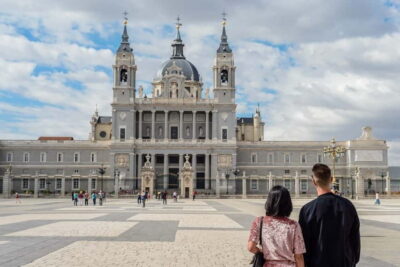
Royal Palace Expert Guided Tour with Skip-the-Line
Read our review →
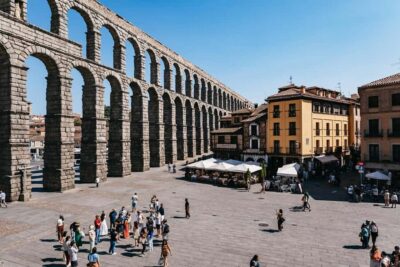
Toledo & Segovia Full Day Guided Tour with Alcázar
Read our review →
Madrid Welcome Tour with Local Guide in Eco Tuk Tuk Private
Read our review →