
Reviewed · MARKETS
Bluefin Tuna tasting in the most Prestigious Market of Spain
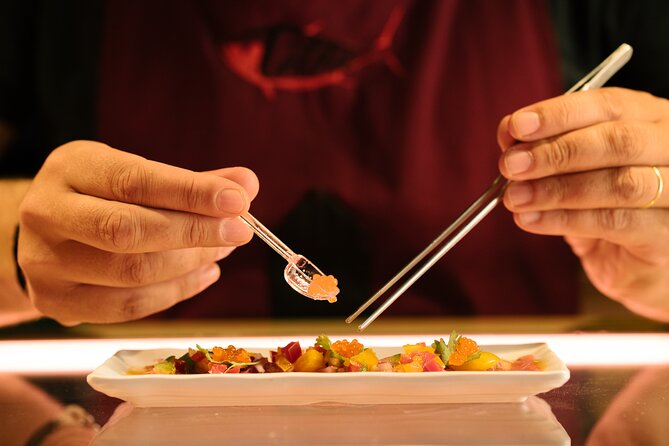
The main draw here is the tuna itself: wild Almadraba bluefin from the Strait of Gibraltar, served in several raw cuts inside Madrid’s famous Mercado de San Miguel. You get spicy and seasoned tartare, sashimi, bull sashimi, wakame salad with salmon roe, and a glass of wine or dry sherry.
I like two things right away. First, the tasting lets you compare parts of one fish instead of receiving one generic plate of tuna. Second, the setting is hard to beat: an early twentieth-century iron market in central Madrid. The concern is organization. The food can be very good, but the host may not appear promptly, and one recent experience involved a 40-minute wait with little communication.
Key points before you book
- Wild Almadraba tuna: The fish comes from the traditional tuna traps of the Strait of Gibraltar, a fishing method linked to Phoenician and Roman times.
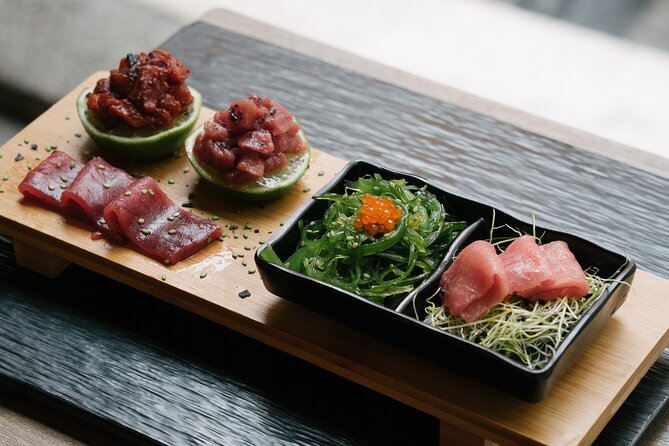
- Six raw preparations: Your 150 grams includes two tartares, tuna sashimi, bull sashimi, and a wakame salad with salmon roe and sesame.
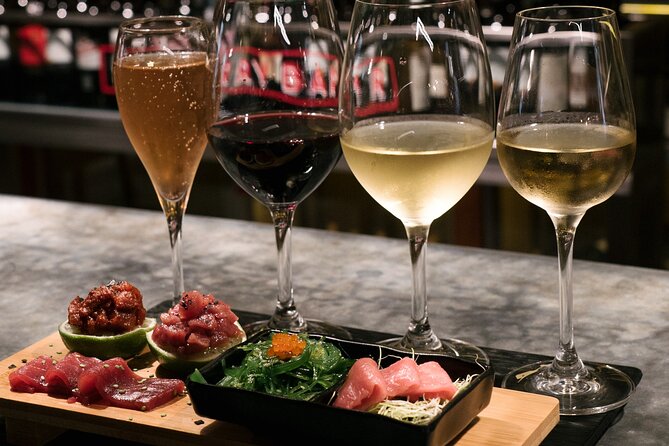
- One drink included: Choose red wine, white wine, sparkling wine, or dry sherry.
- Mercado de San Miguel setting: You meet and finish inside one of Madrid’s best-known food markets, with its original iron structure.
- Small group size: The experience has a maximum of six people, though the hands-on hosting may not always be reliable.
- One-hour format: This is a compact tasting, not a full market tour or long cooking class.
The tuna comes first at Mercado de San Miguel
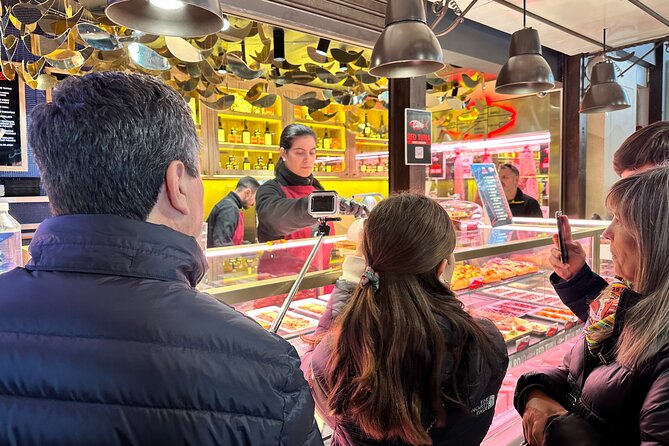
This is a focused food tasting, not a general introduction to Spanish cuisine. You meet at Mercado de San Miguel, at Plaza de San Miguel in Madrid’s Centro district, and the activity finishes at the same place after about one hour.
The market matters. Its early twentieth-century iron structure gives the tasting a proper Madrid setting rather than placing it in an anonymous restaurant room. You are surrounded by one of the city’s most recognized food halls, close to major sights in the historic center. The meeting point is also near public transportation, which helps if you are fitting this into a busy sightseeing day.
The experience is connected with TATUN, a food concept built around wild bluefin tuna. The idea is simple: let you taste different cuts with restrained toppings so you can pay attention to the fish. If you like raw seafood, this direct approach is likely to appeal to you. If you prefer cooked fish, sauces, or a longer cultural tour, the format may feel narrow.
Because the tasting lasts about an hour, you should think of it as a carefully sized stop between other plans. It is not meant to replace lunch for most people, though the 150-gram tuna portion is substantial for a tasting. The included glass of wine adds a useful Spanish touch, especially if you choose dry sherry with the tuna.
More Madrid Food Tours:
- Madrid: Live Flamenco Show with Food and Drinks Options
★ 4.5 · 9,901 reviews - Toledo Tour & Vineyard Walk with Wine Tasting from Madrid
★ 5.0 · 2,546 reviews - Madrid: Tapas & Wine Tasting Tour with Local Guide
★ 4.8 · 2,171 reviews
What wild Almadraba tuna means on the plate
Almadraba is an old fishing method used along the coast of Cádiz and the Strait of Gibraltar. Tuna are guided into a system of nets, and the method is associated with Phoenician and Roman fishing traditions. The experience presents this fish as a prized product of the Coast of Light.
That background gives the tasting more purpose than simply ordering sashimi. You are meant to notice how texture and flavor change from one part of the tuna to another. The chefs are also expected to explain the fishing process, the characteristics of the fish, and the nutritional and culinary qualities of the parts used.
Keep your expectations practical. The food is prepared raw, and the toppings are relatively light. This is a good match for someone who wants to compare tuna cuts. It is less suitable if you want elaborate cooking, a large meal, or a long talk about Spanish food traditions.
The menu is built around roughly 150 grams of tuna. That amount is divided among several preparations:
- Spicy tuna tartare served on a slice of lime
- Seasoned tuna tartare served on a slice of lime
- Tuna sashimi
- Bull sashimi
- Wakame salad with salmon roe and sesame
- Wasabi served with the salad
- One glass of red wine, white wine, sparkling wine, or dry sherry
The menu gives you several textures in a small space. Tartare offers finely cut tuna with seasoning, while sashimi keeps the fish in larger, cleaner pieces. The bull sashimi is included as another part of the tuna, giving the tasting a chance to show the difference between cuts.
The tartares offer the clearest contrast
The two tartares are a smart part of the tasting. One is spicy, and the other is seasoned in a different style. Both are placed on lime slices, which provide acidity and make the small portions easy to serve.
I like this structure because it keeps the comparison clear. You can try the tuna with heat, then taste it in a milder preparation. The point is not to cover the fish with a heavy sauce. It is to show how a small change in seasoning affects the same central ingredient.
The lime is useful, but you may want to taste the tuna on its own first if the chef does not suggest an order. Raw fish can taste quite different before and after citrus, spice, or seasoning. Since the menu is designed around raw cuts, eating slowly will give you more from the portion than treating it like a quick appetizer.
There is one practical issue here. The tasting depends on clear explanation. Without someone introducing the dishes, the two tartares can feel like small bites simply placed in front of you. The best version of this experience is one where the host explains which cut you are eating and why it has been paired with each topping.
Sashimi and bull sashimi show the fish more plainly
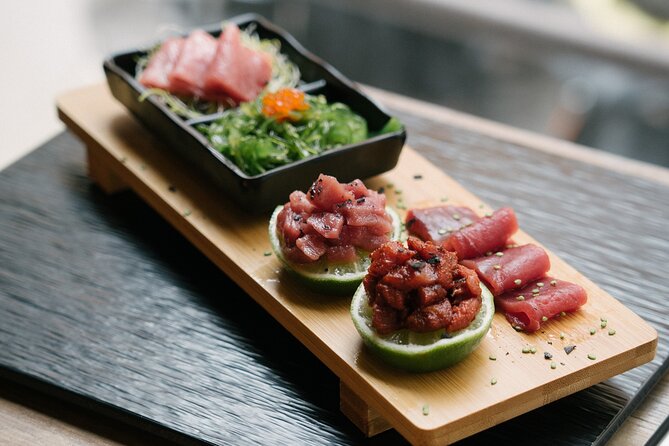
The sashimi is the most direct part of the menu. It removes much of the distraction and lets you concentrate on the tuna’s texture and flavor. The bull sashimi gives you a second cut to compare, though the provided details do not explain its exact position or characteristics.
That missing detail is important. The experience promises an explanation of the different parts of the fish, so you should expect the chef to identify the cuts during the tasting. If no one is present to explain them, you can still eat the food, but you lose one of the main reasons to book a guided tasting instead of ordering tuna at a market stall.
I would approach this part with patience. Try the sashimi before adding wasabi or other seasoning. Then compare it with the bull sashimi and the tartares. You are paying for a compact lesson in tuna as much as for the food itself.
The presentation is described as minimalist. That can be a strength when the tuna is the star. It also means you should not expect a large decorated plate or a theatrical cooking display. The value rests on fish quality, the number of cuts, the market location, and the explanation.
More Market Visits in Madrid:
- Madrid Tapas & Paella Cooking Experience with Local Market Visit
★ 5.0 · 432 reviews - De Mercados: A Neighborhood Market and Food Tour
★ 5.0 · 237 reviews - Try Madrid Best Churros, Tapas & Market by FLT
★ 5.0 · 37 reviews - Madrid: Paella & Tapas Cooking Class and Market Visit
★ 4.9 · 37 reviews
Wakame, salmon roe, sesame, and wasabi round out the plate
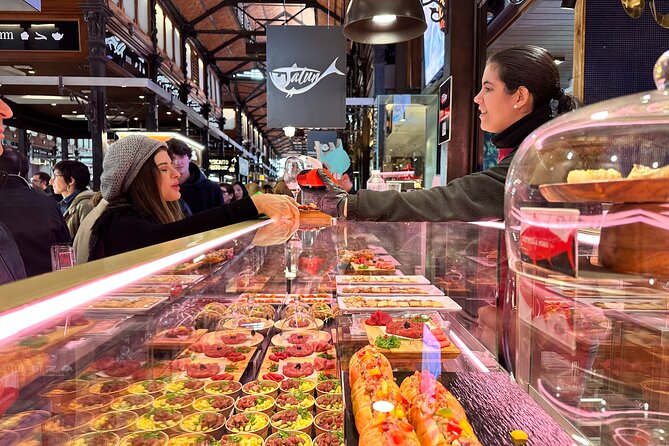
The wakame salad brings a different texture and a more sea-focused flavor to the tasting. Salmon roe and sesame add small bursts of salt and nuttiness, while wasabi provides heat if you choose to use it.
This side dish helps break up the tuna-heavy menu. A full hour of raw bluefin can become repetitive, especially for someone new to eating different tuna cuts. The seaweed and roe offer a change without pulling the meal away from its seafood theme.
Still, the menu is firmly centered on raw fish. You should be comfortable with that before booking. There is no cooked tuna preparation described, and no alternative menu is provided. This is not the right pick if you need a broad selection of dishes or want to sample Madrid’s market food in general.
Your wine or sherry choice matters
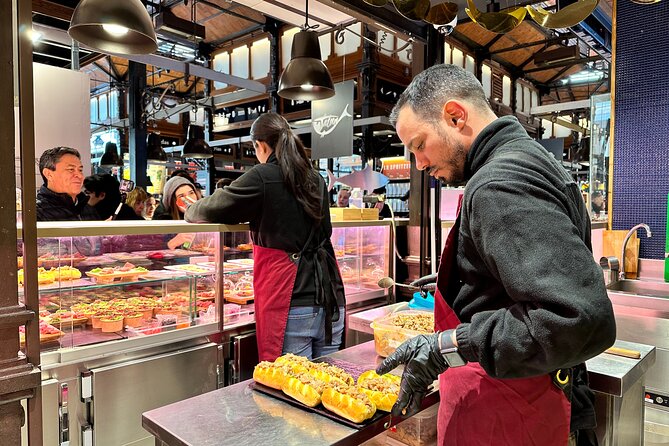
The tasting includes one glass, and you can choose red wine, white wine, sparkling wine, or dry sherry. That is a useful range because people enjoy raw tuna with different styles of drink.
White wine or sparkling wine may suit you if you want something fresh with sashimi and tartare. Dry sherry gives the experience a stronger connection to southern Spain and the Cádiz region associated with Almadraba tuna. Red wine is also available if that is your preference.
The drink is part of the value, but it does not turn the tasting into a full wine pairing. You receive one glass, not a flight or a guided comparison of wine styles. If you are mainly interested in the tuna, the drink is a pleasant addition. If you are looking for a serious wine lesson, this is not that kind of experience.
The market setting is a major part of the value
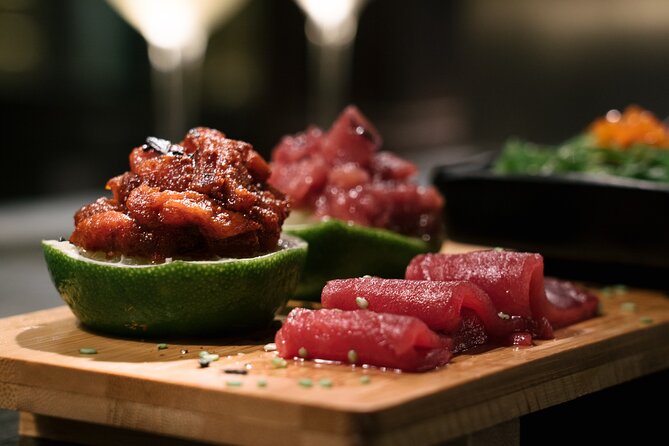
Mercado de San Miguel is one of Madrid’s most prominent food markets, and its preserved iron structure gives the tasting a strong sense of place. You are not just sitting in a standard dining room. You are eating in a market that has been part of Madrid’s food identity for many years.
That setting helps justify some of the $45.38 price. The fee covers the tuna tasting, 150 grams of fish, one drink, the market location, and the chance to hear about Almadraba fishing and tuna cuts. For someone who already plans to visit the market, the activity can be a convenient way to turn a quick stop into a more focused food experience.
The value is less convincing if you mainly want a large lunch. The tasting lasts only about an hour, and the menu is designed for sampling several raw cuts rather than filling you with multiple courses. Think of it as a specialty food stop with a drink, not an inexpensive meal.
The experience is often booked about 37 days ahead. That suggests you should reserve early if the time matters to your schedule. It does not guarantee that every service will run perfectly, so keep the meeting details saved on your phone and arrive at the stated meeting point.
The biggest weakness is inconsistent hosting
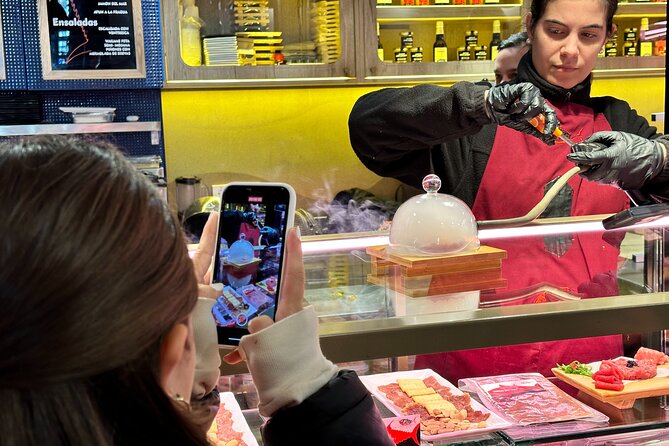
The food receives the strongest positive attention in the available feedback, but the organization is the part that needs caution. One person waited about 40 minutes without seating or much acknowledgment, then received a tuna assortment without an explanation. Another found that the operator did not show up, although the market counter still provided the food and the tuna was good.
That is a serious issue for a guided tasting. The explanation of the fishing method and cuts is not an optional extra. It is part of what separates this experience from buying a plate of tuna on your own.
I would not assume that poor hosting will happen every time, but I would plan for a little uncertainty. Keep the confirmation available as a mobile ticket. If the host is not immediately visible, go to the TATUN counter at the meeting point and show the reservation. The counter has previously been able to provide the tasting even when the operator was absent.
A rating of 3.8 from four reviews points to a small and mixed sample, not a firm verdict. The details are more useful than the number: the tuna itself can be excellent, while communication and timing may fall short. If you are booking for a special occasion or have a tight schedule, that risk deserves attention.
Who will enjoy this one-hour tasting
I would recommend this experience most strongly to people who meet three conditions: you like raw fish, you want to compare tuna cuts, and you enjoy food in a market setting.
It also suits a short Madrid itinerary. The one-hour length makes it easy to place before or after sightseeing in the Centro district. A maximum of six people is appealing because the format is small, though the quality of the interaction depends on whether the host is present and engaged.
This is a weaker choice for you if you want:
- A full meal with cooked dishes
- A broad tour of Spanish market food
- A long cooking demonstration
- A formal wine tasting
- A completely predictable schedule
The raw seafood focus is not a minor detail. The entire menu is built around bluefin tuna, seaweed, roe, and related accompaniments. If that sounds exciting, the limited menu is a virtue. If you need variety, it may feel restrictive.
Booking details and cancellation
You receive confirmation at the time of booking, and the experience uses a mobile ticket. The meeting point is Mercado de San Miguel, Plaza de San Miguel, in Madrid’s Centro district. The activity ends at the same market.
The maximum group size is six, and public transportation is nearby. The listed price is $45.38 per person. You can cancel for a full refund up to 24 hours before the start time. Cancellations made within 24 hours are not refunded, and changes within that period are not accepted.
Because the operator is Curioseety SRLS and the hosting has been inconsistent, save the confirmation and allow extra time at the market. That small bit of preparation can prevent a confusing start.
Should you book the Almadraba tuna tasting?
Book it if you want a concentrated introduction to wild bluefin tuna, especially if you enjoy sashimi and tartare. The fish, the different cuts, the included drink, and Mercado de San Miguel make the concept appealing and specific.
I would hesitate if your schedule is tight or if the explanation is the main reason you are paying the premium. The food may still be delivered if the host is missing, but that leaves you with only part of the promised experience.
My advice is simple: reserve this as a specialty food stop, not as a guaranteed polished tour. Go for the Almadraba tuna and the market setting. Keep your expectations flexible about timing and hosting, and you will have a better chance of finding the $45.38 worthwhile.
FAQ
Where does the bluefin tuna tasting take place?
It takes place at Mercado de San Miguel, Plaza de San Miguel, in Madrid’s Centro district.
How long does the experience last?
The tasting lasts approximately one hour.
Where does the activity finish?
The activity ends back at Mercado de San Miguel, the same place where it begins.
How much tuna is included?
The tasting includes 150 grams of tuna prepared in several ways.
What dishes are served?
You receive spicy tuna tartare on lime, seasoned tuna tartare on lime, tuna sashimi, bull sashimi, and a wakame salad with salmon roe, sesame, and wasabi.
Is a drink included?
Yes. You can choose one glass of red wine, white wine, sparkling wine, or dry sherry.
How many people can join?
The activity has a maximum of six participants.
Can I cancel for a full refund?
Yes. You can cancel at least 24 hours before the start time for a full refund. Cancellations within 24 hours are not refunded.
Just added around Madrid
- Visit the National Archaeological Museum in Madrid★ 4.4 · 6 reviews
- From Madrid: Parque Warner Beach Water Park & Transport★ 3.9 · 14 reviews
- Madrid Wine Tasting, Flamenco Class and Pub Crawl★ 4.5 · 6 reviews
- Virtual Reality Experience Fun And Tickets & Imageen★ 5.0 · 12 reviews
- Visit to the Prado Museum★ 4.9 · 6 reviews
- Prado Museum VIP tour with an art Expert, tickets included★ 5.0 · 11 reviews
- Tuk Tuk Tour with Wine Test in Madrid★ 3.8 · 6 reviews
- Tuktuk historical tour of Madrid 1 Hr in a fun and original way★ 3.7 · 3 reviews
Markets, compared.
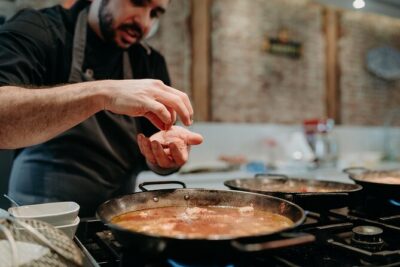
Madrid Tapas & Paella Cooking Experience with Local Market Visit
Read our review →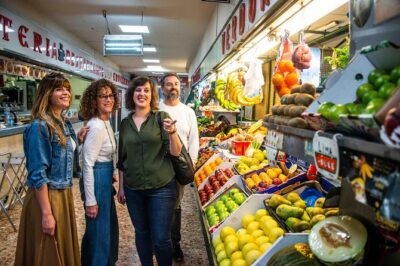
De Mercados: A Neighborhood Market and Food Tour
Read our review →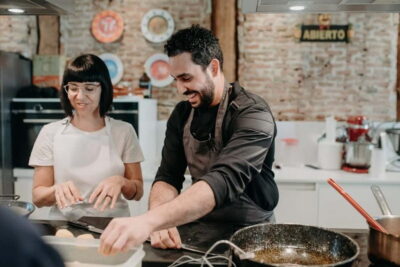
Browse the lists this tour appears in