
Reviewed · HISTORICAL TOURS
Architecture Tour: Old Historic Madrid with an architect
Madrid’s oldest streets make more sense when you see them as a record of changing power. This private 3.5-hour walk follows the city from its Arab fortress through the Habsburg age and into Bourbon Madrid, with an architect explaining how politics shaped streets, churches, squares, and royal buildings.
I like the architecture-first approach, and I like that the route links major sights with less obvious traces such as the Arab Wall and the 12th-century Christian Wall. The possible drawback is clear: this is a detailed tour, not a quick highlights stroll, and the Royal Palace is viewed from outside rather than entered.
The guide fee and church admissions are included, and the private format gives you a better chance to ask questions. Emilio has been praised for his strong command of Madrid’s past, but you should book this only if architecture, urban planning, and political history are central to your interests.
Key points at a glance
- Follow Madrid’s transformation: Learn how an Arab settlement became the capital of Spain under Felipe II.
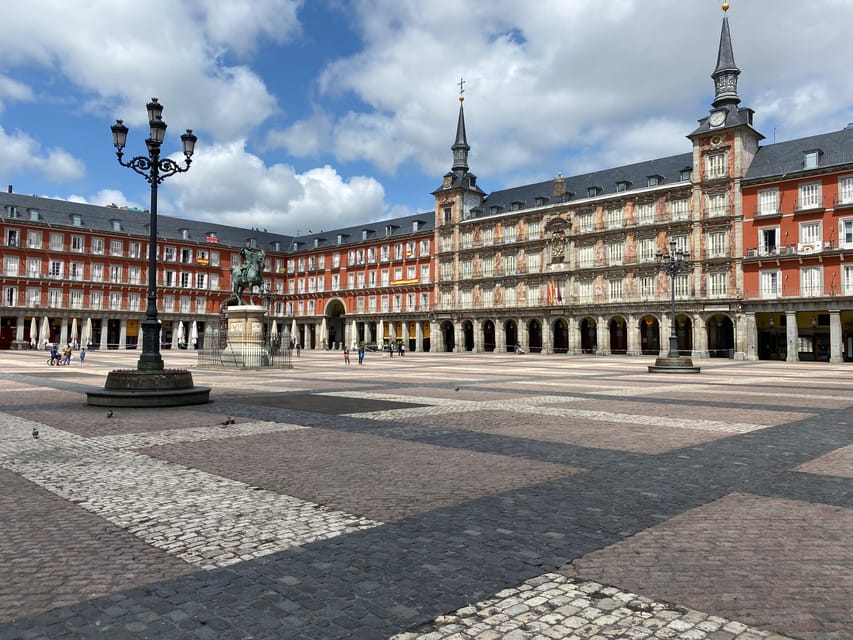
- See the Habsburg center on foot: Visit Plaza de la Villa, San Miguel Market, and Plaza Mayor.
- Study royal Madrid from the outside: See the Royal Theater, Plaza de Oriente, Royal Palace, and Almudena Cathedral.
- Find older Madrid beneath the grand squares: Stop at the Arab Wall and remains of the 12th-century Christian Wall.
- Walk with an architect: The tour connects design, city growth, royal power, and political decisions.
- Plan for a serious walking tour: Wear suitable shoes, bring water in summer, and dress warmly in winter.
Why this Madrid walk feels different
Many old-city tours point out monuments and move on. This one asks why Madrid grew where it did, how its rulers changed its shape, and what survives from earlier cities beneath later buildings.
The route begins with Madrid’s Arab foundation at the end of the 9th century. You then follow the city through the Christian conquest by Alfonso VI of Castile, Felipe II’s decision to make Madrid the capital, the long Habsburg period, and the Bourbon changes that followed in the 18th century.
That long view is the main reason to book. You are not just collecting photographs of famous squares. You are learning how a fortress, royal residence, administrative center, and modern capital developed in layers.
The guide is an architect, so expect attention to buildings, street plans, materials, and the relationship between public space and political power. The emphasis is not limited to decoration. You will also hear about urbanism, architecture, history, and politics.
The tour is private, with English and Spanish available. That matters if you want to pause for questions or shape the discussion around a particular interest. The price is $387 for a group of up to one person, so the value is strongest for a solo visitor who wants a specialist guide rather than a large group experience. For two or more people, confirm how the final price applies before booking, since the listed rate is described as being for a group up to one.
More History Tours in Madrid:
- Madrid Essential: Historic Center, Plaza Mayor & Royal Palace
★ 5.0 · 6,416 reviews - Madrid Historical Tour with Local Guide in Eco Tuk Tuk Private
★ 5.0 · 876 reviews - Madrid Historic Centre Food Tour with Authentic Tapas & Wines
★ 5.0 · 814 reviews
Starting beside the Teatro Real
Meet at the entrance of the Starbucks on one corner of the Royal Theater at Plaza de Isabel II. This is a practical starting point because the Teatro Real gives the tour an immediate architectural subject, while the surrounding area places you near Madrid’s royal and ceremonial center.
The Teatro Real stop lasts about 15 minutes. You can expect a guided look at the theater and a chance to connect it with the city’s royal history. This is also a useful moment to settle into the guide’s pace before the walk moves toward the palace quarter.
The tour then continues through Plaza de Oriente for roughly 15 minutes. Its position between the theater and Royal Palace makes it an important civic space, and the guide can use it to explain how grand public areas were arranged around royal buildings.
You should not expect long interior visits at every stop. The strength here is the sequence: theater, square, palace, cathedral, walls, old streets, market, and main plaza. Each place adds another piece to the city’s development.
Royal Madrid at the palace and cathedral
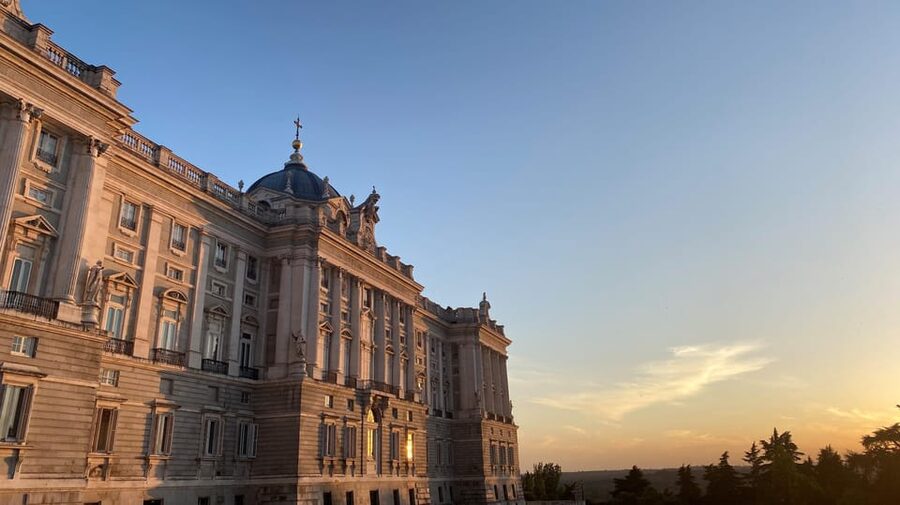
The Royal Palace of Madrid receives about 20 minutes of guided attention, but the interior is not included. This is one of the tour’s main limitations if you hoped to tour the palace rooms, collections, or ceremonial spaces.
Still, an exterior discussion can be useful. The palace is tied to the story of Bourbon rebuilding after the old Alcázar was lost to fire, and the tour explains the shift from the Arab-built Alcázar to the Royal Palace ordered by Felipe V. That transition gives you a clear example of how a change in dynasty brought a change in architectural language and royal image.
From there, you pass by the Church of San Nicolás. The stop is listed at about 10 minutes, and it adds an older religious building to a route otherwise shaped by royal institutions and major civic spaces.
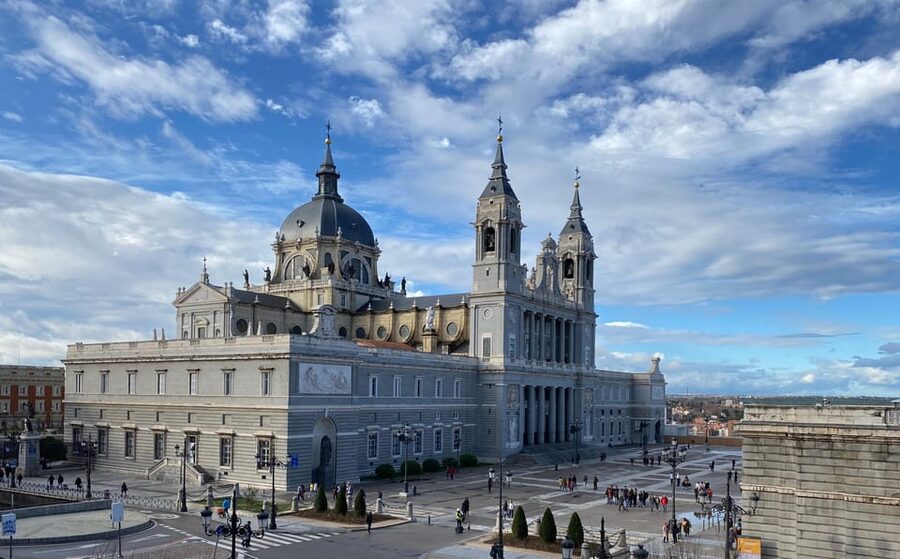
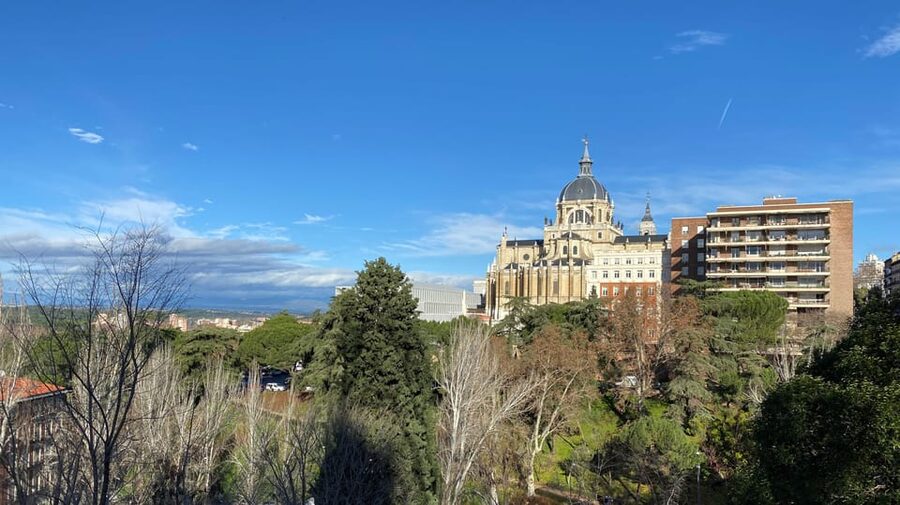
Almudena Cathedral follows, with around 15 minutes of guided touring. Its position beside the Royal Palace makes it a natural place to discuss church and monarchy, as well as the way Madrid’s religious center fits into the royal precinct.
This section should appeal to you if you like connections between buildings rather than isolated facts. The cathedral, palace, theater, and Plaza de Oriente are not random points on a map. They form a concentrated area where Spain’s religious, royal, and public life meet.
The Royal Collections view and Casa de Campo
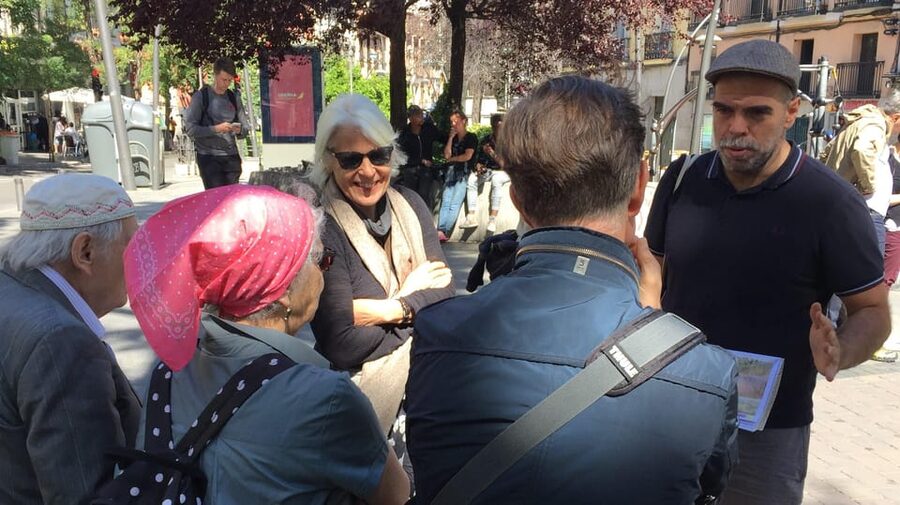
The route also includes the new Museum of Royal Collections, designed by Tuñón and Mansilla. The tour description places this stop in the area where you can enjoy views toward the Casa de Campo forest.
The museum is a useful contrast to the older buildings around it. After seeing Arab, medieval, Habsburg, and Bourbon layers, you get a modern architectural response within the royal zone. That makes the walk more than a march through old monuments. It gives you a chance to compare periods and ask how contemporary architects work beside historic structures.
The supplied timing does not list a separate numbered stop for the museum, so you should think of it as part of the royal and cathedral section rather than a guaranteed long interior visit. The route is primarily a walking and interpretation experience, and the Royal Palace interior is specifically excluded.
More Madrid Tours:
- Madrid: Tour Bernabéu Entry Ticket
★ 4.5 · 21,573 reviews - Madrid: Prado Museum Entry Ticket
★ 4.6 · 17,509 reviews - Madrid: “Emociones” Live Flamenco Performance
★ 4.8 · 12,866 reviews - Madrid: Panoramic Route City Tour
★ 4.1 · 12,259 reviews
Traces of Madrid before the grand boulevards
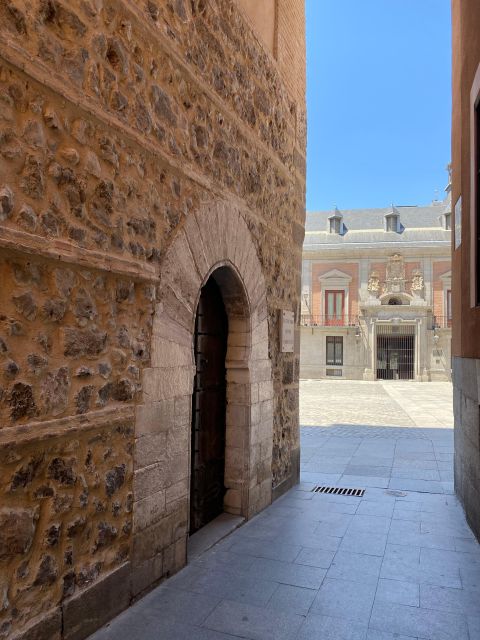
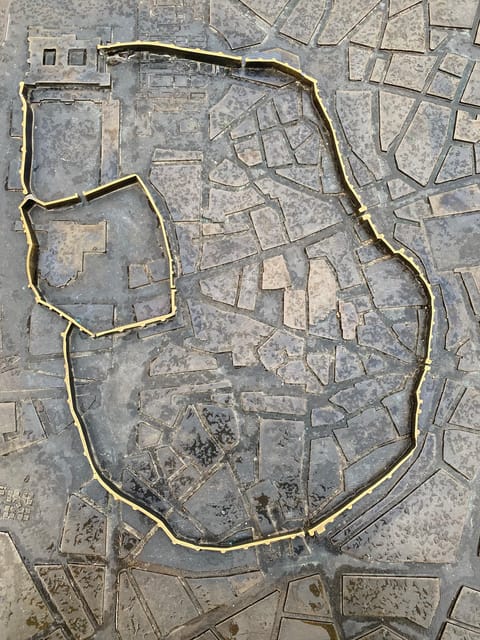
The Arab Wall is one of the most valuable stops for understanding Madrid’s beginning. The city was founded by Arab rulers at the end of the 9th century, and the wall marks the defensive settlement that came before the royal capital.
You spend about 15 minutes sightseeing here. Do not expect a complete fortress complex. What matters is the surviving fragment and the way the guide explains its place in the city’s early growth.
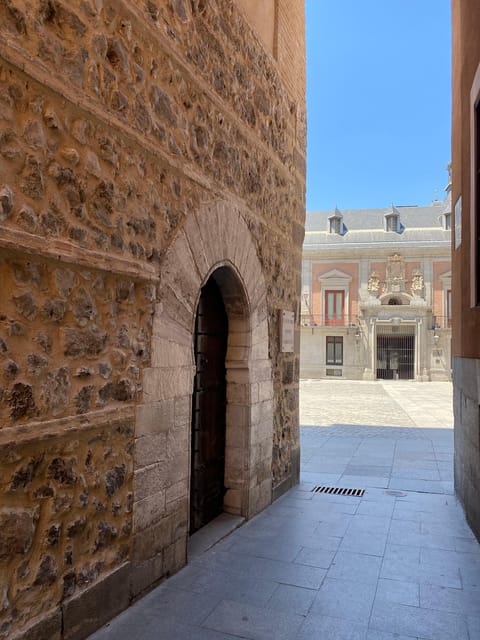
The tour also points out remains of the 12th-century Christian Wall. These traces help you picture a Madrid that was still compact and defensive after the Christian conquest. Later streets, palaces, and public squares can seem disconnected from that early settlement unless someone shows you where the older boundaries survived.
I especially like this part of the walk because it keeps the past physical. You are not only hearing that Madrid changed hands and expanded. You are seeing pieces of the walls that helped define the first city.
Cava Baja, Plaza de la Villa, and San Miguel Market
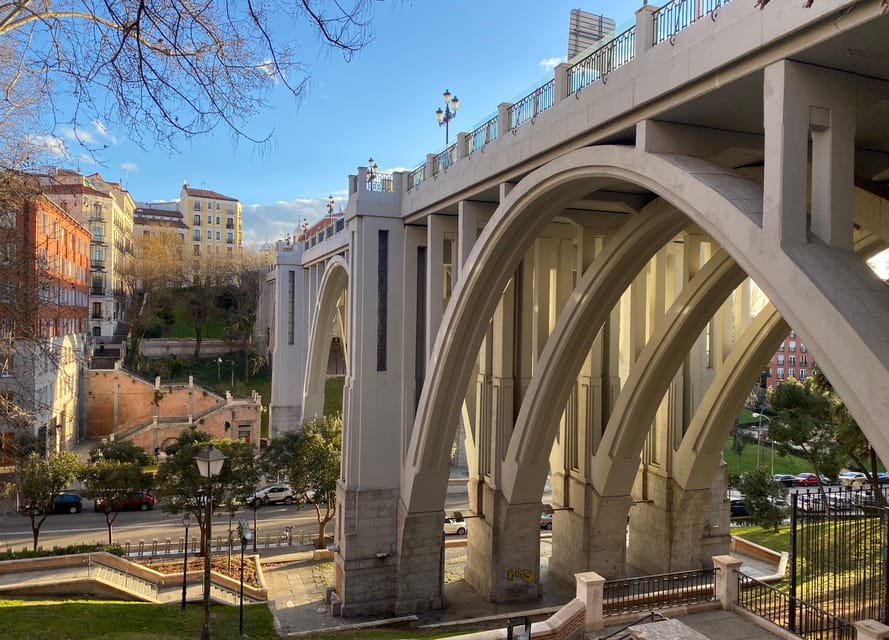
The route continues through Cava Baja, a street lined with old taverns. This is one of the more atmospheric sections because it shifts the focus from royal monuments to everyday urban life.
Cava Baja also helps explain how old routes remain useful long after their original purpose changes. The exact architectural discussion will depend on your guide, but the tour promises to connect the street with Madrid’s older urban pattern rather than treating it as simply a place to eat.
Plaza de la Villa comes next, with about 15 minutes of walking. This square contains the old Town Hall and gives you another view of municipal Madrid. After royal buildings and defensive walls, the old civic center shows how local government fit into the city’s power structure.
The San Miguel Market is scheduled for about 10 minutes of guided attention. This is a short stop, not a full food tour. Drinks and snacks are not included, but you can choose to buy something if you want a break after the walk.
That flexibility is useful. You can stay focused on the tour or pause for a drink at your own expense. Just remember that the listed price covers the guide fee and church entrances, not food, drinks, or personal purchases.
Plaza Mayor and the Habsburg heart of Madrid
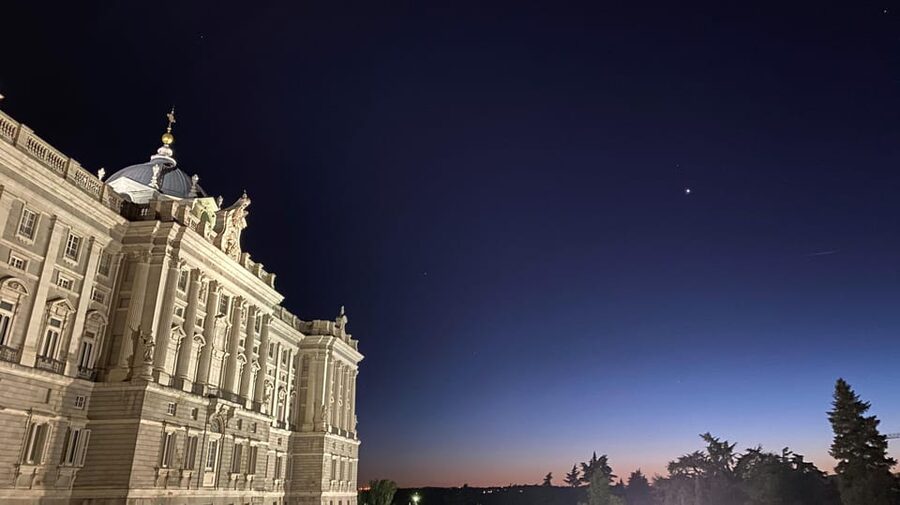
The final major stop is Plaza Mayor, with around 15 minutes of guided touring. This is the natural finish because the square was once the center of Madrid’s social and commercial life.
The plaza is also where the Habsburg character of old Madrid comes together most clearly. You will have already seen the royal quarter, medieval wall remains, old streets, municipal buildings, and market life. Plaza Mayor brings those strands into one large public space.
Your walk finishes here, rather than returning to the starting point. That is convenient if you plan to continue exploring central Madrid afterward, but it means you should not leave anything at the meeting point or assume the guide will escort you back.
The route’s listed stops add up to a little over two hours of scheduled visits and explanations. The full experience lasts 3.5 hours, so the remaining time is used for walking between sites and building connections between them. This is a steady half-day commitment, not a rushed orientation.
Is $387 a fair price?
At $387 for a private group listed as up to one person, this is a premium walking tour. You are paying for a specialist guide, a private format, a long route, and access to churches rather than for a package of major museum admissions.
The value depends on your priorities. If you are an architect, architecture student, urban-design enthusiast, or serious lover of Madrid’s past, the focus may justify the cost. You receive a sustained explanation of how the city developed, with plenty of room for questions.
If you mainly want to enter the Royal Palace, sample food, or see as many sights as possible in a short time, the price will feel harder to defend. The palace interior is not visited, drinks and snacks are extra, and the tour’s detailed subject matter may feel too narrow for a casual first-time visit.
The private setup is the strongest reason to consider it. A specialist guide can spend more time on the topics you care about, though the supplied information does not promise a customized route or a particular guide for every booking. Emilio has led this experience and has been specifically praised for his historical command and generous explanations.
Practical advice for a comfortable walk
Wear shoes suitable for several hours on foot. The route crosses old streets, squares, and historic areas, and a private walking tour still requires a fair amount of movement between stops.
Madrid’s weather should shape what you carry. In winter, bring warm clothing. In summer, take sun protection, sunglasses, a cap or hat, and cold water. The activity does not suit wheelchair users, so check the route carefully if mobility access is important to you.
English and Spanish are available. The free-cancellation window is up to 24 hours before the start time, and you can reserve now and pay later, which helps if your Madrid plans are still shifting.
I would also allow time after Plaza Mayor. Since the tour ends there, you can continue on your own, stop for food, or return to another central sight without retracing the full route.
Who should book this architect-led tour?
I would choose this walk if you want Madrid explained rather than simply displayed. It suits you best if you enjoy asking why a building exists, how a dynasty changed the city, and what remains from earlier walls and street plans.
It also works well for a solo visitor who values a private guide and wants a serious introduction to old Madrid. The English or Spanish choice and the ability to ask questions make the format more personal than a large group walk.
I would skip it if your main goal is palace interiors, casual sightseeing, or a food-focused afternoon. The route is detailed and architecture-led, and one direct assessment makes that clear: be sure this is the subject you want before booking.
Should you book it?
Book this tour if the Arab origins of Madrid, Habsburg urbanism, royal architecture, and surviving medieval walls sound more appealing than a quick checklist of attractions. The strongest parts are the architect’s viewpoint, the connection between political decisions and city design, and the route through places such as the Arab Wall, Cava Baja, Plaza de la Villa, and Plaza Mayor.
Think twice if $387 feels high for an exterior-focused walk, especially since the Royal Palace interior is not included. For the right person, though, this is a focused way to understand why Madrid looks the way it does, with Emilio or another guide helping turn scattered monuments into one long city story.
FAQ
Where does the tour start?
The meeting point is at the entrance of the Starbucks located on one corner of the Royal Theater at Plaza de Isabel II.
Where does the tour finish?
The tour finishes at Plaza Mayor.
How long does the experience last?
The tour lasts 3.5 hours.
Is the Royal Palace interior included?
No. The tour does not visit the interior of the Royal Palace.
What languages are available?
The live guide is available in English or Spanish.
Is this a private tour?
Yes. The activity is arranged as a private group experience.
Are food and drinks included?
No. Drinks, snacks, and personal food or drink purchases are not included.
Is the tour suitable for wheelchair users?
No. The activity is listed as not suitable for wheelchair users.
Just added around Madrid
- Madrid Wine Tasting, Flamenco Class and Pub Crawl★ 4.5 · 6 reviews
- Visit the National Archaeological Museum in Madrid★ 4.4 · 6 reviews
- From Madrid: Parque Warner Beach Water Park & Transport★ 3.9 · 14 reviews
- Virtual Reality Experience Fun And Tickets & Imageen★ 5.0 · 12 reviews
- Visit to the Prado Museum★ 4.9 · 6 reviews
- Tuk Tuk Tour with Wine Test in Madrid★ 3.8 · 6 reviews
- Tuktuk historical tour of Madrid 1 Hr in a fun and original way★ 3.7 · 3 reviews
- Prado Museum VIP tour with an art Expert, tickets included★ 5.0 · 11 reviews
Historical Tours, compared.
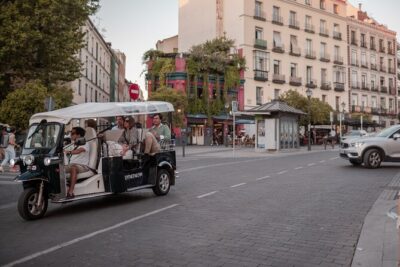
Madrid Historical Tour with Local Guide in Eco Tuk Tuk Private
Read our review →
Madrid Historic Centre Food Tour with Authentic Tapas & Wines
Read our review →
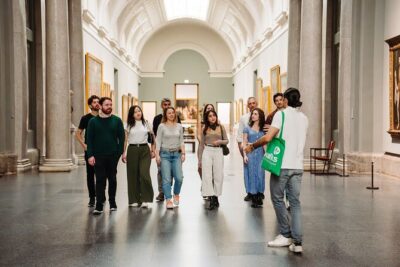
Madrid in a Day Tour:Royal Palace, Historic Center & Prado Museum
Read our review →
Madrid Local’s Tapas Tour Dinner with a side of History
Read our review →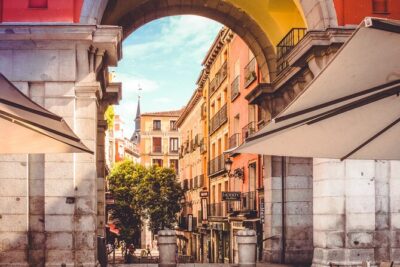
Guided Tour of Madrid of the Austrias and the Historic Center
Read our review →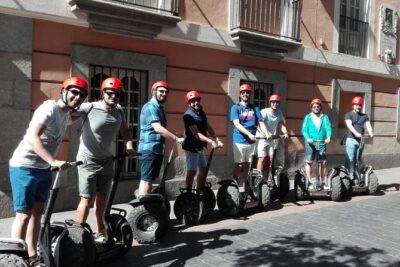
Segway Private Tour in the Historic Center of Madrid
Read our review →
Browse the lists this tour appears in