
Reviewed · PRADO MUSEUM TOURS AND TICKETS
Madrid: Prado Museum Entry Ticket
The Prado is the place to see Spain’s greatest painters in their own house. Velázquez’s Las Meninas, Goya’s unsettling Black Paintings, El Greco’s tall, twisting figures, and Bosch’s strange Garden of Earthly Delights give the museum a powerful sense of place. You are not simply ticking off famous pictures. You are walking through the former Spanish Royal Collection, spread across grand rooms in one of Europe’s great art museums.
I like the freedom of a full-day ticket and the chance to choose your own pace. I also like that an online booking can save you from waiting at the ticket counter, which matters when the Prado is busy. The main catch is the museum’s size: more than 1,300 works are on display, and the ticket includes no live guide or audio guide. Without a plan, you can tire out before reaching the paintings you most want to see.
Key points to know before you go
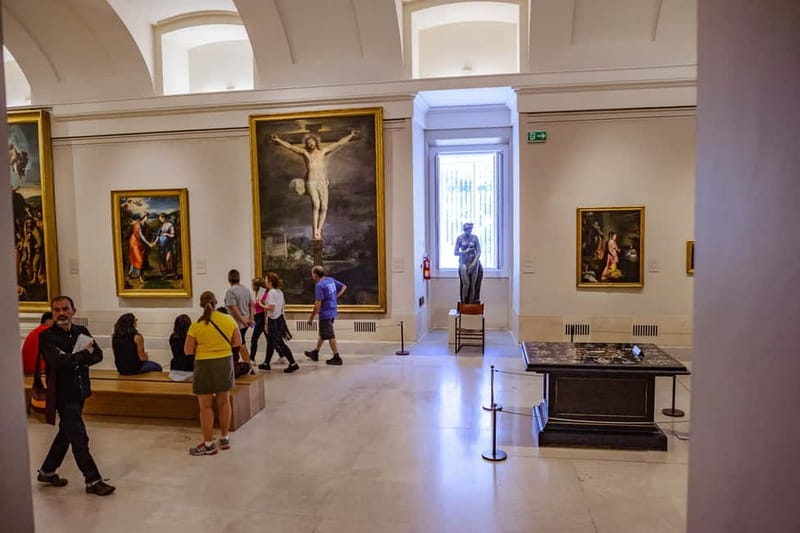
- The Spanish collection is the star: Make time for Velázquez, Goya, El Greco, Ribera, Zurbarán, Murillo, and other major Spanish artists.
- More than 1,300 works are displayed: The full collection is much larger, but the main building still offers more than most people can absorb in one visit.
- Three suggested routes help: The Prado organizes its major works into routes covering art from the Romanesque period through the 19th century.
- Enter at Puerta de los Jerónimos: This is Entrance 4 on the eastern side of the museum, though access can change to the Velázquez entrance on peak dates.
- The audio guide costs extra: You can buy one inside, with options designed for one, two, or three-hour visits.
- Evening admission may be free: The museum is free from 6:00 PM to 8:00 PM Monday through Saturday, and from 5:00 PM to 7:00 PM on Sundays and holidays.
Why the Prado matters in Madrid
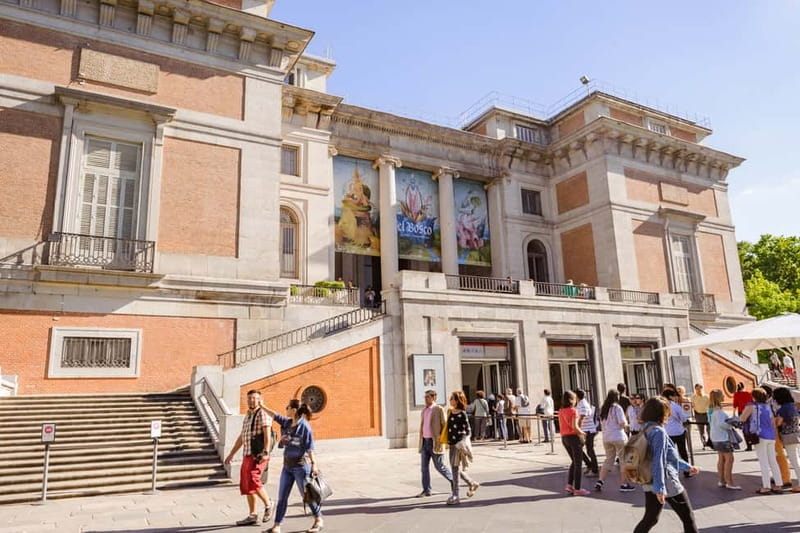
The Prado opened in 1819 as the Royal Museum, built around the Spanish crown’s art holdings. It later became the National Museum of Painting and Sculpture and then the Museo Nacional del Prado.
That royal background explains the museum’s particular strength. You get an unusually clear look at the painters favored by Spanish monarchs, along with works gathered through purchases, commissions, and inheritance. The result is not a random survey of European art. It is a collection shaped by power, religion, court taste, and Spain’s long links with Italy, Flanders, and the rest of Europe.
The numbers are easy to quote and hard to picture. The museum holds about 7,600 paintings, 1,000 sculptures, 4,800 prints, 8,200 drawings, and many historic documents. You will see only a portion of that material during your visit, with more than 1,300 works currently displayed in the main building.
That is still a lot. The Prado rewards a selective visit far more than a frantic attempt to see everything.
More Prado Museum Tours and Tickets:
- Madrid: Small Group of Prado Museum Tour & Optional Tapas
★ 4.6 · 2,437 reviews - Madrid: Prado Museum Guided Tour with Skip-the-Line Ticket
★ 4.5 · 2,018 reviews - Madrid: Prado Museum Guided Tour With Fast Access
★ 4.8 · 1,785 reviews
Getting to Entrance 4 and starting your visit
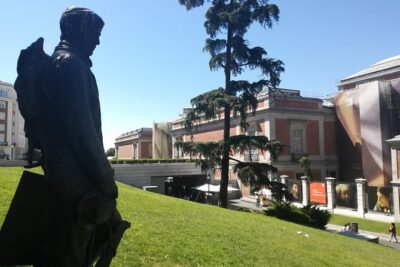
Your stated meeting point is Entrance 4, Puerta de los Jerónimos, on the eastern side of the museum. This detail matters because the Prado has three entrances, and the correct door is not always obvious if you are approaching from another side.
On peak dates, entry may move to the Velázquez access point. Check the instructions you receive with your booking, and allow time to find the right side of the building. A large ticket line may form at busy periods, while an online ticket lets you avoid buying at the museum counter. It does not remove every possible wait, but it can save one unnecessary queue.
The ticket confirmation may arrive within 48 hours of purchase, so do not leave the booking until the last moment if your schedule is tight. The activity is non-refundable, and the ticket is valid for one day only.
Once inside, you can pick up a map and decide how ambitious you want to be. The building is orderly, but the number of rooms can still feel confusing at first. A quick look at the map is time well spent.
Choosing between the Prado’s three routes
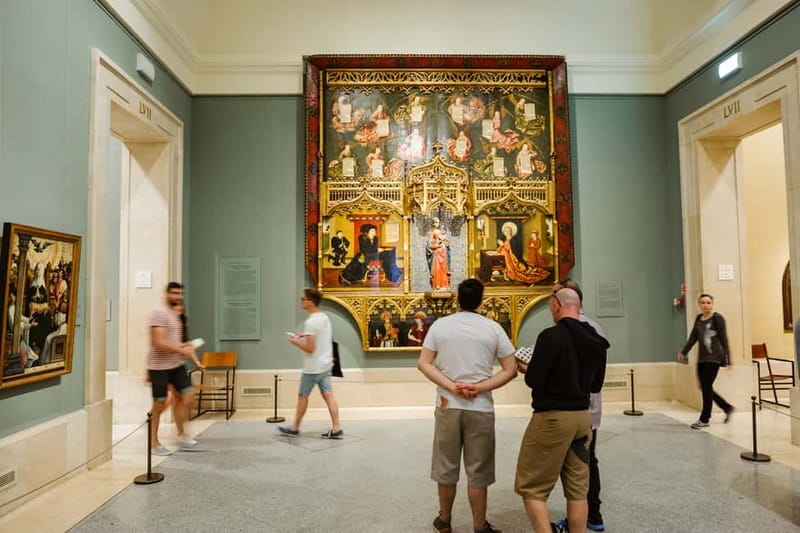
The Prado has organized three routes through its major works. They cover art from the Romanesque era to the 19th century and give you a practical way to handle the museum without wandering aimlessly.
I would use the route system as a framework, not a strict marching order. Start with the artists or paintings that matter most to you, then fill in the gaps. If you have two hours, follow a short route and accept that you will miss plenty. With half a day, you can add sculpture and a few less famous rooms. A full day gives you time to return to favorite paintings and sit quietly in front of them.
The routes are especially useful if you know little about Spanish art. The Prado includes painters whose names may be unfamiliar, including Bartolomé Bermejo, Pedro Berruguete, Sánchez Coello, Alonso Cano, and others. The suggested paths give these artists a place in the larger story instead of leaving you with only the most famous names.
Do not treat the map as a challenge to complete. The best Prado visit is usually built around a handful of paintings you really look at.
The Spanish masters you should prioritize
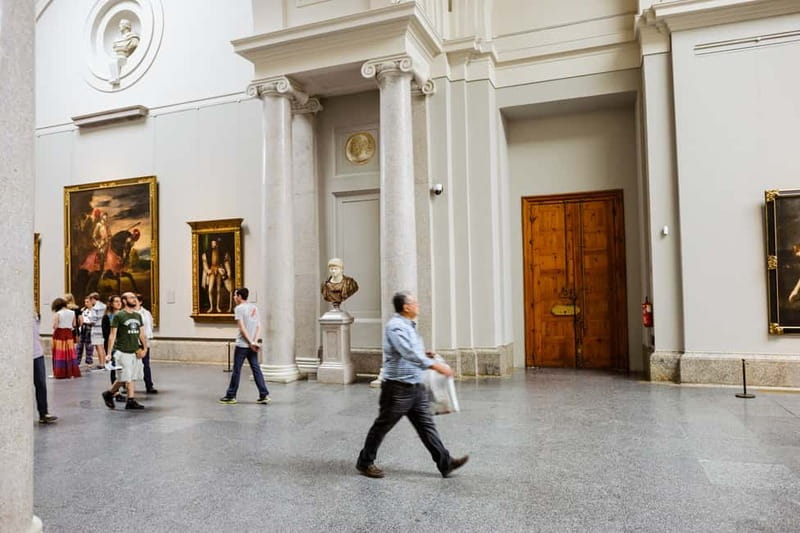
Velázquez deserves your early attention. The museum’s collection lets you see his handling of court portraiture, royal power, and everyday human character. Las Meninas is the obvious landmark, but the surrounding rooms help you understand why the painting matters.
Goya gives the visit a different mood. His work ranges from court portraits to scenes of war, social criticism, and private fear. The Black Paintings are among the most memorable works in the museum, and they are worth seeking out even if you are not normally drawn to darker art.
El Greco is instantly recognizable for his elongated bodies, dramatic gestures, and intense religious scenes. His paintings can feel almost restless after the controlled grandeur of the royal portraits.
You can also make room for Ribera, Zurbarán, Murillo, and Alonso Cano. Their work adds texture to the Spanish story, showing the force of religion, theater, devotion, and patronage in Spanish painting.
The major attraction here is not just quality. It is comparison. A few rooms can show you how Spanish artists treated light, faith, rulers, saints, soldiers, and ordinary people across several centuries.
More Museums in Madrid:
- Madrid: Reina Sofía Museum Entrance Ticket
★ 4.5 · 6,889 reviews - Prado Museum Small Group Tour with Skip the Line Ticket
★ 5.0 · 1,738 reviews - Royal Palace & Prado Museum Skip the Line Guided Tour
★ 4.5 · 1,347 reviews - Madrid: Sweet Space Museum Entry Ticket
★ 3.9 · 1,227 reviews
Bosch, Rembrandt, Titian, and the wider European collection
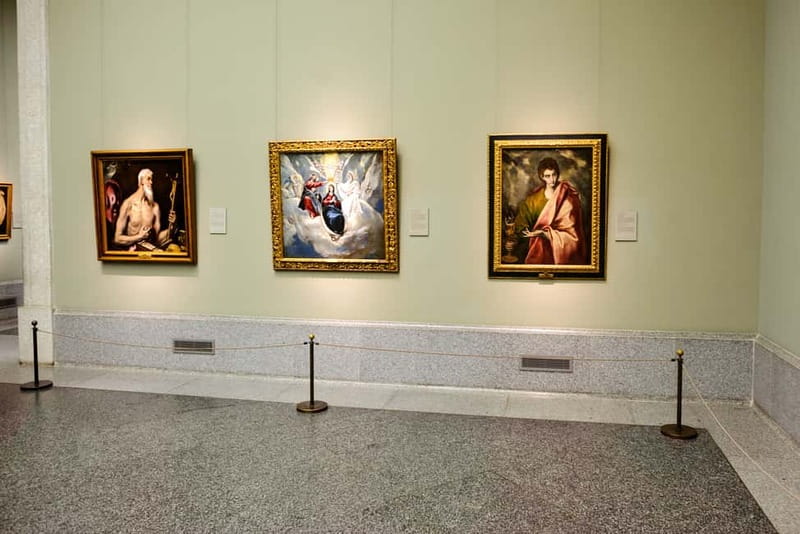
The Prado is essential for Spanish painting, but it is not limited to Spain. You will also find major works by Rembrandt, Dürer, Titian, and other European artists.
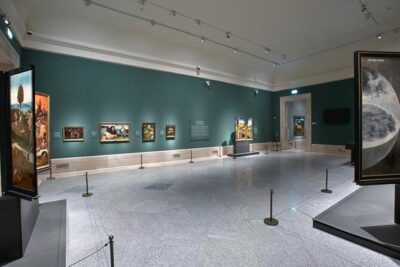
Bosch’s Garden of Earthly Delights is one of the paintings many people head toward first. Its crowded scenes and odd details reward slow looking, though the room can become busy. If this is a personal favorite, go early in your visit rather than hoping you will have energy left for it later.
The European rooms show how closely Spain was connected to the wider art world. Flemish painting, Italian Renaissance art, German prints, and later European traditions sit beside Spanish works. This gives you useful context for the royal collection and for the artists who influenced Spanish painters.
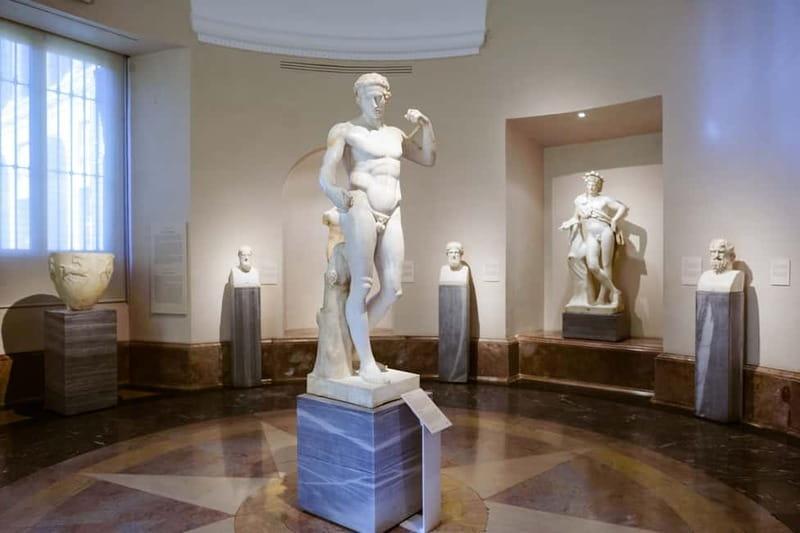
The Prado is also strong in sculpture. About 900 sculptures and 200 fragments are part of the collection. They are easy to skip when you are chasing paintings, but I recommend adding at least a few sculpture rooms to your plan. They change your pace and show the court collection in three dimensions.
The Dauphin’s Treasure and decorative art
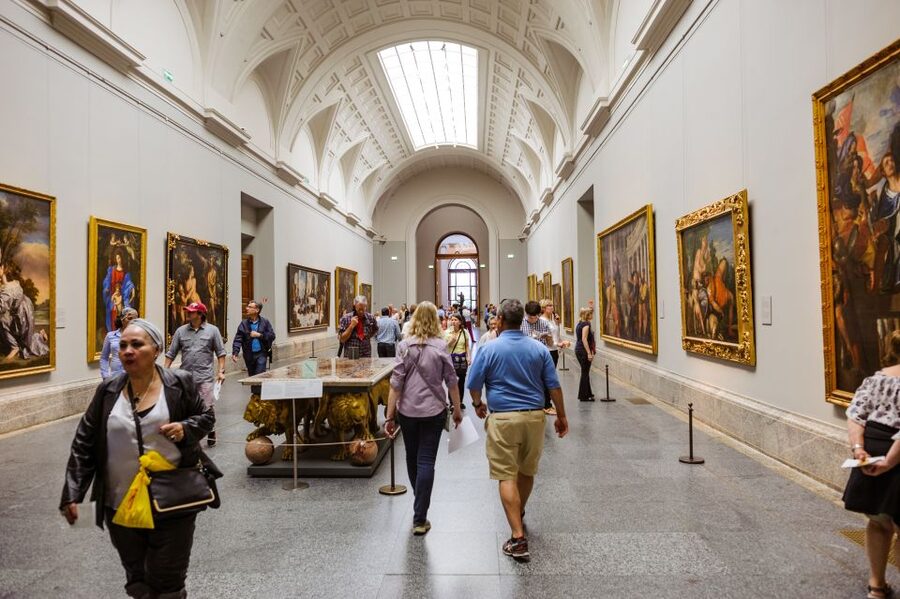
The Dauphin’s Treasure offers a break from the familiar parade of canvases. This collection of royal decorative objects shows how Spanish royalty displayed wealth and taste through precious materials, vessels, and court furnishings.
It is a useful reminder that a royal collection was never only about paintings. Decorative art helped shape ceremony and status. If you have been moving quickly through portrait rooms, this section gives your eyes and feet a different kind of pause.
The museum also holds prints, drawings, documents, and other objects. Not all are on display at once, but the collection’s scope reaches far beyond the headline paintings.
How long should you spend inside?
The ticket is valid for one day, and you can stay within the museum’s opening hours. In practice, plan for at least two hours if you want a focused look at the main works. Three to four hours is a better target for most people, while an art lover could make a full day of it.
A full day does not mean you must stare at paintings until closing. It means you can slow down, take a break, use the cafe, and return to rooms you rushed through earlier.
The museum is closed on January 1, May 1, and December 25. It has reduced hours, from 10:00 AM to 2:00 PM, on December 24, December 31, and January 6. Last access is allowed until 30 minutes before closing, so do not plan a late arrival if you want more than a quick look.
Free hours are useful for budget planning, but they can also be busy. Admission is free from 6:00 PM to 8:00 PM Monday through Saturday, and from 5:00 PM to 7:00 PM on Sundays and holidays. If your visit falls in those windows, compare the free admission period with the $21 ticket. Paying can make sense if you want a longer visit, a less rushed start, or the certainty of having your admission arranged.
Is the $21 ticket good value?
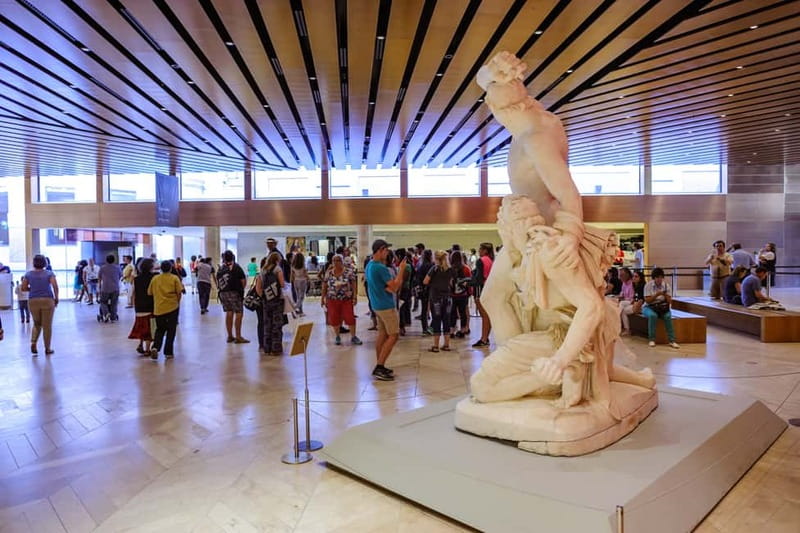
At $21 per person, the ticket is fairly priced for access to a museum of this scale. You are paying for entry to one of Europe’s major art collections, with a full day to use it rather than a short timed visit.
The value is strongest if you care about Spanish art or plan to spend at least several hours inside. Velázquez, Goya, and El Greco alone give the ticket a clear purpose, while Bosch, Rembrandt, Dürer, and Titian add breadth.
The value is less clear for a visitor who has only a short window or who is mainly interested in modern art. The Prado is a historic European painting museum, not a general survey of every artistic period.
The booking fee is included in the stated price. Food and drinks are not included, and no live guide is part of this ticket. There is a cafe, but food and drinks are not allowed in the galleries. One practical complaint is that the cafe can have a long wait, so do not build a tight schedule around eating there.
Should you buy the audio guide?
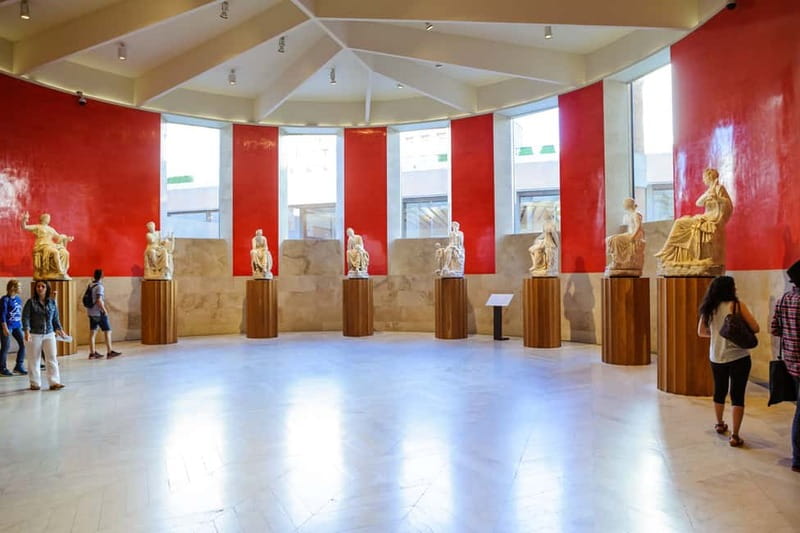
The audio guide is not included, but you can buy one at the museum. It has suggestions for one, two, or three-hour visits, which is useful if you want structure without joining a tour.
I would consider it if you are new to Spanish painting or feel overwhelmed by the size of the museum. It can point you toward the main artists and explain why certain works matter.
Do not expect it to replace a personal guide. Its navigation may not feel perfectly clear, and one visitor found the app less useful than simply walking at their own pace. If you already enjoy looking at art independently, the map and room labels may be enough.
This entry ticket does not include a live guide. That distinction matters if you want stories, questions, and a planned path led by another person. For independent visitors, the ticket gives you more freedom and avoids being tied to a group’s pace.
Crowds, photography, and museum manners
The Prado can become very crowded, especially around famous paintings and at popular times. Arriving near opening time is a smart move. Going earlier also gives you a better chance of spending quiet time with major works before the rooms fill.
Photography is not allowed inside, even without flash. Staff enforce this rule, particularly around important paintings. Put your phone away and use the visit as a chance to look without framing every work through a screen.
Food and drinks are not permitted in the galleries, except in the cafe. Plan snacks and water around your museum time rather than expecting to eat as you walk.
Staff are described as helpful, and English is understood by the museum team. Even so, clear signs for the ticket entrance are not always easy to follow in English. Look for Entrance 4, Puerta de los Jerónimos, and check for a change to the Velázquez entrance on a busy date.
Who will enjoy this Prado ticket most?
This works best for you if you want to set your own route, stay as long as you like, and focus on particular artists. It is also a good choice for a last-minute Madrid plan when regular timed tickets are no longer available for your preferred morning.
Families and first-time museum visitors should set a modest target. Choose a few rooms, take a break, and stop before the art turns into a blur. The ticket does not include a child, student, or senior reduction, so check the cost carefully if you are booking for a mixed-age group.
Art students, devoted museum fans, and anyone interested in Spanish history can easily use the full day. You might spend hours on Velázquez and Goya alone, then return to Bosch, sculpture, or the royal treasures.
Should you book it?
Book this ticket if the Prado is high on your Madrid list and you want the freedom to explore without a live guide. The $21 cost is reasonable for several hours with Velázquez, Goya, El Greco, Bosch, and a major European collection, especially when an online booking helps you avoid the ticket-buying line.
Skip it if you have only a brief gap in your schedule, dislike large painting museums, or need a guided explanation included in the price. For most first-time visitors with half a day or more, I would book it, arrive early, use one of the three routes, and leave enough time to sit with the paintings that catch you.
FAQ
How long is the Prado ticket valid?
The ticket is valid for one day. Check the available starting times when booking.
Where do I enter the Prado Museum?
Go to Entrance 4, Puerta de los Jerónimos, on the eastern side of the museum. On peak dates, access may change to the Velázquez entrance.
Does the ticket include a live guide?
No. The ticket includes museum entry and the booking fee, but not a live guide.
Is the audio guide included?
No. You can purchase an audio guide at the museum for an additional charge.
Are senior, student, child, or under-18 discounts included?
No. This ticket does not include reduced prices for seniors, students, children, or visitors under 18.
When is the Prado free?
Admission is free Monday through Saturday from 6:00 PM to 8:00 PM, and on Sundays and holidays from 5:00 PM to 7:00 PM.
Can I eat or drink inside the museum?
Food and drinks are not allowed in the galleries. They are permitted in the cafe.
Just added around Madrid
- Visit the National Archaeological Museum in Madrid★ 4.4 · 6 reviews
- From Madrid: Parque Warner Beach Water Park & Transport★ 3.9 · 14 reviews
- Madrid Wine Tasting, Flamenco Class and Pub Crawl★ 4.5 · 6 reviews
- Virtual Reality Experience Fun And Tickets & Imageen★ 5.0 · 12 reviews
- Visit to the Prado Museum★ 4.9 · 6 reviews
- Tuk Tuk Tour with Wine Test in Madrid★ 3.8 · 6 reviews
- Tuktuk historical tour of Madrid 1 Hr in a fun and original way★ 3.7 · 3 reviews
- Prado Museum VIP tour with an art Expert, tickets included★ 5.0 · 11 reviews
Prado Museum Tours and Tickets, compared.

Small Group of Prado Museum Tour & Optional Tapas
Read our review →
Prado Museum Guided Tour with Skip-the-Line Ticket
Read our review →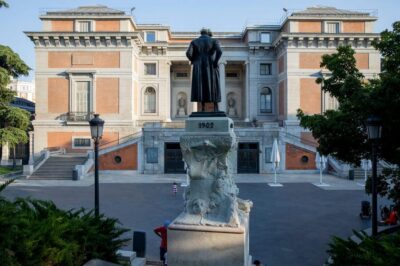
Prado Museum Small Group Tour with Skip the Line Ticket
Read our review →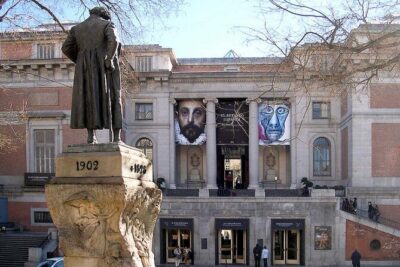
Royal Palace & Prado Museum Skip the Line Guided Tour
Read our review →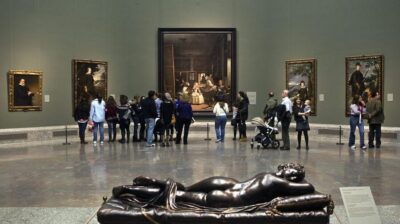
Prado Museum Guided Tour with Skip-the-Line Ticket
Read our review →
Prado Museum Guided Tour with Skip the Line Ticket in Madrid
Read our review →Browse the lists this tour appears in