
Reviewed · REINA SOFíA MUSEUM TICKETS
Museo Reina Sofía: Private visit with art expert
The great prize here is Picasso’s Guernica, but the real value lies in understanding the political, artistic, and personal forces behind it. A private art expert can connect Picasso, Dalí, and Miró instead of leaving you to wander through a large modern-art collection alone. I like the small private group, capped at seven, and I like that you can steer the conversation toward the artists or subjects that interest you most.
The main consideration is the price: $136 per person for two hours is a serious spend, especially for a solo visitor. The tour includes admission and a guide, but not transportation, and the guided portion is listed as about 1.5 hours within the two-hour booking.
Key Points
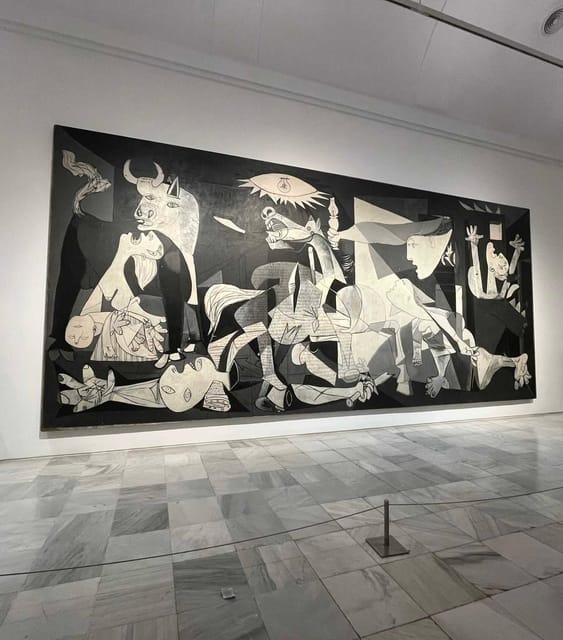
- Picasso’s Guernica gets the expert treatment: Learn why this famous painting became a major symbol of twentieth-century art.
- A private group of up to seven: Ask questions freely without the feel of a large museum crowd.
- Your interests shape the route: Focus more on Picasso, Dalí, Miró, modern art, politics, or artistic movements.
- Skip the ticket line: Meet near the statue by the Nouvel building and enter without waiting in the regular queue.
- English or Spanish guiding: Guides named Amanda and Sofia have received especially strong praise for their explanations and friendly manner.
- You may stay afterward: Once the guided visit ends, you can continue exploring the museum independently if your group has seven people or fewer.
Why a Private Reina Sofía Visit Makes Sense
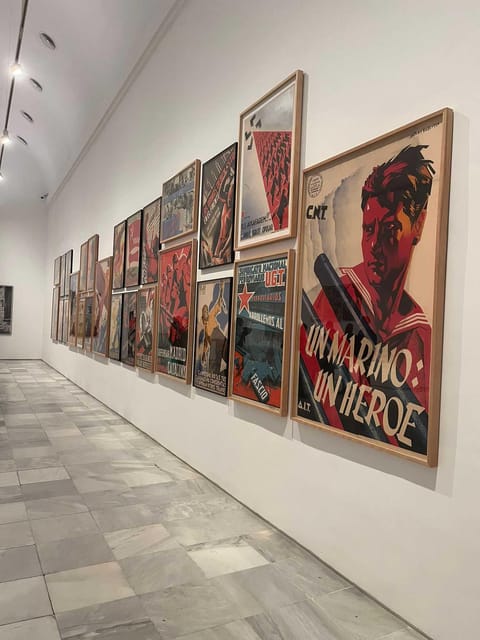
The Museo Nacional Centro de Arte Reina Sofía is not a museum you simply breeze through. Its collection follows European art from 1881 to the present day, a period marked by political upheaval, new technology, war, changing ideas about the human body, and repeated attacks on old artistic rules.
That can be exciting, but it can also be confusing. A private guide gives you a thread to follow. Instead of treating each painting as an isolated object, you can ask how one movement reacted against another, why an artist changed direction, or how a work relates to the history around it.
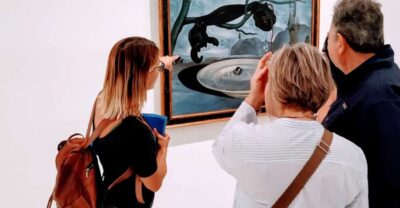
I especially like the private format for modern art. A large group tour often has to keep moving, even when one painting has caught your attention. Here, you can ask for a closer look at a detail, pause over a work you do not understand, or shift the emphasis of the visit.
The group limit is seven people. That is small enough for a real conversation, though you should remember that private does not mean one-on-one unless you book for only yourself and your companions. For couples, families, and small groups of friends, the size offers a good balance between personal attention and shared discussion.
More Reina Sofia Museum Tickets:
- Madrid: Reina Sofía Museum Entrance Ticket
★ 4.5 · 6,889 reviews - Madrid: Reina Sofía Museum Guided Tour
★ 4.3 · 659 reviews - Reina Sofia Museum Small Group Tour -6 people maximum-
★ 5.0 · 433 reviews
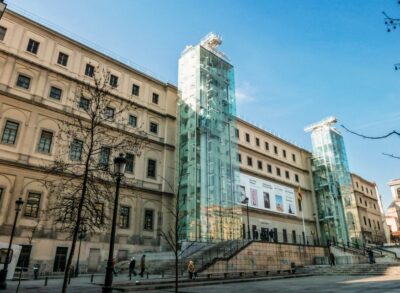
Meeting Near the Nouvel Building
The meeting point is next to the statue in front of the Nouvel building, with the exact point varying according to the option you book. Check your confirmation carefully, since the museum complex has more than one building and entrance.
The surrounding area is part of Madrid’s UNESCO-listed Landscape of Light, a large historic urban area shaped in part by the city improvements associated with Charles III. This gives you a useful setting before the museum visit begins. You are not meeting in an anonymous office or at a distant transport stop. You start beside one of Madrid’s major cultural institutions.
The tour does not include transportation, so plan your route to the museum separately. The guide handles the museum entry once you meet, and the skip-the-line arrangement matters most during busy periods. It saves time and removes one small source of stress before a visit that already asks you to concentrate.
I would arrive with enough time to find the correct statue and building without rushing. The meeting information can vary by booking choice, so do not rely only on the museum name when navigating.
The First 90 Minutes Inside the Museum
The guided museum portion lasts about 1.5 hours, within a total activity duration of two hours. That is enough time for a focused route, not enough time to see every room or study every major artist in the collection.
This is a strength if you want a clear introduction. You will leave with a sense of how modern and contemporary art developed, rather than a list of paintings you barely had time to see. It is also a limitation if you hoped for a full museum survey. The Reina Sofía covers a broad period, and two hours only allows the guide to select.
Your guide is expected to explain the works rather than simply identify them. That distinction matters. Dates and artist names are easy to read on a wall label. The useful part is learning what to look for, how the work fits its period, and why it mattered beyond the museum.
You can also make the visit interactive. Tell the guide at the start if you are particularly interested in Picasso, Surrealism, Spanish art, political painting, or the evolution of modern art. The tour is designed to adjust to those priorities.
If you know little about modern art, ask for the basic structure first. If you already know the major artists, ask for comparisons or lesser-known details. The private arrangement works best when you treat the guide as a conversation partner rather than waiting for a fixed lecture.
Picasso’s Guernica as the Main Event
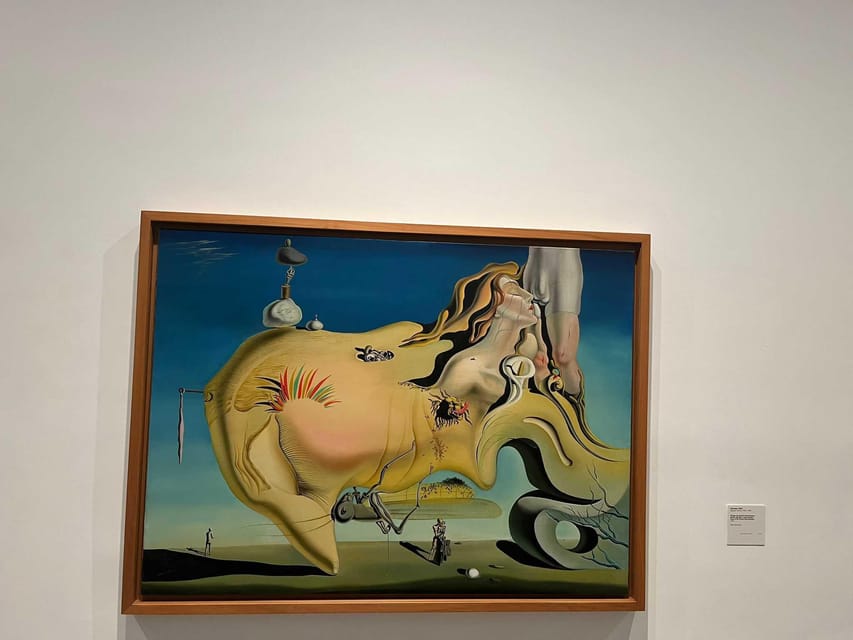
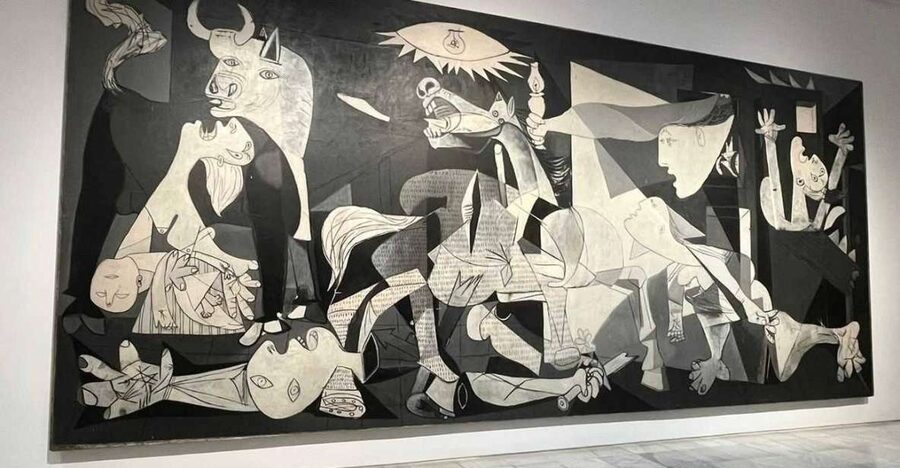
For many people, Guernica is the reason to visit the Reina Sofía. It is also a painting that can overwhelm you if you approach it without context. Its scale, fractured forms, and distressed figures make an immediate impression, but the reasons for its lasting importance take more time to understand.
The guide is meant to reveal the painting’s background, visual choices, and global impact. You can ask why Picasso used a restricted black, white, and gray palette, how the figures are arranged, or why the painting became linked so strongly with the human cost of war.
The experience is not just about admiring a famous canvas. It is about learning how a work can function as art, political response, historical document, and international symbol at the same time.
The museum’s Guernica presentation can attract plenty of attention, so the private format is useful here. You still need to share the gallery with other museum visitors, but you have your own guide and a chance to ask questions instead of simply passing through.
CNN has described Guernica as the fifth most famous painting in the world. That ranking is less important than the chance to see why this particular work has reached such a wide audience. If the guide spends a good portion of the visit here, that is not wasted time. It is the logical center of a Reina Sofía introduction.
More Madrid Tours:
- Madrid: Tour Bernabéu Entry Ticket
★ 4.5 · 21,573 reviews - Madrid: Prado Museum Entry Ticket
★ 4.6 · 17,509 reviews - Madrid: “Emociones” Live Flamenco Performance
★ 4.8 · 12,866 reviews - Madrid: Panoramic Route City Tour
★ 4.1 · 12,259 reviews
Picasso, Dalí, and Miró in Conversation
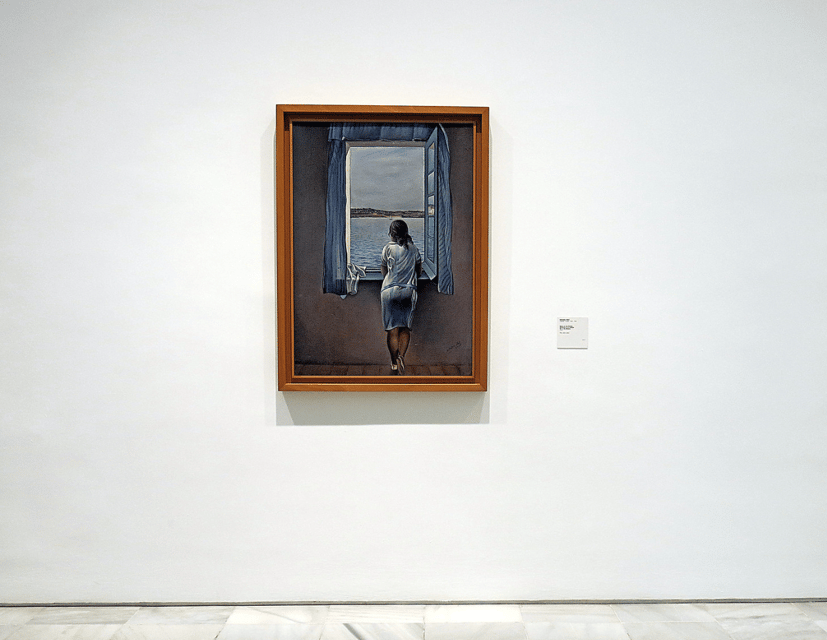
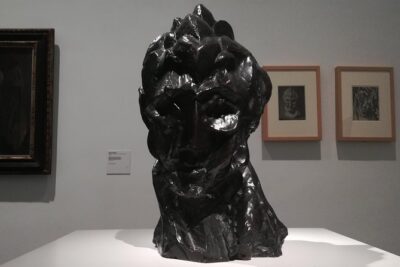
The tour gives special attention to Picasso, Salvador Dalí, and Joan Miró. Seeing these artists within the same museum helps you compare different answers to the problems of modern art.
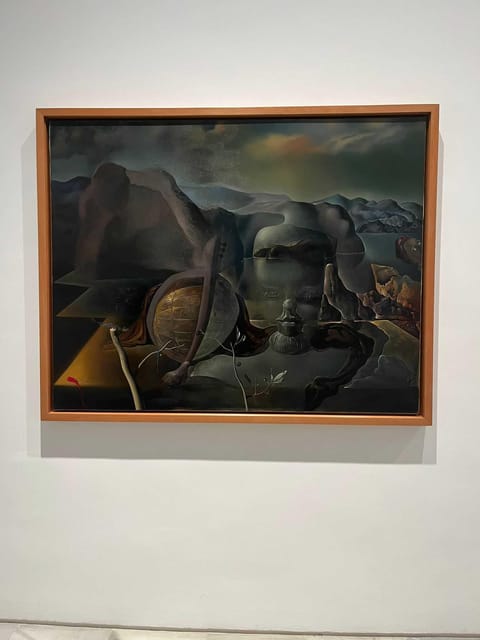
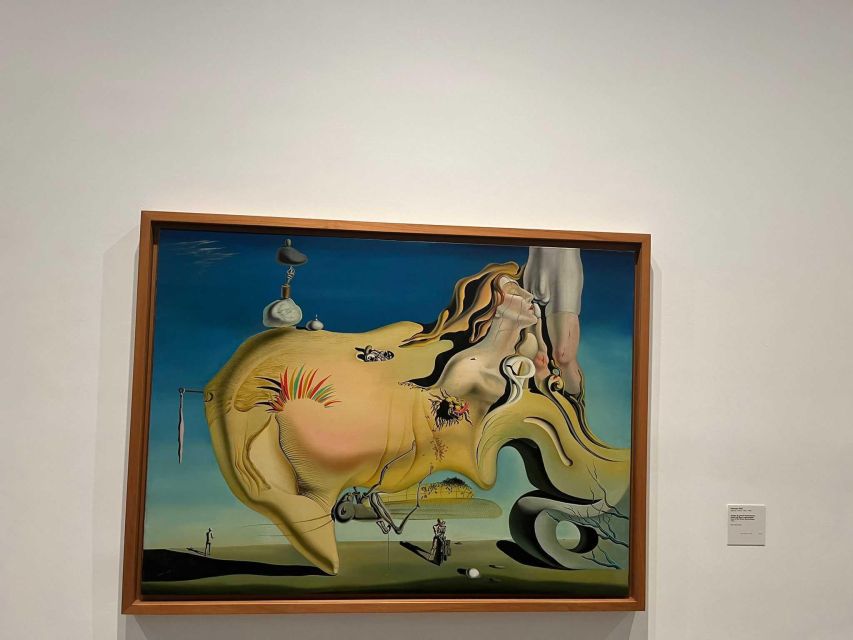
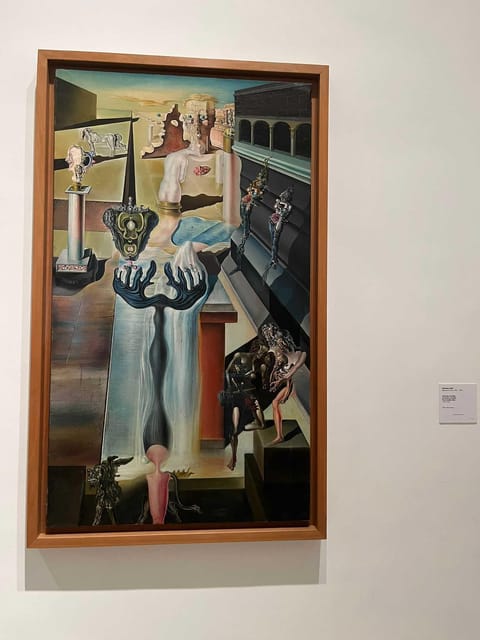
Picasso is useful for understanding how an artist could keep changing the language of painting. Dalí opens a path toward the strange, dreamlike side of twentieth-century art. Miró offers another approach to signs, shapes, and abstraction. The point is not to label one artist as better than another. It is to see how different personalities and methods shaped the direction of European art.
I would ask the guide to compare the three directly. Which ideas did they share? Where did they differ? How did their work respond to earlier traditions? Questions like these turn a series of famous names into a story about artistic change.
The guide can also adjust the balance. You might want more time with Dalí’s Surrealist work, a closer look at Miró, or a broader explanation of Picasso’s place in twentieth-century art. The activity specifically allows this kind of personalization, so make use of it.
Past guides named Amanda and Sofia received particularly warm praise for their explanations, with Sofia noted for making a clear difference through her presentation and Amanda singled out for an excellent guiding style. Your assigned guide may be different, but these comments point to the feature that matters most here: the quality of the explanation.
A Visit Built Around Your Questions
A private tour is only as useful as the questions you bring to it. You do not need an art degree. Even a simple question such as why a painting looks unfinished, why an artist distorted the human figure, or why a work became famous can lead to a better museum experience.
You can also tell the guide what you do not enjoy. If abstract art leaves you cold, say so and ask for a route that provides more historical context. If you love political art, request more time with works connected to conflict and social change.
This flexibility is one of the strongest reasons to pay for a private visit. A general museum tour has to serve the average group. This one can respond to your level of interest and knowledge.
Still, do not expect a complete survey of every room. Personalization means selection. If you want to see the entire museum, use the post-tour time to continue independently.
Staying After the Guided Visit
Once the guided portion ends, you can stay at the museum and explore on your own if your group has seven people or fewer. This makes the two-hour visit more useful than the clock might suggest.
Use the guide’s recommendations before separating. Ask which rooms or artists fit your interests, what you should not miss, and where it makes sense to spend extra time. You may find that the guided visit gives you the basic framework, while the remaining museum time lets you follow your own curiosity.
This arrangement is especially helpful for first-time visitors. You get an organized introduction, then a chance to slow down. You can return to Guernica, revisit an artist discussed earlier, or look at work outside the guide’s selected route.
If you are visiting with a group larger than seven, check the conditions carefully. The post-tour independent museum access is specifically described for groups of seven or fewer.
Is $136 Per Person Good Value?
At $136 per person, this is not a budget museum entry. The cost includes admission, taxes, booking fees, and a specialized art guide. It does not include transportation.
The value depends on how much help you want inside the museum. If you are comfortable reading labels, making your own connections, and choosing your own route, a private guide may feel expensive. You can visit a museum more cheaply on your own.
I think the price makes more sense for people who want context and personal attention, especially if they are sharing the cost among a small group. A couple or family that would otherwise pay for several separate admissions may find the convenience easier to justify. The tour also saves time by bypassing the ticket line.
The strongest value comes from the guide, not from the length. Two hours is short, but a good explanation of Guernica and the main artistic developments can improve the rest of your museum visit. If the guide simply recites labels, the price becomes harder to defend.
The five published ratings are all five-star ratings, with comments praising the friendly, informed presentation and the guides Amanda and Sofia. That is a small sample, so I would not treat it as a guarantee. It does point to the main reason people book this format: they want a human voice to make modern art easier to approach.
Who Should Book This Experience?
I would recommend this tour to first-time visitors who want a strong introduction to the Reina Sofía without trying to master the whole collection in one afternoon. It also suits anyone who feels uncertain around modern art and wants permission to ask basic questions.
It works well for:
- Couples and families who prefer a private outing
- Small groups of up to seven
- Visitors especially interested in Picasso, Dalí, or Miró
- People with limited time in Madrid
- Museum fans who want discussion rather than a self-guided visit
- Wheelchair and stroller users, since the museum is accessible
I would think twice if your main goal is a low-cost museum visit or several hours of independent wandering. The tour gives you a selected route and a guide-led introduction. It does not replace a full day spent exploring every gallery.
The guide can speak English or Spanish. If you need a language other than those, this experience is not the right match based on the available information.
Practical Details Before You Go
The total activity lasts two hours, with the museum tour listed at about 1.5 hours. Starting times vary, so check availability before booking.
You can cancel up to 24 hours before the activity for a full refund, and you can reserve now while paying later. Those terms are useful if your Madrid plans are still shifting.
The museum is wheelchair and stroller accessible. Transportation is not included, so you are responsible for reaching the meeting point near the Nouvel building.
The tour is offered in English and Spanish, and the group is private. Some museum content is presented in its original language, which may matter if you want to examine labels or material beyond the guide’s spoken explanation.
Should You Book the Private Reina Sofía Tour?
Book it if you want Guernica explained rather than merely photographed, value a small group, and prefer an art expert to shape the visit around your interests. The skip-the-line entry and option to remain afterward add practical value.
Skip it if $136 feels too high for a two-hour introduction or if you would rather explore the museum at your own speed from the start. For most people choosing this format, the decision comes down to the guide. If Amanda, Sofia, or another strong art specialist leads your visit, the right explanation can make the Reina Sofía far easier to appreciate.
FAQ
How long does the Reina Sofía private tour last?
The activity lasts two hours, with the guided museum visit listed as approximately 1.5 hours.
How many people can join the private group?
The private group can include no more than seven people.
Is admission to the Reina Sofía included?
Yes. Entrance fees, taxes, booking fees, and management fees are included.
Can I skip the museum ticket line?
Yes. The activity includes skip-the-line entry to the Reina Sofía Museum.
What languages are available?
The live guide is available in English or Spanish.
Can I stay in the museum after the tour?
Yes. If your group has seven people or fewer, you can stay and explore independently after the guided visit. The guide can recommend additional works or rooms to see.
Just added around Madrid
- Visit the National Archaeological Museum in Madrid★ 4.4 · 6 reviews
- From Madrid: Parque Warner Beach Water Park & Transport★ 3.9 · 14 reviews
- Madrid Wine Tasting, Flamenco Class and Pub Crawl★ 4.5 · 6 reviews
- Virtual Reality Experience Fun And Tickets & Imageen★ 5.0 · 12 reviews
- Visit to the Prado Museum★ 4.9 · 6 reviews
- Tuk Tuk Tour with Wine Test in Madrid★ 3.8 · 6 reviews
- Tuktuk historical tour of Madrid 1 Hr in a fun and original way★ 3.7 · 3 reviews
- Prado Museum VIP tour with an art Expert, tickets included★ 5.0 · 11 reviews
Reina Sofía Museum Tickets, compared.
Reina Sofia Museum Small Group Tour -6 people maximum-
Read our review →
Guided Tour of Reina Sofía Museum with Entry Ticket
Read our review →
Reina Sofia and Prado Museum Tickets and Guided Tour
Read our review →
Prado Museum with Reina Sofia Museum Guided Tour
Read our review →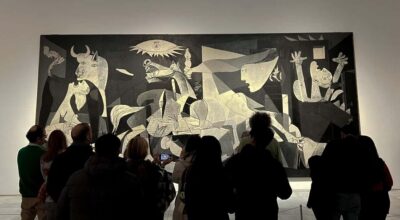
Reina Sofía Guided Tour with Skip-the-Line Tickets
Read our review →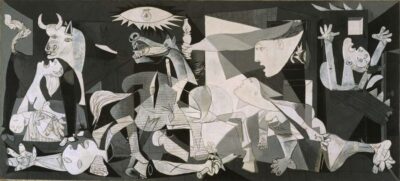
Reina Sofía Museum Ticket with In-App Audio Guide
Read our review →Browse the lists this tour appears in