
Reviewed · MADRID FOOD TOURS
Madrid: Iberico Ham and Spanish Wine Small-Group Food Tour
The star of this Madrid food tour is not simply the ham on your plate. It is learning why one slice costs far more than another, how jamón Ibérico differs from jamón serrano, and why a professional cutter makes such impossibly thin pieces. Iberian ham becomes easier to understand, rather than just another item on a tapas menu.
I like the mix of serious food knowledge and relaxed local stops. I also like that guides such as Pedro and Brian explain Spanish wine, regional food traditions, and smart shopping tips in clear English. The main caution is simple: this is a short tasting tour, and recent arrangements have included only two venues, so do not book it expecting a full evening of bar hopping.
Key points to know before booking
- Taste more than ham: Try jamón Ibérico, chorizo, lomo, salchichón, Manchego and other tapas.
- Learn the buying code: Understand breed, curing, quality grades, jamón versus paletilla, and serrano versus Ibérico.
- Meet at Opera: The group gathers beside the statue of Queen Isabel II at Plaza Isabel II.
- Expect a compact outing: The experience lasts 2.5 hours and includes a drink at each bar or jamonería.
- Guides add local context: Pedro and Brian have led past tours, with explanations covering wine regions, Madrid food culture and ham production.
- Know the limits: It is not suitable for children under 16, vegans, pregnant women, or people with walking disabilities, and there is no vegetarian option.
Why Iberian ham deserves a closer look
Spanish ham can look simple on a plate: a few pink slices, perhaps some cheese, bread and a glass of wine. Yet the label carries a lot of information. The pig’s breed, diet, curing time, region and production method all affect the taste and price.
That is the useful heart of this experience. You are not merely handed a plate and told that the ham is excellent. You learn how to compare different types and what to look for when shopping in Madrid.
The guide explains the difference between jamón serrano and jamón Ibérico. Serrano is made from white pigs and is widely available. Ibérico comes from the Iberian breed, with different grades and production standards that influence its cost. You also learn the distinction between jamón, the hind leg, and paletilla, the front shoulder.
Those details matter once you visit a market or jamonería on your own. Without some guidance, it is easy to pay for an impressive-looking label without knowing what you are buying. This tour gives you a working vocabulary and a better sense of value.
You also hear about four protected Spanish designations linked to ham production. The point is not to memorize every term. It is to understand that Spanish ham is tied to place, method and regulation, much like wine and cheese.
More Madrid Food Tours:
- Madrid Ultimate Spanish Cuisine Food Tour
★ 5.0 · 1,010 reviews - Madrid Historic Centre Food Tour with Authentic Tapas & Wines
★ 5.0 · 814 reviews - Madrid: Tapas Food Tour with Drinks and Food
★ 4.9 · 651 reviews
Starting at Plaza Isabel II near Opera
The meeting point is Plaza Isabel II, beside the statue of Queen Isabel II and close to Opera metro station. That makes the start convenient if you are staying near central Madrid or using the city’s metro system.
Give yourself time to find the statue. Plaza Isabel II is a busy central square, and meeting beside a clear landmark is easier than searching for a restaurant entrance. Your guide speaks English, and the tour is designed for a small group, although the exact group size can vary.
The experience lasts 2.5 hours. That is long enough for several tastings and a useful explanation of the food, but short enough to fit around a museum visit, an afternoon walk, or dinner plans.
The timing can also shape the feel of the outing. One past version began at 4 p.m., which worked well as a bridge between sightseeing and the evening meal. Other starting times may be available, so check the schedule when you book.
Wear comfortable shoes. You will need to move between stops, and the activity is not recommended for people with walking disabilities or wheelchair users. The route is not described as strenuous, but this is not a seated tasting in one room.
At the local taberna: food with a Madrid accent
The first stop may be a traditional taberna or similar local bar. This is where the experience can feel more like a real Madrid food outing than a formal tasting class.
Past tours have included a local stew and a drink at the opening stop. The exact food can change, so think of this as a taste of everyday Spanish cooking rather than a fixed restaurant meal.
This part is valuable because ham makes more sense when you see how it fits into local eating habits. In Spain, cured meat is not treated only as a luxury product. It appears in small plates, sandwiches, shared meals and casual drinks with friends.
Your guide also begins explaining the grades and pricing of jamón. Listen for the practical details. The most expensive slice is not automatically the best choice for every meal, and a local taberna gives you context for how these products are actually enjoyed.
The setting can be lively, though the supplied information does not promise a particular restaurant or menu. That uncertainty is worth keeping in mind if you have strict food preferences or want a guaranteed full lunch. The experience includes a food tasting, but additional food and drinks are not covered.
Inside a traditional jamonería
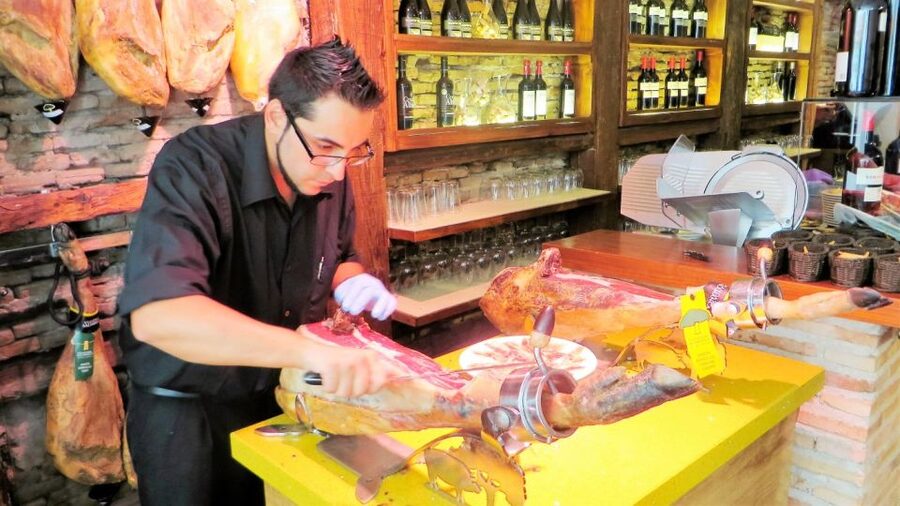
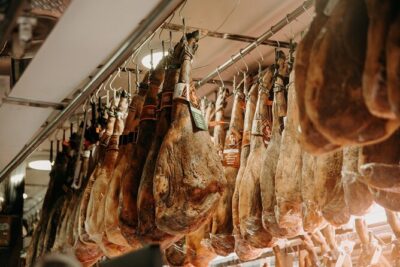
The main stop is a traditional jamonería, a shop or bar devoted to cured ham and related products. Here you see the long legs of ham, the cutting stand, and the careful work behind each serving.
A professional ham cutter, known as a cortador, slices the ham into thin pieces. Watching this matters. The cut affects texture, mouthfeel and the way the fat spreads across the slice. It also shows why hand-carved ham is treated differently from an ordinary packaged cold cut.
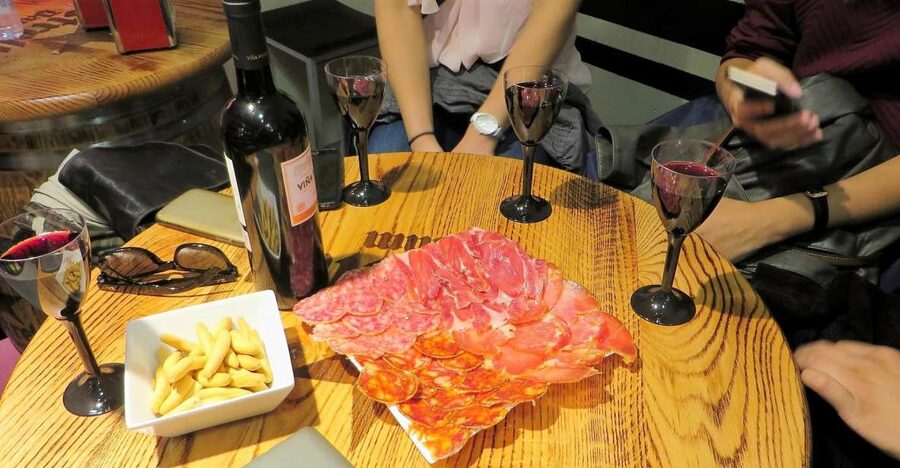
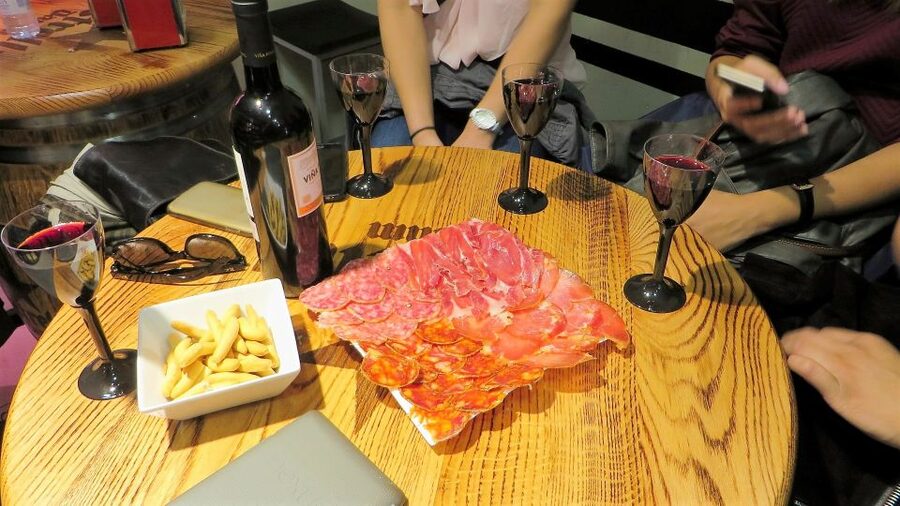
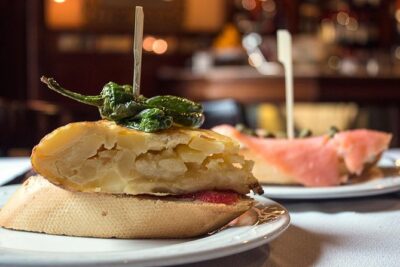
You get to taste several Iberian meats, including ham, chorizo, lomo and salchichón. Manchego cheese and other classic tapas round out the plate. The selection gives you several flavors to compare instead of asking you to judge ham in isolation.
The guide may point out changes in color, marbling, firmness and aroma. Even if you are new to cured meats, these comparisons help. You begin to see that jamón Ibérico is not one single flavor or price category.
The atmosphere is part of the appeal. A jamonería is both a shop and a place to eat, so the lesson connects directly with your future food shopping. You can ask what to buy, how much to order, and which products make sense as gifts or picnic food.
A different sort of day out around Madrid:
- Madrid: Tour Bernabéu Entry Ticket
★ 4.5 · 21,573 reviews - Madrid: Prado Museum Entry Ticket
★ 4.6 · 17,509 reviews - Madrid: “Emociones” Live Flamenco Performance
★ 4.8 · 12,866 reviews - Madrid: Panoramic Route City Tour
★ 4.1 · 12,259 reviews
Learning the ham labels without getting lost
Spanish ham labels can overwhelm first-time buyers. Terms about breed, feed, origin and curing appear together, and the price gap can be large.
The guide breaks down the difference between the main categories. You learn about the pig breed behind Iberian ham, the grading system, and the protected production areas. You also learn what separates jamón from paletilla.
This is one of the strongest reasons to take the tour early in your Madrid stay. If you schedule it near the start of your visit, you can use the advice later at markets, food shops and restaurant counters. One past participant wished they had taken the tour earlier for exactly this reason.
You should not expect to become a ham expert in one afternoon. The useful result is more modest and more practical: you can ask better questions and spot obvious differences in quality and price.
The guide also offers advice on shopping like a local. That can include how to identify a reputable jamonería and how to choose between a premium product and a good everyday option. Since specific shopping recommendations can change, ask your guide what is current during your visit.
Spanish wine alongside the cured meats
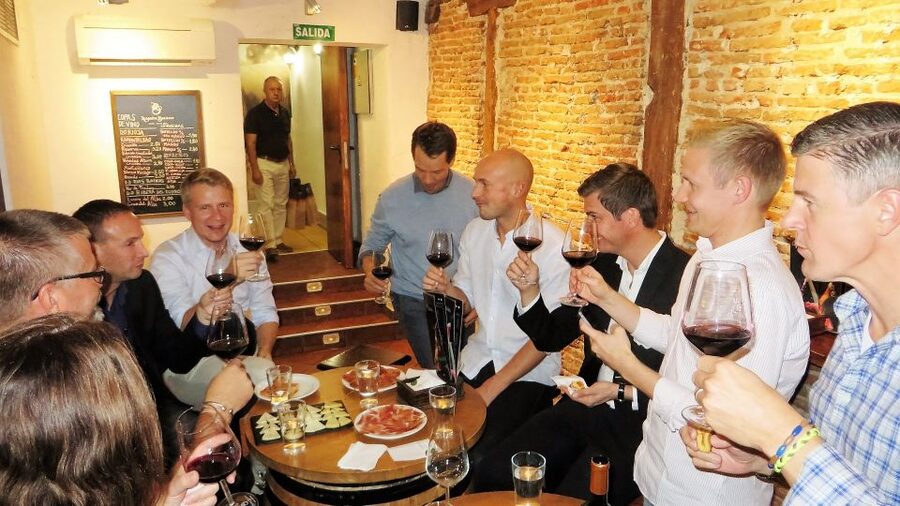
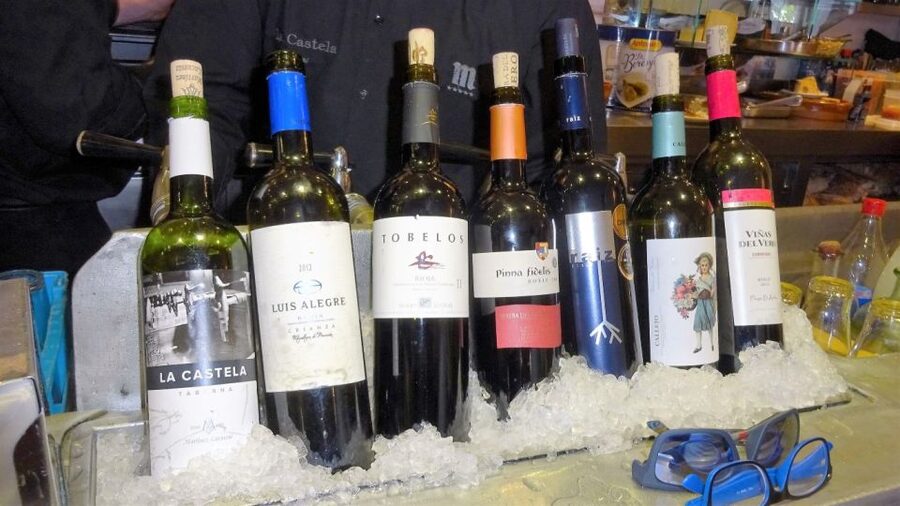
Wine is not an afterthought here. Each bar or jamonería includes one glass of wine, beer or a soft drink, and the tasting includes Spanish wine.
The wine discussion covers different regions of Spain, including Madrid wine and other Spanish reds. White wine has also appeared in past tastings. The pairings help you notice how acidity, body and sweetness interact with salt, fat and spice.
You do not need to know Spanish wine before arriving. The guide explains enough to give each glass a place on the map and in the meal. This is especially useful if you plan to order wine during the rest of your trip.
The alcohol policy deserves attention. A glass is included at each stop, but extra drinks cost more. Pregnant women are not permitted on the tour, and the experience is not suited to anyone who wants a fully alcohol-free food program, although soft drinks are included as an option.
What the guides add
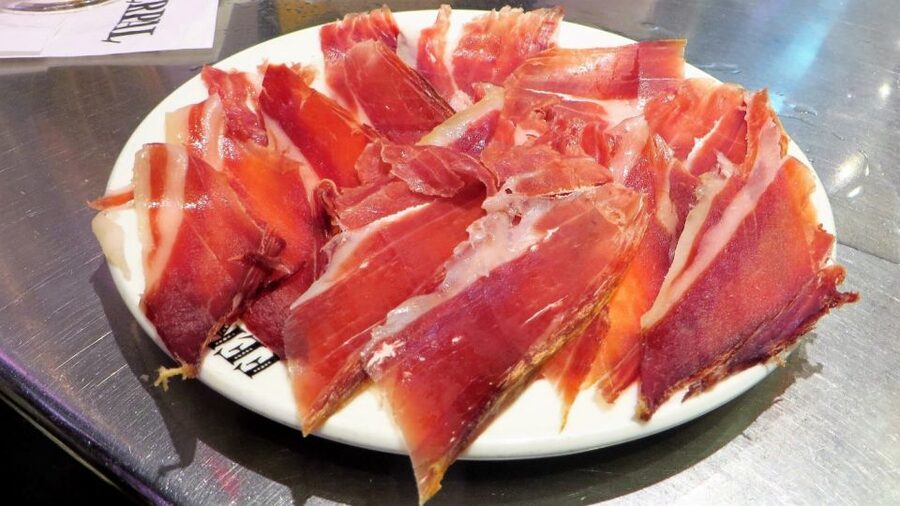
The guide is central to the experience. Pedro has been praised for explaining the food’s origins, Madrid culture, wine regions and shopping tips, while Brian has also led the tour with a strong focus on ham grades, pig breeds and wine pairings.
Guide assignments can change, so you should not assume that Pedro or Brian will lead every departure. Still, the format clearly depends on a guide who can turn the tasting into a conversation rather than a sequence of samples.
The best moments come when you ask questions. Ask why one ham costs more, how long a particular product is cured, which cut is best for a sandwich, or what local wine pairs with a salty slice. The tour is small-group in design, so there is usually room for that kind of exchange, though group size is not fixed.
The guides also add warmth. Past outings have included personal touches for special occasions, relaxed conversation, and even photographs with the ham cutters. These details are not guaranteed, but they show the social side of the tour.
How much food do you get for $69?
At $69 per person, this is not the cheapest way to eat in Madrid. You can buy a plate of ham and a glass of wine for less. The value lies in the guided comparisons, access to traditional food shops, and the information you can use for the rest of your trip.
The price includes the guide, Iberian ham, cured meats, tapas, cheese, wine tasting, and one glass of wine, beer or soft drink at each bar or jamonería. Hotel pickup, transport to the meeting point, and extra food or drinks are not included.
Think of the experience as a tasting lesson with lunch-sized elements, not an all-you-can-eat meal. One past account describes the food as outstanding and substantial enough to feel like an authentic lunch. Another points out that only two venues were visited and would have preferred more tapas bars.
That difference in expectation matters. If you want a focused introduction to ham and wine, the price is reasonable. If you want four or five bars, a long evening meal and many rounds of drinks, choose a broader tapas tour instead.
Who should book this Madrid tasting?
I would recommend it to food-minded visitors who want to understand what they are ordering. It suits first-time visitors especially well because the guide connects the food with Madrid customs, Spanish wine regions and local shopping.
It also works for couples, friends and older family members who prefer a compact activity. The tour is not designed for young children, since the minimum age is 16, and the food focus is almost entirely on meat, cheese and wine.
You should skip it if you are vegan or need a vegetarian menu. There is no vegetarian option, and special dietary requirements or allergies must be provided at booking. The available information does not promise substitutions.
This is also a poor fit if you cannot walk comfortably between stops. Comfortable shoes are required, and the activity is not recommended for people with walking disabilities or wheelchair users.
Practical details worth knowing
Meet at Plaza Isabel II beside the statue of Queen Isabel II, near Opera metro station. There is no hotel pickup, so plan your own route to the square.
Book with enough notice if you need confirmation for a special date or have dietary requirements. Confirmation is normally sent at booking, but bookings made within one day may be confirmed within 24 hours, subject to availability.
The tour is conducted in English. Free cancellation is available up to 24 hours before the start time, and you can reserve now and pay later if that option is offered at checkout.
Because the stops can be busy food businesses, the exact menu and venues may vary. Treat the ham, cured meats, cheese, tapas and drink inclusions as the core promise, not a guarantee of a particular dish or brand.
Should you book it?
Book this tour if you want more than a quick plate of ham. At its best, it teaches you how breed, curing, origin and cutting shape one of Spain’s most famous foods, then lets you taste those differences in traditional Madrid settings.
The strongest reasons to go are the practical shopping advice, the wine pairing, and the chance to learn from a guide such as Pedro or Brian. The main reason to hesitate is the compact format. With only two venues on some departures, you may want a larger tapas crawl if variety and nightlife matter more than ham expertise.
For food lovers, first-time Madrid visitors, and anyone planning to buy Spanish cured meats, $69 is a fair price for a focused 2.5-hour introduction. Schedule it early in your stay, wear comfortable shoes, and arrive ready to ask questions.
FAQ
Where does the Madrid Iberian ham tour meet?
The meeting point is Plaza Isabel II, beside the statue of Queen Isabel II. Opera metro station is nearby.
How long does the experience last?
The tour lasts 2.5 hours.
What food is included?
The tasting includes Iberian ham, chorizo, lomo, salchichón, Manchego cheese, other tapas and Spanish wine tasting.
Is a drink included?
Yes. You receive a glass of wine, beer or a soft drink at each bar or jamonería.
Is the tour conducted in English?
Yes. The tour includes a live English-speaking guide.
Is there a vegetarian or vegan option?
No. A vegetarian option is not available, and the activity is not suitable for vegans.
Can I cancel for a refund?
Yes. You can cancel up to 24 hours before the activity for a full refund.
More Madrid Wine Tastings and Winery Tours
- Toledo Tour & Vineyard Walk with Wine Tasting from Madrid
★ 5.0 · 2,546 reviews - Madrid: Tapas & Wine Tasting Tour with Local Guide
★ 4.8 · 2,171 reviews - Madrid Tapas & Wine Tour with Rooftop Views and Local Guide
★ 5.0 · 2,047 reviews - Paella Cooking Class in Madrid with Bottomless Wine Pairing
★ 5.0 · 985 reviews
Just added around Madrid
- Visit the National Archaeological Museum in Madrid★ 4.4 · 6 reviews
- From Madrid: Parque Warner Beach Water Park & Transport★ 3.9 · 14 reviews
- Madrid Wine Tasting, Flamenco Class and Pub Crawl★ 4.5 · 6 reviews
- Virtual Reality Experience Fun And Tickets & Imageen★ 5.0 · 12 reviews
- Visit to the Prado Museum★ 4.9 · 6 reviews
- Tuk Tuk Tour with Wine Test in Madrid★ 3.8 · 6 reviews
- Tuktuk historical tour of Madrid 1 Hr in a fun and original way★ 3.7 · 3 reviews
- Prado Museum VIP tour with an art Expert, tickets included★ 5.0 · 11 reviews
Madrid Food Tours, compared.
Madrid Historic Centre Food Tour with Authentic Tapas & Wines
Read our review →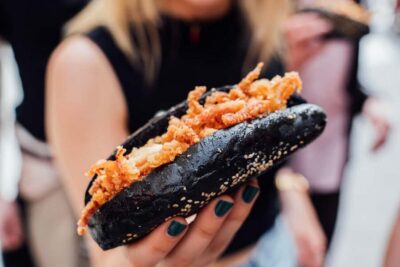
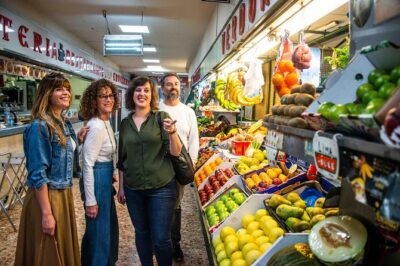
De Mercados: A Neighborhood Market and Food Tour
Read our review →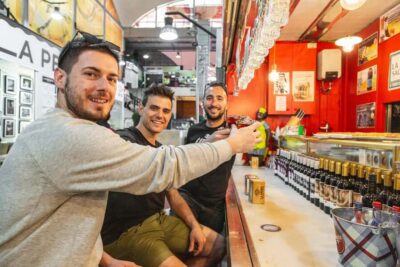
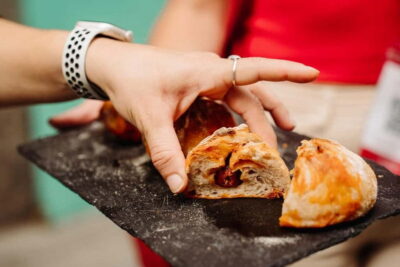
Private: Madrid Historic Centre Food Tour with 10+ Authentic
Read our review →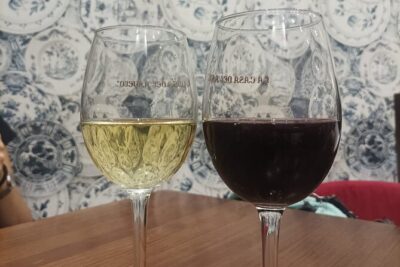
Madrid Food Tour: Tapas, Drinks and Delights with a Local
Read our review →Browse the lists this tour appears in