
Reviewed · REINA SOFíA MUSEUM TICKETS
Madrid: Thyssen-Bornemisza & Reina Sofia Private Tour
Madrid’s two major art museums make a fine pairing: the Thyssen-Bornemisza traces European painting across centuries, while the Reina Sofía gives Spain’s 20th-century artists the spotlight. A private guide helps you choose what matters instead of wandering through two very large collections.
I like the skip-the-line entry, which protects your limited time in Madrid, and I like the private format, since you can ask why a painting matters rather than simply walk past it. Guide Carmen earned particular praise for explaining any artwork her group wanted to understand.
The main consideration is the price, $283 per person for four hours. That is a serious museum bill, and transportation is not included, but it can make sense if you want focused art guidance instead of trying to master both museums alone.
Key points to know before booking
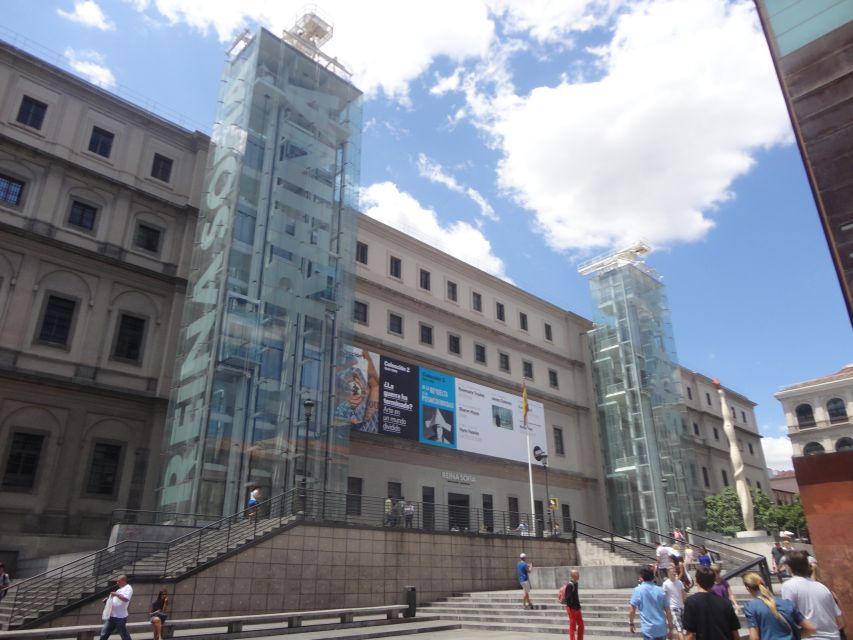
- Two museums, two very different stories: The Thyssen moves from early European masters through Impressionism and modern art, while the Reina Sofía concentrates on Spanish art of the 20th century.
- Picasso, Dalí, and Miró are central draws: The Reina Sofía gives you direct access to major Spanish names, including Picasso’s Guernica.
- A private guide keeps the visit flexible: You can ask about specific works and spend more time on the periods that interest you.
- The four-hour schedule is efficient but full: You will cover major ground, so this is not a slow, room-by-room museum study.
- Entry lines are handled for you: Admission to both museums is included, with skip-the-ticket-line access.
- English and Spanish tours are available: The tour is also listed as wheelchair accessible, though you should confirm any personal access needs when booking.
Why pair the Thyssen-Bornemisza with the Reina Sofía?
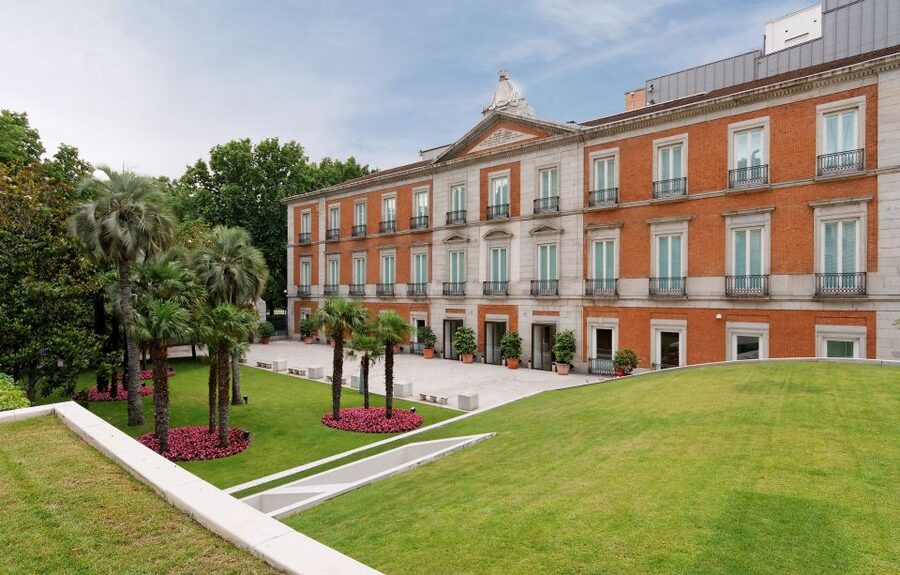
Madrid’s great museum district brings several major institutions close together, but the Thyssen-Bornemisza and Reina Sofía offer sharply different experiences. The Thyssen gives you a broad account of European painting. The Reina Sofía narrows its focus to modern Spanish art and related international movements.
That contrast gives the four-hour tour a clear shape. You begin with centuries of changing styles, materials, and artistic concerns. Then you move toward the political and personal force of 20th-century art, where Picasso, Dalí, Miró, and later Spanish artists take center stage.
I like this pairing because it helps you see connections. After looking at older approaches to portraiture, religious scenes, landscape, and light, you can better understand why modern artists broke figures apart, distorted space, or abandoned realistic painting altogether.
You should not expect to see every important room in either museum. These are major collections, and four hours is enough for a guided selection, not a full survey. The private format matters here. Your guide can spend time on a few works that speak to you instead of giving every room equal treatment.
More Thyssen-Bornemisza Museum Tickets:
- Museo Nacional Thyssen-Bornemisza with Skip the line ticket
★ 4.5 · 435 reviews - Madrid: Thyssen Museum Guided Tour with Skip-the-Line Entry
★ 4.5 · 165 reviews - Madrid: Thyssen-Bornemisza Museum Guided Tour & Entry Ticket
★ 4.6 · 70 reviews
Beginning at the Thyssen-Bornemisza
The first museum covers a wide stretch of European art. You might encounter Italian and Flemish painters from the 14th and 15th centuries, Renaissance works, Dutch Baroque painting, and Italian Vedutism from the 18th century.
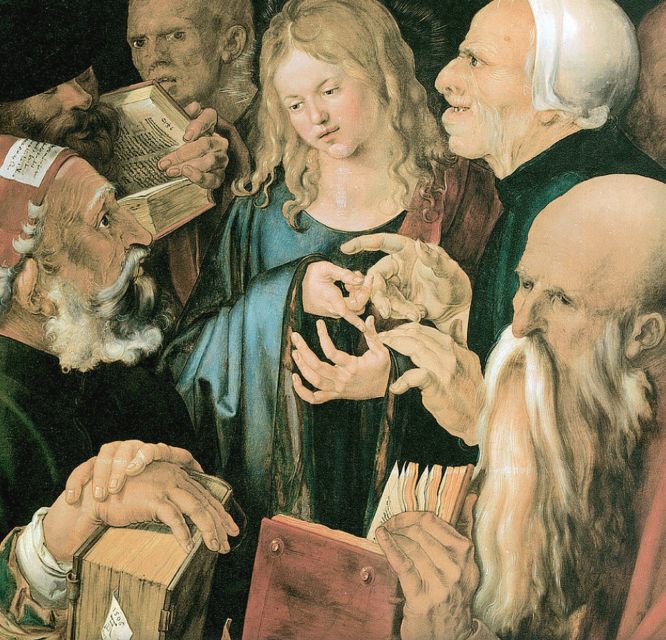
Those labels can sound like a syllabus, but the value of a guide is making the changes visible. Early Italian and Flemish painting can introduce you to careful detail, religious themes, and the development of European panel painting. Renaissance works bring a stronger interest in human figures, space, and classical ideas.
Dutch Baroque art shifts the mood again. It often brings greater attention to daily life, interiors, objects, and the interests of a prosperous urban society. Italian Vedutism, known for detailed city views, gives you another turn toward place and observation.
I would pay attention to how the guide links works across periods. A museum visit can otherwise become a parade of famous names with little sense of sequence. Here, the point is not simply to identify an artist. It is to see how European painting changed over several hundred years.
The Thyssen also includes Impressionist works and several major currents of 20th-century art. You may see Cubism, German Expressionism, abstract painting, Pop Art, and the figuration of the 1980s.
This later section makes the museum particularly useful for people who enjoy modern art but want some earlier context. Impressionism changes the role of light and brushwork. Cubism questions the way a single viewpoint presents an object. German Expressionism uses distortion and forceful treatment to create emotional pressure.
Abstract painting asks you to think without recognizable subject matter, while Pop Art draws on the look of mass media and consumer culture. The figuration of the 1980s brings the human figure back in new ways.
You do not need to arrive with a working knowledge of art movements. A good private visit should make those shifts easier to see. Carmen, one of the guides associated with this tour, was praised for explaining whichever piece interested her group. That is a useful detail for anyone who dislikes a fixed lecture and prefers to follow a question as it develops.
Walking from older masters to modern Spain
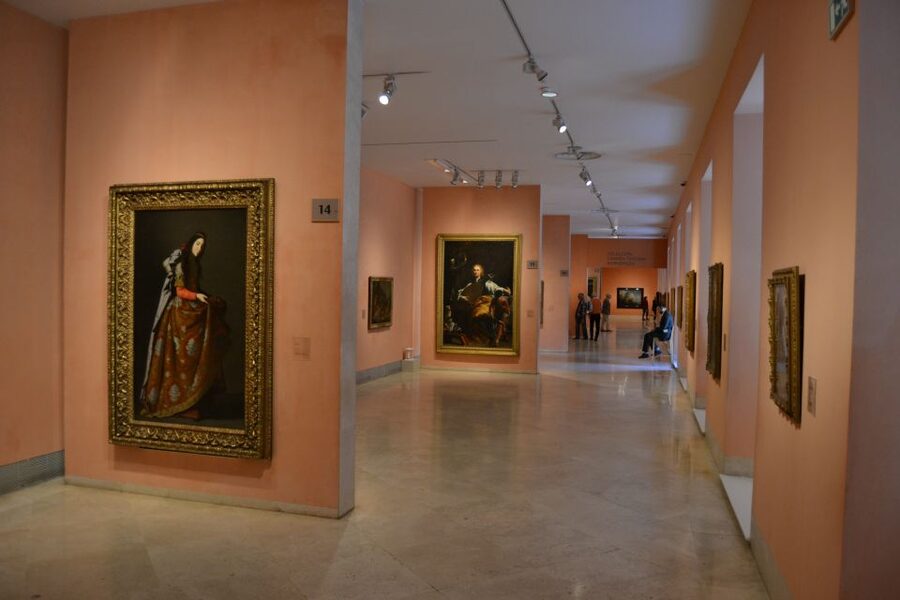
After the Thyssen, you walk with your guide to the Reina Sofía Museum. Transportation is not included, but the itinerary specifically describes this as a walk between the museums, so you do not need to arrange a vehicle for that transition.
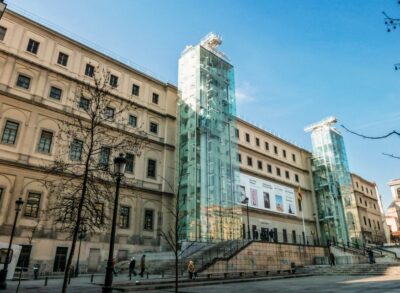
The change of setting is part of the appeal. The Reina Sofía occupies Madrid’s former General Hospital, a large 18th-century neoclassical building designed by the Italian architect Sabatini. The building gives the second half of the visit a different feel from a traditional old-master gallery.
The tour then turns to major Spanish artists of the 20th century, especially Pablo Picasso, Salvador Dalí, and Joan Miró. You will also see collections connected with Surrealism and Cubism, along with artists associated with New Figuration, including Francis Bacon and Antonio Saura.
This is the portion many visitors will remember most clearly. The Reina Sofía is not simply a museum of famous Spanish names. It shows how artists responded to a century marked by political conflict, changing ideas about identity, and rapid changes in visual culture.
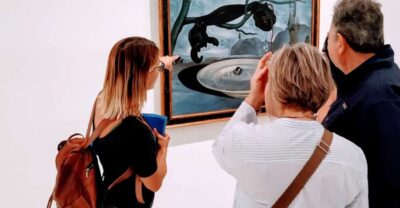
Picasso, Dalí, and Miró did not paint in the same way, and the guide can help you notice those differences. Picasso’s fractured forms, Dalí’s dreamlike imagery, and Miró’s signs and abstract shapes offer very different routes into modern art.
The key work here is Picasso’s Guernica. The supplied details identify the painting as a central attraction of the museum experience, and it deserves time rather than a quick glance. You may already know its broad subject, but seeing it in the setting of a museum devoted to modern Spanish art gives the work a stronger place in the wider story.
The private format is especially helpful in front of a work like this. You can ask about composition, symbolism, historical setting, or the ways Picasso makes the painting feel chaotic without losing its structure. The guide’s role is not to replace your reaction, but to give you tools for looking longer and more carefully.
What four hours really gives you
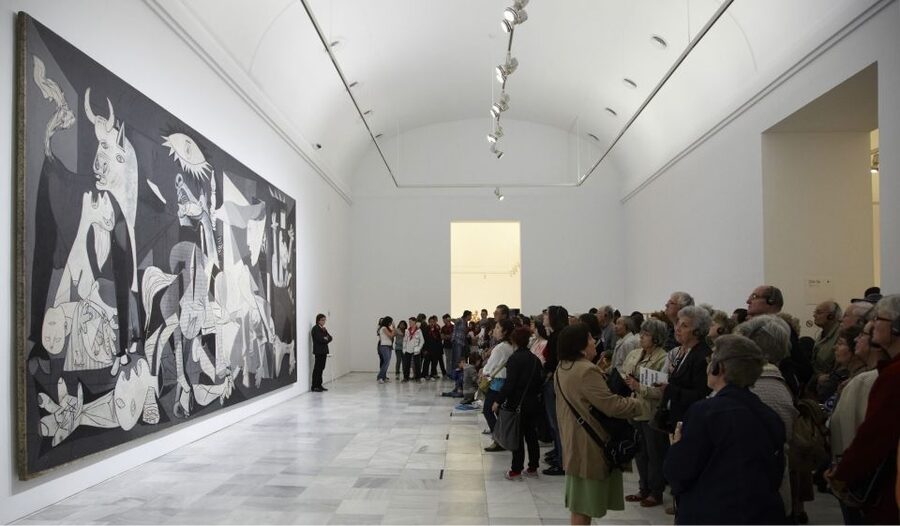
Four hours sounds generous, but two large museums can absorb far more time. I would treat this tour as a guided introduction with depth in selected areas, not as a complete visit to both institutions.
The first museum spans several centuries. The second covers key movements and artists from the modern period. That is a lot of material, and the pace will probably feel purposeful. If you stop for every painting, you will not reach the later galleries in a relaxed way.
This is where a private guide earns the fee. You can say that you care most about Renaissance art, Impressionism, Picasso, or Surrealism. You can also ask for help with a work that leaves you cold or confused. Guide Carmen was specifically praised for responding to the pieces her group wanted to discuss, which suggests the tour can adapt to personal interest.
If you already know both museums well, this may feel too broad. You may prefer to visit independently and spend an entire morning with one collection. If you are new to Madrid’s art museums, though, the structure saves time and prevents the common problem of leaving a major museum exhausted without seeing its most important rooms.
The tour is listed for private groups, so you are not sharing the guide with a large public crowd. That should make questions easier and keeps the visit more personal. The exact group size is not provided, so do not assume the experience is limited to only two people.
More Reina Sofia Museum Tickets:
- Madrid: Reina Sofía Museum Entrance Ticket
★ 4.5 · 6,889 reviews - Madrid: Reina Sofía Museum Guided Tour
★ 4.3 · 659 reviews - Reina Sofia Museum Small Group Tour -6 people maximum-
★ 5.0 · 433 reviews - Madrid: Guided Tour of Reina Sofía Museum with Entry Ticket
★ 4.9 · 363 reviews
Is $283 per person a fair price?
At $283 per person, this is not a budget museum visit. The price includes a four-hour guide, entrance tickets to both museums, taxes, and public liability insurance. It does not include transportation.
The value depends on how you use the private format. If you want to cover both museums quickly, skip ticket lines, and have an art specialist explain the works that catch your eye, the cost may be reasonable for a special day in Madrid. If you are comfortable reading museum labels and choosing your own route, independent admission will likely cost less.
I would especially consider this tour if you are traveling with family or a small private group with different levels of interest. A guide can provide enough context for a first-time museum visitor without forcing an art enthusiast to stay with only the most famous paintings.
The price is harder to justify if your main goal is a leisurely, unstructured visit. Four hours with a guide gives you direction, but it also creates a schedule. You may want to return later for a second look at a favorite room.
Meeting point, languages, and access
You meet your guide in the museum hall, next to the desk. The supplied information does not specify which museum’s hall is used as the starting point, so confirm the exact meeting location and starting time when you reserve.
The tour is available in English and Spanish. A live guide leads the visit, and the experience is listed as wheelchair accessible. Since museums can involve different entrances and routes, anyone with particular mobility needs should still confirm the practical details before booking.
The tour lasts four hours, with starting times subject to availability. Because the museums are the main event, plan your day around the appointment rather than treating it as a casual drop-in.
Free cancellation is available up to 24 hours in advance for a full refund. You can also reserve now and pay later, which is useful if your Madrid schedule is still changing.
Who will enjoy this private museum tour?
I would recommend it most strongly to:
- First-time Madrid visitors who want a clear introduction to two major museums
- Couples or private groups who prefer questions and conversation over a large group lecture
- Art lovers who want both older European painting and 20th-century Spanish art in one morning or afternoon
- Visitors with limited time who want skip-the-line entry and a planned route
- Families or mixed-interest groups that benefit from a guide adjusting explanations to the people in front of them
I would be more cautious if you want to study every gallery in detail. The tour covers a lot, and the four-hour length requires selection. Independent visitors may prefer to choose one museum and return to favorite works at their own pace.
Should you book the Thyssen and Reina Sofía tour?
Book it if you want a focused first look at Madrid’s major art collections, especially if Picasso, Dalí, Miró, and European modern art are high on your list. The strongest reasons are the private guide, included admission, line-skipping access, and the chance to ask about the works that interest you most.
The price is the clear drawback. You are paying for guidance and efficiency, not just entry tickets. For someone who wants context, dislikes wandering without a plan, or has only one art-focused block in Madrid, that can be good value.
If you prefer slow museum days and already feel confident navigating art collections alone, skip the private tour and spend the money on more time inside one museum. For everyone else, this is a smart way to connect European art at the Thyssen-Bornemisza with the forceful modern Spanish collection at the Reina Sofía.
FAQ
How long does the private museum tour last?
The tour lasts four hours.
Which museums are included?
The tour includes the Thyssen-Bornemisza Museum and the Reina Sofía Museum in Madrid.
What art periods can I see at the Thyssen-Bornemisza?
The collection includes Italian and Flemish painting from the 14th and 15th centuries, Renaissance works, Dutch Baroque painting, Italian Vedutism, Impressionism, Cubism, German Expressionism, abstract art, Pop Art, and figuration from the 1980s.
Which artists are highlighted at the Reina Sofía?
The tour focuses especially on Pablo Picasso, Salvador Dalí, and Joan Miró. It also includes artists connected with Surrealism, Cubism, and New Figuration, including Francis Bacon and Antonio Saura.
Is Picasso’s Guernica included?
The Reina Sofía portion includes the museum’s major works by 20th-century Spanish artists, including Picasso. Guernica is identified as one of the museum’s core works.
Is transportation included?
No. Transportation is not included. The itinerary describes walking with the guide from the Thyssen-Bornemisza to the Reina Sofía.
What languages are available?
The live tour guide is available in English or Spanish.
Can I cancel the booking?
Yes. You can cancel up to 24 hours in advance for a full refund. The booking option also allows you to reserve now and pay later.
Just added around Madrid
- Visit the National Archaeological Museum in Madrid★ 4.4 · 6 reviews
- From Madrid: Parque Warner Beach Water Park & Transport★ 3.9 · 14 reviews
- Madrid Wine Tasting, Flamenco Class and Pub Crawl★ 4.5 · 6 reviews
- Virtual Reality Experience Fun And Tickets & Imageen★ 5.0 · 12 reviews
- Visit to the Prado Museum★ 4.9 · 6 reviews
- Tuk Tuk Tour with Wine Test in Madrid★ 3.8 · 6 reviews
- Tuktuk historical tour of Madrid 1 Hr in a fun and original way★ 3.7 · 3 reviews
- Prado Museum VIP tour with an art Expert, tickets included★ 5.0 · 11 reviews
Reina Sofía Museum Tickets, compared.
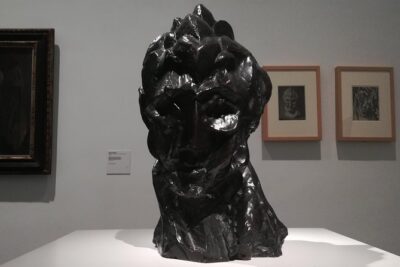
Reina Sofia Museum Small Group Tour -6 people maximum-
Read our review →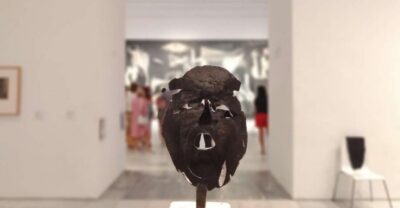
Guided Tour of Reina Sofía Museum with Entry Ticket
Read our review →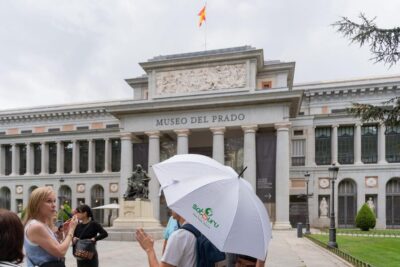
Reina Sofia and Prado Museum Tickets and Guided Tour
Read our review →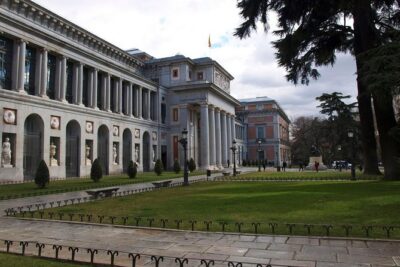
Prado Museum with Reina Sofia Museum Guided Tour
Read our review →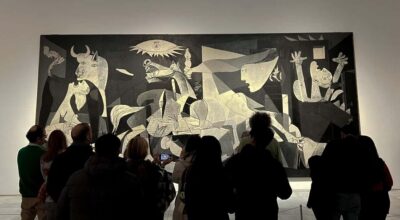
Reina Sofía Guided Tour with Skip-the-Line Tickets
Read our review →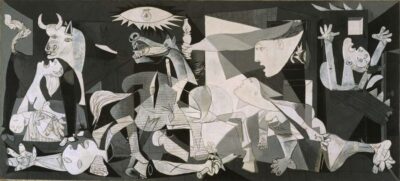
Reina Sofía Museum Ticket with In-App Audio Guide
Read our review →Browse the lists this tour appears in