
Reviewed · PRADO MUSEUM TOURS AND TICKETS
Madrid: Private Tour of the Prado Museum
The Prado is not a museum you should try to conquer by wandering until your feet give up. A private guide gives you a clear route through its greatest paintings, from Van der Weyden and Rafael to Velázquez, Rubens, El Greco, and Goya. Javier and Anne are named guides who bring strong knowledge and a light touch.
I like the private format, since you can ask questions and steer the conversation toward the artists or periods you care about. I also like that the tour ends with time to continue alone, rather than ushering you straight back outside. The main catch is simple: museum admission is extra, and the advertised tour operates in German only.
Key points at a glance
- A two-hour private route through the Prado: You tour without other participants and can ask questions as you go.
- Art from the Middle Ages to the early 20th century: The selection moves through the Renaissance, Baroque period, and later Spanish painting.
- German-speaking guides Javier and Anne: Javier is known for lively stories, while Anne has adapted well to families and individual interests.
- A focused selection, not every room: The guide chooses important works so you do not lose the whole visit to museum fatigue.
- Time to continue independently: After the guided portion, you can revisit favorite rooms or find paintings not included in the route.
- Admission is paid separately: Adults pay EUR 15 for groups of one to six, with reduced rates for seniors and free entry for students up to age 25.
Why a private Prado tour makes sense
The Prado is one of those museums where a floor plan does not tell you what matters. Its collection covers centuries of European painting, and the most famous names are spread across different rooms and periods. Without a plan, you can spend two hours looking at large canvases without understanding how one era connects to the next.
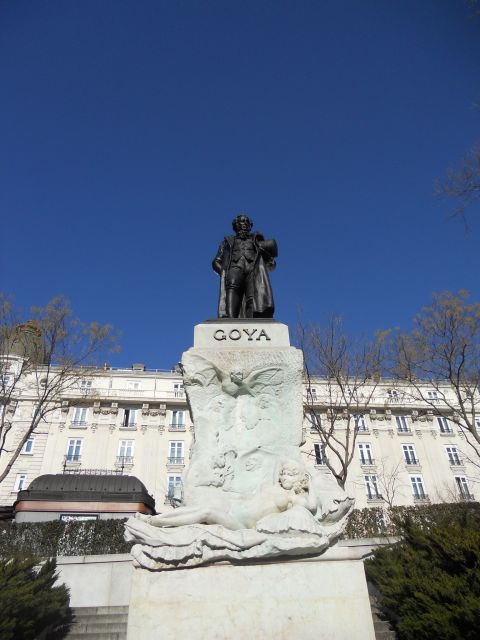
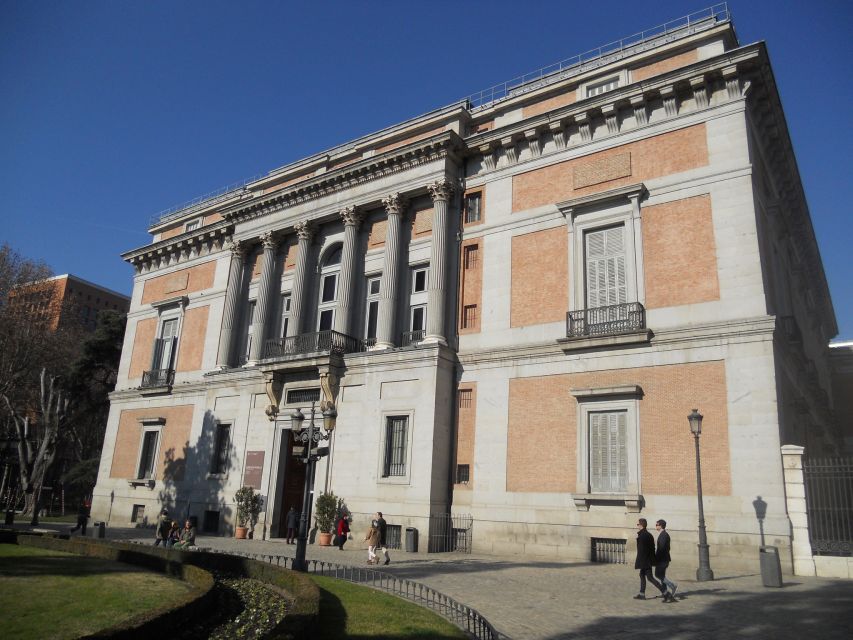
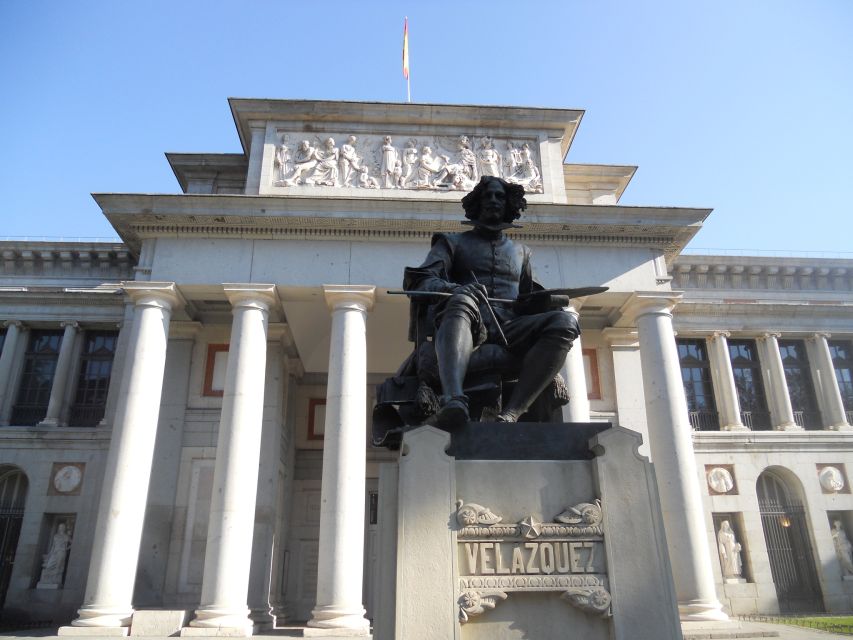
This tour gives you that structure. You begin at the Goya statue in front of the Prado’s main entrance on Paseo del Prado, then enter with your guide and follow a selected path through the collection. The aim is not to point at every painting. It is to show you a useful sequence of major works and explain the choices, techniques, religious subjects, royal commissions, and cultural changes behind them.
That approach suits me. I would rather leave with a few paintings firmly fixed in my mind than remember a blur of gold frames. You still see only a fraction of the museum in two hours, but the fraction has a purpose.
The private setup is especially useful for people who dislike standard group tours. There are no other participants to slow the pace or change the subject. If you want to ask why a figure looks away, how an artist created a particular texture, or why one painter mattered to a later period, you can ask at once.
The published price is $171 per group of up to two people. That is not a cheap museum add-on, but it is easier to assess when you view it as a private guide fee rather than a per-person ticket. For two people, you share the cost of a personal two-hour visit. Museum entry is still separate, so you should add that to your budget before booking.
More Prado Museum Tours and Tickets:
- Madrid: Prado Museum Entry Ticket
★ 4.6 · 17,509 reviews - Madrid: Small Group of Prado Museum Tour & Optional Tapas
★ 4.6 · 2,437 reviews - Madrid: Prado Museum Guided Tour with Skip-the-Line Ticket
★ 4.5 · 2,018 reviews
Meeting Goya before entering the Prado
Your meeting point is the Goya statue in front of the Prado’s main entrance. This is a sensible place to meet because it puts you directly beside the museum rather than sending you to a nearby street or hotel lobby.
Arrive with enough time to find the statue and settle in. The Prado is on Paseo del Prado, s/n, 28014, in Madrid. The supplied details do not give a recommended arrival time, so I would not cut it close. A museum entrance can be busy, and a private guide cannot easily repeat a missed start while keeping the rest of the route intact.
Meeting in front of Goya also gives the visit a fitting beginning. Francisco de Goya is one of the central figures in the Prado, and his work becomes part of the later route through Spanish painting. You are not simply meeting beside a random landmark. You are meeting beside the museum’s artistic story.
The guide language is German. That point matters more than the private format for some people. If you need English, Spanish, or another language, this particular experience does not promise it. The named guides include Javier and Anne, and the available information identifies them as German-speaking guides.
The first part of the route: art before the Renaissance
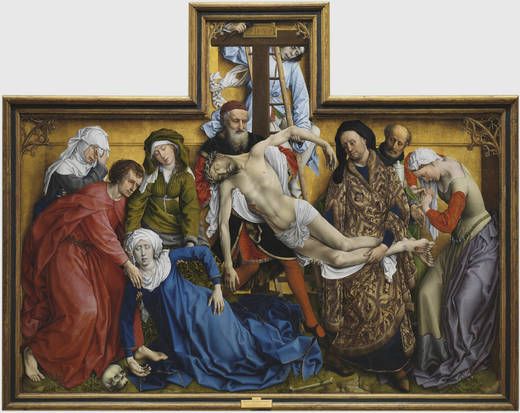
The tour covers a long stretch of art history, beginning with works from the Middle Ages before moving into the Renaissance and Baroque periods. This early section helps you see how artists handled religious subjects, figures, space, and storytelling before the later masters changed the rules.
One featured artist is Rogier van der Weyden, often presented as Van der Weyden. His paintings give a guide plenty to explain: controlled emotion, carefully arranged figures, and small details that reward close looking. You might find that a work which first seems formal becomes more affecting once you understand the expressions, gestures, and symbolic details.
This is where a guide can save time. Museum labels tend to give dates, titles, and basic background. A live explanation can connect a painting to the habits of its period and point out the skill you might otherwise miss.
The tour then moves toward artists such as Rafael and Titian. Rafael helps represent the balance and order associated with the High Renaissance, while Titian brings a different force through color, surface, and brushwork. You do not need an art degree to follow this comparison. A good guide can put the difference in plain language and show you where to look.
That cross-period structure is one of the stronger features of the visit. You are not seeing famous paintings as isolated trophies. You are watching artists solve similar problems in different ways: how to make a figure convincing, how to create depth, how to tell a story, and how to hold the viewer’s attention.
Rafael, Titian, and the changing idea of mastery
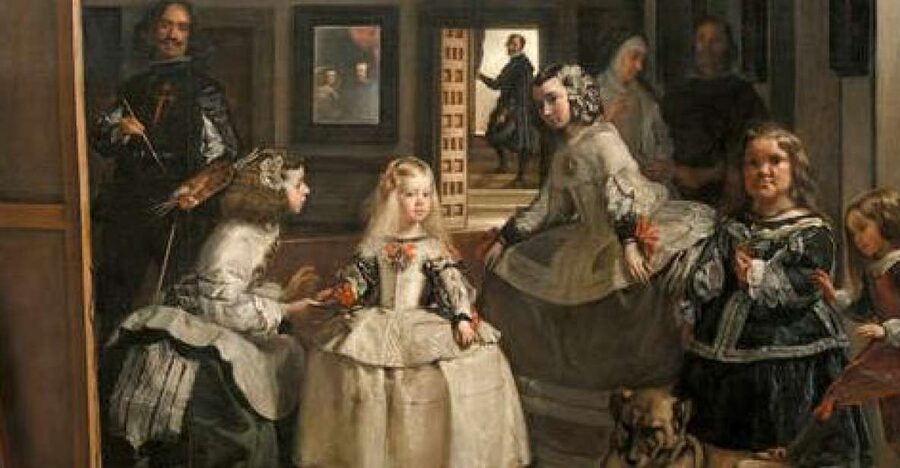
Rafael and Titian are names many visitors recognize, but recognition alone does not make a painting meaningful. The guide’s job is to turn a familiar name into something you can see.
With Rafael, look for control and harmony. His works can seem effortless, which is precisely why an explanation helps. The calm arrangement, balanced figures, and polished finish reflect choices rather than luck.
Titian offers a useful contrast. His paintings can feel more immediate and physical, with a stronger sense of color and texture. The comparison shows you that the Renaissance was not one fixed style. Artists working in the same broad period could pursue very different effects.
The route also includes Tintoretto, another important figure in the development of Venetian painting. His work can bring more movement and drama to the story. By placing these artists in one visit, the guide helps you see that art history is not a straight march from simple to advanced. It is a series of competing ideas, regional styles, and personal decisions.
I would pay attention to how the guide handles these comparisons. The strongest part of a museum tour is often not the date or the name, but the instruction to look at one small feature. A hand, a fold of cloth, a background figure, or the direction of a gaze can change the way you read the whole canvas.
More Museums in Madrid:
- Madrid: Reina Sofía Museum Entrance Ticket
★ 4.5 · 6,889 reviews - Madrid: Prado Museum Guided Tour With Fast Access
★ 4.8 · 1,785 reviews - Prado Museum Small Group Tour with Skip the Line Ticket
★ 5.0 · 1,738 reviews - Royal Palace & Prado Museum Skip the Line Guided Tour
★ 4.5 · 1,347 reviews
El Greco and the Prado’s Spanish character
El Greco gives the tour a clear Spanish focus, though his work also reflects a wider European world. His unusual figures and dramatic spiritual intensity are easy to recognize, yet they can still surprise you when seen alongside more measured Renaissance paintings.
A guide can explain how El Greco’s style differs from the artists before him and why his work does not fit neatly into a simple timeline. His paintings ask you to look at shape, movement, and mood rather than only realistic proportion.
This is also a good point to ask questions. The tour is private, so you can stop when a work catches your attention instead of waiting for a whole group to move on. If you are interested in technique, religious imagery, or the artist’s place in Spanish art, you can ask for more detail.
The Prado visit is not only about famous Spanish names. It is the contrast between different painters that makes the collection easier to grasp. El Greco’s intensity prepares you to think differently about later Spanish art, including the work of Velázquez and Goya.
Velázquez and the heart of the collection
Velázquez is one of the essential stops on a Prado visit. The tour includes his work among the central masterpieces, and this is likely to be a highlight for many people, even if they arrive with only a general idea of why he matters.
His paintings reward patient looking. You may notice how he suggests texture, depth, and atmosphere with surprisingly economical marks. The guide can help you avoid the common mistake of standing only at the center of a painting. Look around the edges, at the relationships between figures, and at the way the composition directs your eye.
The value of hearing this in person is practical. You can ask a question while standing in front of the painting, then look again with the answer in mind. That immediate connection between explanation and object is much stronger than reading a paragraph about the artist later.
The tour’s structure also places Velázquez among other masters instead of treating him as a separate celebrity stop. You can compare his handling of people and space with Rafael, Titian, El Greco, and Rubens. That makes the Prado feel like a conversation among artists rather than a row of disconnected rooms.
Rubens, Goya, and the route toward modern art
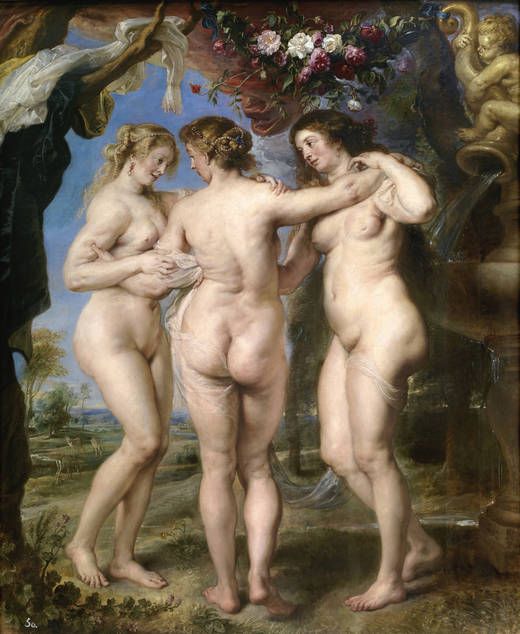
Rubens brings the Baroque period into view with energy, rich surfaces, and dramatic composition. His works help explain the period’s taste for movement, emotion, and theatrical effect.
The guide also covers Goya, whose career reaches toward the beginning of the 20th century in the broad historical route described for this tour. Goya is particularly important for understanding how Spanish painting shifts from court portraiture and traditional subjects toward more personal, unsettling, and modern ways of seeing.
You can expect the guide to explain the secrets and technical skills behind major works rather than simply recite biographies. That distinction matters. A list of dates may be accurate, but it does not tell you why a painting still holds your attention.
The route through Goya also gives the meeting point added meaning. You begin with his statue outside and later encounter his work inside. It creates a simple thread through the visit, especially for anyone curious about how Spanish art changed over time.
Because the tour includes so many eras, it cannot give every artist equal attention. That is not a flaw as much as a fact of timing. In two hours, you receive a guided selection. If Goya or Velázquez is your main reason for visiting, tell the guide early so the private format can work in your favor.
What the two hours feel like in practice
The experience lasts two hours, which is long enough for a serious introduction but short enough to remain manageable in a large museum. You should expect a brisk but selective route rather than a complete survey of the Prado.
I like this length for a first visit. You get a framework without committing half a day to guided listening. The museum can be tiring, especially when every room offers another major painting. A focused tour helps you use your energy wisely.
The best evidence of that flexibility comes from the guide feedback available for this experience. Javier is described as funny and informative, with stories that make the paintings easier to follow. Another German-language assessment describes him as turning potentially dry material into a sequence of interesting stories.
Anne has also guided families well. Her approach with children aged 11 and 9 was noted as especially attentive, and she has been praised for adapting to individual interests. If you are visiting with children, that is useful information, though you should still tell the provider about your group when booking.
One private tour even ran longer than two hours, but you should not count on extra time. Treat the advertised duration as the firm plan. If your schedule is tight, leave room after the tour for the exit, the museum shop, or the rooms you want to revisit.
Staying after the guide leaves
A major advantage is the chance to continue at your own pace after the guided section. You can return to a painting that went by quickly, follow a room that caught your eye, or seek out works the guide did not include.
This matters because no two visitors want the same Prado. One person may care about Goya, another about Renaissance painting, and another about portraits or technique. The guided route gives you the map. Your independent time lets you follow your own interests.
Do not expect the guide to cover every famous room in depth. The museum is too large for that within two hours. Instead, listen for the logic behind the selected works, then use the remaining time to explore with more confidence.
If you have a short Madrid visit, this format is efficient. You gain an introduction to the collection and still keep control of the rest of your day. If you are a serious art enthusiast, you may want a longer museum visit overall, since the private tour is an orientation rather than a full study session.
Price, admission, and who gets the best value
The tour costs $171 for a group of up to two people. The Prado entrance ticket is not included and is paid at the venue.
For groups of one to six, the listed museum prices are EUR 15 for adults and EUR 7.50 for seniors over 64. Students up to age 25 enter free. Larger groups of seven to 15 pay EUR 15.50 per person, plus EUR 1 for headphones, and the museum requires headphones for those groups.
For two adults, the total cost is the tour fee plus two standard museum tickets. That is a substantial outlay compared with entering alone, but you are paying for a personal guide, the chance to ask unlimited questions during the route, and a better sense of how the collection fits together.
I would consider it good value if you have limited time, prefer German, or know that a large museum leaves you unsure where to begin. I would skip it if you are happy reading labels, already know the Prado well, or want to spend several hours choosing your own paintings without a fixed route.
The private price also makes more sense for two people than for one. Solo visitors receive the same personal format, but the full group price is still charged.
Access, cancellation, and language details
The activity is listed as wheelchair accessible. The available information does not describe the exact route, door widths, seating, or restroom arrangements, so you should confirm any specific mobility needs before booking.
You can cancel up to 24 hours in advance for a full refund. The reserve-now, pay-later option lets you hold the booking without paying immediately, which can help if your Madrid plans are still shifting.
The tour is offered with a live German-speaking guide and is set up as a private group. No other participants join your tour. Make sure German is comfortable for everyone in your party, since no other guide language is stated.
Should you book this Prado experience?
Book it if you want the Prado to make sense, not just to look impressive. The private format, the clear movement through major periods, and the chance to continue alone afterward give you both guidance and freedom.
I would especially recommend it to German-speaking couples, families who want explanations adjusted to children, and first-time Prado visitors with only a few hours. Javier may suit you if you like humor and story-driven explanations. Anne may be a strong match for families or people who want the route shaped around their interests.
Think twice if the extra museum fee strains your budget or if you want a long, self-directed art session. This is a focused introduction, not an exhaustive tour of every room.
For the right visitor, the price buys more than facts. It gives you a way to look closely, compare artists, ask questions at the moment they occur, and leave the Prado with a clearer idea of what you saw.
FAQ
How long does the private Prado Museum tour last?
The guided tour lasts two hours. Afterward, you can stay in the museum and view other paintings and rooms independently.
Is museum admission included in the tour price?
No. Museum entry is paid separately at the venue. For groups of one to six, adults pay EUR 15, seniors over 64 pay EUR 7.50, and students up to age 25 enter free.
How many people can join the private tour?
The advertised price is for a private group of up to two people. No other participants join the tour. Separate museum pricing is also provided for groups of up to 15.
What language is the guide speaking?
The live guide speaks German. The named guides connected with the experience include Javier and Anne.
Where does the tour meet?
The meeting point is the Goya statue in front of the Prado Museum’s main entrance on Paseo del Prado, s/n, 28014 Madrid.
Can I cancel the booking?
Yes. You can cancel up to 24 hours in advance for a full refund. The activity also offers a reserve-now, pay-later option.
Just added around Madrid
- Visit the National Archaeological Museum in Madrid★ 4.4 · 6 reviews
- From Madrid: Parque Warner Beach Water Park & Transport★ 3.9 · 14 reviews
- Madrid Wine Tasting, Flamenco Class and Pub Crawl★ 4.5 · 6 reviews
- Visit to the Prado Museum★ 4.9 · 6 reviews
- Virtual Reality Experience Fun And Tickets & Imageen★ 5.0 · 12 reviews
- Tuk Tuk Tour with Wine Test in Madrid★ 3.8 · 6 reviews
- Tuktuk historical tour of Madrid 1 Hr in a fun and original way★ 3.7 · 3 reviews
- Prado Museum VIP tour with an art Expert, tickets included★ 5.0 · 11 reviews
Prado Museum Tours and Tickets, compared.

Small Group of Prado Museum Tour & Optional Tapas
Read our review →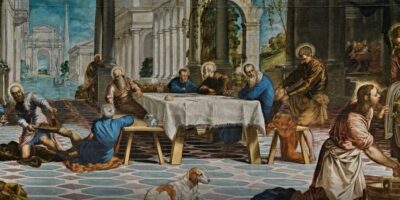
Prado Museum Guided Tour with Skip-the-Line Ticket
Read our review →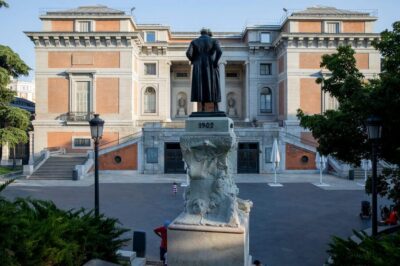
Prado Museum Small Group Tour with Skip the Line Ticket
Read our review →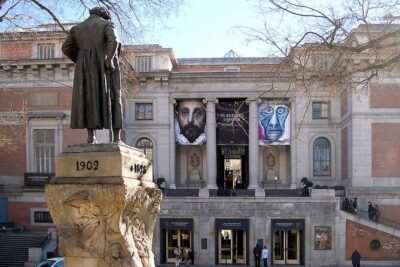
Royal Palace & Prado Museum Skip the Line Guided Tour
Read our review →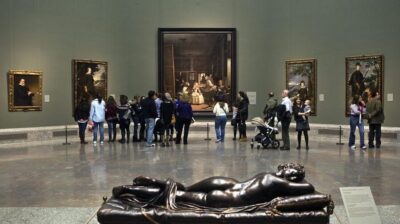
Prado Museum Guided Tour with Skip-the-Line Ticket
Read our review →Browse the lists this tour appears in