
Reviewed · PRADO MUSEUM TOURS AND TICKETS
Madrid: Prado & Reina Sofia Museum Skip-the-Line Guided Tour
The best thing about this Madrid tour is the pairing: the Prado shows Spain’s grand old masters, while Reina Sofia turns to Picasso, Dalí, and the uneasy art of modern Spain. In one day, you move from Velázquez and Goya to Guernica and surrealism without wasting museum time in ticket queues.
I like the small group limit of eight and the guide’s role in explaining the people and politics behind the paintings, not just naming them. I also like the built-in lunch break, since two major museums and five hours of art require a reset.
The main drawback is the pace. Two and a half hours in each museum gives you a strong overview, but not time for every gallery. At $189 per person, this is a premium outing, so it makes the most sense if you want expert guidance and efficient access rather than a long, independent museum visit.
Key points to know before booking
- Two essential Madrid museums in one day: Visit the Prado and Reina Sofia, with a 2.5-hour guided tour at each.
- A small group of no more than eight: The format allows more room for questions than a large museum crowd.
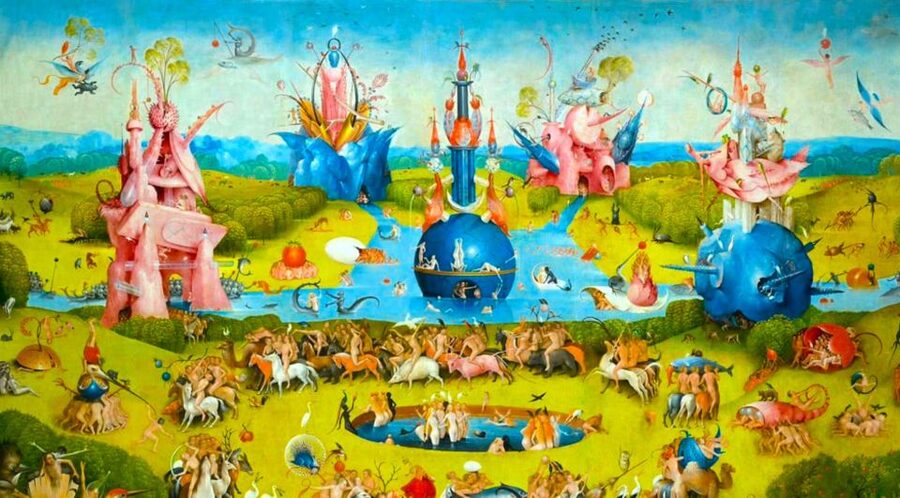
- Major works are the focus: See Las Meninas, The Garden of Earthly Delights, Guernica, and works by Goya, El Greco, Dalí, and Miró.
- A guide adds political context: Marta is specifically praised for explaining Goya and the political forces surrounding the artists.
- A real break divides the day: Lunch is scheduled between museums, though food and drinks are not included.
- Pack light: Large bags and suitcases are not allowed. Only handbags or small, thin backpacks can pass through security.
Why this Prado and Reina Sofia pairing works
Madrid’s two great art museums tell different chapters of Spain’s story. The Prado looks mainly backward, with painting and sculpture dating from the 1200s through later centuries. Reina Sofia focuses on 20th-century art, especially Spanish artists and the shocks of modern politics.
That contrast gives the day a useful shape. At the Prado, you see royal portraiture, religious scenes, court life, and powerful old-master technique. At Reina Sofia, familiar rules break apart. Bodies become distorted, space gets fragmented, and political violence enters the picture.
I find this pairing more satisfying than spending five hours in one enormous museum. The change of period gives your eyes a rest and helps you notice how artists respond to their time. You will also finish with a clearer sense of how Spanish art developed from Velázquez and Goya toward Picasso, Dalí, and Miró.
The tour lasts about five to five and a half hours, including the lunch break. You should expect a full half-day, not a quick museum stop. Wear comfortable shoes and keep the rest of your schedule reasonably open.
More Reina Sofia Museum Tickets:
- Madrid: Reina Sofía Museum Entrance Ticket
★ 4.5 · 6,889 reviews - Madrid: Reina Sofía Museum Guided Tour
★ 4.3 · 659 reviews - Reina Sofia Museum Small Group Tour -6 people maximum-
★ 5.0 · 433 reviews
Meeting at the Prado’s Goya statue
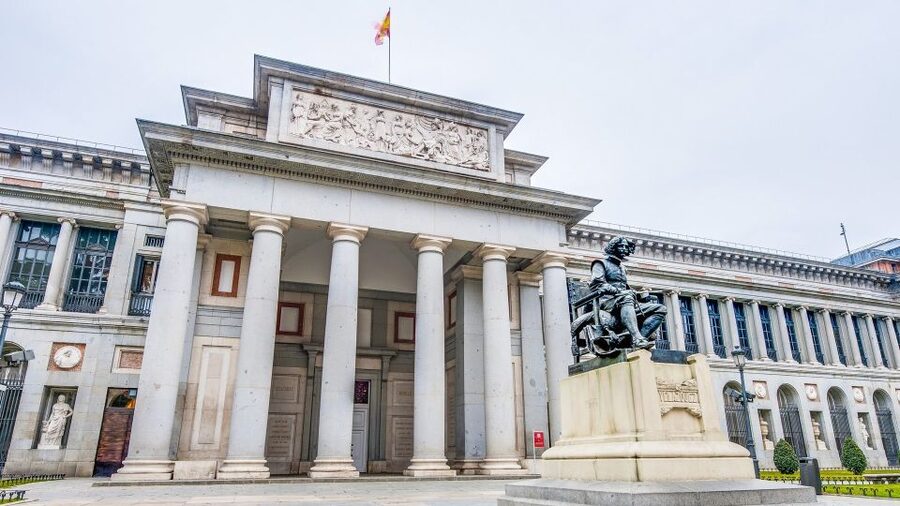
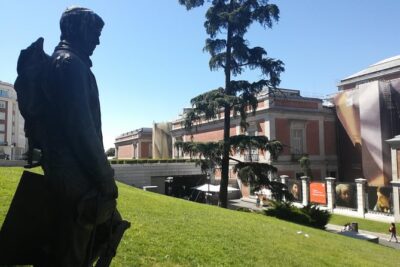
You begin outside the Prado Museum at the statue of Goya, by the main entrance on Calle de Felipe IV. The meeting point is on the museum esplanade, down the steps across from the entrance. If you arrive by car, the listed address is Calle de Felipe IV, 3, 28014 Madrid.
Give yourself enough time to find the statue. A major museum entrance can be confusing, especially when you are watching the clock and looking for a guide rather than a building. If you cannot locate the meeting point, contact the guide.
Starting beside Goya’s statue is fitting. He becomes one of the key figures of the Prado visit, and his work helps connect the old court world with the political and social turmoil that later shaped Spanish art.
Bring your passport or ID card. Do not bring luggage or a large daypack. Security permits handbags and small, thin backpacks, but large bags and suitcases will not be allowed inside.
The Prado in 2.5 hours: Velázquez, Goya, and Bosch
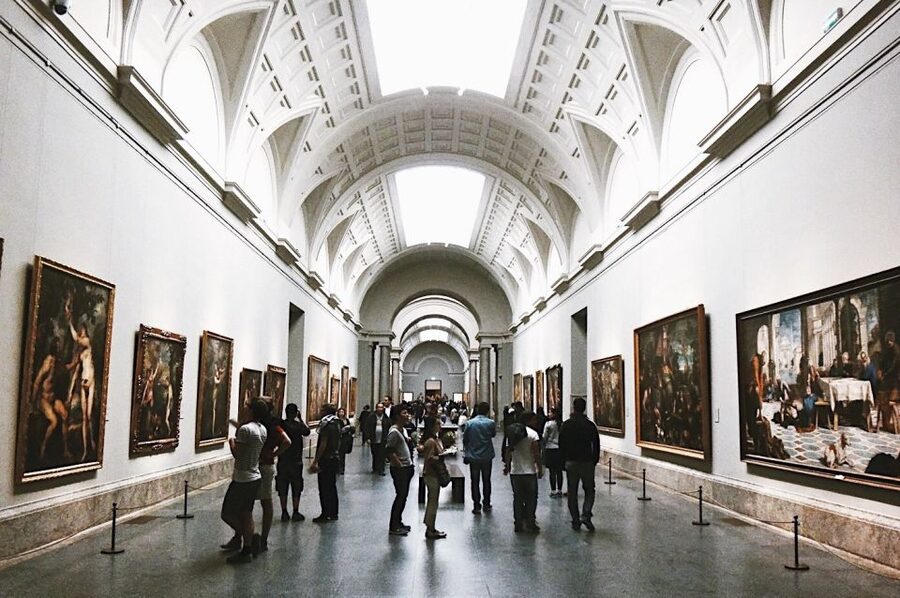
The Prado began as a late-18th-century building and opened its art collection to the public in the early 1800s. Its neoclassical exterior is impressive, but the real reason to enter is the concentration of European painting inside.
The collection includes thousands of works, with a strong emphasis on Spanish painting. Your guide will focus on the most important pieces rather than trying to march you through every room. That is the right approach for a first visit, since the Prado can easily swallow an entire day.
Velázquez and Las Meninas
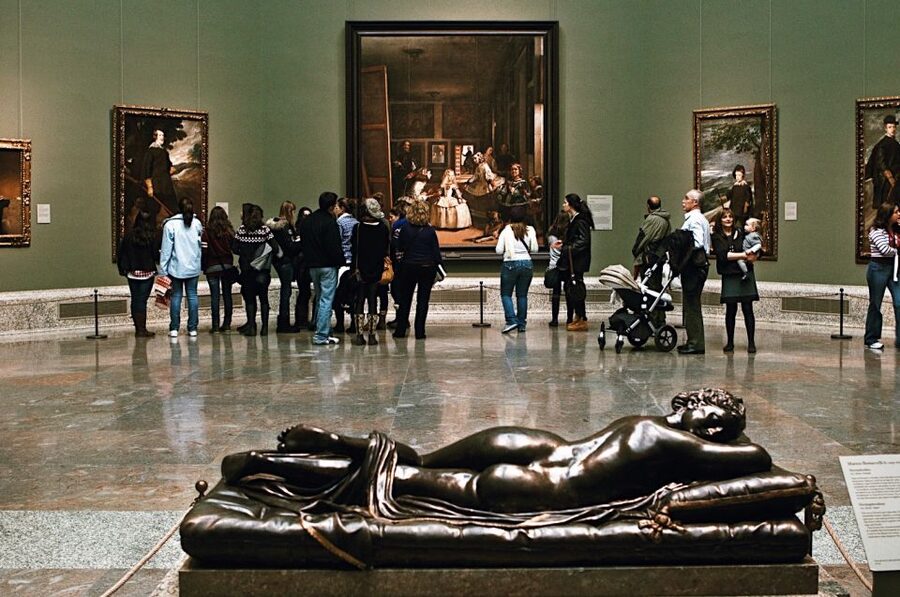
The essential stop is Diego Velázquez’s Las Meninas, or The Maids of Honor. It looks at first like a court scene, but it is also a puzzle about the act of painting itself.
Velázquez appears inside the work, standing at his easel. The young princess and her attendants fill the room, while a mirror at the back complicates your sense of who is being painted. The royal couple may be reflected in that mirror, placing you in their position as you look at the scene.
A guide can help you slow down here. Without context, you may simply see a famous palace interior. With explanation, you begin to notice the unusual point of view, the placement of the figures, and Velázquez’s claim that the painter belongs in the world of the court.
More Prado Museum Tours and Tickets:
- Madrid: Prado Museum Entry Ticket
★ 4.6 · 17,509 reviews - Madrid: Small Group of Prado Museum Tour & Optional Tapas
★ 4.6 · 2,437 reviews - Madrid: Prado Museum Guided Tour with Skip-the-Line Ticket
★ 4.5 · 2,018 reviews - Madrid: Prado Museum Guided Tour With Fast Access
★ 4.8 · 1,785 reviews
Bosch and The Garden of Earthly Delights
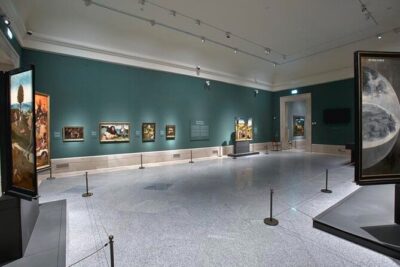
Hieronymus Bosch’s The Garden of Earthly Delights brings a very different mood. This triptych is crowded with strange bodies, animals, temptations, and imagined scenes. It rewards close attention, but it can also leave you wondering what exactly you are looking at.
Your guide can give you a way into Bosch’s visual language and the moral ideas behind the work. This is one of the Prado’s pieces where a short explanation saves you from simply scanning a wall of bizarre details.
Goya, El Greco, and the stories behind the art
Goya is one of the strongest reasons to take a guided Prado visit. His work moves from portraits connected to the Spanish court toward images marked by war, fear, suffering, and political criticism.
The guide will also discuss El Greco, Rembrandt, and other major artists. The focus is not just on dates and labels. You will hear about the artists’ lives, the patrons who supported them, and the scandals and conflicts that affected their work.
Marta receives particular praise for connecting Goya’s art with the political situation of his time. That detail matters because Goya’s paintings can look merely dramatic when viewed without their historical setting. With the politics in view, his choices feel sharper and more personal.
The Prado also holds the largest collection of Italian masterpieces outside Italy. Important stops include Fra Angelico’s The Annunciation and Caravaggio’s David and Goliath. These works broaden the visit beyond Spanish art and show why the museum matters on a European scale.
You will also encounter sculpture and prints, although the tour is primarily centered on the paintings. The guide’s job is to choose the works that give you the clearest picture of the collection within the time available.
The lunch break between two demanding museums
A lunch break is included between the Prado and Reina Sofia portions. Food and drinks are not included, so you will arrange and pay for your own meal.
That may sound like a small detail, but it affects the day. Five hours of museum time can make even a devoted art lover sluggish. Use the break to eat, drink water, and let the first museum settle before you face the second.
Since the exact lunch location and timing are not specified, do not count on a particular restaurant or included meal. Treat the break as useful free time in the middle of the program.
Reina Sofia in 2.5 hours: Picasso, Dalí, and modern Spain
Reina Sofia occupies a former hospital renovated in the 1990s. The setting feels different from the Prado, and so does the art. The collection centers on 20th-century work, with Spanish modernism, abstraction, cubism, and surrealism among the key movements.
You may find some of these works less immediately friendly than the Prado’s portraits and religious scenes. That is part of the point. Reina Sofia asks you to consider how artists respond when traditional forms no longer seem adequate for a world shaped by war, political division, and rapid change.
Picasso and Guernica
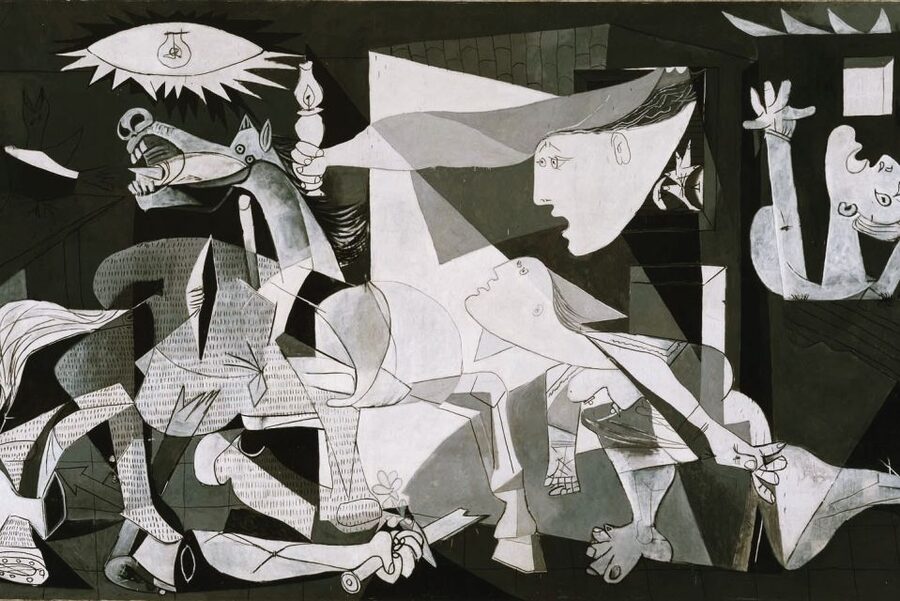
The central work is Pablo Picasso’s Guernica. You will stand before the painting while the guide explains its imagery and the Spanish Civil War context that shaped it.
Guernica is not a literal battlefield scene. Its fractured bodies, anguished faces, and stark black-and-white palette create a picture of suffering that feels both specific and broadly human. It is a work best seen in person, where its scale and crowded composition become difficult to take in all at once.
The guide’s context is especially useful here. Without it, you may focus only on the recognizable shapes and dramatic expressions. With the political background, you can better understand why the painting became such a powerful statement about violence and civilians caught in war.
Do not expect to spend unlimited time in front of it. The Reina Sofia visit has a planned length, and other important works remain on the route.
Dalí and surrealism
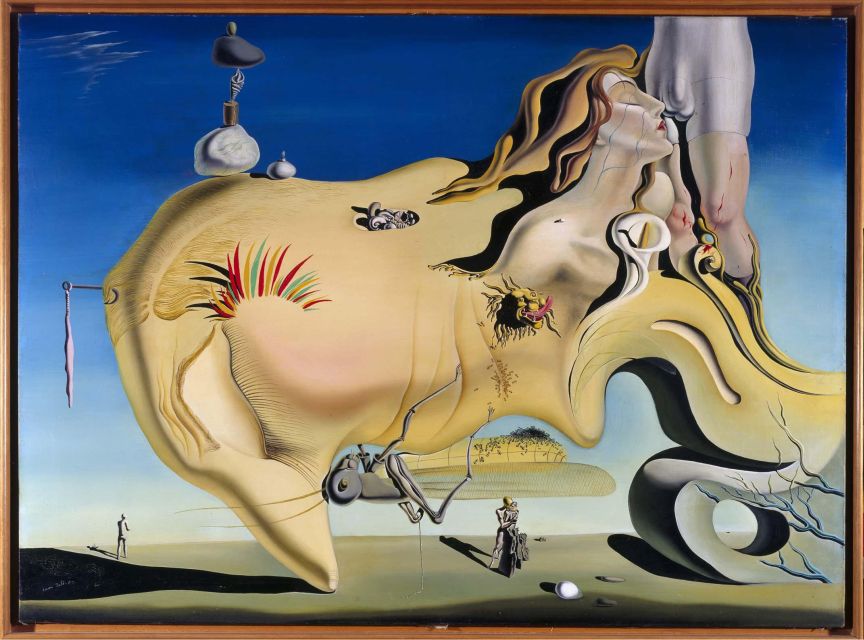
Salvador Dalí’s Face of the Great Masturbator is one of the more unusual works discussed on the tour. It offers a clear introduction to surrealist ideas, where dreams, symbols, fears, and distorted forms take priority over ordinary visual reality.
Dalí’s work can seem strange for the sake of being strange. The guide helps you look for technique and meaning rather than dismissing it as simply odd. You will learn about the stories and choices behind the painting, along with the broader ideas of surrealism.
Miró and modern Spanish art
The tour also includes Joan Miró’s The Man with a Pipe. Miró’s work gives you another route into modern art, using simplified forms and bold visual decisions rather than the detailed realism associated with the Prado.
Together, Picasso, Dalí, and Miró show that there was no single path into modernism. One artist fractured space, another explored the subconscious, and another reduced forms into signs and shapes.
The guide will place these works within social and political events, including the Spanish Civil War. This is where the second museum gains its force. You are not looking at isolated experiments. You are seeing artists respond to a country and a century under pressure.
What a small group changes
The tour is available as a private experience or a small group with no more than eight participants. For an art museum, group size matters. A large crowd can make it hard to hear, ask questions, or look closely at a work while the guide is speaking.
A maximum of eight should make the visit more personal, though it does not guarantee that every question can receive a long answer. The tour is designed as an overview, so the guide must keep moving to cover both museums.
If the small-group departure does not reach the required minimum of two people, an alternative date or full refund is offered. Private tours are also available for people who want a more controlled pace or have a particular interest in Spanish painting and modern art.
The available guide languages are English, Italian, Spanish, and French. Marta is one named guide associated with the experience, and her strength is connecting Goya’s paintings with the political circumstances around him.
Is $189 a fair price?
At $189 per person, this is not a budget museum visit. You are paying for admission to both museums, skip-the-line access, a professional art historian guide, and a five-hour program in a small group or private format.
The value depends on how you normally visit museums. If you are comfortable reading labels, choosing your own rooms, and waiting in ticket lines, you can spend less by visiting independently. You will also control your pace and stay longer with the works that interest you.
I see the tour as better value for a first visit, a short stay in Madrid, or anyone who wants the major works explained in context. The two museums are large, and a focused route can prevent you from losing half the day to navigation and indecision.
The price is harder to justify if you dislike guided schedules or want to study a small number of artists at length. Two and a half hours per museum is enough for the main works, not enough for a full scholarly visit.
Skip-the-line entry is another part of the calculation. It does not make the museums quiet, and it does not remove security checks, but it can protect your limited Madrid time. Check the departure time carefully when booking, since the available starting times vary.
Who should book this museum tour?
I would recommend it to you if you want the essential Prado and Reina Sofia works in one carefully planned day. It suits first-time visitors, art lovers with limited time, and people who want a guide to explain why Goya, Picasso, Dalí, and Velázquez matter.
It is also a good match if political and social context helps you understand art. The strongest feature is not simply seeing famous paintings. It is linking the Prado’s courtly and religious works with the modern art shaped by war and upheaval.
Families and mixed-interest groups may also benefit because the guide can make the visit easier to follow than a long museum visit without a plan. Still, the five-hour length may be tiring for young children or anyone who prefers short stops.
Mobility details need care. Tours for wheelchair users are listed as available by request, but the activity is also marked as not suitable for wheelchair users. Contact the provider before booking and ask for a clear accessibility confirmation rather than relying on the general description.
The Prado and Reina Sofia can occasionally close without warning from museum management. If an opening is delayed by more than one hour, an alternative is offered, but refunds or discounts are not provided in that situation. Appropriate dress may also be required for entry.
My take: book it for context and efficiency
Book this tour if you want Madrid’s two leading art museums explained by a guide, with the major works selected for you and the ticket lines removed. The small group size, lunch break, and coverage of both old and modern Spanish art make the day practical.
The strongest reason to choose it is the guide’s historical framing, especially around Goya and Guernica. The main caution is the price and the fixed pace. If you want to wander slowly or revisit one painting for an hour, go independently. If you want a focused introduction that turns famous paintings into a connected story, this five-hour tour earns its place in your Madrid plans.
FAQ
How long does the Prado and Reina Sofia tour last?
The experience lasts about five to five and a half hours. It includes a 2.5-hour guided visit to the Prado, a lunch break, and a 2.5-hour guided visit to Reina Sofia.
Where does the tour begin?
Meet by the Goya statue at the Prado Museum’s main entrance, outside on Calle de Felipe IV. The listed car address is Calle de Felipe IV, 3, 28014 Madrid.
Where does the tour end?
The activity ends back at the meeting point.
Which languages are available?
Guided tours are available in English, Italian, Spanish, and French.
Are museum tickets included?
Yes. Entrance fees to the Prado and Reina Sofia are included, along with skip-the-line access.
Is lunch included?
A lunch break is included in the schedule, but food and drinks are not included.
Can wheelchair users join the tour?
Wheelchair tours are available by request, but the activity information also says it is not suitable for wheelchair users. Contact the provider before booking to confirm whether the chosen tour can meet your needs.
More Skip the Line Tickets in Madrid
- Madrid: Royal Palace Expert Guided Tour with Skip-the-Line
★ 4.7 · 6,986 reviews - Madrid: Royal Palace Skip-the-line Guided Tour
★ 4.9 · 3,146 reviews - Madrid: Royal Palace Skip-the-Line Guided Tour
★ 4.5 · 2,140 reviews - Madrid Old Town & Royal Palace Walking Tour Skip the Line Ticket
★ 4.5 · 1,829 reviews
More Museums in Madrid
- Prado Museum Small Group Tour with Skip the Line Ticket
★ 5.0 · 1,738 reviews - Royal Palace & Prado Museum Skip the Line Guided Tour
★ 4.5 · 1,347 reviews - Madrid: Sweet Space Museum Entry Ticket
★ 3.9 · 1,227 reviews - Madrid: Prado Museum Ticket with In-App Audio Guide
★ 3.6 · 1,154 reviews
Just added around Madrid
- Visit the National Archaeological Museum in Madrid★ 4.4 · 6 reviews
- From Madrid: Parque Warner Beach Water Park & Transport★ 3.9 · 14 reviews
- Madrid Wine Tasting, Flamenco Class and Pub Crawl★ 4.5 · 6 reviews
- Virtual Reality Experience Fun And Tickets & Imageen★ 5.0 · 12 reviews
- Visit to the Prado Museum★ 4.9 · 6 reviews
- Prado Museum VIP tour with an art Expert, tickets included★ 5.0 · 11 reviews
- Tuk Tuk Tour with Wine Test in Madrid★ 3.8 · 6 reviews
- Tuktuk historical tour of Madrid 1 Hr in a fun and original way★ 3.7 · 3 reviews
Prado Museum Tours and Tickets, compared.

Small Group of Prado Museum Tour & Optional Tapas
Read our review →
Prado Museum Guided Tour with Skip-the-Line Ticket
Read our review →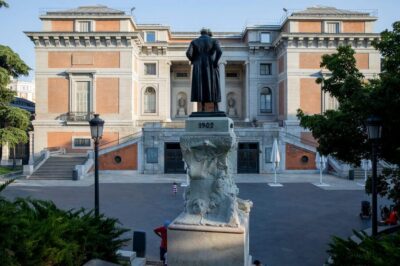
Prado Museum Small Group Tour with Skip the Line Ticket
Read our review →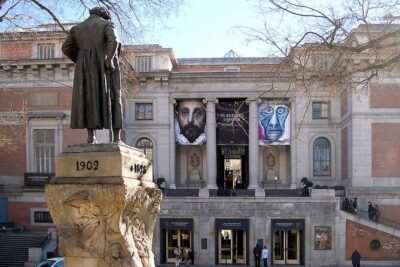
Royal Palace & Prado Museum Skip the Line Guided Tour
Read our review →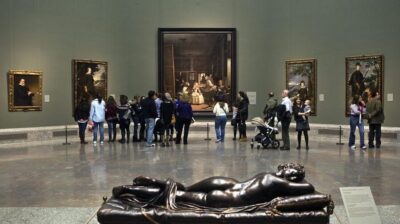
Prado Museum Guided Tour with Skip-the-Line Ticket
Read our review →Browse the lists this tour appears in