Reviewed · TICKETS
Virtual Reality Experience Fun And Tickets & Imageen
Madrid’s past gets a clever upgrade on this two-hour walk. Instead of only hearing how the city looked centuries ago, you use virtual reality glasses to see earlier versions of its landmarks while standing in the modern streets. The mix of street-level sightseeing and historical video makes the Royal Palace, Plaza Mayor, and Puerta del Sol easier to picture.
I like two things here: the route links several major sights without wasting time on transport, and the guides add context beyond the screens. Miguel has been praised for explaining details and local curiosities, while Luis helped guests join the group after a meeting-point mix-up. The main consideration is pace. One recent tour moved quickly because rain threatened, and the walk has several stops packed into two hours.
Key points to know before you book
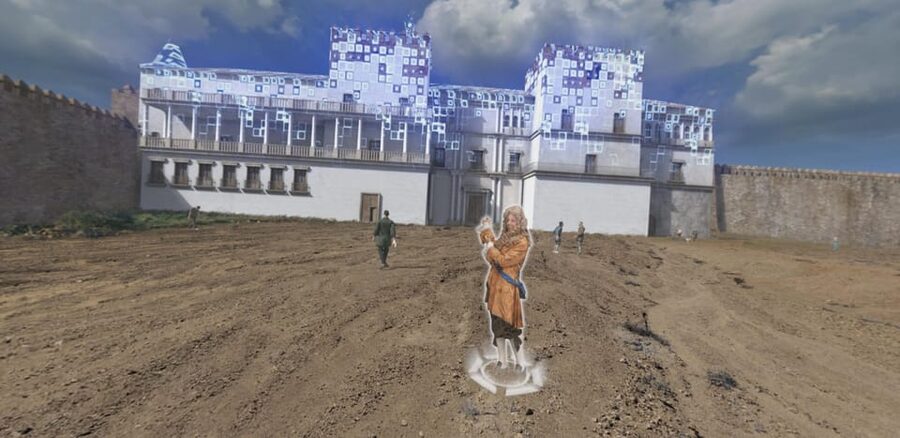
- Virtual reality changes the way you see Madrid: The glasses show earlier scenes at the places you are visiting, so you can compare modern Madrid with its past.
- The route covers four central landmarks: You visit the Royal Palace, Plaza Mayor, Puerta del Sol, and Plaza de la Villa before finishing at Plaza del Callao.
- It is a proper walking tour, not a headset-only attraction: A live guide leads the route in English or Spanish and adds explanations, facts, and city curiosities.
- The experience works especially well for families: Children can see the history instead of trying to picture it from a spoken description alone.
- Allow time to check in early: Meet at Mayor Street, 43, fifteen minutes before departure.
- The price is reasonable for a two-hour guided experience: At $21 per person, you are paying for the guide, walking route, and virtual reality equipment, not just admission to one site.
Seeing Madrid’s past through a headset
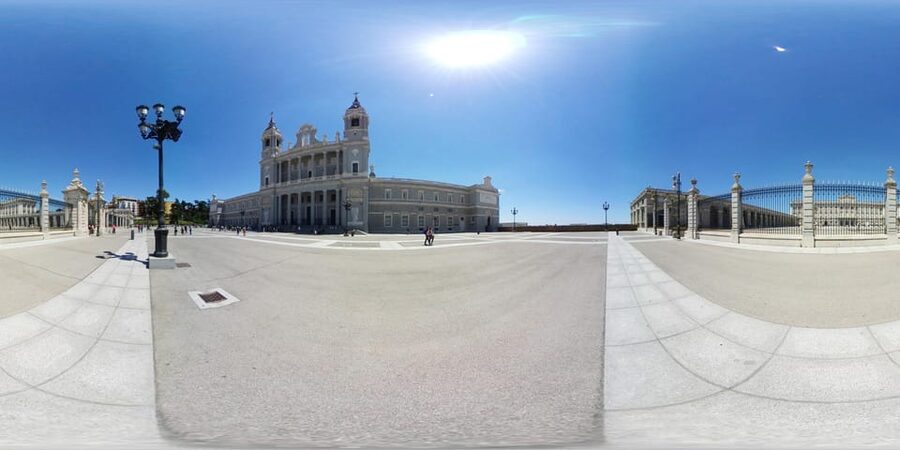
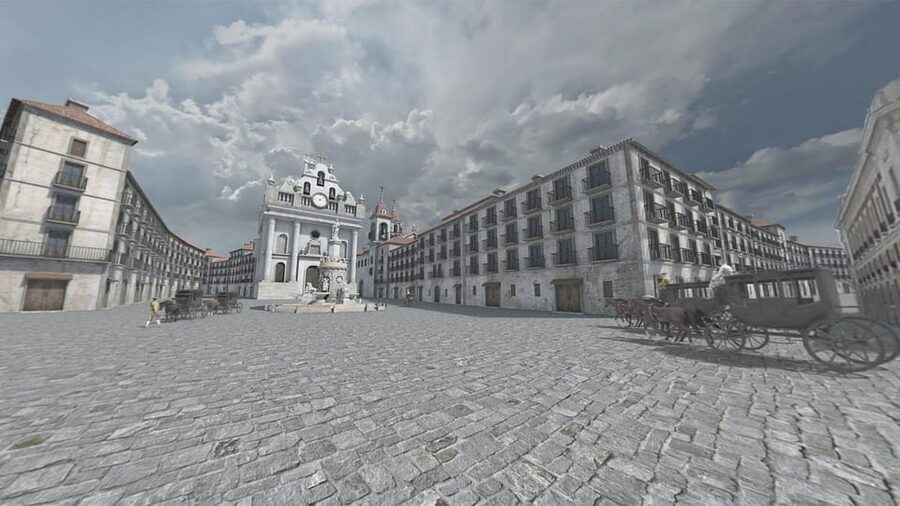
The idea is simple and effective. You walk through present-day Madrid, stop at important places, and use virtual reality to see how those locations appeared in earlier periods. A normal walking tour asks you to imagine vanished buildings, old streets, and past events. Here, the videos do some of that work for you.
That matters most in a city with layers of royal, civic, and everyday history packed close together. The Royal Palace gives you grandeur. Plaza Mayor shows the city’s public face. Puerta del Sol brings you into the heart of modern Madrid, while Plaza de la Villa offers a more intimate look at the older city.
The glasses are not a substitute for a live guide. They are the visual aid. Your guide explains what you are seeing, keeps the group moving, and fills in the details that a short video cannot cover. The best part of the format is the contrast between the real street in front of you and the historical version appearing in the glasses.
You should expect a social, guided activity rather than a private museum-style session. The available information does not specify group size, so the number of people may vary. It is worth keeping your attention on the guide as well as the images, since the spoken explanation adds local facts and links one stop to the next.
More Madrid Tours:
- Madrid: Tour Bernabéu Entry Ticket
★ 4.5 · 21,573 reviews - Madrid: Prado Museum Entry Ticket
★ 4.6 · 17,509 reviews - Madrid: “Emociones” Live Flamenco Performance
★ 4.8 · 12,866 reviews
Starting at Mayor Street, 43
Check in at the Fun and Tickets office on Mayor Street, 43, at least fifteen minutes before the start. This is an important practical detail. The route begins in the central area, and arriving late can make it harder to find the group or catch up with the first historical segment.
The tour is designed as a continuous walk. You do not need to arrange a bus, metro ride, or taxi between the principal stops. Wear comfortable shoes, since the experience involves moving through central Madrid and standing during explanations and video sections.
The guide leads in English or Spanish, and an audio guide is included in those languages. The live guide remains useful even if you choose the audio support, because the tour depends on timing the historical scenes with the locations around you.
The first walk takes you toward the Royal Palace. This opening stretch helps set the scene for Madrid’s royal past before the technology begins doing its most useful work.
Royal Palace: Madrid’s grand opening scene
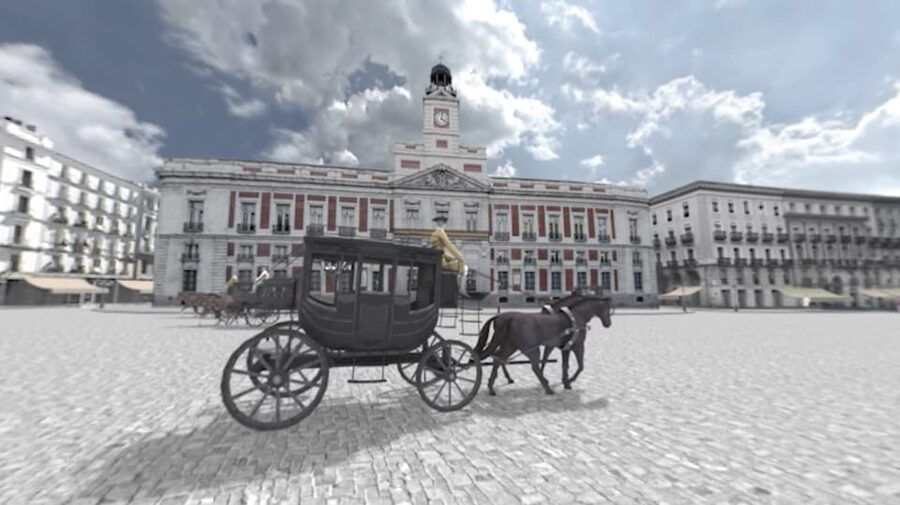
The Royal Palace of Madrid is the biggest visual stop on the route, and it gets about twenty-five minutes. The schedule lists this as a photo stop and guided visit rather than entry into the palace, so do not book this tour expecting an interior palace tour.
That limitation is also clear in the price. You are seeing the palace from the outside and learning about its place in Madrid’s story, not buying admission to the rooms, galleries, or royal collections. For many visitors, that is enough for a first orientation, especially if you plan to visit the palace interior separately.
The virtual reality element can help here because the palace is impressive in its current form, but a large building alone does not explain how Madrid grew around it. Historical images give you a way to picture change over time. Your guide then connects the visual material to the building and the city around it.
I would pay close attention to the spoken explanation at this stop. Virtual reality can show you an earlier scene, but the guide helps you understand why the location mattered and what to look for when the headset comes off.
Plaza Mayor: public life in twenty minutes
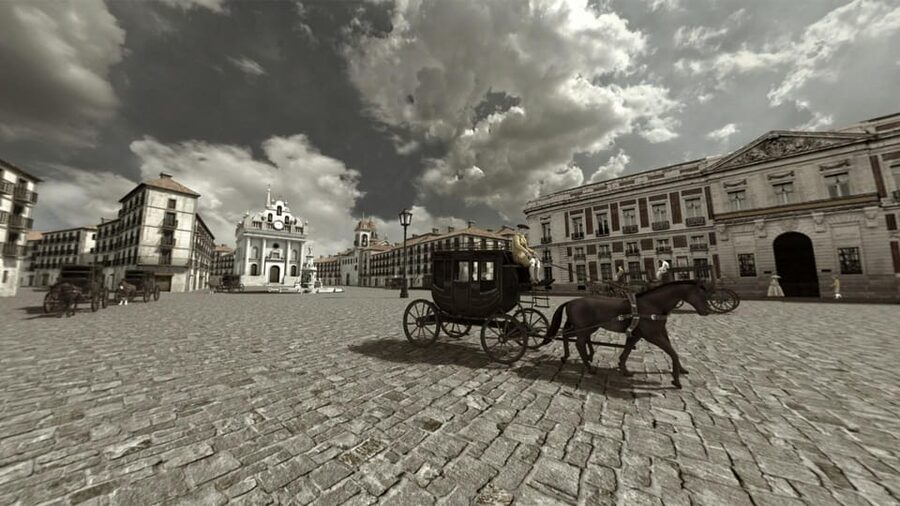
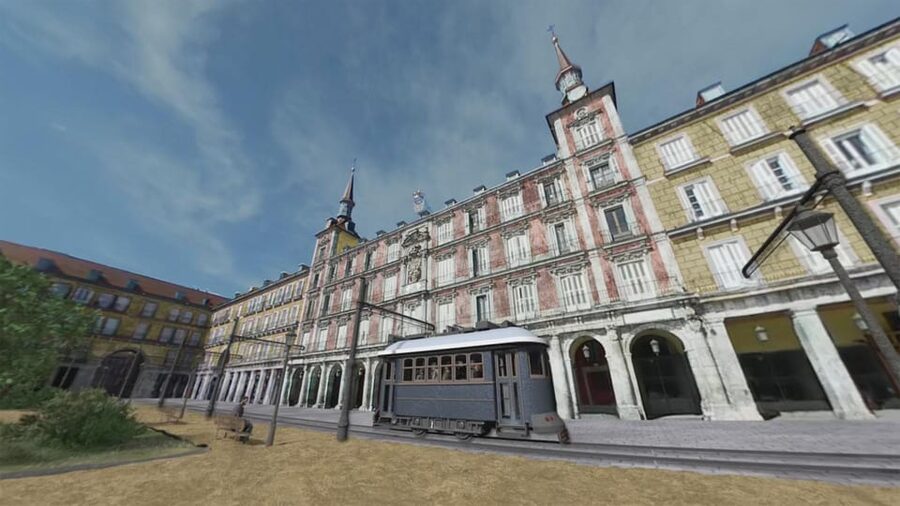
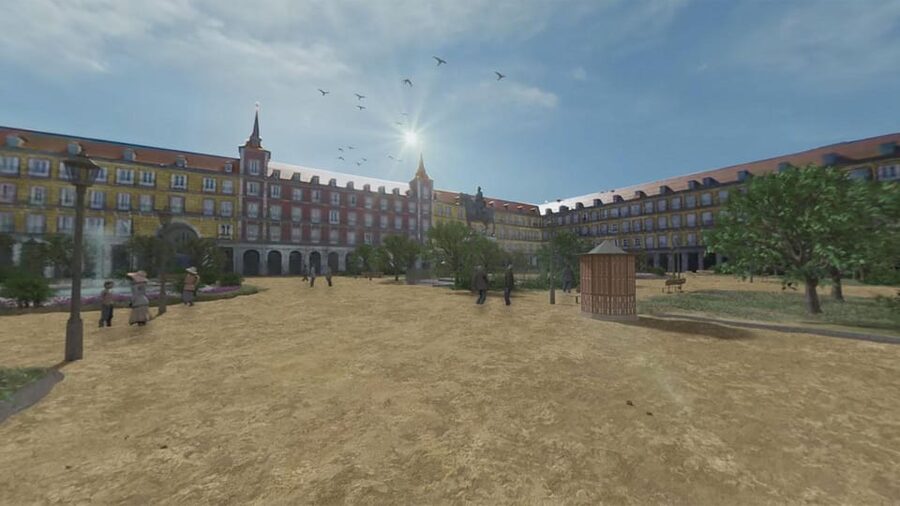
The tour continues to Plaza Mayor for roughly twenty minutes of guided explanation. This is one of the best places on the route for the technology to add something, since the broad square has served different public purposes across the centuries.
You get time to look at the architecture, hear the story of the square, and compare the present-day setting with earlier scenes shown through the glasses. The stop is short enough to keep the tour moving, but long enough for the guide to explain the square’s role in Madrid.
Do not expect a long architectural lecture. The format favors clear facts and visual comparisons over a slow, specialist tour. That makes it a good match if you want a strong sense of place without spending an entire afternoon on one monument.
The route also gives you a useful break from the headset. You can take in the actual square, listen to the guide, and then return to the virtual scenes with a better understanding of what has changed.
More Tickets and Entries in Madrid:
- Avila & Segovia Tour with Tickets to Monuments from Madrid
★ 5.0 · 9,762 reviews - Madrid: Reina Sofía Museum Entrance Ticket
★ 4.5 · 6,889 reviews - Madrid: Avila and Segovia Day Trip with Tickets to Monuments
★ 4.6 · 4,568 reviews - Madrid: La Cueva de Lola Flamenco Show Tickets with Drink
★ 4.8 · 2,567 reviews
Puerta del Sol: the route’s longest stop
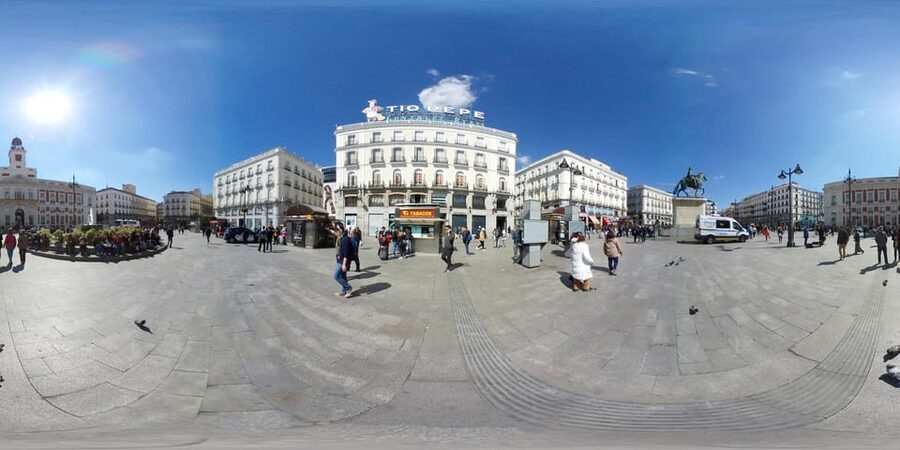
Puerta del Sol receives about thirty minutes, the longest scheduled stop. That extra time makes sense. Sol is one of Madrid’s most recognizable public spaces, and it brings together several themes from the tour: old Madrid, civic life, movement through the city, and the contrast between a historic setting and a modern urban center.
This is likely where the walk feels most energetic. The exact crowd level will vary, but Puerta del Sol is a central city space rather than a quiet monument. Keep close to the guide and be ready to pause when asked. The tour is not built around wandering freely through the square.
The virtual scenes can be especially helpful here because the present-day space is easy to experience as a busy crossroads. Historical footage gives it a longer story. Instead of seeing only signs, pavement, and passing people, you get a visual sense of how the area changed.
One practical point: the tour may feel brisk at this stage. A Spanish participant described a fast pace on a rainy day, though the guide still explained the material in detail. Weather can affect the rhythm, so bring suitable clothing and avoid treating the two-hour schedule as loose. The stops are timed.
Plaza de la Villa: a quieter historical pause
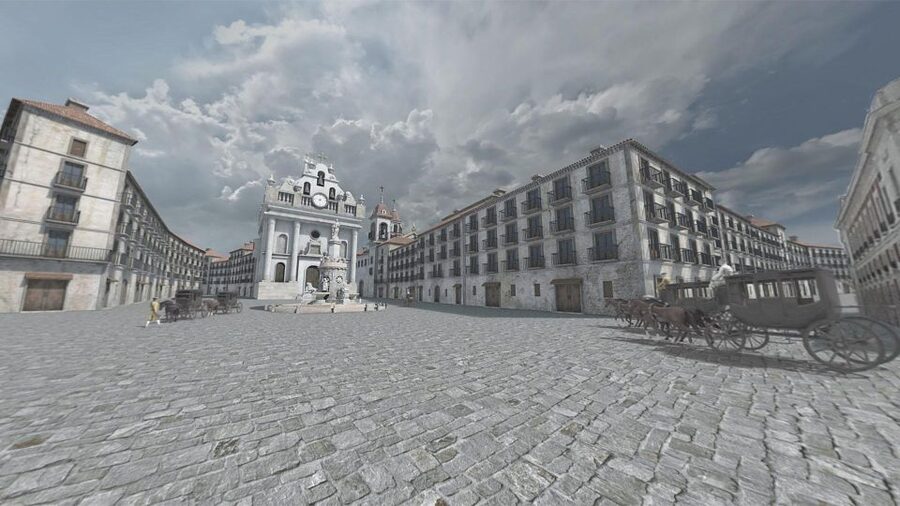
Plaza de la Villa is the shortest stop, at about ten minutes. It comes late in the route and offers a smaller-scale contrast with the Royal Palace, Plaza Mayor, and Puerta del Sol.
Because the stop is brief, listen for the main points rather than expecting a long visit. The square works as a compact piece of older Madrid, and the guide uses it to add another layer to the city’s development before the walk ends.
I like the inclusion of this stop because it keeps the experience from becoming a parade of only the most famous sights. You get a mix of royal, civic, and historic urban spaces. The ten-minute visit will not satisfy someone who wants a detailed study of the square, but it gives you a useful final look at a different side of central Madrid.
Finishing at Plaza del Callao
The tour ends at Plaza del Callao. The finish is convenient for continuing through central Madrid, though the provided details do not include a return transfer or a scheduled final activity after the guide says goodbye.
Think of the ending as a handoff to the rest of your day. You can use the walk to get oriented, then continue exploring on your own. The route also helps you understand how close many major sights are to one another, which is useful when planning later visits.
Since the experience does not include entry to the Royal Palace or other paid attractions, you may want to schedule those separately. The tour works best as an introduction and historical framework, not as a replacement for every museum or monument in the area.
What the guides add to the technology
The equipment gets attention, but the guides are a major part of the experience. Miguel has been singled out for being attentive, involving the group, and adding small city curiosities. Luis handled a meeting-point problem by calling a participant and helping them join the group while catching up on missed videos.
Elina and her team have also led the walk, and Irene and Pedro have been praised for their guiding. The available feedback repeatedly points to friendly, active guides rather than a purely automated presentation. That matters because virtual reality can become a gimmick if nobody explains what you are seeing.
The strongest version of this tour comes when you treat the guide and the glasses as equal parts. Watch the scene, then listen for the detail that places it in Madrid’s story. The experience is more useful when you do not rush through the visual material or ignore the live explanation.
Spanish and English are available for both the guide and audio support. If you have a strong preference, confirm your selected language when booking.
Is $21 a fair price?
At $21 per person, the value is good for a two-hour guided walk with virtual reality glasses and an official guide. You are not paying for a palace admission or a long museum visit. You are paying for the route, the historical presentation, the equipment, and the guide’s time.
I would compare it with the cost of a standard city walking tour. The extra value here comes from the visual reconstruction of Madrid’s past. If you learn best by seeing places rather than only hearing about them, the added technology can justify the price.
The value is less clear if you already know central Madrid well or prefer a slow, detailed architectural tour. The itinerary covers several places in a short period, so the experience favors breadth and visual storytelling over extended time at any one landmark.
Families may get particularly good value. A child who loses interest during a conventional explanation can often follow a historical scene more easily when it appears through the glasses. The format also gives adults a clear route and a manageable two-hour commitment.
Who should choose this Madrid tour?
I would recommend it to first-time visitors who want a quick orientation to central Madrid, families looking for a more visual way to study the city, and anyone curious about how technology can support a walking tour.
It also suits people who want historical context but do not want a full-day museum schedule. The route is short, central, and focused on well-known places, so you get a useful introduction without giving up an entire day.
You may want a different tour if your main goal is to enter the Royal Palace, study art, or spend thirty minutes examining one square. This is a moving experience with several stops, not a specialist monument visit.
The route is listed as wheelchair accessible. Since it is a walking activity, confirm the current route details if you have specific mobility needs. The tour offers free cancellation up to twenty-four hours before departure, and you can reserve now and pay later, which helps if your Madrid schedule is still changing.
My verdict: book it for a visual city introduction
I would book this tour if you want to see Madrid’s major central spaces while gaining a clearer picture of their past. The virtual reality is more than a photo trick when the guide uses it to explain the difference between the city you see and the city that came before it.
The strongest reasons to choose it are the four-stop route, the low $21 price, the family-friendly format, and the guides who add facts and local detail. Go in expecting a brisk, outdoor walking experience with timed stops, not a palace interior visit or a slow academic lecture.
If that sounds like your kind of sightseeing, this is a practical way to get your bearings fast and make the city’s history easier to picture.
FAQ
How long does the virtual reality Madrid tour last?
The tour lasts two hours.
Where does the tour meet?
Meet at the Fun and Tickets office on Mayor Street, 43. All participants should check in fifteen minutes before the tour begins.
Where does the tour finish?
The tour finishes at Plaza del Callao.
Which places are included on the route?
The route includes the Royal Palace of Madrid, Plaza Mayor, Puerta del Sol, and Plaza de la Villa.
Does the tour include entry to the Royal Palace?
The Royal Palace stop is listed as a photo stop and guided visit. Admission to the palace interior is not included.
Which languages are available?
The live guide and audio guide are available in English and Spanish.
Are virtual reality glasses included?
Yes. Virtual reality glasses are included, along with the walking tour and official guide.
Is the tour wheelchair accessible?
Yes, the activity is listed as wheelchair accessible.
Just added around Madrid
- Visit the National Archaeological Museum in Madrid★ 4.4 · 6 reviews
- From Madrid: Parque Warner Beach Water Park & Transport★ 3.9 · 14 reviews
- Madrid Wine Tasting, Flamenco Class and Pub Crawl★ 4.5 · 6 reviews
- Visit to the Prado Museum★ 4.9 · 6 reviews
- Tuk Tuk Tour with Wine Test in Madrid★ 3.8 · 6 reviews
- Tuktuk historical tour of Madrid 1 Hr in a fun and original way★ 3.7 · 3 reviews
- Prado Museum VIP tour with an art Expert, tickets included★ 5.0 · 11 reviews
- Personalised Traditional Madrid Night Tapas and Drinks Tour★ 4.9 · 93 reviews
Tickets, compared.



Avila & Segovia Tour with Tickets to Monuments from Madrid
Read our review →
Avila and Segovia Day Trip with Tickets to Monuments
Read our review →
La Cueva de Lola Flamenco Show Tickets with Drink
Read our review →
Prado Museum Guided Tour with Skip-the-Line Ticket
Read our review →