
Reviewed · LAS VENTAS BULLRING TOURS
Madrid: Las Ventas Bullring VIP Private Guided Tour
Las Ventas is more than a place to watch a corrida. This private 90-minute tour takes you into Madrid’s grand bullring, its bullfighting museum, and the corners that an audio guide may pass over. Guides such as Carlos, Lélia, Hugo, and Lucas bring the rules, rituals, and personalities to life without requiring you to attend a bullfight.
I like the direct conversation with an official Las Ventas guide, and I like the chance to ask questions at your own pace. The virtual bullfighting game and the opportunity to handle a cape add a hands-on touch, especially for families. The main caution is clear: bullfighting can be graphic and morally troubling, even when presented as culture and history.
Key points
- Private guidance: Your group has its own official Las Ventas guide rather than following a recorded audio tour.
- A major Madrid monument: Las Ventas opened in 1929 and holds up to 23,797 people.
- More than the arena: The route includes the Bullfighting Museum, the Patio de Caballos, and lesser-known spaces.
- Good for mixed opinions: You can learn about bullfighting without buying a ticket to a live event.
- Interactive finish: Try torero movements with a cape and take on the virtual bullfighting game.
- Easy to reach: The bullring is at Calle Alcalá 237, beside Ventas Metro station.
Why Las Ventas deserves a closer look
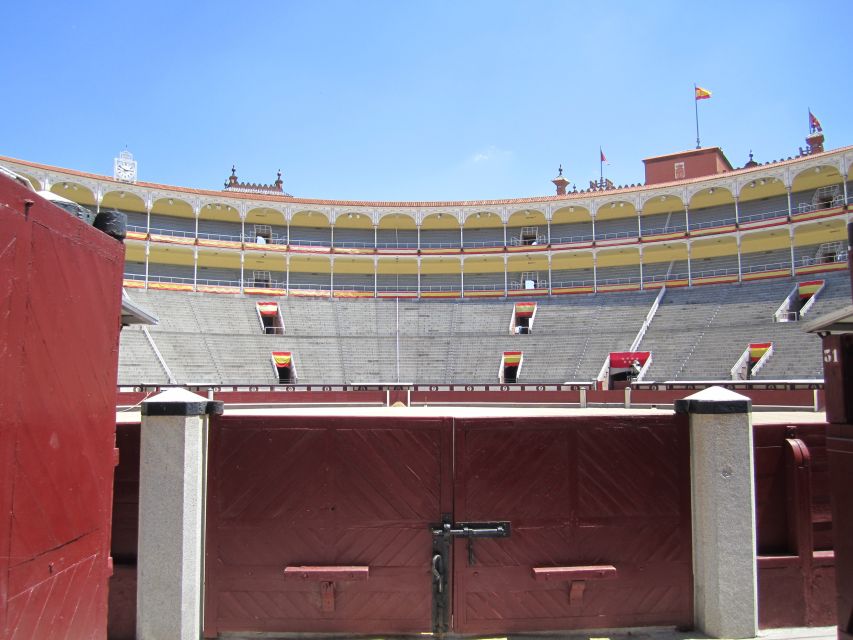
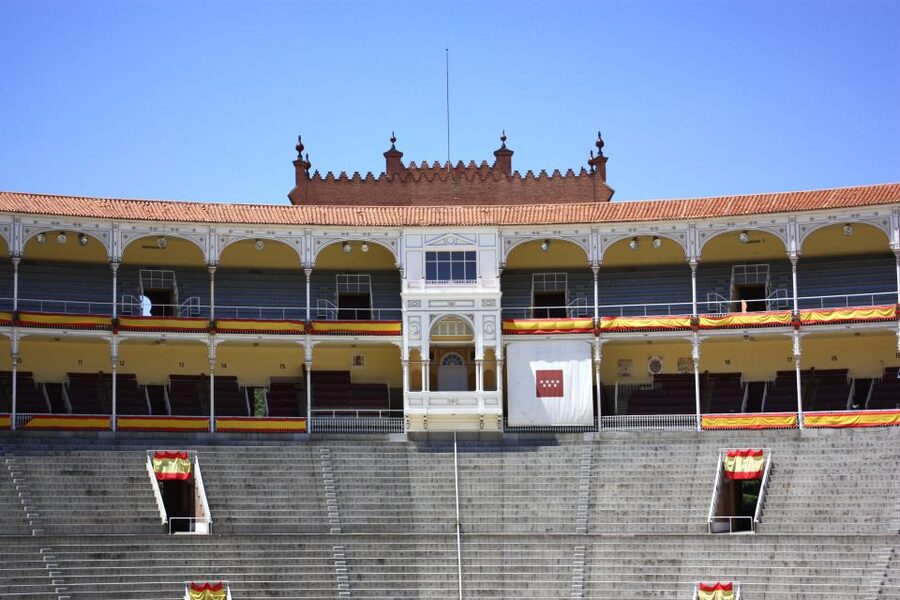
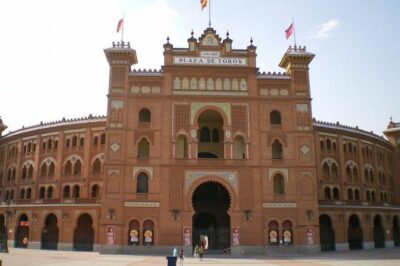
Las Ventas is often called the Cathedral of Bullfighting. That name may sound grand, but the building earns it through scale and ceremony. Built in 1929 on land known as Las Ventas del Espíritu Santo, the arena covers about 45,800 square meters and can hold 23,797 people.
You will also hear the nickname Chair of the Winds. The bullring sits on one of Madrid’s windiest patches, in the Guindalera area of the Salamanca district. That detail helps explain the arena’s particular setting. It is not tucked into a quiet old quarter. It faces the city with a broad, imposing presence.
I find the building most interesting when the guide connects its architecture to the customs carried out inside it. Statues, entrances, chapels, seating areas, and the ring all have a role. Without explanation, you see a handsome red-brick arena. With a guide, you begin to understand how the building works as a stage for a formal performance.
The tour is also a useful choice if you are curious about Spain’s bullfighting tradition but do not want to watch a live bullfight. You can learn the vocabulary, understand the sequence of a corrida, and see where the ritual happens before deciding how you feel about the event itself.
More Las Ventas Bullring Tours:
- Madrid: Las Ventas Bullring Tour with Audio Guide
★ 4.6 · 3,154 reviews - Audio Guided Tour of the Bullring of Las Ventas in Madrid
★ 4.5 · 290 reviews - VIP visit to the Las Ventas Bullring in Madrid
★ 5.0 · 178 reviews
Meeting your guide at Calle Alcalá 237
Your guide meets you at the main entrance, by the ticket booth at Calle Alcalá 237. This is the public-facing entrance, so you should allow enough time to locate the correct door rather than arriving at the last second.
The easiest public transport option is Ventas Metro station on Line 2. Several buses also stop nearby: 12, 21, 38, 53, 106, 110, and 146. Since no transfer is included, you make your own way to the arena. That keeps the price focused on the visit itself, and Madrid’s transport network makes the approach simple.
The private format matters from the opening minutes. Instead of placing headphones on and moving at the pace of a recorded script, you can ask why a particular statue is there, what happens in a certain passage, or which bullfighters made their name at Las Ventas. Guides named Carlos, Lélia, Eva, Hugo, Noemie, Lucas, Johann, Yoann, and Matild have all led visits, and the strongest experiences depend heavily on the guide’s ability to tell the story clearly.
The published tour information lists Spanish, English, and French. Russian is also listed in the general description, so confirm the language available for your date if that option matters to you.
Inside the bullring: scale, ritual, and the ring itself
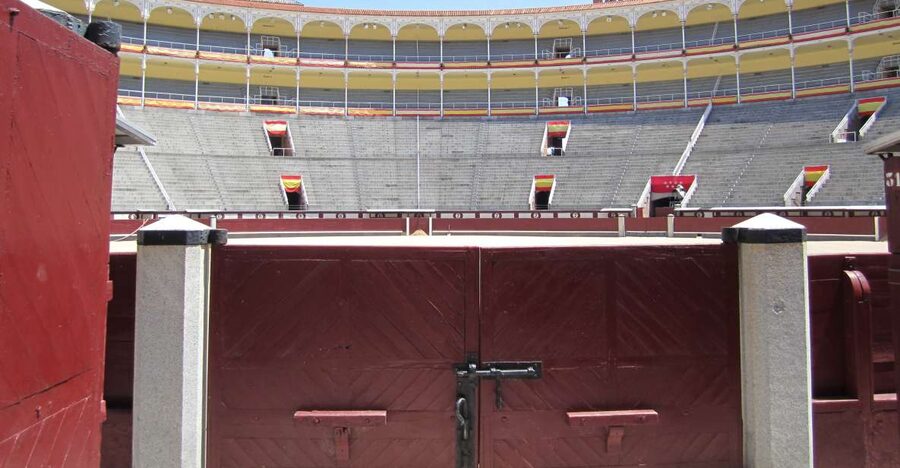
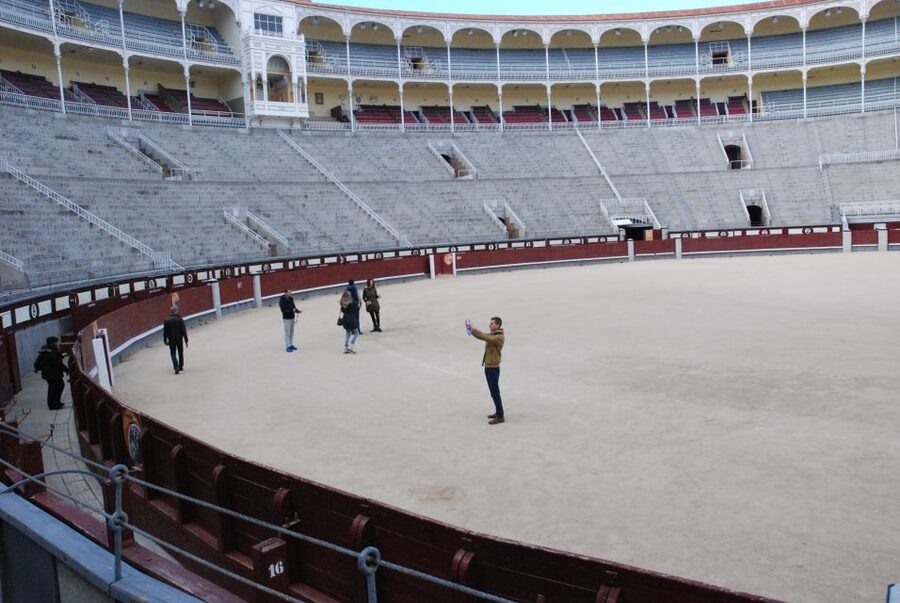
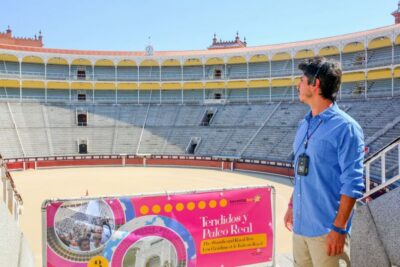
The arena is the heart of the visit. You will see the circular ring from the places connected with the bullfighting performance and learn how the action is organized. The guide explains the roles of the bullfighters, the sequence of events, and the traditions that shape a corrida.
This is where a private guide gives you more than a standard walk around. You can stop to ask about the difference between the participants, how a bullfighter uses the cape, or why certain moments follow a strict order. The guide can also explain the meaning behind the costumes, gestures, and movements that might seem mysterious if you have no prior knowledge.
Several tour experiences have included demonstrations of torero techniques. You may get the chance to see how a cape is handled and try a few movements yourself. The cape is available for visitors to use, but the guide’s demonstration gives the activity some context. It is not simply a photo opportunity. You see how precise and controlled the movements are meant to be.
Families can benefit from this part of the tour. Children aged nine and eleven were included in one visit, and the guide was able to keep them involved. The interactive elements also give younger visitors something to do while they absorb the history and rules.
The arena itself can feel stark. That is part of its value, but it also means the visit is not a polished entertainment attraction at every step. You are looking at a working monument tied to a controversial tradition. The guide’s job is to explain it, not to remove its difficult aspects.
The chapel and the less familiar corners
One of the more meaningful spaces is the chapel where bullfighters pray before a corrida. Access can depend on the visit and the conditions on the day, but private groups have been taken inside when the space was otherwise marked for respectful viewing only.
This small chapel helps you understand the emotional side of bullfighting. The arena is not only a public show. For participants, it involves nerves, belief, risk, and a set of personal rituals before entering the ring. The guide can place the chapel within that larger picture.
The route may also include areas connected with the horses, bullfighters, and movement of people and animals through the building. The Patio de Caballos is especially important because it houses the museum, but it also helps you picture the preparations behind the public performance.
Do not expect every visit to include exactly the same access to every room. The tour description promises a personal look at the monument and its lesser-known corners, while specific spaces can be affected by operations or access rules. That flexibility is normal in a working cultural site.
More Madrid Tours:
- Madrid: Tour Bernabéu Entry Ticket
★ 4.5 · 21,573 reviews - Madrid: Prado Museum Entry Ticket
★ 4.6 · 17,509 reviews - Madrid: “Emociones” Live Flamenco Performance
★ 4.8 · 12,866 reviews - Madrid: Panoramic Route City Tour
★ 4.1 · 12,259 reviews
The Bullfighting Museum and its Goya prints
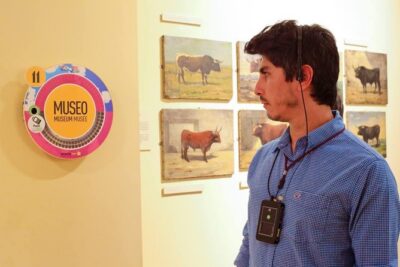
The Bullfighting Museum of Madrid sits in the Patio de Caballos. It provides the historical background that the arena alone cannot. Instead of seeing only the present-day building, you can trace the visual language, figures, and customs linked with bullfighting in Spain.
The collection includes engravings of bullfighting by Francisco de Goya. These works are valuable for visitors who are interested in Spanish art as much as in the sport itself. Goya’s images help show how bullfighting became part of Spain’s public culture and artistic record.
A section devoted to Manolete focuses on one of the most famous bullfighters in the tradition. The museum also holds a large collection of material connected with Las Ventas. Together, these displays give you a clearer sense of how the arena became an important Madrid institution.
I would give the museum your full attention rather than treating it as a quick corridor on the way out. The arena explains the setting; the museum explains the symbols and people. If you have mixed feelings about bullfighting, this part may be especially useful because it presents the tradition through objects, images, and historical context rather than through a live performance.
The virtual corrida and hands-on activities
The virtual bullfighting game is one of the tour’s most distinctive features. You can try to face a virtual bull in the Las Ventas ring and feel, in a limited and playful way, what it is like to perform the movements of a torero.
It does not reproduce the danger or physical strain of a real corrida. Still, it makes the rules easier to understand. You are not just hearing that timing, posture, and cape movement matter. You are trying to coordinate them yourself.
The activity works well for families and for adults who want something more active than a museum visit. It also gives people who oppose bullfighting a way to engage with the mechanics of the performance without watching a live animal event. The game may feel light compared with the serious history around it, but that contrast can help you see how a public ritual combines skill, theater, and danger.
Keep in mind that the virtual game is described as available, not guaranteed as a fixed part of every visit. Your guide can tell you what is operating on the day.
How the private format changes the experience
The private tour costs about $47 per person. That is roughly double what some visitors expect to pay for a basic self-guided visit, but the price buys more than entry. You get a private official guide, skip-the-line entry, and a conversation shaped around your group.
That can be good value if you have little knowledge of bullfighting or if your group has many questions. A private guide can slow down for children, explain unfamiliar terms, or spend more time on the museum if art interests you most. You are also not limited to the information chosen for an audio track.
The value is less clear if you prefer to wander silently or already know a great deal about the subject. The visit lasts about 1.5 hours, so it is not an all-day experience. Some visitors may prefer a cheaper self-guided option and use the saved money elsewhere in Madrid.
Still, the guide is the main reason to choose this version. Carlos has been praised for his enthusiasm and detailed explanations, while Lélia has been especially effective at answering questions and demonstrating the traditions. Other guides, including Eva, Hugo, Lucas, and Johann, have also led engaging visits. A great guide makes the arena understandable; a flat presentation would leave you looking at an impressive building without much connection to it.
The difficult question of bullfighting
You do not need to support bullfighting to find this tour worthwhile. Several parts of the visit focus on architecture, art, social tradition, and the history of Madrid. The guide can explain why the event matters to some people and why it troubles others.
You should also know that the subject can be graphic. The reality of injury and death involving both animals and people is part of bullfighting’s history. If that material is upsetting or unacceptable to you, the museum and arena may not be a comfortable stop.
The tour does not appear to shame visitors for being squeamish or for taking a critical view. That makes it a reasonable choice for couples or families with different opinions. One person can learn about the tradition without committing the group to attending a corrida.
This is a cultural visit, not a disguised ticket to a live bullfight. No food, drinks, or transport are included, and no live event is part of the 90-minute itinerary.
Who should book this Las Ventas tour?
I would choose this experience if you want context rather than a quick photo outside the arena. It suits first-time visitors to Madrid, families with curious children, and anyone interested in Spanish art, ritual, or controversial cultural traditions.
It is also a strong choice for couples who disagree about attending a bullfight. You can explore the subject together, ask honest questions, and leave with a better understanding without sitting through a live event.
The tour may not suit you if graphic material is a firm dealbreaker, if you want only a brief architectural visit, or if you dislike guided activities. You should also confirm the guide language and the availability of the virtual game before booking if those details are important.
Cancellation is free up to 24 hours before the start, and you can reserve now and pay later. The site is wheelchair accessible, which makes the private format useful for discussing access needs with the guide.
My verdict on the $47 experience
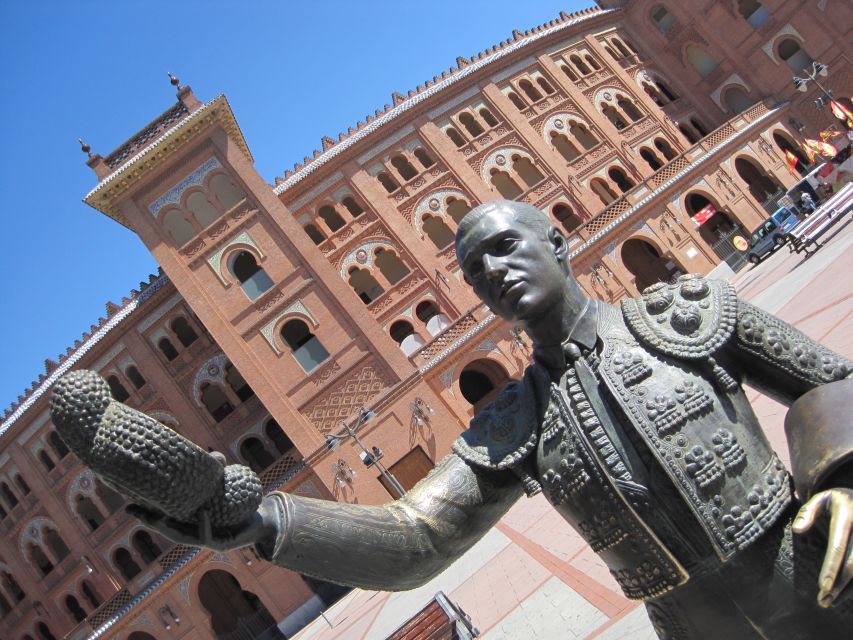
Book it if you want Las Ventas explained by a person who can connect the ring, chapel, museum, artwork, and rituals. The private setting gives you room to ask questions, and the cape demonstration and virtual game keep the visit from becoming a dry lecture.
Skip it if you only want to see the exterior or if bullfighting’s graphic side will make the visit unpleasant. For everyone else, $47 is a fair price for a focused, personal introduction to one of Madrid’s most distinctive monuments. You may leave without wanting to watch a corrida, but you will understand far better why Las Ventas matters.
FAQ
Where does the Las Ventas private tour start?
Meet your official guide at the main entrance by the ticket booth at Calle Alcalá 237.
How long does the visit last?
The guided visit lasts about 1.5 hours.
What does the ticket include?
It includes entry to Las Ventas bullring, entry to the Bullfighting Museum, skip-the-line access, and a private guide.
Is transport to Las Ventas included?
No. You make your own way to the bullring.
How can I reach Las Ventas by public transport?
Use Ventas Metro station on Line 2. Buses 12, 21, 38, 53, 106, 110, and 146 also serve the area.
Which languages are available?
The activity information lists Spanish, English, and French guides. The general tour description also lists Russian, so confirm availability for your chosen date.
Is the tour private?
Yes. The activity is arranged for a private group with its own guide.
Is the bullfighting museum included?
Yes. The visit includes the Bullfighting Museum in the Patio de Caballos.
Can I try a virtual bullfighting game?
A virtual bullfighting game is available as part of the experience, though you should confirm its operation on the day.
Is Las Ventas wheelchair accessible?
Yes. The tour information states that Las Ventas is accessible to disabled visitors and wheelchair users.
Can I cancel the booking?
Yes. You can cancel up to 24 hours in advance for a full refund.
Do I have to attend a live bullfight?
No. This is a guided visit to the bullring and museum. A live bullfight is not included.
Just added around Madrid
- Visit the National Archaeological Museum in Madrid★ 4.4 · 6 reviews
- From Madrid: Parque Warner Beach Water Park & Transport★ 3.9 · 14 reviews
- Madrid Wine Tasting, Flamenco Class and Pub Crawl★ 4.5 · 6 reviews
- Virtual Reality Experience Fun And Tickets & Imageen★ 5.0 · 12 reviews
- Visit to the Prado Museum★ 4.9 · 6 reviews
- Tuk Tuk Tour with Wine Test in Madrid★ 3.8 · 6 reviews
- Tuktuk historical tour of Madrid 1 Hr in a fun and original way★ 3.7 · 3 reviews
- Prado Museum VIP tour with an art Expert, tickets included★ 5.0 · 11 reviews
Las Ventas Bullring Tours, compared.
Audio Guided Tour of the Bullring of Las Ventas in Madrid
Read our review →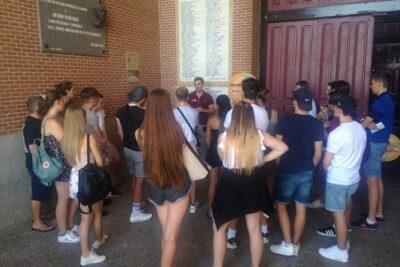
Las Ventas Madrid Bullring & Bullfighting Museum with Audioguide
Read our review →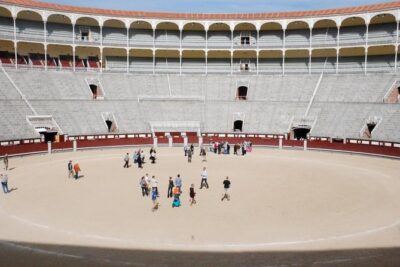
Las Ventas: Bullfighting Hall, Museum and Tour of the Bullring
Read our review →Browse the lists this tour appears in