
Reviewed · TOLEDO TOURS
Underground Visit
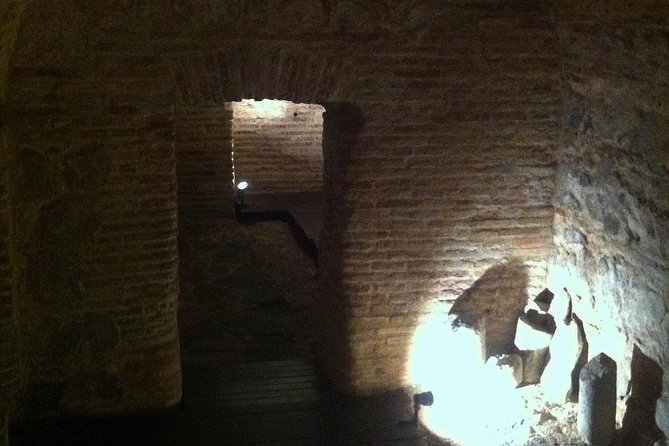
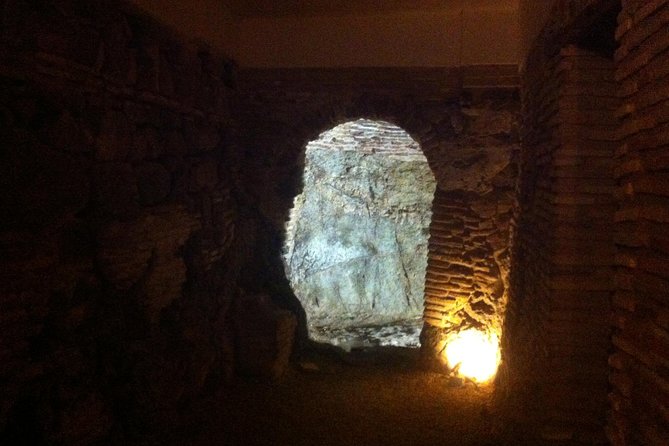
Toledo’s most surprising sights may be below your feet. This tour leads you into five underground spaces, including Roman baths, an 11th-century Arab hammam, a former mosque cistern, and two other bath sites. You move through the old city between entrances, so this is part archaeology visit and part walking tour.
I like the access to places normally closed to tourism, and I like the way the route connects Roman, Arab, Jewish, and Christian Toledo through practical remains rather than grand monuments. Guides Ruth, Luis, Javier, and Santiago are repeatedly praised for making the explanations clear and lively. The main drawback is important: you do not walk through one continuous underground city. You walk above ground between separate sites, and the tour is conducted in Spanish.
Key points at a glance
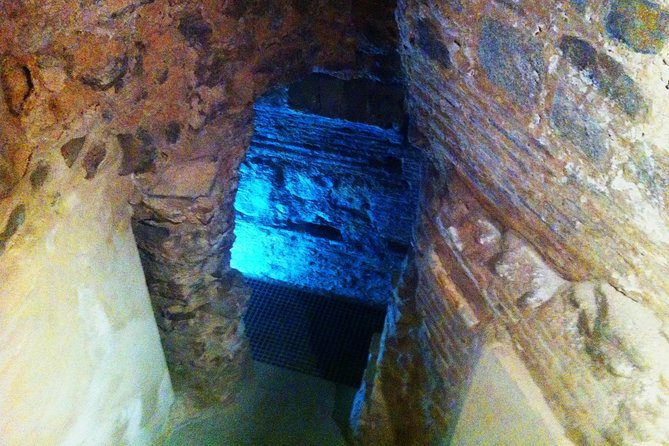
- Five normally closed spaces: See the Cenizal bath, Roman baths of Old Nuncio, El Salvador’s old cistern, the Baths of the Angel, and the Baños del Caballel.
- A city tour with underground stops: The route uses Toledo’s streets to connect separate archaeological spaces, rather than taking you through one uninterrupted tunnel.
- Spanish-language guiding: Ruth, Luis, Javier, and Santiago have led this experience, with a style that combines explanation, anecdotes, and local legends.
- Strong value at $14.90: For about two hours and five unusual sites, the price is modest, especially if you have already seen Toledo’s major churches and museums.
- Small enough to follow: The group limit is 24 people, which matters when entering compact rooms and listening in old stone spaces.
- Book with the right expectation: This suits you if you enjoy archaeology and city history, but it may disappoint you if you expect a long subterranean walk.
Why Toledo has another city below the streets
Toledo is famous for the city above ground: steep lanes, stone walls, churches, synagogues, and views over the Tagus. Yet the older story is often easier to understand below street level, where water systems, bathing rooms, foundations, and reused buildings show how the city worked.
I like this approach because it moves away from postcard views and toward everyday life. Baths tell you about hygiene and social habits. A cistern tells you about water and worship. Roman construction reused by later communities shows how each period built on what came before.
The tour also helps you connect Toledo’s many cultural chapters. Roman, Arab, Jewish, and Christian communities did not occupy four perfectly separate cities. They inherited buildings, changed their purpose, sealed passages, and adapted older spaces to new needs.
The guide fills in those links as you walk from one entrance to the next. You hear anecdotes and legends along the route, so the experience is not just a series of technical stops. That storytelling matters in Toledo, where many historic features are easy to miss behind an ordinary doorway or beneath a modern street.
More Toledo Tours:
- Three Cities in One Day: Segovia, Avila and Toledo from Madrid
★ 5.0 · 8,402 reviews - Madrid: Segovia and Toledo Tour, Alcazar, and Cathedral
★ 4.7 · 7,797 reviews - Toledo Tour from Madrid: Cathedral, Synagogue & St. Tome’s Church
★ 5.0 · 6,784 reviews
The Cenizal bath and the practical side of an old hammam
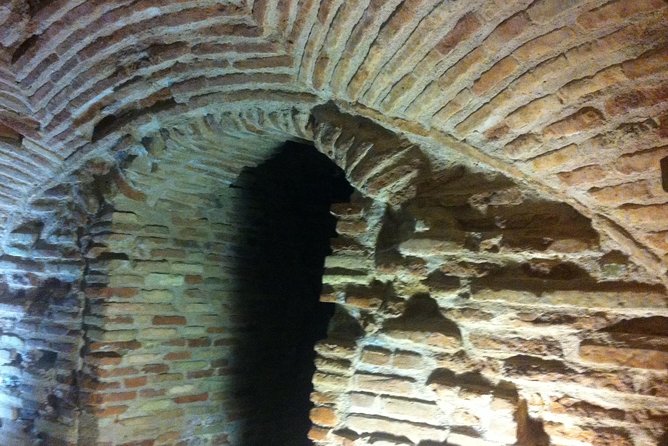
The Cenizal bath is described as an 11th-century hammam, or Arab bath. This is one of the clearest examples of why the tour is useful: from the street, you might pass without noticing it, but inside, the layout opens a window onto the way an Arab bath operated.
Your guide explains the architectural details, what the space was used for, and how it functioned. The value is in learning to read the room, not simply looking at old stone. A bath was a social and practical place, and the guide’s explanation gives the remains a purpose.
The space is also a good reminder to keep your expectations realistic. These are old underground rooms, not restored attractions designed for large crowds. Their appeal comes from their age, setting, and limited access. You are seeing a place that is usually closed, with the guide helping you understand what survives.
Guides Ruth and Javier receive especially warm praise for making complicated material easy to follow. If you enjoy stories and clear explanations, this may be one of the strongest parts of the route.
Roman baths of Old Nuncio and Toledo’s earlier foundations
The Roman baths of Old Nuncio reveal a different layer of the city. Here, the focus shifts to Roman Toledo, including the way the Romans built thermal spaces and how later generations reused them.
The baths were not only about washing. They were thermal and social spaces, and your guide explains the construction methods and the changes made over time. This gives you a useful way to view ruins: not as isolated fragments, but as buildings that continued to shape the city long after their original use ended.
I like this stop because it adds scale to Toledo’s story. The medieval city often dominates attention, but Roman infrastructure came first. Seeing the baths helps you picture Toledo before the familiar churches and fortified streets took their current form.
The stop can also be challenging if you prefer visual displays or large rooms. Underground remains may require imagination. The guide’s ability to simplify the ideas is therefore a major part of the experience. Javier is repeatedly singled out for explaining clearly and keeping the tone entertaining, while Luis is praised for being warm and easy to understand.
El Salvador’s cistern and the role of water
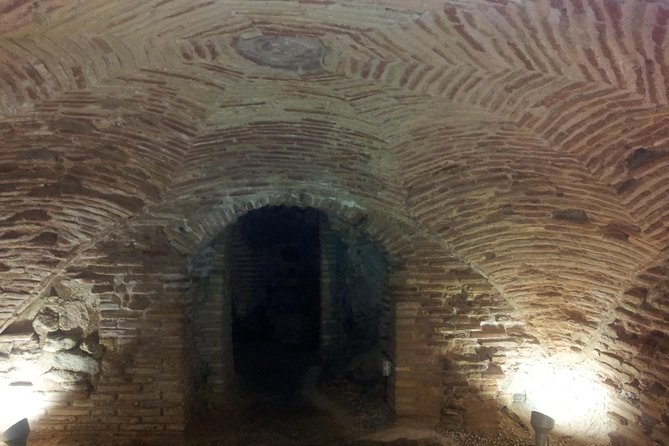
El Salvador’s old cistern, known as El well del Salvador, dates from the 11th century and belonged to the mosque that later became the church of El Salvador. This is a small site with a large lesson: religious buildings often preserve earlier structures beneath their present identity.
A cistern is less dramatic than a cathedral, but it tells you how people lived. Water storage was essential in a dense hilltop city. The connection to the former mosque also shows how Toledo’s buildings changed function as political and religious control shifted.
This stop works particularly well if you want to understand the city’s three-culture story through physical remains rather than broad labels. The room is not simply Arab or Christian. It is part of a building with layers of use, memory, and adaptation.
You may enter some of the underground spaces with a key. That detail makes the experience feel more like access to a working historic site than a standard open museum. It also explains why going with an organized guide matters. Without the guide, you may walk past the entrance and never know what is below.
A different sort of day out around Toledo:
- Toledo Half or Full Day Tour with Optional Lunch from Madrid
★ 4.5 · 5,807 reviews - From Madrid: Guided Day Trip to Toledo by Bus
★ 4.1 · 5,280 reviews - Madrid: Toledo & Segovia Full Day Guided Tour with Alcázar
★ 4.6 · 4,394 reviews - From Madrid: Toledo Guided Day Trip
★ 4.3 · 3,501 reviews
The Baths of the Angel and Baños del Caballel
The Baths of the Angel and the Baños del Caballel add two more Arab bath sites to the route. The supplied details do not assign a separate story or full architectural description to each one, so you should expect the guide to explain their individual features on site.
Together, they reinforce the role of bathing in Arab Toledo. They also make the itinerary feel varied. You are not visiting one underground room and then leaving. You are comparing several spaces, noticing different layouts, surviving elements, and later changes.
The benefit of visiting multiple baths is cumulative. One site introduces the idea. The next helps you recognize patterns in construction and use. By the end, you have a better sense of how bathing spaces fit into the old city.
The tradeoff is time and repetition. If you are not interested in architecture or archaeology, several bath stops may begin to feel similar. The guide’s storytelling is what keeps the route moving. Ruth, Luis, and Javier are praised for adding humor, anecdotes, and a personal connection to Toledo, which is useful during a detail-heavy visit.
What the walking between sites is really like
The tour does not keep you underground from start to finish. You walk through Toledo between the five spaces, with stops along the way for anecdotes, curiosities, and legends.
This above-ground movement is not a flaw by itself. It lets you see how the underground sites fit into the present-day city. You begin to understand that the buried remains are not gathered in one archaeological park. They are scattered through an old urban area, often beneath or beside buildings that still serve modern purposes.
Still, this is the point most likely to affect your decision. If you picture a continuous tunnel network, you may feel disappointed. One participant found the experience different from expected because much of the route took place in the streets, with stops to see underground cisterns and baths rather than a long walk below ground.
The provider explains that the spaces are separate and that later construction has blocked many tunnels. Private properties also limit access. So book this as an underground archaeology walk, not as an underground expedition.
Toledo’s streets can be steep and uneven, though the supplied information does not give a specific accessibility assessment. Most people can participate, and the meeting point is near public transportation, but you should allow time to reach the starting point at C. del Hombre de Palo, 7.
The guides make the difference
The route depends heavily on the guide. The tour is in Spanish, and the explanations can be thorough. If Spanish is not comfortable for you, the experience may become tiring, even if you can understand some of the language.
One non-Spanish-speaking couple found the visit long and mentally exhausting because they could not follow everything. That is useful warning, not a minor detail. The subject is explanation-heavy, and you will get much more from it if you can understand spoken Spanish well.
The named guides receive consistent praise for different strengths. Ruth is described as friendly, close to the group, and good at making the material fun. Luis is praised for his pleasant manner and communication. Javier is repeatedly credited with clear explanations, humor, professionalism, and concern for the group’s comfort. Santiago is also associated with well-received Toledo visits.
The guide is not just there to open doors. You need someone to explain why a room matters, what changed over time, and how an ordinary underground feature connects with the larger city. If your assigned guide is one of these named team members, expect a personal and lively approach, though the exact guide is not guaranteed.
Is $14.90 a fair price?
At $14.90 per person, this is a good-value add-on to a Toledo visit. You get approximately two hours, access to five spaces, a guide, and a group capped at 24 people. The mobile ticket also keeps the booking simple.
The value is strongest if you have already seen Toledo’s headline sights and want something less obvious. A major church or museum can justify a higher entrance fee through its scale and displays. This tour offers a different kind of value: unusual access, local explanation, and a chance to see places you are unlikely to find on your own.
The price is less convincing if you want extensive time inside each space or a long underground route. The five stops are spread through the city, and part of your time goes into walking and listening outdoors. You are paying for the route and interpretation as much as for the rooms themselves.
The group limit of 24 is reasonable for a walking tour, though compact underground spaces can still feel crowded. Booking is made well in advance on average, around 24 days, so I would not leave this until the last moment if the schedule matters to you.
Who should book this Toledo experience?
I would recommend it to you if you enjoy old buildings, archaeology, religious change, water systems, and the small clues that explain how cities functioned. It is especially useful after you have visited Toledo’s main monuments, because the route gives you a different view of the same city.
Families can also find it worthwhile. Children aged eight enjoyed the mixture of underground rooms, cisterns, and Roman baths, though the Spanish explanations may limit the appeal for younger children who cannot follow the guide.
Spanish speakers will get the most from the tour. If you understand only basic Spanish, consider booking it only if you are comfortable missing parts of a long explanation. The tour is not presented in another language according to the supplied information.
I would skip it if you want a continuous underground passage, a fast-paced sightseeing loop, or a self-guided visit with signs and displays. The route is explanatory and story-led. Its success depends on your interest in listening and looking closely.
The experience offers free cancellation up to 24 hours before the start time. Within 24 hours, changes and refunds are not accepted. Bad weather or an insufficient minimum group can lead to a different date or a full refund.
Should you book the Underground Visit?
Book it if the idea of entering five normally closed spaces appeals to you more than ticking off another major monument. The Cenizal bath, Roman baths, former mosque cistern, Baths of the Angel, and Baños del Caballel give you a useful look at Toledo from below, while the streets between them connect the sites to the living city.
Just arrive with the right picture in mind. This is not a continuous subterranean walk. It is a Spanish-language walking tour with several underground entries, detailed explanations, and guides such as Ruth, Luis, and Javier who bring the remains into focus.
At $14.90, I consider it an easy recommendation for Spanish-speaking visitors interested in the city’s less visible past. For everyone else, the decision comes down to two questions: can you follow a thorough Spanish explanation, and are you happy to walk between separate underground sites? If the answer to both is yes, book it.
FAQ
Where does the Underground Visit begin?
The tour begins at C. del Hombre de Palo, 7, 45001 Toledo, Spain.
Where does the tour end?
The activity ends back at the meeting point.
How long does the tour last?
The advertised duration is approximately two hours. Some descriptions of the experience refer to about an hour and a half of explanation, so allow roughly two hours in your schedule.
Is the tour conducted in English?
No. The tour is conducted in Spanish.
How many underground spaces will I visit?
The route includes five spaces: the Cenizal bath, the Roman baths of Old Nuncio, El Salvador’s old cistern, the Baths of the Angel, and the Baños del Caballel.
How large is the group?
The activity accepts a maximum of 24 people.
Can I cancel for a refund?
You can cancel at least 24 hours before the start time for a full refund. Cancellations or changes made within 24 hours are not refunded or accepted. If poor weather or an insufficient minimum group causes the tour to be canceled, you will be offered another date or a full refund.
Just added around Toledo
- Hot Air Balloon over Toledo with optional transfers from Madrid★ 4.5 · 23 reviews
- Visit to the Toledo Underground★ 4.5 · 45 reviews
- Private Jewish Walking Tour in Toledo★ 5.0 · 95 reviews
- Toledo Underground Tour Visit Thermae and Private Basements★ 5.0 · 50 reviews
- Toledo, City of the Three Cultures★ 4.5 · 11 reviews
- Toledo Historical Small Group Tour with Cathedral & Monuments★ 5.0 · 49 reviews
- Toledo Templars Evening Walking Tour★ 5.0 · 24 reviews
- Medieval Toledo: The Knight of Three Cultures Exploration Game★ 4.0 · 20 reviews
Toledo Tours, compared.
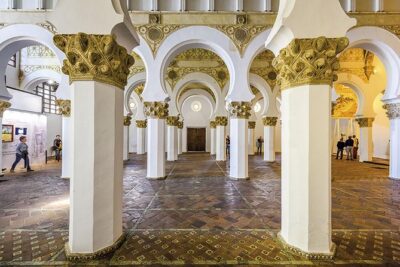
Toledo Tour from Madrid: Cathedral, Synagogue & St. Tome’s Church
Read our review →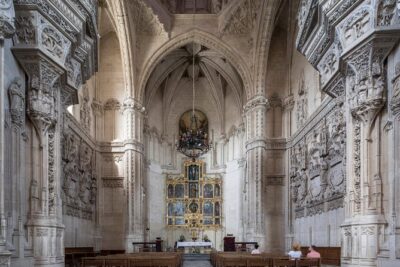
Toledo Half or Full Day Tour with Optional Lunch from Madrid
Read our review →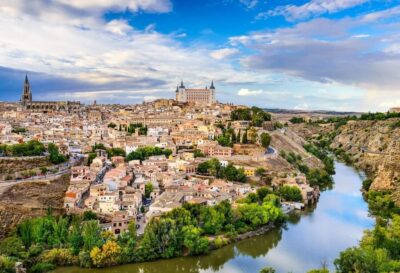
Toledo & Segovia Full Day Guided Tour with Alcázar
Read our review →

Segovia and Toledo Day Tour from Madrid with Optional Alcazar
Read our review →
Browse the lists this tour appears in