
Reviewed · TOLEDO TOURS
Underground Toledo Private Walking Tour with Official Local Guide
Toledo’s best stories often sit below street level. This private walking tour leads you into Roman cisterns, old baths, medieval wells, a Jewish Quarter site, and a preserved hammam. I like the way it shows Toledo through water and stone, and I like that guides such as Javier, Alejandro, Enrique, and Anna can adjust the talk to the group. The main drawback is the price: $172.82 per person for about two hours is a serious spend, especially for a short tour.
I also like that the tour moves beyond Toledo’s major sights and connects Roman, Islamic, Visigothic, Jewish, and medieval layers. You walk between sites, so the city itself becomes part of the lesson. Check the timing carefully, though: Cuevas de Hercules is open to this tour only Tuesday through Saturday, from noon to 2 p.m. or 5 to 7 p.m.
Key points at a glance
- Roman waterworks underground: See the Cuevas de Hercules and the large second-century thermal complex at Plaza de Amador de los Rios.
- Six compact historic stops: The sites are small, often just a room or two, so the guide’s explanation gives them much of their meaning.
- A private experience: Only your group takes part, making it easier to ask questions and set the pace.
- Guides with strong local expertise: Javier, Alejandro, Enrique, and Anna are praised for history, architecture, archaeology, and clear personal attention.
- A walking tour between sites: You do not simply enter one attraction and leave. You cross Toledo’s old streets while the guide explains buildings and city layers.
- Practical access details: Entry to the underground places is included, headphones are supplied for groups over five, and comfortable shoes are advised.
Why Toledo’s underground tells a better story
Toledo is famous for its cathedral, Alcázar, and hilltop views. Those sights matter, but this tour asks you to look below the plazas and streets. The focus is on how people collected, moved, heated, and used water across many centuries.
That gives the tour a clear thread. Roman engineering appears beside Islamic baths. Medieval wells sit under later religious or civic spaces. In the Jewish Quarter, archaeology helps you picture a neighborhood that cannot be understood from its façades alone.
I find this approach more useful than a simple list of old buildings. You learn why an underground chamber exists, what later cultures changed, and how the same space could serve a new purpose over time. One room may have begun as Roman infrastructure, later served an Islamic community, and then been absorbed into a Christian building.
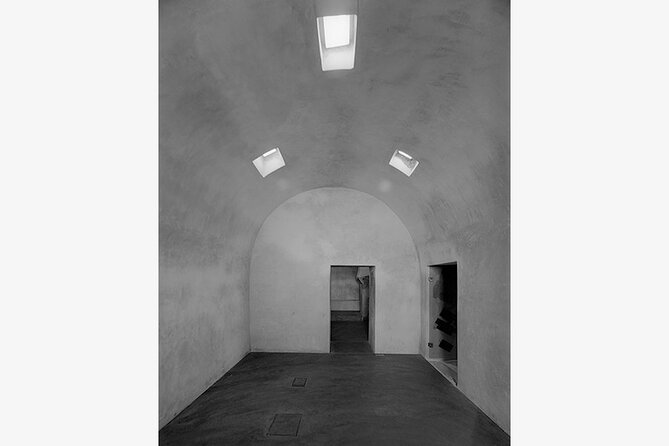
The sites are not grand halls with rows of polished exhibits. Several are compact archaeological spaces, sometimes only a room or two. That can feel modest if you expect a major monument, but it also makes the experience personal. You are close to the masonry, vaults, wells, and surviving bath features.
More Walking Tours in Toledo
- Guided Walking Tour of Immortal Toledo
★ 5.0 · 1,116 reviews - Madrid: 6-Hour Day Trip to Toledo with Guided Walking Tour
★ 4.0 · 865 reviews - Toledo Full-Day Walking Tour with Guide from Madrid
★ 4.5 · 170 reviews
Cuevas de Hercules and Toledo’s layered beginnings
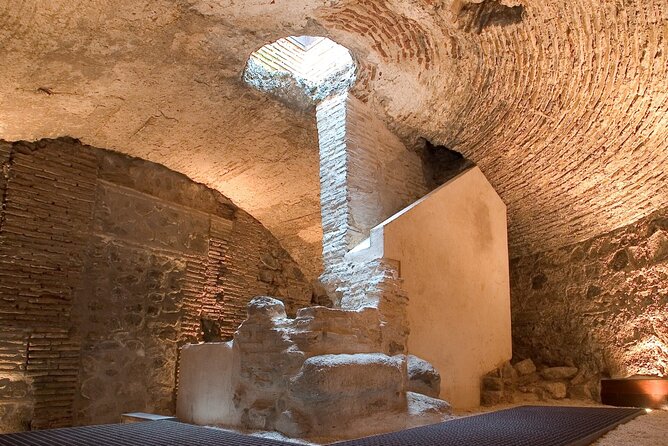
The tour begins at Cuevas de Hercules, a place surrounded by old legends and changing uses. You see Roman cisterns, a mosque, and a later church connected with the same site.
That mixture gives the guide plenty to explain. The value here is not one perfectly preserved building. It is the evidence of Toledo being rebuilt and repurposed across different periods. The remains point to Roman engineering, Islamic worship, and later Christian use in one location.
The scheduled visit lasts about 12 minutes, so expect a focused introduction rather than a long archaeological session. Your guide’s explanation matters greatly because the remains may not speak for themselves. Javier, Alejandro, Enrique, or another official local guide can help you read the stonework and understand the legends without turning the stop into a dry lecture.
This site has an important scheduling catch. Access to Cuevas de Hercules is available only Tuesday through Saturday, from 12 to 2 p.m. and from 5 to 7 p.m. If this stop is a priority, confirm that your tour time fits those windows before booking.
Roman baths at Plaza de Amador de los Rios
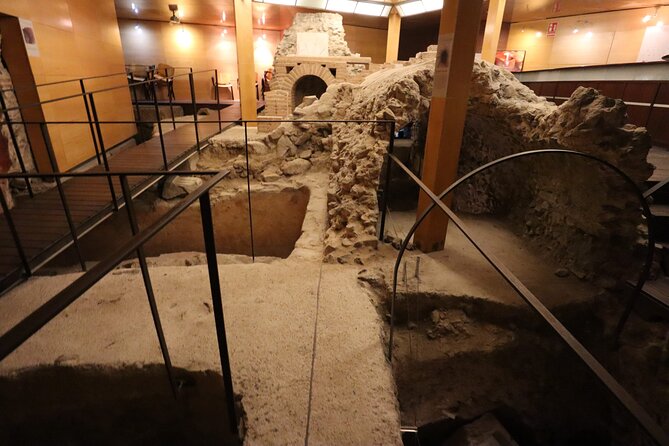
At Plaza de Amador de los Rios, you visit the remains of a huge thermal complex dating from the second century. The 12-minute stop gives you a quick look at Roman public bathing and the scale of the infrastructure that once supported city life.
The word gigantic can set high expectations, so keep the format in mind. You are seeing archaeological remains within a walking route, not spending an hour in a fully reconstructed bath complex. The guide supplies the missing context: how Roman baths worked, why they needed such substantial construction, and how water shaped the city.
This is one of the strongest stops for anyone interested in engineering. The tour is not limited to art, royal history, or religious buildings. It shows the practical systems that made urban life possible. I especially like that the Roman material is placed alongside later Toledo sites, allowing you to compare how different communities handled water, heat, and public space.
Plaza Colegio Infantes and the baths below the street
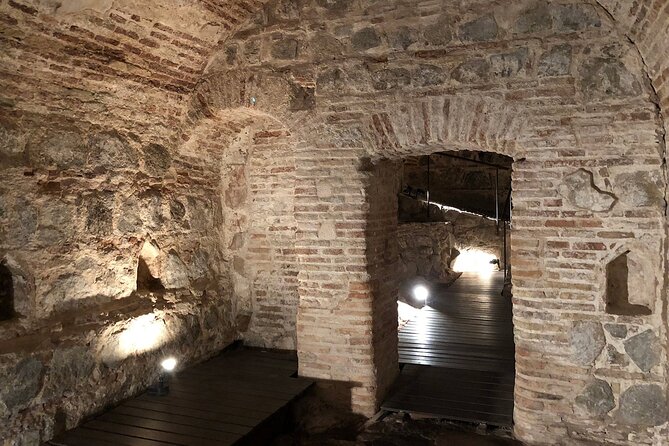
Plaza Colegio Infantes is a 20-minute stop, the longest scheduled visit on the route. Beneath and around this area are archaeological remains linked with the Baño del Caballel and Baños del Cenizal.
The extra time makes sense here. You can expect a closer explanation of several remains rather than a quick look at one chamber. The guide can show how bath spaces fit into Toledo’s older urban plan and how later construction changed what survives.
This is also a reminder that Toledo’s archaeology is scattered through the modern city. You may walk past an ordinary-looking plaza without realizing that important remains lie below it. With a private guide, you can pause for questions and ask how the site relates to nearby streets and buildings.
If you have already taken a broad Toledo city tour, this stop adds a different layer rather than repeating the usual cathedral-and-palace route. One Spanish-speaking review noted that the guide adapted the content to avoid repeating an earlier tour, which is useful if you are building a full program in the city.
More Madrid Walking Tours:
- Guided English walking tour to the monuments of Toledo
★ 4.5 · 129 reviews - Toledo City Walking Tour
★ 4.5 · 125 reviews - Madrid: Day Trip to Toledo with Walking Tour & Small Group
★ 4.2 · 111 reviews - Toledo: Guided Walking Tour with Cathedral Ticket and Tour
★ 4.2 · 98 reviews
The well beneath Plaza del Salvador
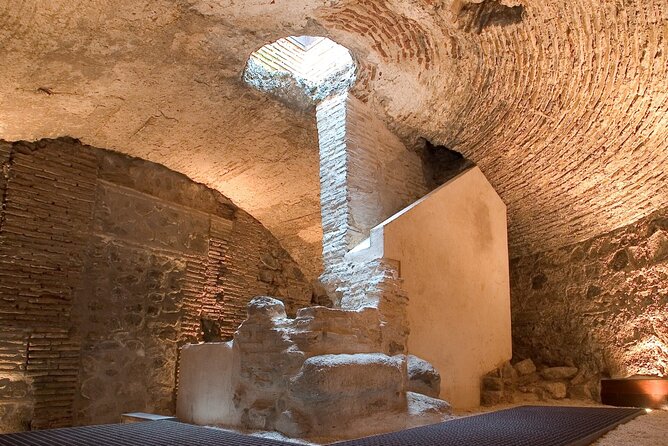
At Plaza del Salvador, the story shifts from Roman baths to medieval religious space. Below the square are the remains of a former cloister belonging to Trinitarian monks, along with the Well of El Salvador, dated to the eleventh century.
The scheduled visit takes about 13 minutes. That is enough for a clear explanation of the well and the former cloister, but not enough for an extended architectural study. I would treat this as a compact stop that helps connect Toledo’s underground water supply with its medieval religious buildings.
Wells can seem less dramatic than baths or cisterns, yet they are often the most direct reminder of daily life. A well tells you that water had to be stored and managed close to homes, religious houses, and neighborhoods. Here, the date also places the site within Toledo’s medieval period, adding another layer to the route.
Casa del Judío in the Jewish Quarter
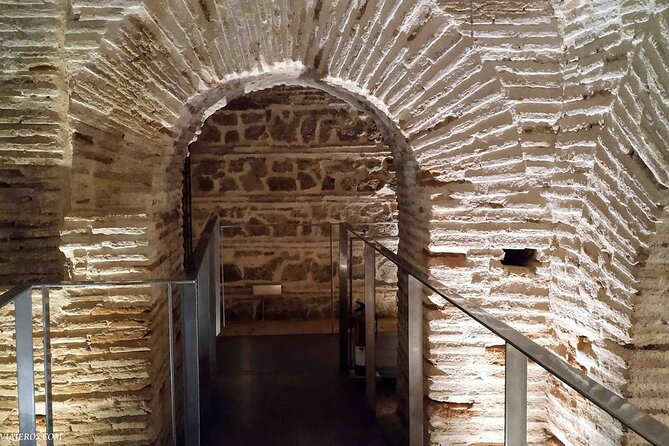
Casa del Judío is the tour’s stop in Toledo’s Jewish Quarter and lasts about 15 minutes. The site adds social and cultural context to the route, moving beyond public baths and water systems into the spaces associated with Jewish life.
The description identifies it as an archaeological place, so you should expect remains rather than a fully furnished historic house. That is not a weakness, but it does mean the guide’s storytelling is central. Enrique, praised for his passion for history, or another local guide can explain what the archaeology reveals and what must be inferred.
I like the balance this stop brings. Roman and Islamic engineering can dominate a tour of underground Toledo, but the Jewish Quarter reminds you that the city’s past is also about communities, homes, worship, and daily routines. The site is a useful counterpoint to the monumental attractions above ground.
Calle del Ángel and the preserved hammam
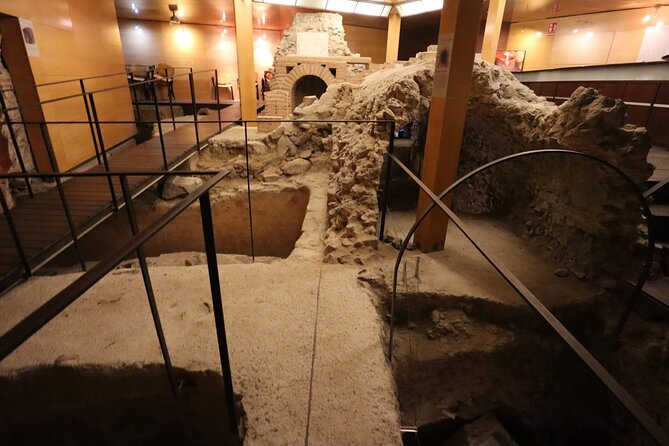
The final stop is on Calle del Ángel, where a basement preserves part of a hammam and its hypocaust. A hypocaust is a heating system associated with Roman and later bath traditions, allowing heated air to circulate beneath a floor.
This is one of the most distinctive stops on the route because it links architectural remains with the physical process of bathing. You are not just hearing that Toledo had hammams. You can see part of the system that helped heat one.
The scheduled visit lasts about 15 minutes. As with the other underground locations, the preserved area may be compact. The tour works best when you enjoy close study and explanation rather than expecting a huge open complex.
Anna was praised for explaining old hammams, Roman baths, medieval wells, and the architecture between each site. That combination is important. The walking portions are not wasted time. They help you see how these underground remains fit into the streets and buildings above.
A private format with several guide names in the mix
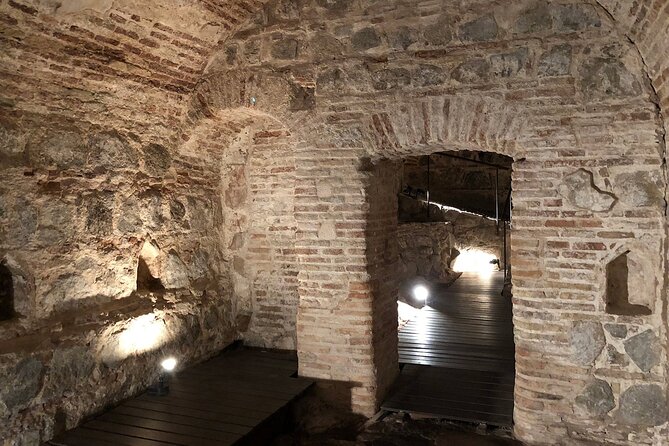
This is a private tour, so only your group participates. That gives you more room to ask questions than you would normally have on a large scheduled walk. A group of more than 20, including infants, teenagers, and adults into their 60s, was handled successfully by Alejandro, who adjusted the tour to suit different ages.
The guides named in the available feedback include Javier, Alejandro, Enrique, and Anna. Their strengths vary slightly in the comments: Javier is praised for explaining how spaces changed use over time, Alejandro for archaeology and group care, Enrique for history and enthusiasm, and Anna for combining underground sites with architecture along the walking route.
English is offered. One English-speaking family found its guide extremely well informed but spoke quickly, making some explanations harder for one person to follow. That is a fair practical point. If you need slower speech or clearer repetition, say so at the start. A private format should make that request easier.
For groups of more than five, individual headphones are provided. That matters in small underground areas, where sound may bounce and where a larger party can make it hard to hear every word.
Is $172.82 per person good value?
At $172.82 per person, this is not a budget walk. You are paying for a private guide, access to underground places, and a route that reaches sites you would be unlikely to interpret on your own.
The value is strongest for a small group that wants a specialist experience. If four family members share one private booking, the cost may feel more reasonable than booking several separate public activities. The supplied price is listed per person, so check the final total for your group before committing.
The two-hour length is both a benefit and a limitation. It fits well into a short Toledo visit and leaves time for the cathedral, Alcázar, or a meal. At the same time, the high price means you should expect a focused route, not a full day of sightseeing.
I would book it for the unusual subject matter, not for quantity. You are not collecting dozens of attractions. You are getting a guided look at six carefully chosen sites and the streets between them.
Who will enjoy this tour most?
I would recommend it to you if you have already seen Toledo’s main monuments or want a different way to understand the city. It also suits anyone interested in archaeology, Roman infrastructure, Islamic architecture, Jewish history, medieval wells, or old bathing systems.
Families can benefit from the private setup, especially when ages vary. The underground rooms and stories offer a change from long museum visits, while the short stop lengths help keep the route moving.
You should think twice if you want a grand, polished attraction with large intact rooms. Several places are small and archaeological. The experience depends on your interest in fragments, explanations, and connections between sites.
Wear comfortable shoes. You walk through the city from one location to the next, and the tour is more enjoyable when you can focus on the guide rather than your feet.
Booking timing and cancellation
The tour is commonly reserved well ahead, with an average booking time of about 32 days. That suggests you should not leave it until the last moment if your Toledo dates are fixed.
Confirmation is received at booking. The activity is near public transportation, service animals are allowed, and most people can participate. Cuevas de Hercules has restricted access hours, so that remains the most important timing issue.
Free cancellation is available until 24 hours before the start time for a full refund. Cancellations or changes made within 24 hours are not refunded or accepted. If the minimum number of participants is not reached and the operator cancels, you are offered another date or experience, or a full refund.
Should you book the Underground Toledo tour?
Book it if you want Toledo’s less obvious story and enjoy having an expert connect scattered remains into one clear picture. The Roman cisterns, second-century baths, eleventh-century well, Jewish Quarter archaeology, and preserved hammam give the route real variety.
I would be more cautious if $172.82 feels high for two hours or if you prefer large monuments over small archaeological spaces. For the right audience, though, this is a distinctive addition to a Toledo visit. It shows how the city was supplied, heated, rebuilt, and lived in across centuries, often just below the streets you are already walking.
FAQ
How long does the Underground Toledo Private Walking Tour last?
The tour lasts approximately two hours.
How much does the tour cost?
The listed price is $172.82 per person.
Is this a private tour?
Yes. Only your group participates in the activity.
Which language is offered?
The tour is offered in English.
Are entrance fees to the underground places included?
Yes. Access to the underground places on the tour is included.
When can you visit Cuevas de Hercules?
Access to Cuevas de Hercules is available Tuesday through Saturday from 12:00 to 14:00 and from 17:00 to 19:00.
Are headphones provided?
Individual headphones are provided when the group has more than five people.
Just added around Toledo
- Hot Air Balloon over Toledo with optional transfers from Madrid★ 4.5 · 23 reviews
- Visit to the Toledo Underground★ 4.5 · 45 reviews
- Underground Visit★ 5.0 · 35 reviews
- Private Jewish Walking Tour in Toledo★ 5.0 · 95 reviews
- Toledo Underground Tour Visit Thermae and Private Basements★ 5.0 · 50 reviews
- Toledo, City of the Three Cultures★ 4.5 · 11 reviews
- Toledo Historical Small Group Tour with Cathedral & Monuments★ 5.0 · 49 reviews
- Toledo Templars Evening Walking Tour★ 5.0 · 24 reviews
Toledo Tours, compared.
Toledo Tour from Madrid: Cathedral, Synagogue & St. Tome’s Church
Read our review →
Toledo Half or Full Day Tour with Optional Lunch from Madrid
Read our review →
Toledo & Segovia Full Day Guided Tour with Alcázar
Read our review →

Segovia and Toledo Day Tour from Madrid with Optional Alcazar
Read our review →
Browse the lists this tour appears in