
Reviewed · MADRID
Monastery Royal Barefoot Visit with entrance without waiting for queues
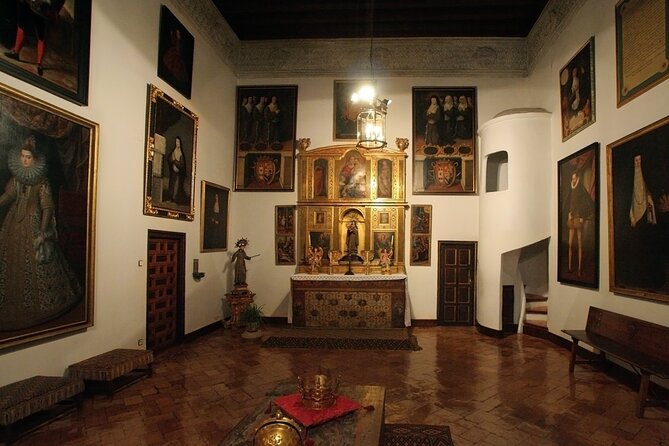
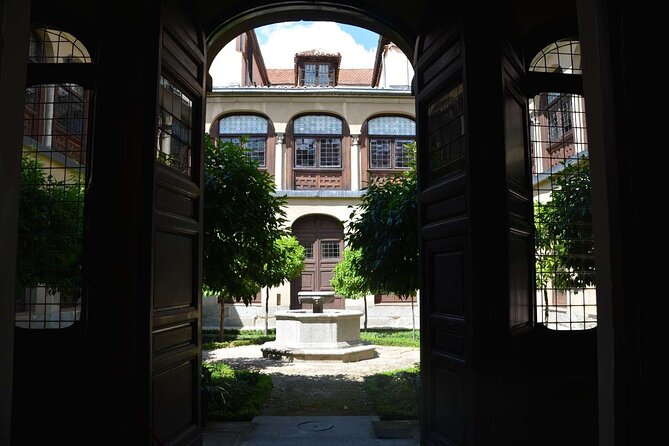
The most striking thing about the Descalzas Reales Monastery is the contrast between its quiet convent life and its royal past. Founded by Juana of Austria, daughter of Emperor Charles V and sister of Philip II, this is not just an old church visit. It is a former royal foundation filled with paintings, sculpture, chapels, frescoes, and works gathered by the Habsburg family.
I like the small group limit of 15 and the fact that an art guide leads you through the rooms instead of leaving you to puzzle over Latin inscriptions and unfamiliar names. I also like the choice of adding a walk through Madrid of the Austrias, which connects the monastery to Plaza Mayor and Plaza de la Villa.
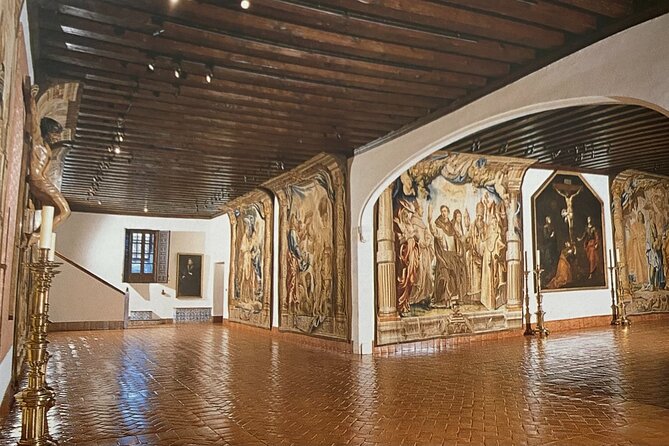
The main drawback is that the visit is uneven in places. The paintings, architecture, and history are the strongest parts, while the Flemish wall hangings may feel less impressive than expected. The monastery can also close for a solemn event or national holiday, so keep your plans flexible.
Key points to know before you book
- Royal convent in central Madrid: Visit a monastery founded by Juana of Austria, daughter of Charles V and sister of Philip II.
- Queue-free entrance included: Your ticket covers entry, helping you avoid spending part of your Madrid day in line.
- Art-led interpretation: An art expert explains works by Vicente Carducho, Luca Giordano, Antonio Moro, Pedro de Mena, and others.
- Two ways to experience it: Choose the one-hour monastery visit or add a one-hour walk through Habsburg Madrid.
- Living religious setting: The community still gathers to pray in the choir, and 18 barefooted nuns remain associated with the monastery.
- Small group format: The activity accepts no more than 15 people, a useful size for questions and close listening.
Why the Descalzas Reales is worth your time
Madrid has no shortage of grand churches and royal buildings, but the Descalzas Reales offers a different kind of royal story. Its name means Royal Barefoot Monastery, and it began as a convent for aristocratic women rather than as a palace open to courtly display.
Juana of Austria founded the monastery in 1559. She was the youngest daughter of Charles V and the sister of Philip II, so the building became tied to the Spanish royal family from the start. That connection explains the quality of the art inside, but the atmosphere remains more restrained than theatrical.
I find that combination especially appealing. You are not simply looking at a collection placed in a museum. You are moving through a religious house that still has a spiritual purpose, with rooms shaped by prayer, ritual, and community life.
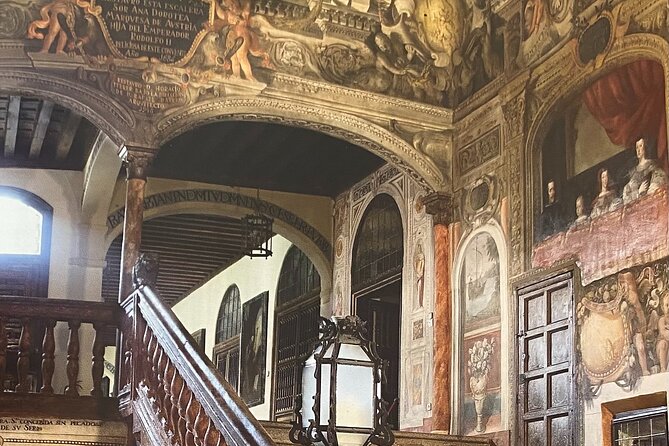
The guided format matters here. Many of the details are easy to miss without help: a fresco high on a staircase, a tomb tucked into the choir, or the role of a particular sculpture in a religious procession. A guide gives those objects a place in the story instead of leaving you with a series of grand but disconnected rooms.
More Madrid Tours:
- Madrid: Tour Bernabéu Entry Ticket
★ 4.5 · 21,573 reviews - Madrid: Prado Museum Entry Ticket
★ 4.6 · 17,509 reviews - Madrid: “Emociones” Live Flamenco Performance
★ 4.8 · 12,866 reviews
Entering the monastery at Plaza de las Descalzas
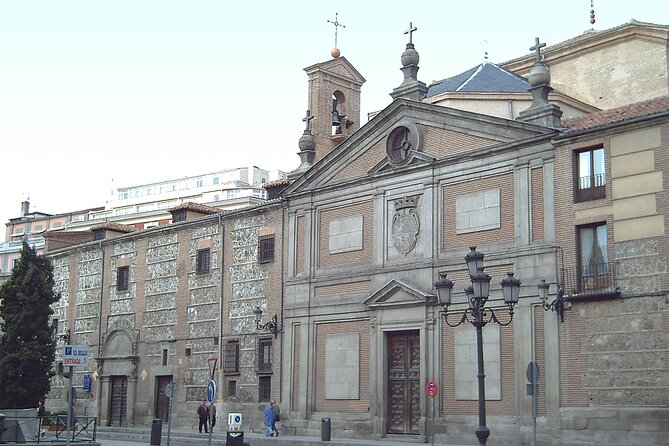
The meeting point is the Monasterio de las Descalzas Reales at Plaza de las Descalzas, 3, in Madrid’s Centro district. The location is near public transportation and sits in a busy central part of the city, making it practical to combine with other sights in the historic center.
The experience lasts about one hour if you choose the monastery visit alone. The advertised price is $34.62 per person, including the entrance ticket and guided visit. That is more than a basic self-guided admission, but you are paying for interpretation as well as access, and the queue-free entry has real value when your Madrid schedule is tight.
The group size is capped at 15 people. That is not a private tour, but it is small enough to make it easier to hear the guide and ask a question without turning the visit into a crowd-management exercise.
Your confirmation arrives when you book. The activity ends back at the meeting point, so you do not need to arrange a separate return transfer or find your way across town after the tour.
The staircase frescoes and upper cloister
One of the first details to watch for is the main staircase, decorated with frescoes attributed to Claudio Coello. This is the kind of feature that can slip past you if you enter without context. A staircase may seem like a passage from one floor to another, but here it becomes part of the monastery’s artistic program.
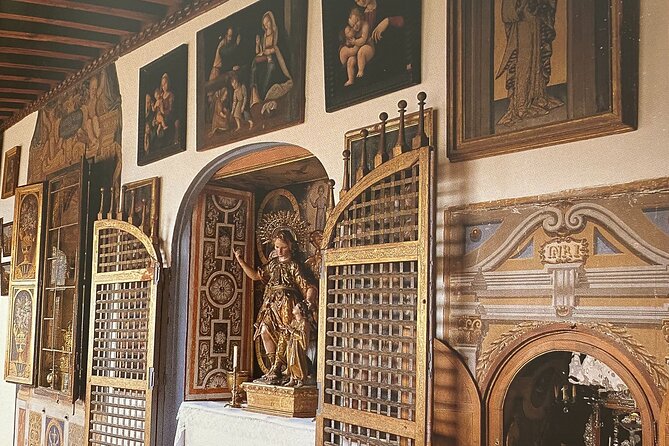
The upper cloister contains chapels with a sixteenth-century image of the recumbent Christ, attributed to Gaspar Becerra. The image has a living place in the monastery’s religious calendar because it is carried in procession on Good Friday.
That detail helps explain why this is not simply a former convent converted into a gallery. Some objects remain connected to worship and ceremony. You can look at the sculpture as art, but it also has a function within the community’s religious life.
The cloister and its chapels reward patient looking. Pay attention to the combination of architecture, devotional objects, floors, and inscriptions. One useful feature of a guided visit is that the guide can point out what belongs to the original setting and what reflects later decoration.
Paintings from three European traditions
The monastery holds paintings from Flemish, Italian, and Spanish artists of the sixteenth and seventeenth centuries. That variety gives the visit more range than a single-school collection.
You may encounter works connected with Vicente Carducho, Luca Giordano, and Antonio Moro. The art comes from a period when Madrid’s royal and religious institutions drew on artists from across Europe. The result is a collection that reflects both Spanish taste and the wider Catholic world of the Habsburg era.
I would not approach this as a checklist of famous names. The pleasure is in seeing how the works function within a religious house. A painting has a different effect when it hangs in a chapel or corridor connected to prayer than it does when it sits alone on a white museum wall.
The guide’s role is important because many of these artists may be unfamiliar to you. You will get more from the visit if you ask which works were made for the monastery, which arrived through royal connections, and how the paintings relate to the rooms around them.
A different sort of day out around Madrid:
- Madrid: Panoramic Route City Tour
★ 4.1 · 12,259 reviews - Madrid: Live Flamenco Show with Food and Drinks Options
★ 4.5 · 9,901 reviews - Avila & Segovia Tour with Tickets to Monuments from Madrid
★ 5.0 · 9,762 reviews - Three Cities in One Day: Segovia, Avila and Toledo from Madrid
★ 5.0 · 8,402 reviews
Pedro de Mena, royal tombs, and the choir
The choir is one of the most meaningful stops. It retains its original stalls, and the community still gathers there to pray. The space is decorated by a Dolorosa by Pedro de Mena, a sculptor known for highly expressive religious figures.
The choir also contains the tombs of Empress María and her daughter, Infanta Margarita. These royal burials bring the monastery’s dynastic story into a more personal frame. You are not just hearing about the Habsburg family in broad political terms. You are seeing where members of that family were commemorated inside the religious foundation.
This is one of the places where I would slow down and listen carefully. The building’s power does not come only from grand decoration. It comes from the connection between royal identity, family memory, and daily religious practice.
A useful tip is to ask about the difference between the monastery’s public artistic role and its private devotional role. The same room can serve as a work of art, a royal memorial, and an active place of worship.
What to expect from the wall hangings
The monastery’s wall hangings were commissioned by Isabel Clara Eugenia to decorate the building. They are part of the royal connection and help show how the women of the Habsburg family shaped the institution.
Still, I would set your expectations carefully. The wall hangings may not be the highlight for you, especially if you are drawn more to paintings, sculpture, and architecture. Their importance comes from their setting and commission, but their visual impact can feel less consistent than the frescoes and religious works.
That does not make them unworthy of attention. It simply means you should not book the tour expecting every object to be a masterpiece. The visit works best as a complete sequence of rooms, stories, and artworks rather than as a parade of famous treasures.
Adding the one-hour Habsburg Madrid walk
You can select an additional one-hour walk through Madrid of the Austrias. This option broadens the experience beyond the monastery and places it within the city shaped by the Austrian, or Habsburg, dynasty.
The walk includes other royal foundations and emblematic buildings around Plaza Mayor and Plaza de la Villa. It also brings in local stories and legends connected with the Habsburg legacy.
I like this option for a first visit to Madrid’s historic center. The monastery alone gives you a focused indoor visit, while the walk helps you understand how the royal city developed around it. The two parts also make a natural pair: first, you see a royal religious foundation from inside; then, you explore the streets and squares that formed the wider setting.
The tradeoff is time. The combined experience takes about two hours rather than one. If you have only a short window in central Madrid, the monastery visit gives you the more distinctive interior experience. If you want a fuller introduction to the old royal quarter, the added walk is the better choice.
The living convent behind the artwork
One detail gives this visit unusual weight: the monastery is not only a historic monument. Eighteen barefooted women still live there, and the community continues its religious life.
You may also attend Mass to hear them sing, although Mass is not listed as part of this guided activity. Treat that as separate from the tour rather than something guaranteed during your visit.
The continuing presence of the community changes how you look at the rooms. The choir is not a stage set. The chapels are not simply decorative corners. The building has a purpose beyond tourism, and visitors need to respect that by following the guide’s instructions and keeping the tone calm.
This is also why closures can occur for solemn events or national holidays. The possibility is not a flaw in the monastery. It is a reminder that you are entering an active religious institution, not a building operated only for sightseeing.
How the guide affects the experience
The guide is an art specialist, and that is a strong reason to choose this experience over simple admission. You will hear the story of Juana of Austria, learn why the monastery received royal support, and get help identifying the works spread through the rooms.
The guide can also connect individual objects to broader subjects: royal women, religious patronage, Spanish painting, Flemish influence, and the place of art in Catholic worship. That context is useful even if you do not normally study art.
The small group makes the format more personal. A group of up to 15 is large enough to have energy but small enough for the guide to pause and answer questions. If you are interested in painting technique, royal genealogy, or religious customs, this is the time to ask.
No guide name is provided for this activity, so you cannot request a particular person in advance. The important point is the guide’s art background and the fact that the visit is led rather than self-directed.
Price, timing, and practical value
At $34.62 per person, the tour is priced as a guided cultural visit rather than a simple entrance ticket. Your payment includes admission and the guide. Drinks and gratuities are not included.
I think the price makes the most sense for you if you value explanation. The Descalzas Reales contains enough history and art to justify a guide, especially if you do not already know the Spanish Habsburg story. The queue-free entrance also saves time in a central part of Madrid where you may have several sights competing for your attention.
The one-hour length is another advantage. It is long enough to see the main rooms without taking over your day. If you add the Madrid of the Austrias walk, plan on roughly two hours for the full experience.
This is not the right choice if you want to wander alone at your own speed. The tour follows a guided structure, and an active monastery may limit how freely you can move through the building. For most people, though, the structure is a benefit because it keeps the visit focused.
Who should choose this visit
I would recommend the monastery visit to anyone interested in Spanish royal history, religious art, or historic buildings that still serve their original purpose. It is also a good fit if you prefer a smaller cultural stop to a huge palace or crowded museum.
Art lovers will have plenty to examine, from Coello’s staircase frescoes to works linked with Carducho, Giordano, Moro, and Pedro de Mena. You do not need specialist knowledge to enjoy it, but you should be willing to listen and look closely.
The added city walk suits first-time visitors who want help understanding Madrid’s Habsburg center. Families and mixed-interest groups may prefer the combined option because the outdoor section breaks up the indoor art visit.
I would be more cautious if your main goal is a spectacular collection of wall hangings. Those pieces may disappoint compared with the monastery’s paintings, sculpture, choir, and architectural details. Go for the full setting and story, not one single category of object.
Should you book the Descalzas Reales visit?
Book it if you want a focused look at one of Madrid’s most unusual royal foundations, especially with an art guide to explain what you are seeing. The strongest reasons are the active convent setting, the royal connections, the original choir, the royal tombs, and the mix of Spanish, Italian, and Flemish works.
Choose the monastery-only version if you have limited time or want a compact cultural stop. Add the Habsburg Madrid walk if you are still building your bearings in the old center and want the history to continue outside.
The visit is not flawless. The wall hangings may feel less impressive, and a closure for a solemn event or holiday can disrupt your plans. Still, the combination of art, royal history, and living religious practice makes this a worthwhile choice for a thoughtful hour in Madrid.
FAQ
Where does the tour start?
The tour starts at the Monasterio de las Descalzas Reales, Plaza de las Descalzas, 3, Centro, 28013 Madrid, Spain.
How long does the experience last?
The monastery visit lasts about one hour. If you choose the additional walk through Madrid of the Austrias, the full activity takes about two hours.
Is the entrance ticket included?
Yes. The experience includes the entrance ticket and a guided visit.
Can I add a walk through Habsburg Madrid?
Yes. An optional one-hour walk through Madrid of the Austrias includes areas such as Plaza Mayor and Plaza de la Villa, along with other royal foundations and stories linked to the Habsburg dynasty.
How many people can join the tour?
The activity has a maximum group size of 15 travelers.
Could the monastery be closed on my visit date?
Yes. The monastery may close because of a solemn event or a national holiday.
Just added around Madrid
- Madrid Wine Tasting, Flamenco Class and Pub Crawl★ 4.5 · 6 reviews
- Visit the National Archaeological Museum in Madrid★ 4.4 · 6 reviews
- From Madrid: Parque Warner Beach Water Park & Transport★ 3.9 · 14 reviews
- Virtual Reality Experience Fun And Tickets & Imageen★ 5.0 · 12 reviews
- Visit to the Prado Museum★ 4.9 · 6 reviews
- Tuk Tuk Tour with Wine Test in Madrid★ 3.8 · 6 reviews
- Tuktuk historical tour of Madrid 1 Hr in a fun and original way★ 3.7 · 3 reviews
- Prado Museum VIP tour with an art Expert, tickets included★ 5.0 · 11 reviews