
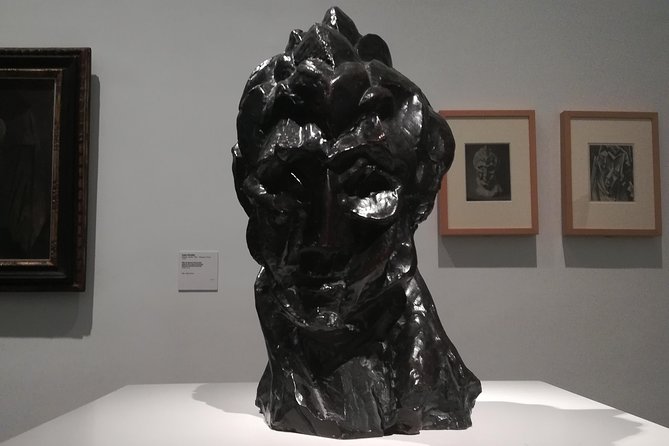
Reviewed · REINA SOFíA MUSEUM TICKETS
Reina Sofia Museum Small Group Tour -6 people maximum-
Picasso’s Guernica is the main event, but this tour works best because it shows you how Spanish art arrived there. In 90 minutes, your guide traces the move from realistic painting through Modernism, social art, and Cubism, then uses Picasso’s enormous antiwar painting as the emotional and artistic payoff.
I like two things right away: the small-group format, advertised at six people maximum, and the included skip-the-line entry. Guides such as Stephi, Alex, Maria, Natalia, and Belén are repeatedly praised for making difficult art clear, bringing in history, and keeping children and adults involved.
The tradeoff is time. An hour and a half is enough for a smart highlights tour, not a full museum visit. Also, the booking information gives a maximum of 20 participants in its general activity details, so confirm the group size if six is essential to your decision.
Key points to know before booking
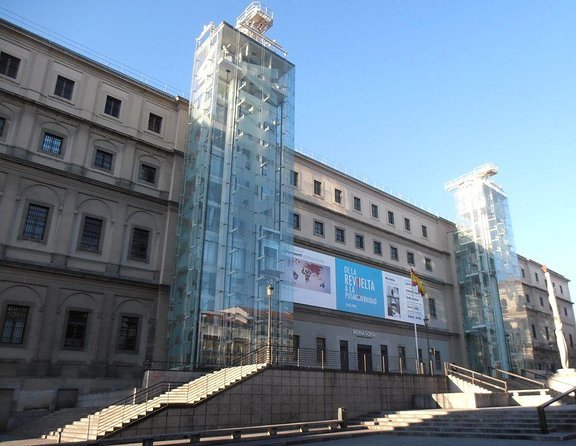
- Guernica is the central focus: The tour builds toward Picasso’s landmark painting instead of treating it as an isolated masterpiece.
- The guide supplies the missing context: You learn how Spanish politics, war, and changing artistic styles shaped the works.
- The group is designed to stay personal: The experience is promoted for six people maximum, though the general activity information lists up to 20.
- The tour runs about 90 minutes: It gives you a useful framework, then leaves room to continue alone.
- Skip-the-line admission is included: That saves time at one of Madrid’s major art museums.
- It suits mixed experience levels: Guides explain Picasso, Dalí, Miró, Juan Gris, and Ángeles Santos in plain language.
Why Reina Sofía makes a good guided visit
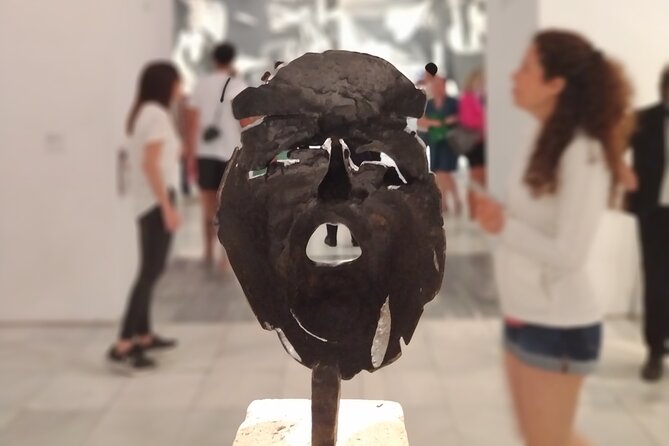
The Museo Nacional Centro de Arte Reina Sofía can be rewarding on your own, but modern art often asks you to bring your own background. A painting may look simple, strange, or even unfinished until someone explains the artist’s aims and the moment in which it was made.
That is where this tour earns its keep. Your guide places the art in sequence, connecting artists and ideas rather than leading you from one famous name to the next. The route is described as a journey through 20th-century art, from Modernism to the height of Cubism and Guernica.
I find that approach especially useful in Madrid. The museum is not just a parade of Picasso and Dalí. It also introduces you to artists such as Juan Gris and Ángeles Santos, along with the wider shift from representative painting toward social and political art.
You should expect a highlights visit rather than a room-by-room survey. Your guide chooses a manageable group of major works and explains why they matter. That keeps the pace moving, but it also means you will not see every gallery or receive equal attention for every artist.
More Reina Sofia Museum Tickets:
- Madrid: Reina Sofía Museum Entrance Ticket
★ 4.5 · 6,889 reviews - Madrid: Reina Sofía Museum Guided Tour
★ 4.3 · 659 reviews - Madrid: Guided Tour of Reina Sofía Museum with Entry Ticket
★ 4.9 · 363 reviews
Meeting at C. de Santa Isabel 52
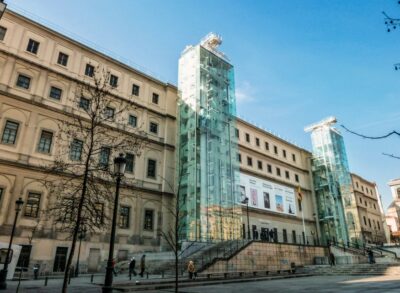
The tour begins at the entrance of Museo Nacional Centro de Arte Reina Sofía, at C. de Sta. Isabel, 52, in Madrid’s Centro district. The guide meets you there, and the activity ends back at the same meeting point.
This arrangement is simple, especially if you are fitting the museum between other central Madrid sights. The meeting point is near public transportation, and confirmation is provided when you book. You receive a mobile ticket, so keep the booking details easy to reach on your phone.
Arrive with enough time to find the entrance and gather your group. The tour itself is short, and losing the first several minutes to a late arrival matters more here than it would on a long walking tour.
The guide is the person who makes the day work. The strongest comments about this experience focus on guides who ask about your interests, answer questions, and adjust the discussion to the group. A small group makes that possible. If you are the only person fascinated by Dalí, you have a better chance of getting a useful answer than you would in a large museum lecture.
The 90-minute route through Spanish modern art
The tour’s structure is chronological. That does not mean you will receive a long academic lecture. Instead, you follow a clear story about changing styles and changing Spain.
The first part sets up the move away from straightforward realism. Your guide may explain how Modernism changed the way artists viewed form, color, and subject matter. From there, the discussion moves toward social realism and then Cubism.
That sequence is valuable because Cubism can seem like a sudden break from the real world. Once you understand the earlier stages, Picasso’s fractured forms feel less like a puzzle and more like a deliberate response to older ways of representing people and events.
Guides praised for this tour also connect works to the lives of their creators. That can help you see Picasso and Dalí as more than famous signatures. You learn to look at choices in composition and subject matter, not just recognize a name on a wall.
The tour can be tailored to your interests, within the limits of its 90-minute schedule. You can ask about a particular artist or request more historical context. Still, do not expect a private museum consultation. The guide must keep the group moving and reach the main works on time.
Picasso’s Guernica and the power of context
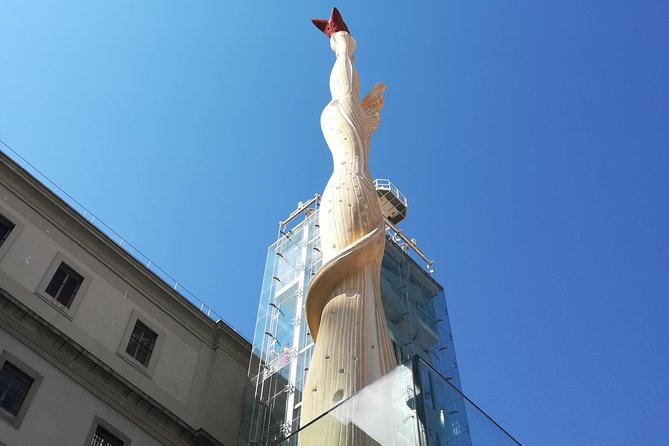
The visit builds toward Guernica, the museum’s best-known work and the clearest reason many people book this experience. Seeing it in person is important, but understanding it is even more useful.
The painting is not presented as an isolated display of Picasso’s technique. The tour connects it to the political and wartime setting around its creation, then explains how its fractured figures and harsh visual language communicate suffering.
That background changes the way you look at the canvas. Instead of trying to identify every shape, you can consider the painting’s larger force, its victims, its violence, and its refusal to offer a calm or tidy scene.
A guide is especially helpful here because the work attracts attention from nearly everyone in the room. You may have only a short window to take it in before continuing, so a well-organized explanation keeps you from missing the main ideas.
One guide, Natalia, is specifically praised for providing a detailed account of Spanish modern art and Guernica while keeping the group moving. Another guide, Alex, is noted for explaining the evolution of Spanish modern art and then giving Guernica particular attention. Those details suggest the painting is not treated as a quick photo stop.
You should also know that Guernica can be emotionally heavy. If you prefer art visits that stay light and purely decorative, this is not that kind of museum experience. The historical setting is central to the tour.
More Museums in Madrid:
- Madrid: Prado Museum Entry Ticket
★ 4.6 · 17,509 reviews - Madrid: Small Group of Prado Museum Tour & Optional Tapas
★ 4.6 · 2,437 reviews - Madrid: Prado Museum Guided Tour with Skip-the-Line Ticket
★ 4.5 · 2,018 reviews - Madrid: Prado Museum Guided Tour With Fast Access
★ 4.8 · 1,785 reviews
Dalí, Miró, Juan Gris, and Ángeles Santos
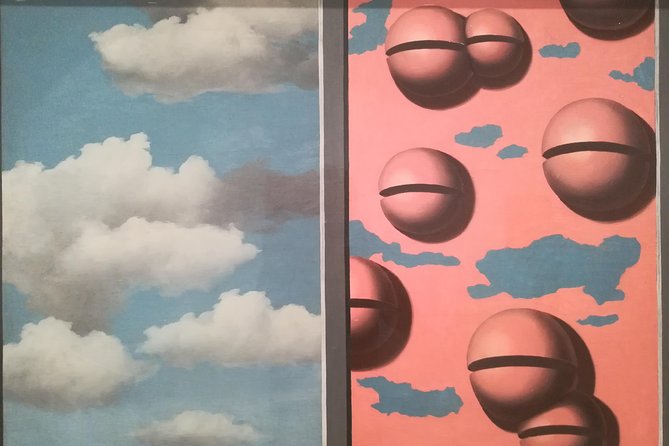
Picasso gets the headline, but the tour is broader than one artist. Dalí, Miró, Juan Gris, and Ángeles Santos are among the names connected with the visit.
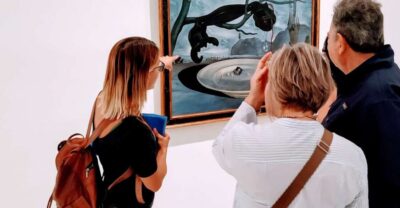
Dalí receives special attention in the guide feedback. Maria is singled out for making the Dalí paintings easier to understand, with explanations of both the art and the stories around it. That is useful because Dalí’s images can tempt you into surface-level guessing. A guide can point out how the work fits into the artist’s ideas and the period.
Juan Gris helps extend the discussion of Cubism beyond Picasso. Seeing another artist working with related ideas gives you a better sense of Cubism as a movement, not simply Picasso’s personal invention.
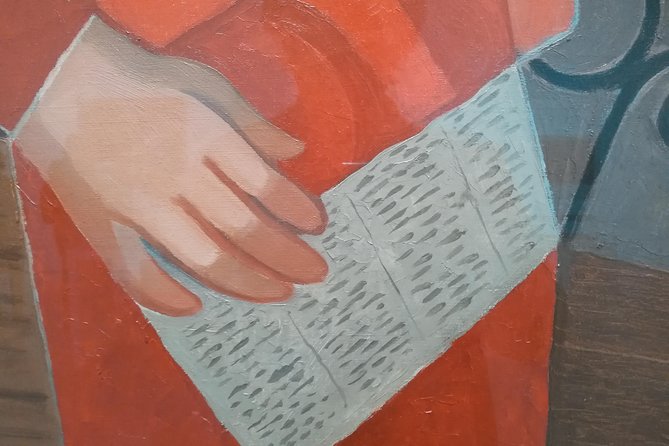
Ángeles Santos is another worthwhile inclusion. Her work helps widen the story of Spanish modern art and reminds you that the museum is not only about the most internationally famous men.
Miró may appeal to you if you like art that feels playful, spare, or dreamlike. A highlights tour cannot linger over every painting, but it can give you a starting point for returning to the galleries later.
This is one of the tour’s best features: the guide helps you identify what to revisit. You do not need to remember every date or technical term. You need enough understanding to walk back through the museum and notice why a work caught your attention.
What the small group changes
The experience is promoted as a small-group tour with six people maximum. That size matters in a museum, where large clusters can block a painting and make questions awkward.
A very small group also lets the guide read the room. If children are present, the explanation can become more visual and conversational. If everyone wants history, the guide can spend more time on the political setting. Belén is praised for sharing art and historical context with a family of five while keeping the children engaged.
The general activity information lists a maximum of 20 participants, so there is a point worth checking before you pay: the product title and main description promise six people maximum, but the wider participation note gives a higher cap. Most of the experience’s appeal rests on its personal format, so ask the provider if a six-person limit is important to you.
Even with a slightly larger group, the included professional guide and skip-the-line ticket still provide practical value. But the quieter, more flexible discussion described in the small-group format is the reason to choose this over a standard museum entry.
Is $59.26 a fair price?
At $59.26 per person, you are paying for more than admission. The price includes skip-the-line entry and a professional English-speaking guide for about 90 minutes.
For someone who already knows modern art and plans to spend several hours reading labels, a self-guided visit may cost less and offer more freedom. You can move at your own speed, linger with lesser-known works, and return to Guernica later.
For most first-time visitors, I think the price is easier to justify. The guide gives you a framework quickly, and the skip-the-line feature protects your limited time in Madrid. A museum visit without context can become a march from famous painting to famous painting. Here, you get a connected story and a clear idea of what deserves another look.
The value is strongest if you book the tour early in your museum visit, then continue alone afterward. One useful plan is to take the guided visit in the morning and spend extra time with the galleries that caught your interest. You get both direction and independence.
Group discounts are available, though the supplied information does not give the discount amount. If you are booking for several people, check the final price before completing the reservation.
Who should book this Reina Sofía tour?
This tour is a strong fit for you if:
- You want to see Guernica but need help understanding it.
- You are short on time in Madrid.
- You prefer conversation and questions over reading every museum label.
- You are traveling with children or adults with different levels of interest.
- You enjoy history as much as technique.
- You want a guided introduction before exploring alone.
It is also a good choice if modern art makes you uneasy. You do not need to arrive with a vocabulary of art terms. The route starts with recognizable changes in style and works toward more challenging paintings.
You may prefer a self-guided visit if you want a full day at the museum, dislike a fixed pace, or already have a strong plan for the collection. Ninety minutes can pass quickly, especially if you want to linger over Dalí, Miró, or the museum’s lesser-known artists.
The tour is offered in English. Most people can participate, and service animals are allowed. That makes it broadly accessible, though the supplied information does not give further details about wheelchair access, seating, or the exact route inside the museum.
Timing, cancellation, and practical planning
The experience is booked about 34 days ahead on average, which is a useful sign that you should not leave it until the last moment if your Madrid dates are fixed. The confirmation arrives at booking, and the mobile ticket avoids the need for a printed voucher.
Free cancellation is available up to 24 hours before the start time for a full refund. Cancellations or changes made less than 24 hours before the experience are not accepted for a refund, and the cut-off follows Madrid local time.
Plan your day around the fixed meeting time. The tour ends where it begins, so you can continue elsewhere in central Madrid afterward. If you have a train to catch, leave a generous buffer. One particularly useful feature of the 90-minute format is that it can fit a tight schedule, but that only works if you arrive on time and do not add another major appointment immediately afterward.
My verdict: book it for context, not just entry
I would book this tour if Guernica is high on your Madrid list and you want the painting placed in a clear artistic and historical sequence. The strongest guides, including Stephi, Alex, Maria, Natalia, Belén, Clara, and Cristiana, are praised for making complex art understandable, connecting paintings to events, and keeping the visit lively.
The included admission and skip-the-line access help justify the $59.26 cost, especially on a short visit. Just remember that 90 minutes gives you the museum’s main ideas, not the whole collection.
Book it early, confirm the expected group size, and plan to stay afterward for independent exploration. That is the best way to get the full value: let the guide give you direction, then follow your own curiosity.
FAQ
Where does the Reina Sofía tour begin?
It begins at Museo Nacional Centro de Arte Reina Sofía, C. de Sta. Isabel, 52, Centro, 28012 Madrid, Spain.
Where does the tour end?
The activity ends back at the meeting point at the museum.
How long does the tour last?
The guided visit lasts approximately 1 hour and 30 minutes.
Is museum admission included?
Yes. The price includes a Reina Sofía skip-the-line admission ticket and a professional guide.
Is the tour offered in English?
Yes. The available tour language is English.
How many people are in the group?
The experience is promoted as a group of six people maximum. However, the additional activity information lists a maximum of 20 participants, so confirm the expected group size if this matters to you.
Which artworks and artists does the tour cover?
The route focuses on 20th-century art, including Picasso’s Guernica, and may discuss artists such as Dalí, Miró, Juan Gris, and Ángeles Santos.
Can the tour be tailored to my interests?
Yes. The tour can be tailored to suit your interests, subject to the 90-minute duration and the guide’s need to cover the main highlights.
Can I cancel for a full refund?
Yes. You can cancel at least 24 hours before the experience start time for a full refund. Cancellations or changes made less than 24 hours before the start time are not accepted for a refund.
Just added around Madrid
- Visit the National Archaeological Museum in Madrid★ 4.4 · 6 reviews
- From Madrid: Parque Warner Beach Water Park & Transport★ 3.9 · 14 reviews
- Madrid Wine Tasting, Flamenco Class and Pub Crawl★ 4.5 · 6 reviews
- Virtual Reality Experience Fun And Tickets & Imageen★ 5.0 · 12 reviews
- Visit to the Prado Museum★ 4.9 · 6 reviews
- Tuk Tuk Tour with Wine Test in Madrid★ 3.8 · 6 reviews
- Tuktuk historical tour of Madrid 1 Hr in a fun and original way★ 3.7 · 3 reviews
- Prado Museum VIP tour with an art Expert, tickets included★ 5.0 · 11 reviews
Reina Sofía Museum Tickets, compared.
Guided Tour of Reina Sofía Museum with Entry Ticket
Read our review →
Reina Sofia and Prado Museum Tickets and Guided Tour
Read our review →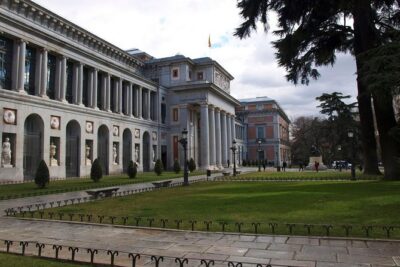
Prado Museum with Reina Sofia Museum Guided Tour
Read our review →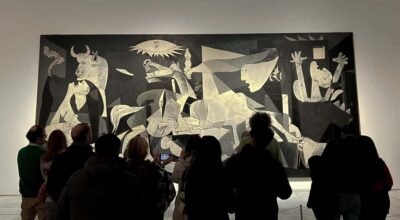
Reina Sofía Guided Tour with Skip-the-Line Tickets
Read our review →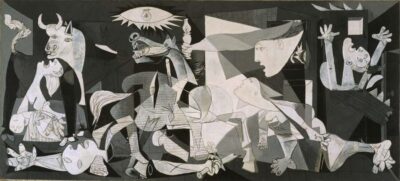
Reina Sofía Museum Ticket with In-App Audio Guide
Read our review →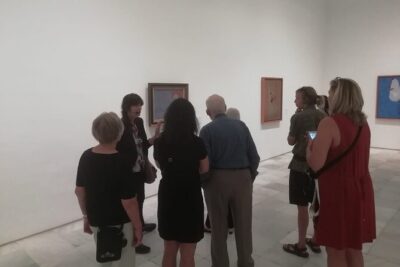
Browse the lists this tour appears in