
Reviewed · MADRID NEIGHBOURHOOD TOURS
The Making of Malasaña
Malasaña is more than late-night bars and fashionable cafés. This private walk connects its street life to uprisings, royal scandal, French invasion, Moorish influence, and the artists who helped shape modern Madrid. Guide Felicity builds the story through sharp anecdotes rather than a standard city overview.
I like the specific neighborhood focus and the chance to see Madrid’s so-called Sistine Chapel ceiling in an otherwise plain church. I also like the personal scale: only your group takes part, so Felicity can adjust the conversation and answer questions. The main drawback is the $356.05 per-person price, which is steep for about two hours, especially since one admission fee is extra.
Key points about The Making of Malasaña
- Malasaña beyond nightlife: Learn how the district changed from a working neighborhood into one of Madrid’s best-known evening districts.
- Felicity’s story-led guiding: Expect researched anecdotes, historical connections, and a lively delivery rather than a list of dates.
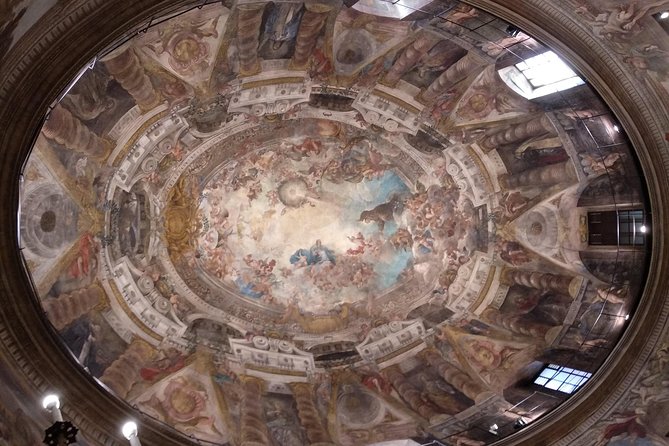
- A remarkable church interior: See the Church of Saint Anthony of the German, known for its dramatic painted ceiling.
- Three contrasting stops: The route pairs a former brothel turned microtheater with a church and a formal museum.
- Private format: Your group is the only group on the activity, which makes questions and conversation easier.
- Convenient finish: The walk ends at El Penta Bar on Calle de la Palma, close to Tribunal metro station.
Why Malasaña makes a strong subject for a walking tour
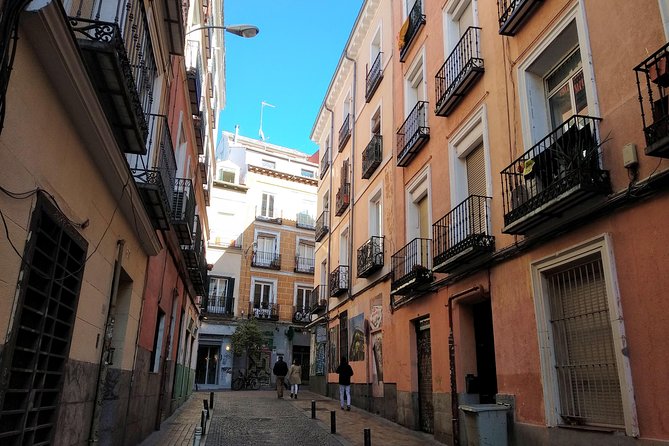
Malasaña rewards a guide who can explain what you are seeing between the obvious sights. Its identity is tied to political unrest, changing social customs, artists, nightlife, and the people who gave the district its name and character.
That makes this a better choice for a second look at Madrid than for a first and only orientation tour. You will not get a broad survey of the Royal Palace, Prado Museum, Retiro Park, and Puerta del Sol. Instead, you spend about two hours in one compact area and learn why its streets matter.
The tour also gives you a useful contrast between Madrid’s past and present. A former brothel now used for tiny theater productions reflects the neighborhood’s creative side. A richly decorated church reveals a far older religious and artistic tradition. The Madrid History Museum then ties local stories to national events.
I particularly like this approach because it gives you a way to read Malasaña after the tour. A café, bar, theater, or worn façade becomes part of a larger story instead of just another stop on a city walk.
More Madrid Neighbourhood Tours:
- Tour “Barrio de las Letras” Spanish Golden Age
★ 5.0 · 72 reviews - Leathercraft Workshop in the Rastro of Madrid
★ 5.0 · 58 reviews - De Tapas in Malasaña: Evening Wine and Tapas Tour
★ 5.0 · 36 reviews
Meeting Felicity near Baja de San Pablo
The walk begins at BULANCorre, at Baja de San Pablo, 2, in central Madrid. The meeting point is close to public transportation, and the route ends at El Penta Bar on Calle de la Palma, 4, near Tribunal metro station.
That point-to-point format is useful. You do not need to return to the starting place, and the finish puts you in a lively part of Malasaña with easy onward transport. The listing provides a mobile ticket, so keep the booking confirmation accessible on your phone.
Felicity is the named guide, and her style is central to the experience. Her tours are built around local research, anecdotes, and broader historical context. The available feedback repeatedly praises her ability to keep a group engaged, explain complicated subjects clearly, and avoid the feel of a mass-produced walking tour.
Several people who already lived in Madrid said they learned new things from her walks. That matters here. Malasaña is not hard to walk through, but it is easy to miss the connections between places unless someone points them out.
Because this is a private activity, only your group participates. That can make the higher price easier to understand if you are traveling with several people who will share the experience. For one person or a couple, the cost deserves careful thought.
Microteatro, where a former brothel became a theater
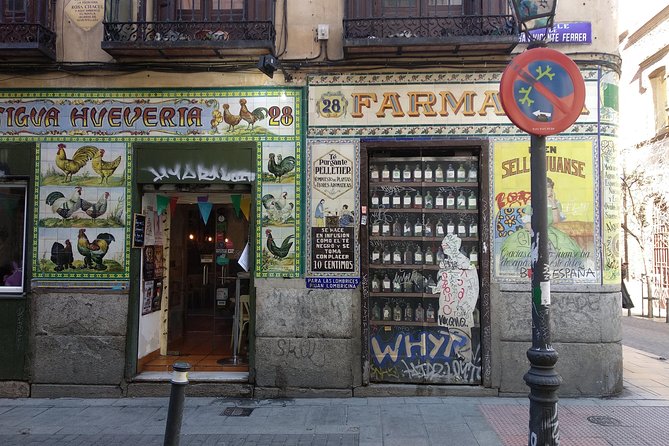
The first listed stop is Microteatro, a performance space founded in a former brothel. Its format helped start a wider trend of miniature plays, with short productions staged for small audiences.
You spend only about five minutes here, and admission is free. That means the stop is not about sitting down for a performance. Instead, it gives Felicity a compact way to explain Malasaña’s creative energy and its habit of turning unusual spaces into cultural venues.
The former use of the building adds a slightly mischievous note to the route. Malasaña’s past is not presented as a polished succession of grand monuments. It includes nightlife, unconventional businesses, and places that have changed purpose as the neighborhood changed.
This is also a good example of why the walk is more than a checklist. You could pass the theater without giving it much thought. With context, it becomes part of the story of how Malasaña developed its modern identity.
Do not expect a long visit here. The stop is brief, and the value comes from the explanation around it rather than from a major interior visit.
Saint Anthony of the German and the ceiling you might miss
The Church of Saint Anthony of the German is one of the route’s most unusual surprises. From the outside, it is easy to overlook. Inside, the ceiling has earned the comparison to Madrid’s Sistine Chapel.
The planned stop is about three minutes, and admission is not included. That makes it important to check the final cost before booking and to have a little flexibility in your schedule in case entry arrangements affect the visit.
The short time listed does not mean the church lacks importance. It suggests that Felicity uses it as a focused visual stop, directing your attention to the artwork and explaining why the building matters. You are not signing up for a long church tour or an extended religious art lecture.
I like the contrast between this stop and Microteatro. One is a small, modern performance space in a reused building. The other points to Madrid’s older artistic and religious traditions. Together, they show how much variety can fit into a few Malasaña blocks.
If you care about interiors, paintings, and overlooked places, this may be the most memorable stop. If you prefer long visits inside major museums, the three-minute timing may feel too quick.
More Madrid Tours:
- Madrid: Tour Bernabéu Entry Ticket
★ 4.5 · 21,573 reviews - Madrid: Prado Museum Entry Ticket
★ 4.6 · 17,509 reviews - Madrid: “Emociones” Live Flamenco Performance
★ 4.8 · 12,866 reviews - Madrid: Panoramic Route City Tour
★ 4.1 · 12,259 reviews
The Madrid History Museum and a royal scandal
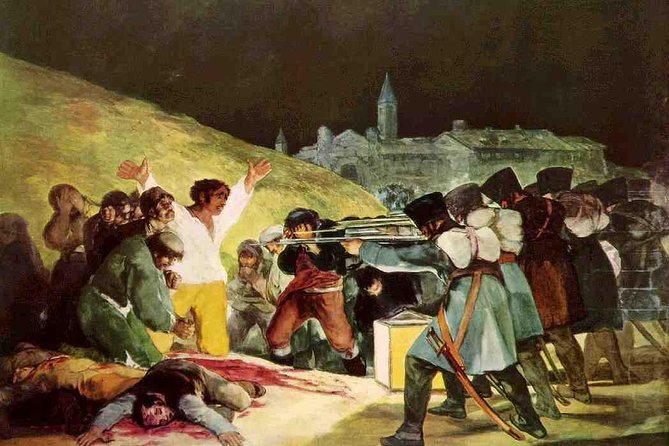
The longest listed stop is the Museo de Historia de Madrid, with about 15 minutes devoted to it and admission included. Here, Felicity explains how a love affair involving the queen and one of the king’s advisers helped lead to the French invasion of Spain.
That is exactly the sort of local story that can make a large political event easier to understand. Instead of treating the French invasion as a distant chapter in a textbook, the tour connects it to people, relationships, power, and Madrid itself.
You will also see one of Goya’s most controversial paintings. The information provided does not name the work, so the emphasis is on the guide’s explanation and the chance to encounter a debated piece of art in its historical setting.
The museum stop gives the walk some structure. Microteatro represents cultural change. Saint Anthony of the German offers a concentrated look at art and faith. The museum places Malasaña within the wider story of Spanish monarchy, conflict, and public life.
Fifteen minutes is enough for a pointed introduction, not a full museum visit. If the museum interests you, ask Felicity what else deserves attention and plan a separate return. This tour is designed to give you context, not replace a museum afternoon.
The stories between the stops matter most
The three named stops are useful anchors, but the walking and conversation between them are likely to form most of the experience. The full activity lasts about two hours, while the listed stop times add up to only around 23 minutes.
That leaves plenty of time for streetside explanations, neighborhood history, and questions. Felicity’s strength is reported to be her collection of anecdotes and her ability to connect individual stories to larger events. You should expect the route to feel more like a narrated walk than three isolated visits.
The subject reaches beyond the modern image of Malasaña. It includes uprisings, colorful local figures, Moorish influence, royal politics, and the district’s later transformation into a nightlife center. The emphasis is on lesser-known connections rather than the usual Madrid highlights.
This format suits curious people who enjoy asking why a place looks or feels the way it does. It is less suited to anyone who wants a quick photo stop at famous monuments or a strict timetable with long admissions at every location.
The guide can also point you toward other things to do in Madrid. That practical local advice is especially useful if you schedule the tour early in your stay. You can use the neighborhood tips to shape later evenings and museum visits.
What the $356.05 price really means
At $356.05 per person, this is an expensive two-hour walking tour. The price is much higher than a standard group walk, so you should not book it simply because you want a general introduction to Madrid.
The private format is the key value point. Only your group participates, which gives you a more personal setting and removes the crowd of a large public tour. If you are traveling with family or a larger party, the private arrangement may feel more reasonable when you consider the experience as a group purchase.
The price also pays for a narrow subject and a guide-led interpretation. You are not paying for a long list of included tickets. Microteatro is free, the church admission is not included, and the museum admission is included. Drinks, food, and any extra activity at the finishing bar are not listed as part of the tour.
I would compare this with your priorities. If you value local research, unusual stories, a private guide, and a route that avoids a basic city overview, it may be worth the splurge. If you mainly want to see Madrid’s headline sights or keep admission costs low, choose another activity.
The high price makes the small-group format important. Before booking, make sure everyone in your party cares about neighborhood history, art, and storytelling. A mixed group with little interest in those subjects may not get enough value from the cost.
Who will enjoy this Malasaña walk
I would recommend it most to people who have already seen some of central Madrid or who prefer a focused neighborhood study to a standard highlights tour. It also suits repeat visitors, residents, and history-minded visitors who want stories that do not appear in a basic guidebook.
Art lovers get the church ceiling and Goya connection. History fans get uprisings, royal scandal, the French invasion, and the district’s changing role in Madrid. Anyone interested in nightlife culture gets a look at how Malasaña became a major evening destination.
The route can also work well for a private group that likes to talk and ask questions. Felicity’s engaging style and personal approach are repeatedly emphasized, so the experience should benefit from conversation rather than passive listening.
Most people can participate, and service animals are allowed. The tour is near public transportation, but the supplied details do not describe the exact walking distance, step-free access, or seating. If those details matter to you, ask the provider before confirming.
Timing, weather, and booking details
Plan for roughly two hours, though the precise pace can depend on the group and the stops. The meeting point is at Baja de San Pablo, and the end point is El Penta Bar on Calle de la Palma.
Confirmation is sent within 48 hours of booking, subject to availability. The activity requires good weather, and it also requires a minimum number of participants. If poor weather or an insufficient number causes cancellation, you are offered another date or experience, or a full refund.
You can cancel for a full refund up to 24 hours before the start time. Cancellations or changes made less than 24 hours ahead are not accepted for a refund. The cut-off follows Madrid local time, so check the time carefully if you book while abroad.
The mobile ticket is convenient, but a phone with enough battery is wise. You will also want comfortable shoes for a walking route through central Madrid, though the supplied information does not give a precise distance.
Should you book The Making of Malasaña?
Book it if you want a private, story-heavy walk through one Madrid district and you are willing to pay a premium for Felicity’s research and personal guiding. The unusual stops, especially Microteatro and Saint Anthony of the German, give the route a clear sense of place.
Skip it if you want a broad first-day orientation, a low-cost group tour, or long visits inside each attraction. The two-hour format offers context and conversation, not an exhaustive museum itinerary.
For the right person, the best value is not the number of sights. It is the way the neighborhood starts to make sense. You leave with a clearer idea of how Malasaña moved from unrest and social change to art spaces, bars, and nightlife, and you can continue exploring from the Tribunal area on your own.
FAQ
Where does The Making of Malasaña begin?
The tour begins at BULANCorre, Baja de San Pablo, 2, in Madrid’s Centro district.
Where does the tour finish?
It ends at El Penta Bar, Calle de la Palma, 4, in Madrid.
How long does the experience last?
The tour lasts approximately two hours.
Is the tour private?
Yes. Only your group participates in the activity.
Who leads the tour?
The guide named for the experience is Felicity.
Is a mobile ticket available?
Yes. The experience includes a mobile ticket.
Is admission to Microteatro included?
Yes. The Microteatro stop has no admission charge.
Is admission to the Church of Saint Anthony of the German included?
No. Admission to the church is not included.
Is admission to the Museo de Historia de Madrid included?
Yes. Admission to the Madrid History Museum is included.
Can I cancel for a full refund?
Yes, if you cancel at least 24 hours before the experience start time. Cancellations made less than 24 hours in advance are not refunded.
What happens if bad weather cancels the tour?
You are offered a different date or a full refund if poor weather causes cancellation.
Is the tour suitable for most people?
The information states that most people can participate and that service animals are allowed. It does not provide detailed mobility information, so ask the provider if you need specific access arrangements.
Just added around Madrid
- Visit the National Archaeological Museum in Madrid★ 4.4 · 6 reviews
- From Madrid: Parque Warner Beach Water Park & Transport★ 3.9 · 14 reviews
- Madrid Wine Tasting, Flamenco Class and Pub Crawl★ 4.5 · 6 reviews
- Virtual Reality Experience Fun And Tickets & Imageen★ 5.0 · 12 reviews
- Visit to the Prado Museum★ 4.9 · 6 reviews
- Tuk Tuk Tour with Wine Test in Madrid★ 3.8 · 6 reviews
- Tuktuk historical tour of Madrid 1 Hr in a fun and original way★ 3.7 · 3 reviews
- Prado Museum VIP tour with an art Expert, tickets included★ 5.0 · 11 reviews
Madrid Neighbourhood Tours, compared.

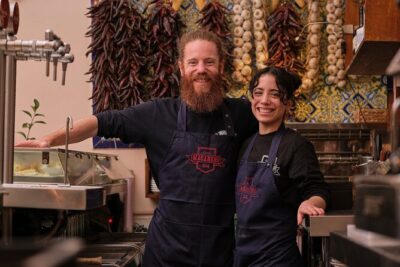
De Tapas in Malasaña: Evening Wine and Tapas Tour
Read our review →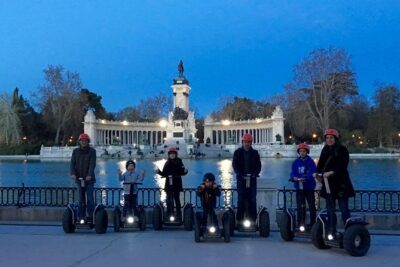
Private Segway Tour Madrid: Lavapiés & Historical Center
Read our review →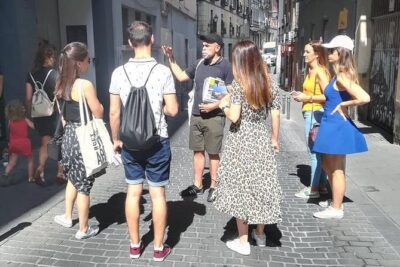
Architour through Lavapiés and Rastro with an architect
Read our review →

Private Tapas & Wine Food Walking Tour in La Latina
Read our review →
Lavapiés: The most multicultural neighbourhood of Madrid, Private Walking Tour
Read our review →Browse the lists this tour appears in