Reviewed · HALF-DAY
Half-Day Private Tour in Madrid with Art Historian Guide
Madrid reveals itself best on foot, and this private tour links its grandest sights with the small streets where daily life still feels local. You move from Puerta del Sol and the Royal Palace to tapas bars, old market squares, La Latina, and the Literary Quarter, while an art historian explains how power, religion, writers, and ordinary trade shaped the city.
I like the private format, which lets your guide adjust the pace and route to your interests. I also like the human touches, such as stopping for churros, coffee, or a tip about orange cookies, rather than treating Madrid as a string of photo stops. The main drawback is simple: the listed monument visits are brief, and admission fees are not included.
Key points to know before booking
- The route connects Madrid’s major sights with real neighborhoods, including Cava Baja, La Latina, and Barrio de las Letras.
- Veronika is the guide most clearly associated with the experience, bringing art, architecture, politics, and local history into the walk.
- This is a private tour, so your group can ask questions, linger at a favorite stop, or request an individual route.
- The 3.5-hour schedule is active, with much of the time spent walking between central landmarks.
- Royal Palace and cathedral entry are not included, and the short stop times suggest that the focus is mainly on orientation and outside commentary.
- Food breaks can be built in, but snacks, churros, coffee, and other purchases cost extra.
Madrid in one walk, from Puerta del Sol to La Latina
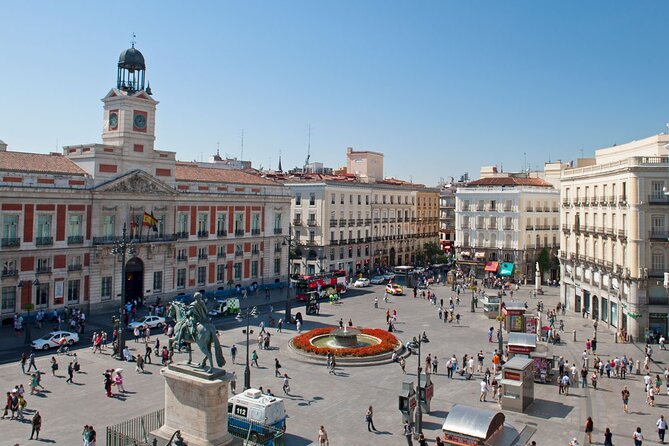
The tour begins at the King Charles III statue in Puerta del Sol, one of the easiest places in central Madrid to find. This is a useful starting point because you are immediately in the middle of the old city, with major streets, historic squares, and public transport close by.
Your guide then leads you through the historic center rather than simply pointing out isolated buildings. That matters. Madrid’s story makes more sense when you see how royal power, religious institutions, commerce, and nightlife sit within a fairly compact area.
The route is planned for roughly three and a half hours. The scheduled stops add up to less than the full tour time, so expect the rest to go toward walking, explanations, questions, and possible refreshment breaks. You will not be rushing from one ticket line to the next.
Because it is private, you can ask why a building looks the way it does, how a neighborhood developed, or where to return later for food and drinks. This makes the experience a good first orientation to Madrid, especially if you want context before exploring museums or entering the palace on your own.
More Half-Day Tours in Madrid:
- Madrid: Half-Day Spanish Cooking Class
★ 5.0 · 345 reviews - Toledo Half-Day Tour with St Tome Church & Synagoge from Madrid
★ 4.5 · 314 reviews - From Madrid: Half-Day or Full-Day Trip to Segovia
★ 3.9 · 211 reviews
Teatro Real and the royal heart of Madrid
The Teatro Real is the first major landmark after Puerta del Sol. Your stop here is short, about 15 minutes, and admission is not included. The point is to see one of Europe’s important opera houses and place it within Madrid’s royal and cultural center.
The theater’s story reaches back to an era when famous singers and composers performed for elite audiences. An art historian can help connect the building to the city’s long relationship with monarchy, public ceremony, music, and status.
Do not book this tour expecting a full opera-house visit. The schedule gives you an exterior introduction, not a performance or extended interior tour. If Teatro Real matters greatly to you, ask your guide how to plan a separate visit.
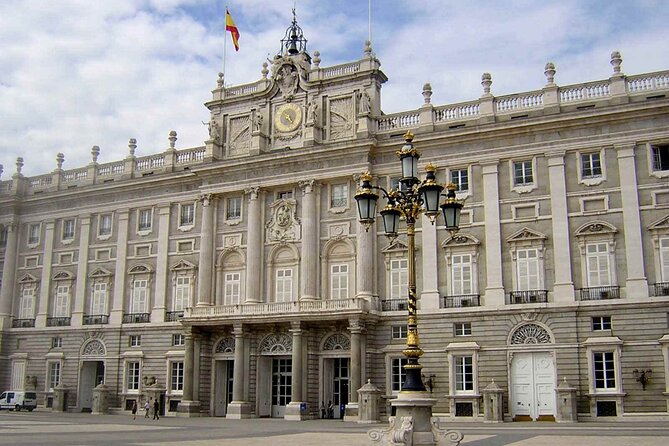
The Royal Palace follows. It is described as the largest functioning royal palace in Europe by floor area and remains the official residence of the Spanish royal family, though it is used mainly as a museum and for state ceremonies. That distinction is useful: you see a living institution, not just an old royal building.
Again, the listed stop lasts about 15 minutes, with admission extra. You should think of this as a strong introduction to the palace grounds, facade, and role in Spanish public life. If you want the grand rooms, collections, and full museum visit, you will need separate time and a separate ticket.
Almudena Cathedral, a modern building with old ambitions
Across from the royal center, Almudena Cathedral gives the tour a different angle. Madrid does have older churches, but its main cathedral is comparatively recent. Construction began in 1879, and Pope John Paul II consecrated it in 1993.
That unusual timeline gives your guide plenty to explain. The cathedral’s interior is Neo-Gothic, but it also includes chapels and statues by contemporary artists. The result is not a single, tidy style. It combines historical revival with newer decorative ideas, including pop-art touches.
This is one of the more interesting stops for anyone who assumes every European cathedral is medieval. Madrid’s political importance grew faster than its religious architecture, and Almudena reflects a city trying to create a major cathedral in a much later age.
The scheduled visit is about 15 minutes, and entry is not included. You may see the exterior and receive an overview rather than spend time examining the interior. If art and religious architecture are your priority, tell the guide early so the private format can work in your favor.
Plaza de la Villa and the city before the grand avenues
Plaza de la Villa is smaller and quieter in character than the Royal Palace or Plaza Mayor. Three sides of the square show different periods of Madrid architecture, from Mudéjar influences to Baroque design.
This is the kind of place that benefits from explanation. Without a guide, you might pass through quickly and see only a pleasant old square. With context, the mixed styles become a compact lesson in how Madrid changed over time.
The square served as the city’s main square in the seventeenth century. Its modest scale also helps you picture an older Madrid before the city expanded into the broad streets and formal districts familiar today.
Admission is free, and the stop lasts about 15 minutes. I would use this pause to look up at the facades and ask your guide to point out the differences between the architectural periods. This is also a good spot for photographs without the scale and crowds of Plaza Mayor.
More Madrid Tours:
- Madrid: Tour Bernabéu Entry Ticket
★ 4.5 · 21,573 reviews - Madrid: Prado Museum Entry Ticket
★ 4.6 · 17,509 reviews - Madrid: “Emociones” Live Flamenco Performance
★ 4.8 · 12,866 reviews - Madrid: Panoramic Route City Tour
★ 4.1 · 12,259 reviews
Mercado de San Miguel and Plaza Mayor
Mercado de San Miguel is presented as a monument to Spanish food as much as a market. It sits in the center of Madrid and has become a well-known meeting place for people looking for small bites and drinks.
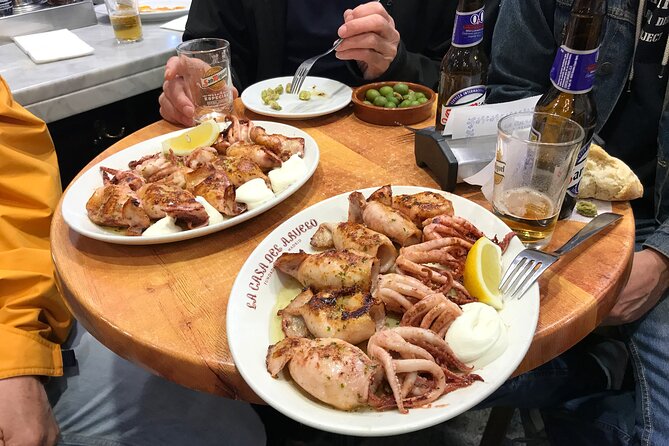
The tour does not include snacks, so budget separately if you want to eat here. A short stop can help you understand the market’s role and give you ideas for a later visit, but it is not a food tour with tastings included.
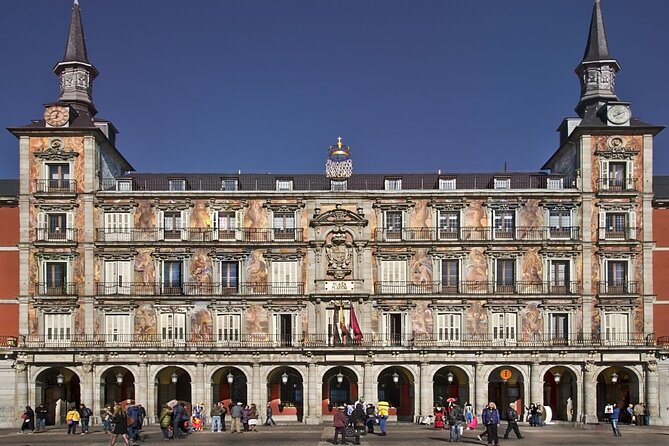
Next comes Plaza Mayor, the grand rectangular square at the center of old Madrid. Its uniform arcaded architecture creates a very different mood from the irregular streets around it. The square was first built between 1580 and 1619 during the reign of Philip III, whose statue now gives the space a strong historical focus.
Plaza Mayor has long been a public stage. Its size and formal design tell you something about royal planning and civic display, while the surrounding arcades show how commercial life was built into the square.
It is also one of the busiest parts of the route. I like seeing it with historical context, but I would not linger here expecting a quiet local square. Take in the geometry, look beneath the arcades, and then let the tour move into the narrower streets where Madrid feels less ceremonial.
Cava Baja and La Latina after the palaces
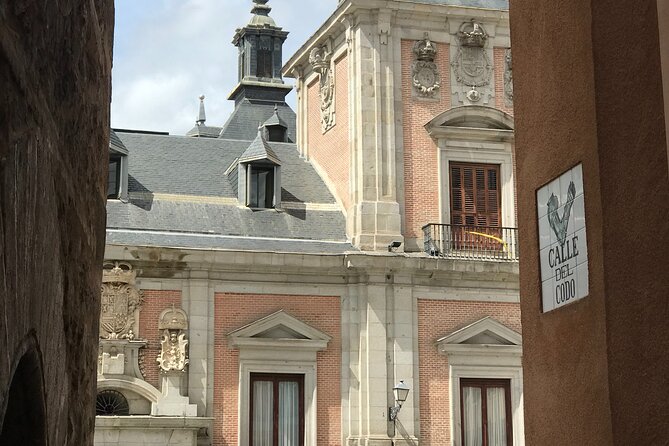
Calle de la Cava Baja is a sharp change of pace. It is a winding street lined with taverns and bars, known for having one of the highest concentrations of tapas places in Madrid.
Your guide can help you read the street as more than a restaurant row. It is a useful place to ask where to return later, what kind of food different bars serve, and how to avoid treating every meal as a tourist stop. The route includes only about 10 minutes here, so save serious eating for after the tour.
From Cava Baja, the walk continues into La Latina. The neighborhood’s narrow, winding streets mostly follow an irregular medieval pattern. Many lead into small squares, giving the area a very different feel from the straight, planned spaces near the palace.
La Latina grew outside the medieval walled village and housed merchants who sold goods at the market. Several names still recall that commercial past: Plaza de la Cebada refers to barley, Plaza de los Carros to carriages, and Plaza de la Paja to straw. El Rastro, Madrid’s famous flea market, takes its name from the blood trail associated with an old slaughterhouse.
The La Latina portion lasts around 30 minutes, making it one of the better places to ask questions and absorb the city’s older layout. The route does not promise a visit to El Rastro itself, and the flea market is not listed as a separate stop. Still, the neighborhood gives you a useful sense of how commerce shaped Madrid street by street.
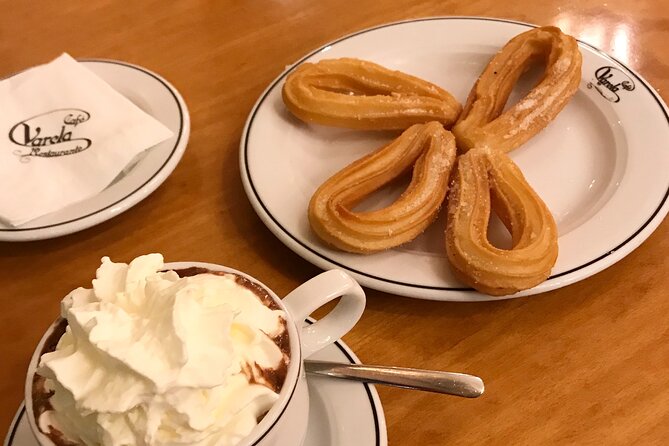
This is also where a café break can make the tour feel less like a checklist. One past itinerary included churros in the historic center and coffee in a quiet La Latina spot. Those purchases are not included, but the private format allows room for a pause when the schedule and guide agree.
Barrio de las Letras and Madrid’s literary past
The final major neighborhood is Barrio de las Letras, the Literary Quarter. In the seventeenth century, during Spain’s Golden Age of literature, writers including Cervantes, Lope de Vega, Quevedo, Tirso de Molina, and Góngora lived here.
The district’s street names and plaques help connect the physical neighborhood with Spanish writing and cultural life. The stop lasts about 30 minutes, enough for a good introduction and a few questions, though not enough for a full literary walking tour.
I especially like ending in this area because it broadens the tour beyond kings and churches. Madrid is also a city of writers, theaters, taverns, printers, and public debate. After seeing royal buildings, you finish among streets shaped by people who wrote, argued, performed, and sold ideas.
If you have a special interest in Cervantes or Spain’s Golden Age, tell the guide at the start. The private route can be adjusted, but the tour still has a fixed time limit.
What the private guide adds
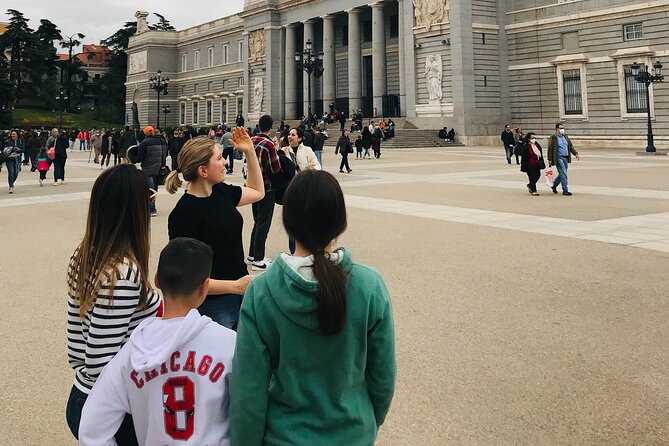
The greatest strength here is the guide’s ability to connect facts instead of reciting them. Veronika is described as friendly, energetic, and able to adapt to a small family group’s interests. Her explanations cover art, architecture, political forces, powerful families, and popular uprisings.
That range changes how you see the route. The Royal Palace is not just a grand facade. Plaza de la Villa is not just an old square. La Latina is not merely a photogenic maze of streets. Each place becomes part of Madrid’s political and social story.
The private format is especially useful if you have limited time or strong interests. You can ask for more architecture, more literature, more food advice, or more detail about the city’s neighborhoods. A standard group walk usually cannot bend as easily.
The tour has a perfect five-star rating from seven reviews, but the more useful point is what receives the strongest praise: the pace, the guide’s personal approach, the broad historical context, and the practical local suggestions. I would value those qualities more than a long list of stops.
Is $72.10 per person a fair price?
At $72.10 per person, the value depends on your group size and what you want from a walking tour. You are paying for a private experience with an art historian guide, not for entrance tickets, meals, or a large sightseeing package.
For a small group that wants personal attention, the price can make sense. You receive route planning, local guidance, and the ability to ask questions throughout three and a half hours. You also avoid spending your first day in Madrid trying to understand how the central districts fit together.
The value is weaker if you mainly want to enter the Royal Palace or cathedral. Those admissions are extra, and the scheduled stops are short. In that case, plan this walk as a city introduction, then set aside another block of time for the interiors that interest you most.
Breaks at selected cafés are possible, but snacks are not included. Keep some money and time available if you want coffee, churros, tapas, or another small treat during the walk.
Practical details that affect your day
The tour is offered in English, with a morning or afternoon departure. Starting in the morning may leave your evening free for tapas or a performance, while an afternoon departure can work well after a museum visit or a relaxed lunch.
You meet at Puerta del Sol and finish back at the meeting point. The area is near public transportation, which makes it a practical place to begin and continue your day.
Wear comfortable shoes. The route is pedestrian-focused and includes central streets, irregular medieval lanes, plazas, and neighborhood sidewalks. Most people can participate, and service animals are allowed.
Confirmation is sent within 48 hours, subject to availability. The tour requires good weather and a minimum number of participants. If poor weather or insufficient participation cancels the experience, you can choose another date or receive a full refund. You can cancel for a full refund up to 24 hours before the start time.
Who should book this Madrid walk?
I would choose this tour for a first visit to Madrid, a short stay, or a small group that wants history explained in plain language. It suits people who enjoy architecture but also want food streets, local neighborhoods, and useful suggestions for the rest of the trip.
It is particularly good for families or friends with mixed interests. One person can ask about art, another about politics, and another about where to eat later. The private guide can adjust the conversation instead of forcing everyone through a fixed script.
I would think twice if your main aim is a full interior tour of every monument. You will see the outside of several major buildings, and entry fees are not part of the price. You should also expect walking rather than a vehicle-based sightseeing tour.
Should you book it?
Book this tour if you want Madrid explained through its buildings, streets, writers, markets, and food culture. The strongest reason to choose it is not the number of landmarks. It is the chance to connect the Royal Palace with La Latina, Plaza Mayor with Cava Baja, and the city’s royal past with its literary and everyday life.
Skip it if you prefer to explore alone or want a ticketed palace and cathedral tour. For everyone else, especially small groups who value a flexible pace, Veronika’s personal approach and the route’s mix of major sights and older neighborhoods make this a useful first look at Madrid.
FAQ
How long does the private Madrid tour last?
The tour lasts approximately 3 hours and 30 minutes.
Where does the tour begin and end?
It begins at Puerta del Sol in central Madrid, at the King Charles III statue, and ends back at the meeting point.
Is the tour offered in English?
Yes. The experience is offered in English.
Are Royal Palace and cathedral admission fees included?
No. Entry into the monuments and museums is not included in the tour price.
Can the route be changed?
Yes. Individual route planning is possible because the tour is private. Your guide can adjust the experience to your group’s interests, subject to the available time.
Can I cancel for a full refund?
Yes. You can cancel at least 24 hours before the experience start time for a full refund. Changes or cancellations made less than 24 hours before the start are not accepted for a refund.
Just added around Madrid
- Visit the National Archaeological Museum in Madrid★ 4.4 · 6 reviews
- From Madrid: Parque Warner Beach Water Park & Transport★ 3.9 · 14 reviews
- Madrid Wine Tasting, Flamenco Class and Pub Crawl★ 4.5 · 6 reviews
- Virtual Reality Experience Fun And Tickets & Imageen★ 5.0 · 12 reviews
- Visit to the Prado Museum★ 4.9 · 6 reviews
- Tuk Tuk Tour with Wine Test in Madrid★ 3.8 · 6 reviews
- Tuktuk historical tour of Madrid 1 Hr in a fun and original way★ 3.7 · 3 reviews
- Prado Museum VIP tour with an art Expert, tickets included★ 5.0 · 11 reviews
Half-Day, compared.

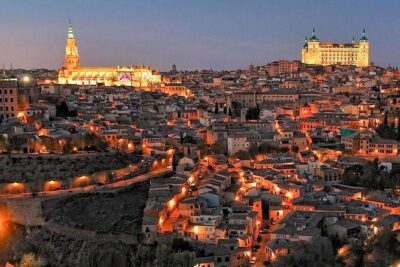
Toledo Half-Day Tour with St Tome Church & Synagoge from Madrid
Read our review →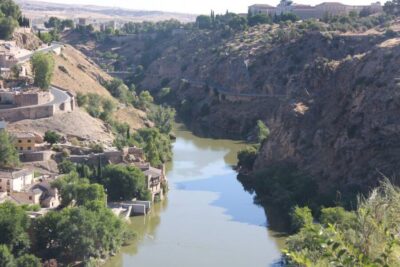
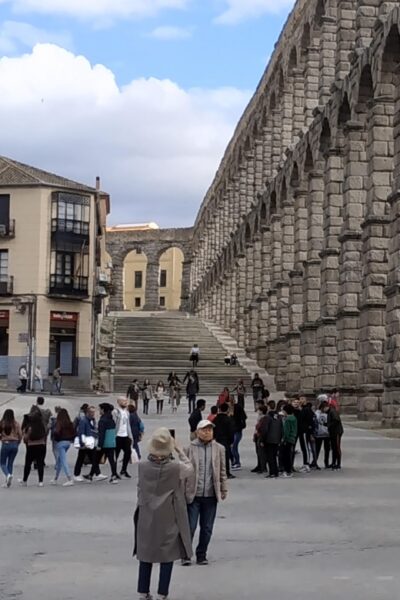
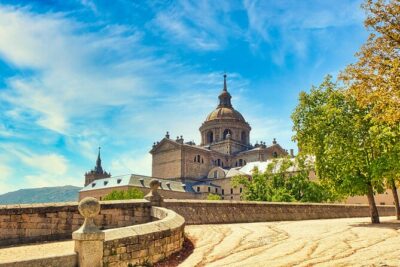
Escorial & Valley Half-Day Morning Tour from Madrid
Read our review →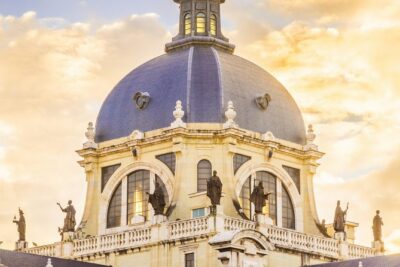
Panoramic Madrid Tour and Toledo Half-Day Trip from Madrid
Read our review →
Half-Day Madrid History and Legends Private Walking Tour with Hotel Pick Up
Read our review →