Reviewed · TOURS
Secrets of Madrid Small Group Tour
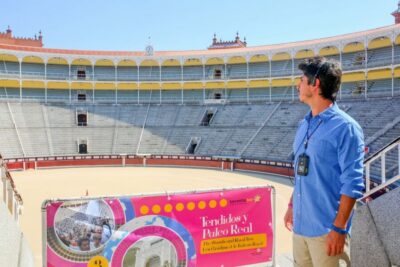
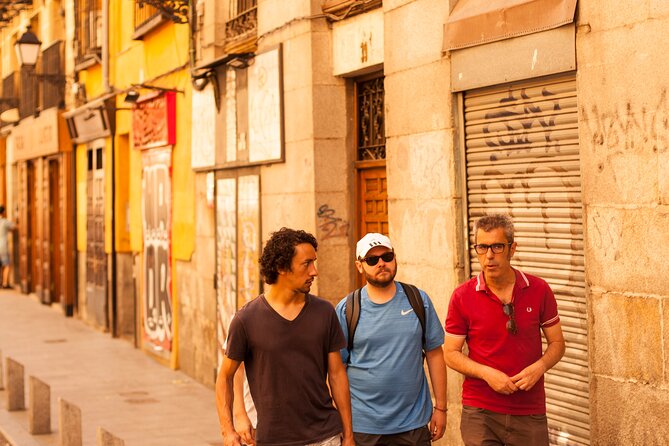
Madrid’s oldest center is not found only in grand squares and royal rooms. This walk leads you through narrow medieval lanes, quiet convent corners, and overlooked churches, then brings you up to sweeping views of the Royal Palace. The stories move from Mudéjar Madrid and the Habsburgs to the Inquisition, the Bourbons, and modern city life.
I like the small maximum of 10 people, which gives Juan room to answer questions and adjust the talk. I also like the mix of famous sights and places you might easily miss, including the convent garden, the nuns’ biscuit window, and Calle de Codo.
The main consideration is the pace. You cover a lot of ground in 2 hours and 30 minutes, with stairs and extended walking. If you prefer a slow monument visit or want to go inside major buildings, this is not that kind of tour. The Royal Palace is viewed from outside, and its admission ticket is not included.
Five things to know before you book
- A small English-speaking group: The tour accepts a maximum of 10 people, so you can hear Juan without headphones and ask questions along the way.
- Madrid’s quieter old quarters: The route includes Calle de Codo, Calle de los Mancebos, convent gardens, old churches, and other corners beyond the standard sightseeing circuit.
- A strong local guide personality: Juan uses humor, stories, and a final stone map to tie the walk together. His background in film journalism may add extra color about Spanish art and culture.
- A weekday-only garden stop: El Huerto de las Monjas is open to this walking visit Monday through Friday, but its gate stays closed on weekends.
- Good value at $32.53: All fees and taxes are included, but you pay separately if you enter the Royal Palace.
Why this walk gives you a different Madrid
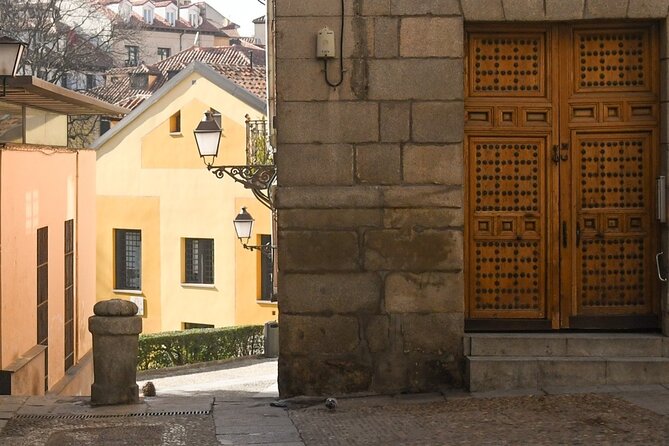
The tour begins at Plaza de Puerta Cerrada at 10:30 am and quickly moves into the oldest part of Madrid. You are not simply ticking off monuments. You are following the city’s changes in power, religion, architecture, and daily life.
That approach works best early in a Madrid visit. After the walk, you will have a useful mental map of the center. You will also have context for sights you may visit later, including the Royal Palace, Almudena Cathedral, Plaza Mayor, and the old Habsburg quarter.
Juan is the named guide, and his style is lively and personal. He has a distinctive habit of punctuating important points with a cha-ching expression. Some people may find that charming, while others may prefer a quieter lecture. The strongest part of his approach is the way he connects small details to larger events.
One useful feature is the recap near the end. Juan uses a map carved in stone to review the places you have seen and show how Madrid fits together. That is especially helpful after a route with many names, kings, churches, and legends.
More Madrid Tours:
- Madrid: Tour Bernabéu Entry Ticket
★ 4.5 · 21,573 reviews - Madrid: Prado Museum Entry Ticket
★ 4.6 · 17,509 reviews - Madrid: “Emociones” Live Flamenco Performance
★ 4.8 · 12,866 reviews
From Plaza de la Villa to a medieval elbow
At Plaza de la Villa, you begin with a compact lesson in Madrid’s architectural layers. Mudéjar, Plateresque, and Habsburg façades sit close together, showing how the city changed over the centuries.
Look for the stone coat of arms of King Charles II. He was the last Habsburg monarch, so this small carving becomes a marker for the end of a royal line. It is the sort of detail you could pass without noticing on your own.
The next stop, Calle de Codo, takes only five minutes but helps you read the old street plan. Its name means Elbow Street, a reference to the sharp bend. The narrow curve and uneven stones preserve the feel of a medieval route.
This is not a stop for a long explanation or a major photo session. Its value is atmospheric. You get a quick sense of how different Madrid feels when you leave the broad avenues and enter the older lanes.
A convent window and Madrid’s Baroque surprise
The Monasterio del Corpus Christi is one of the most unusual stops. Behind an unmarked door, a 17th-century convent continues a cloistered tradition. The nuns bake galletas de las Carboneras, traditional biscuits sold through a small revolving window.
The tour gives you a glimpse of a way of life that has changed very little over four centuries. If the biscuit window is operating, this is a good chance to buy a local edible souvenir. It is also a reminder that old Madrid is not just a collection of monuments. It still includes living religious institutions and everyday customs.
Next comes the Basilica de San Miguel, where the mood changes sharply. Its curved 18th-century façade brings the theatrical style of the Baroque into the older streets. The church reflects the Bourbon period, with a lighter and more European look than the austere Habsburg buildings around it.
The stop is short, so you should not expect an extended interior visit. The point is to compare the church’s dramatic exterior with the more restrained architecture you have already seen.
The quietest corners of the route
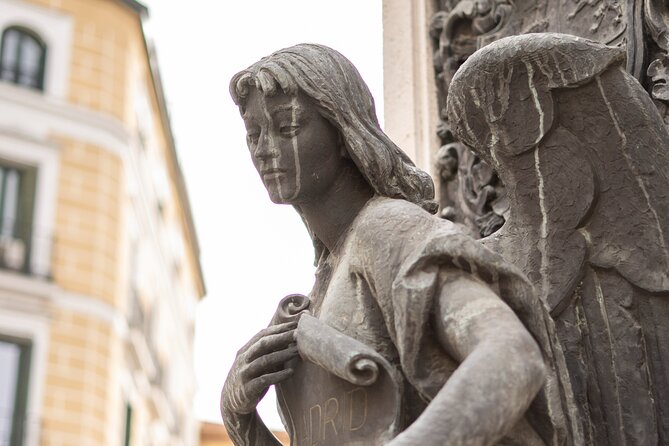
El Huerto de las Monjas is a small convent garden behind high walls. Nuns once cultivated it, and today it offers a rare patch of calm in central Madrid.
The timing matters. The garden can be entered Monday through Friday, but the gate remains closed on weekends. If seeing this spot is important to you, book a weekday tour and check conditions before setting out. Even on an open day, allow for the possibility that access could change.
The Calle de Rollo Fountain introduces the story of the Casa a la Malicia, or house of malice. In the 16th century, Philip II ordered a census so new houses could be taxed. Local builders tried to avoid the charge by making homes look unfinished from the street.
The tale captures a very Madrid kind of humor: practical, sly, and mildly rebellious. The stop also shows why a walking guide adds value. A building detail that looks ordinary at first becomes part of a story about taxes, royal control, and local resistance.
A different sort of day out around Madrid:
- Madrid: Panoramic Route City Tour
★ 4.1 · 12,259 reviews - Madrid: Live Flamenco Show with Food and Drinks Options
★ 4.5 · 9,901 reviews - Avila & Segovia Tour with Tickets to Monuments from Madrid
★ 5.0 · 9,762 reviews - Three Cities in One Day: Segovia, Avila and Toledo from Madrid
★ 5.0 · 8,402 reviews
The Inquisition, a garden, and an old Mudéjar tower
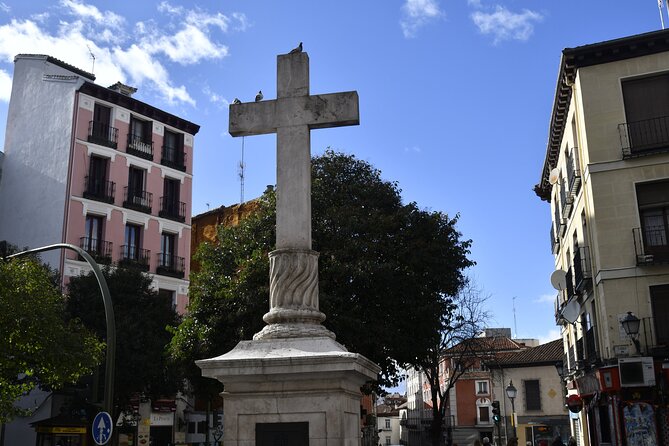
Plaza de la Cruz Verde carries some of the tour’s darkest material. In medieval Madrid, public executions connected with the Inquisition took place here before later moving to Plaza Mayor. The green cross was the emblem used by the Inquisition in solemn processions.
Today, the square is quiet, and nearby cafés give you a chance to pause, use a restroom, and buy coffee. That break is welcome because the walk covers a large section of the city. It also gives Juan a natural point to discuss how Madrid changed from a place of public fear to a modern capital.
At the Jardin del Principe de Anglona, the mood turns reflective. This enclosed 18th-century garden once belonged to the Prince of Anglona. Its formal layout, benches, and jasmine connect it to the Romantic image of old Madrid.
The garden is small, and you will not spend long there. I like it as a contrast to the busy streets. After difficult stories about the Inquisition and royal power, a few quiet minutes among trees and shaded paths help reset the pace.
Iglesia de San Pedro El Viejo provides another architectural lesson. Its brick tower dates from the 14th century and is one of Madrid’s remaining examples of Mudéjar design, combining Christian use with Islamic influence.
The church is modest rather than grand. That is precisely why it matters. Madrid’s story includes small buildings that survived beside much larger royal and religious projects.
Plaza de la Paja and the stories of ordinary power
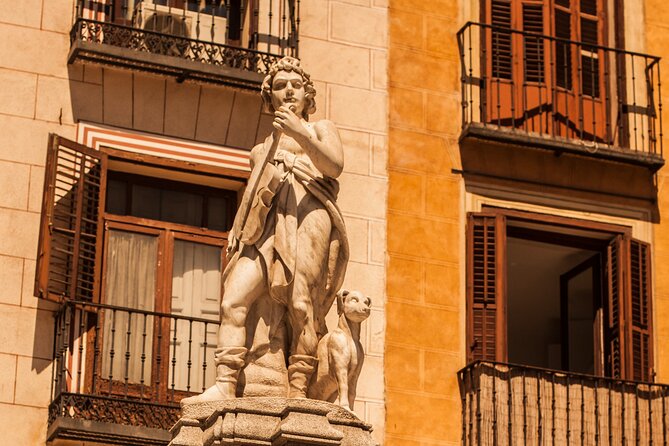
At Plaza de la Paja, you see the Vargas Palace and hear about the Vargas family, powerful feudal lords before Madrid became a royal capital. Their influence reached beyond Spain through the conquest and administration of the Americas.
The story also brings in San Isidro, Madrid’s patron saint, who tradition says worked here as a humble servant. The contrast is memorable: an influential family on one side, a saint associated with simple labor on the other.
This is one of the better stops for understanding Madrid’s mixed character. The city has always combined court power, religious devotion, ambition, and ordinary work. You are not being asked to admire only the grandest people or buildings.
Calle de Madrid leads toward Calle de los Mancebos, a narrow street tied to a medieval mystery. Its name recalls two young men accused of killing a prince who died in 1217. Their guilt was never fully settled.
Nearby, a 15th-century house and remains of the Christian wall add physical evidence to the tale. The stop blends legend and documented history, so listen for the difference between what is known and what is traditional. That distinction makes the story more interesting, not less.
The Vistillas view and the royal center
Jardines de las Vistillas opens the route to the sky. After so many tight streets, you reach a terrace with views toward the Manzanares River and distant mountains.
The Vistillas are also associated with festivals, music, and local gatherings. This is a good place to take photographs, catch your breath, and see Madrid as a city of open space rather than only stone lanes.
The route then returns to major civic landmarks. On Calle Mayor, the Palacio de Consejos presents the sober brick and slate style of Habsburg Madrid. The building reflects the Counter-Reformation and the way religion, royal government, and imperial administration worked together.
The exterior is more restrained than the Royal Palace, but that restraint is the point. You see how architecture once communicated discipline and authority.
The Museo de la Catedral de la Almudena provides a useful surprise. The cathedral may look centuries old, but it was completed only in the late 20th century. Its neo-Habsburg façade was designed during the Franco period to echo 17th-century Madrid.
This stop helps you question first impressions. A building can look historic without being ancient. It also shows how later governments use older styles to create a sense of continuity.
The Royal Palace without the admission ticket
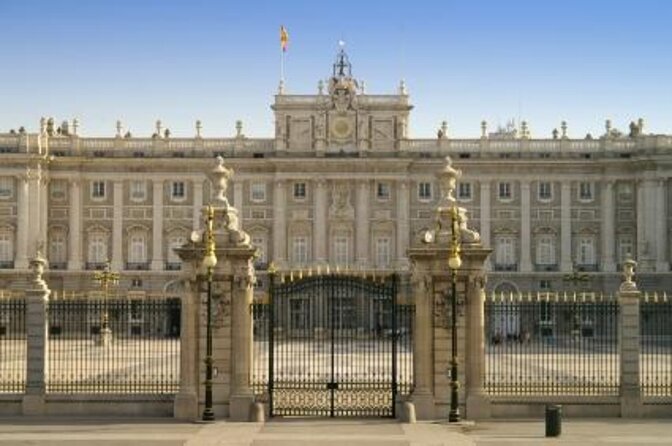
From a small hill, you get one of the route’s best views of the Royal Palace. The Bourbon monarchs built it in the 18th century after the Habsburg Alcázar burned in 1734.
The palace was designed to project power and rival Versailles. From this viewpoint, its size and position make that purpose clear. You see the building as part of Madrid’s wider setting, rather than standing in a queue focused only on the entrance.
The Royal Palace admission ticket is not included. That keeps the walking tour affordable, but you need a separate visit if you want the interior rooms. I see this as a fair arrangement for a short city walk, as long as you understand the difference between viewing the palace and touring it.
At Plaza de Oriente, the statue of Philip IV adds a final piece of royal theater. The bronze equestrian statue balances the horse on its rear legs, an engineering feat linked to Galileo’s calculations.
The pose is more than a technical trick. It presents the king as calm and fully in control, a classic Baroque image of authority. You can appreciate the statue quickly, but Juan’s explanation gives it greater meaning.
Finishing at Plaza de Isabel II
The described route finishes at Plaza de Isabel II, between the Royal Theatre and the modern streets around it. This is a fitting end because the square links old Madrid with the present city.
The route has moved from medieval lanes to royal institutions, from convent traditions to theaters and busy streets. You finish with a sense of how Madrid grew rather than with a list of isolated sights.
The practical information gives the activity’s end as back at the meeting point, while the route description names Plaza de Isabel II as the final stop. I would confirm the exact end location with the operator before booking if your transport plans are tight.
Price, group size, and walking demands
At $32.53 per person, this is good value if you want a broad introduction to Madrid’s old center. You receive a 2.5-hour guided walk, an English-speaking guide, and all fees and taxes included. The price does not cover entry to the Royal Palace, but no paid admission is required at the listed stops.
The group maximum of 10 is important. A small group lets you hear the guide in narrow streets and gives you a better chance to ask about Spanish politics, art, royal families, or local food. Juan has also offered restaurant suggestions, including places with a Menu del Dia, which can help after the walk.
Wear comfortable shoes. The route includes stairs and plenty of walking, and the total distance is substantial for a morning activity. Carry water, especially in warm weather. The walk does include opportunities for a drink and restroom break, but do not treat it as a short stroll.
Most people can participate, and service animals are allowed. The tour is near public transportation and uses a mobile ticket. It requires good weather and a minimum number of participants. You can cancel for a full refund up to 24 hours before the 10:30 am start time.
Who will enjoy this Madrid walk
I would choose this tour for a first or second visit to Madrid, especially if you like urban history, architecture, legends, and small details. It is also a good fit if you want a guide to connect the Royal Palace area with the older neighborhoods south and west of it.
Families can benefit from the stories about hidden house designs, royal statues, convent biscuits, and medieval suspects. The amount of walking may be tiring for young children, though. People who already know Madrid’s political and religious history may find some explanations basic, while others will appreciate the clear overview.
Juan’s style is central to the experience. His humor and personal storytelling appeal to many people, but his presentation is not formal or completely neutral in tone. One unhappy participant found the information too basic and his English difficult to follow. That is worth considering if you want an academic lecture or highly polished delivery.
Should you book Secrets of Madrid?
Book it if you want to see the city through small stories and overlooked corners, not just its headline monuments. The convent biscuit window, Mudéjar tower, Casa a la Malicia, Inquisition square, and Vistillas viewpoint give the walk a clear personality.
Skip it if you want long interior visits, a slow pace, or a tour centered on the Royal Palace itself. For most visitors who enjoy walking and want an affordable introduction to Madrid’s oldest quarters, the small group, wide-ranging route, and final city recap make this a sensible first-day choice.
FAQ
Where does the Secrets of Madrid tour begin?
The tour begins at Plaza de Puerta Cerrada in central Madrid. The stated start time is 10:30 am.
How long does the tour last?
The activity lasts approximately 2 hours and 30 minutes.
Is the tour offered in English?
Yes. The tour is offered in English and uses a mobile ticket.
How large is the group?
The tour has a maximum of 10 participants.
Is Royal Palace admission included?
No. The walking tour includes all listed fees and taxes, but admission to the Royal Palace must be purchased separately.
Can I cancel for a full refund?
Yes. You can cancel at least 24 hours before the start time for a full refund. Poor weather or failure to reach the minimum number of participants may also lead to a different date or a full refund.
Just added around Madrid
- Visit the National Archaeological Museum in Madrid★ 4.4 · 6 reviews
- From Madrid: Parque Warner Beach Water Park & Transport★ 3.9 · 14 reviews
- Madrid Wine Tasting, Flamenco Class and Pub Crawl★ 4.5 · 6 reviews
- Virtual Reality Experience Fun And Tickets & Imageen★ 5.0 · 12 reviews
- Visit to the Prado Museum★ 4.9 · 6 reviews
- Tuktuk historical tour of Madrid 1 Hr in a fun and original way★ 3.7 · 3 reviews
- Prado Museum VIP tour with an art Expert, tickets included★ 5.0 · 11 reviews
- Tuk Tuk Tour with Wine Test in Madrid★ 3.8 · 6 reviews
Tours, compared.



Avila & Segovia Tour with Tickets to Monuments from Madrid
Read our review →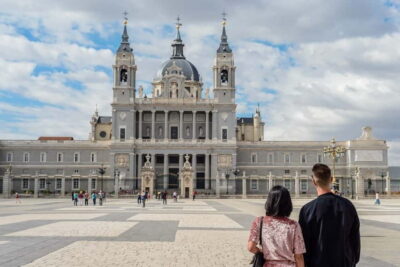
Royal Palace Expert Guided Tour with Skip-the-Line
Read our review →
Toledo Tour from Madrid: Cathedral, Synagogue & St. Tome’s Church
Read our review →
Toledo Half or Full Day Tour with Optional Lunch from Madrid
Read our review →
Toledo & Segovia Full Day Guided Tour with Alcázar
Read our review →