
Reviewed · TOLEDO TOURS
Route of Don Quijote: Windmills, Toledo & Alcala de Henares
The great hook here is the jump from a fictional knight’s famous windmill battle to the real towns tied to Miguel de Cervantes. In one long day, you see the Consuegra windmills, Toledo’s medieval streets, and Alcalá de Henares, where Cervantes was born.
I like the clear literary thread, and I like the three very different stops. The tour also starts on time, uses an air-conditioned vehicle, and gives you a guide rather than leaving you to piece the story together yourself.
The trade-off is the clock. Eleven hours covers a lot of ground, but Toledo gets about four hours and Alcalá about two, while the early 8 a.m. departure and long walking stretches may tire you out. This is not the right choice if you need a slow, accessible day.
Key points to know before booking
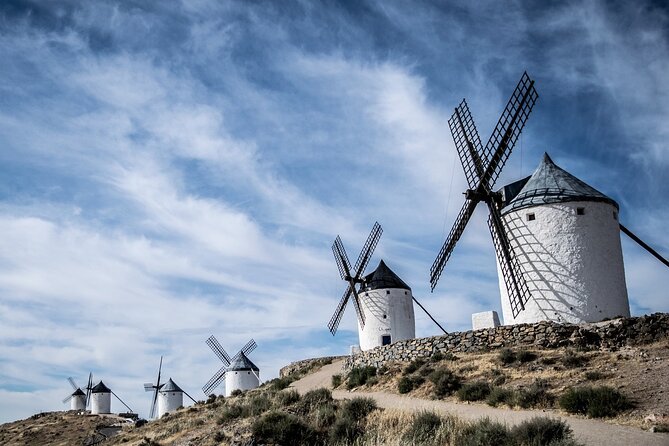
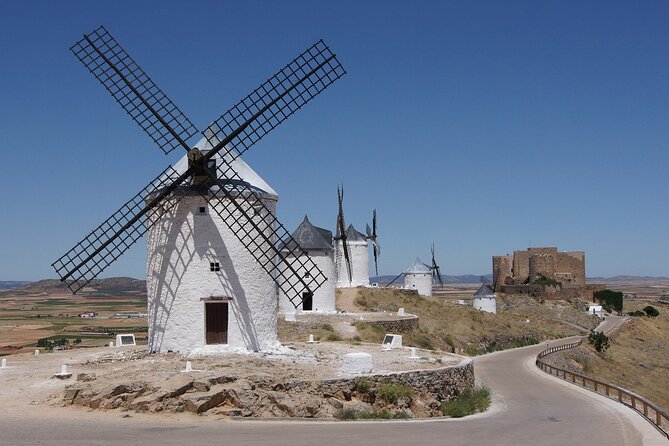
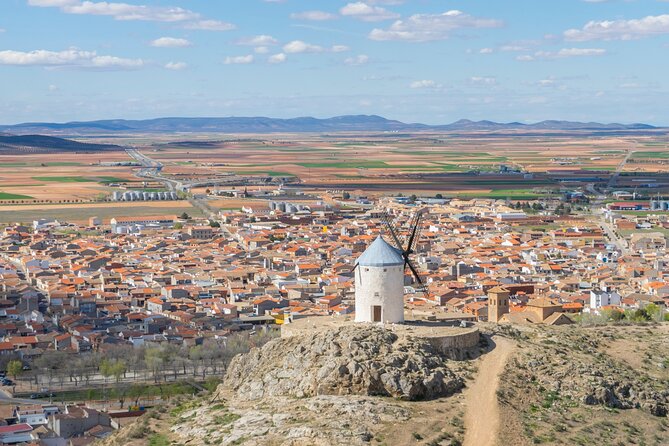
- Consuegra’s windmills: Spend about 45 minutes with the famous machines linked to Don Quijote’s imagined giants, plus wide views across the surrounding countryside.
- Toledo’s three cultures: The guided walk passes through Christian, Muslim, and Jewish parts of the city, including Plaza Zocodover, the Jewish Quarter, and the cathedral exterior.
- Mirador del Valle stop: Allow about 10 minutes for photos of Toledo from across the river before the walking tour begins.
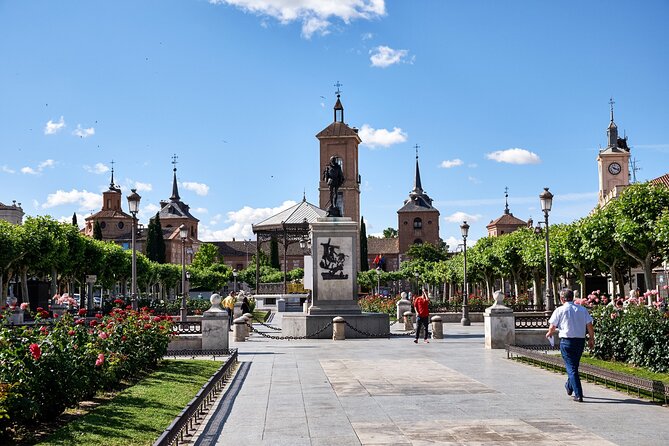
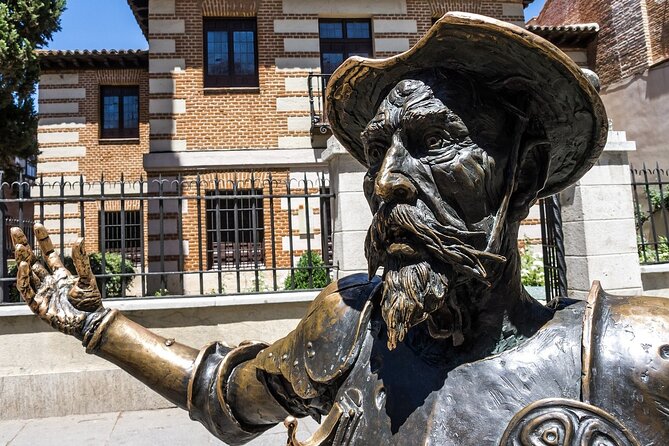
- Cervantes in Alcalá: See the University of Alcalá facade, Cervantes Square, and the bronze Don Quijote and Sancho Panza figures outside Cervantes’ House.
- A full but active day: The tour lasts about 11 hours, with roughly 45 minutes at the windmills, four hours in Toledo, and two hours in Alcalá de Henares.
- Bring your own child seat: Children under 11 must use a baby car seat, and the operator does not provide one.
Why the Don Quijote route works as a day trip
This outing makes sense if you want more than a standard Toledo visit. Toledo alone can fill a day, but this route gives you a literary theme that links the stops.
Consuegra offers the most direct connection to Don Quijote. Toledo supplies the old stone streets and religious landmarks that fit the world of the novel. Alcalá de Henares shifts the focus from the fictional knight to the writer who created him.
That progression is useful. You begin with the visual symbol most people know, move into a historic city, then finish with Cervantes himself. The day has a clear shape instead of feeling like three unrelated sightseeing stops.
You should also know what this experience is not. It is not a literary seminar or a slow examination of Cervantes and Spain’s Golden Age. The tour gives you a guided introduction, but the schedule favors seeing several places over lengthy discussion. If you want more background on the novel, bring a little of your own reading with you.
More Alcala de Henares Day Trips:
- Alcala de Henares and Cervantes Guided Tour from Madrid
★ 5.0 · 111 reviews - From Madrid: Alcalá de Henares, Winery Tour & Wine Tasting
★ 4.4 · 63 reviews - From Madrid: Toledo, Windmills & Alcala de Henares Day Trip
★ 4.3 · 22 reviews
Leaving Madrid early at 8 a.m.
The meeting point is at the corner of Calle Alcalá and Calle de Julio Camba in Madrid’s Salamanca district. The tour begins at 8 a.m. and returns to the same meeting point.
That early start helps the day. Consuegra, Toledo, and Alcalá de Henares are separate destinations, so getting away from Madrid promptly gives you a chance to see all three. It also means you should plan your morning carefully. The tour does not include breakfast or lunch, and no meal is listed among the inclusions.
Transport is by air-conditioned vehicle, with a maximum group size of 30 people. That is large enough to keep the price reasonable, but small enough for a guide to lead a walking group through narrow streets without losing everyone at every corner.
Comfort can vary. One account described the shuttle as small and uncomfortable, while another found the bus comfortable and praised the smooth timing. The sensible approach is to expect practical transport rather than luxury transport. You will also want water, comfortable shoes, and a light snack for the road.
The tour is commonly booked well ahead, with an average booking point of 56 days before departure. That suggests you should not leave it until the last minute if your Madrid dates are fixed.
Consuegra’s windmills and the Don Quijote connection
The first stop is the Molinos de Viento de Consuegra, where you have about 45 minutes. Admission is included at no extra cost.
This is the most instantly recognizable part of the route. Cervantes’ famous scene has Don Quijote attacking windmills because he believes they are giants. The real machines are much less threatening, of course, but their position above the town gives you the same broad visual setting that makes the scene memorable.
You will have time to take photographs and look across the countryside. The stop is short, so think of it as a strong introduction rather than a detailed visit. The appeal is the view, the connection to the novel, and the chance to see the windmills in their actual setting.
I like the restraint here. You do not spend half the morning at one photo stop, and the visit gives the rest of the day room to develop. The downside is equally clear: if you want to inspect every windmill or learn a long history of the machinery, 45 minutes may feel brief.
Your guide is expected to connect the place to Don Quijote, but the amount of literary detail can vary. One useful tip is to read or refresh the windmill episode before leaving Madrid. You will get more from the stop if you already know why these particular windmills matter.
Toledo from the Mirador del Valle
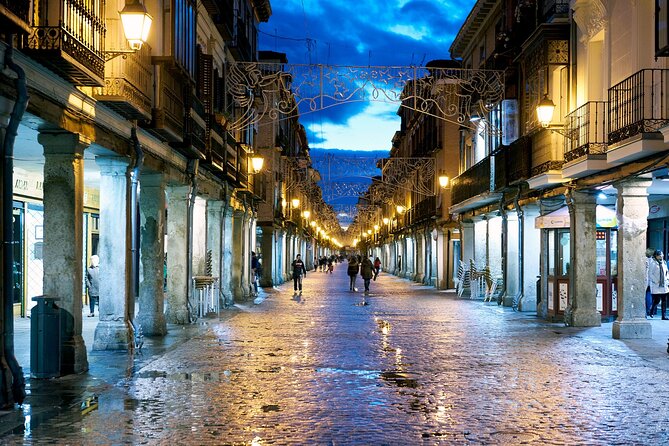
Before the walking portion in Toledo, the vehicle stops at Mirador del Valle for about 10 minutes. This is a quick photo pause with a big payoff.
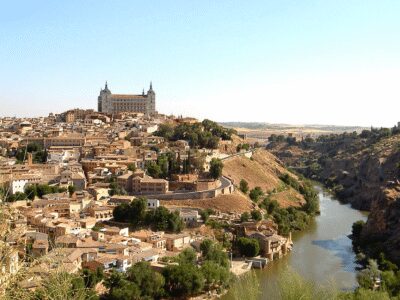
From the viewpoint, Toledo appears across the river as a compact mass of towers, walls, and old buildings. It is the best place on this itinerary to understand the city’s shape before you enter its narrow streets. Ten minutes is enough for photographs, but not enough for lingering.
Do not treat this as a second Toledo visit. It is a useful orientation stop, not a full sightseeing session. If you like taking many photos or need extra time to move around, the short schedule may feel rushed.
Still, the timing is smart. Seeing Toledo from a distance first helps you make sense of the walking tour that follows. You get the broad picture before entering the maze.
More Don Quixote Windmill Tours:
- Madrid: Don Quixote de la Mancha Windmills & Toledo Tour
★ 4.9 · 254 reviews - Tour of the Don Quixote Windmills of La Mancha and Toledo with Lunch
★ 5.0 · 209 reviews - Windmills of Don Quixote Wine Tour & Tasting from Madrid
★ 5.0 · 85 reviews - Toledo, Windmills, Winery Small Group Tour with Lunch from Madrid
★ 5.0 · 14 reviews
Walking Toledo through three cultures
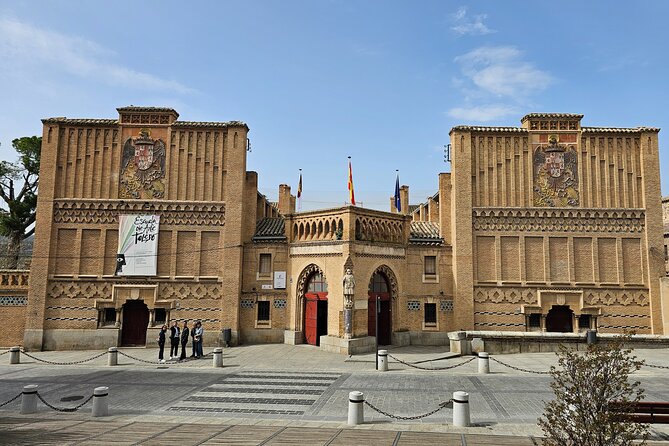
The Toledo portion lasts about four hours, making it the main part of the day. The tour is on foot and takes you through paved, narrow streets. You will need a moderate level of fitness.
The walk begins near the statue of Miguel de Cervantes, a fitting start for a tour built around his work. From there, the group heads toward Plaza Zocodover, once a market square and now one of the city’s main public meeting places.
Plaza Zocodover gives you a sense of Toledo as a living city, not only a preserved monument. It is a natural place to get your bearings before the streets tighten and the route turns toward the historic quarters.
The Jewish Quarter is one of the more meaningful sections of the walk. Your guide discusses the area’s Jewish, Christian, and Muslim connections, as well as periods of coexistence and conflict. This is where the tour’s title becomes broader than Don Quijote. You are also seeing the Spanish setting that shaped Cervantes’ world.
Expect lanes, stone paving, hidden courtyards, and frequent changes in direction. That atmosphere is part of Toledo’s appeal, but it can be hard on feet and wheels. Reduced mobility can make the full route difficult, especially if you are not comfortable walking on uneven or narrow streets.
The cathedral is viewed from outside as the group passes by. Your guide explains its construction during the period associated with Don Quijote and its religious and cultural role in Toledo. This is an important distinction: the cathedral is part of the guided route, but an interior admission ticket is not listed.
Four hours sounds generous, but it includes guided walking, photo pauses, orientation, and some free time. One account wished for more time in Toledo and less unstructured time, while another found the whole day complete and well timed. Your experience will depend partly on how much you want to explore independently.
If Toledo is your main goal, keep your expectations in check. You will see several key areas, but you will not have time to study every museum, church, or shop. This route is best for a first introduction, especially if you want the city placed in a wider regional and literary setting.
Two hours in Cervantes’ Alcalá de Henares
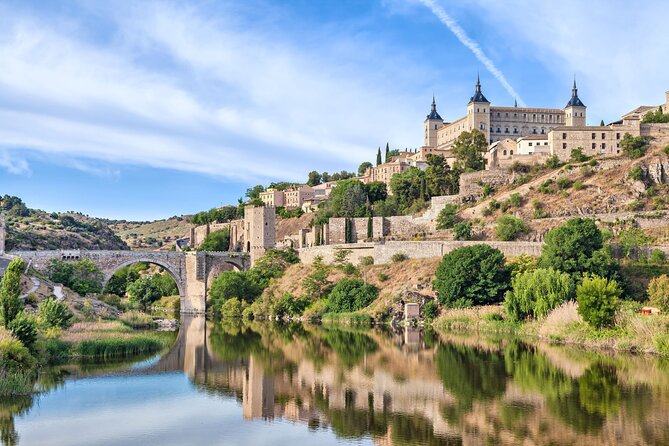
The final destination is Alcalá de Henares, a UNESCO World Heritage City and the birthplace of Miguel de Cervantes. The visit lasts about two hours.
This stop changes the mood. Toledo is a large historic city with many layers. Alcalá focuses more directly on education, Cervantes, and the public memory built around him.
You begin with the facade of the University of Alcalá. Cervantes once walked there as a student, and the building gives the stop an academic setting. You will not be spending hours inside a university program, but the facade helps explain why Alcalá is linked to learning and Spanish literature.
From there, the route continues to Cervantes Square. The square is named for the author and gives you a central point for understanding how the city honors him.
The clearest photo opportunity comes in front of Cervantes’ House, where bronze statues of Don Quijote and Sancho Panza sit in their familiar partnership. The figures connect the real author to his fictional characters in a simple, memorable way.
One person found the university portion less appealing than the windmills and Toledo. That is fair. If your interest is mainly scenery and medieval streets, Alcalá may feel quieter and less dramatic. If you care about Cervantes, however, it adds the context that the first two stops cannot provide.
The two-hour visit is enough for a guided overview and photographs, but not a detailed examination of every historic building. Think of Alcalá as a final chapter, not a second Toledo.
What the price includes, and what it does not
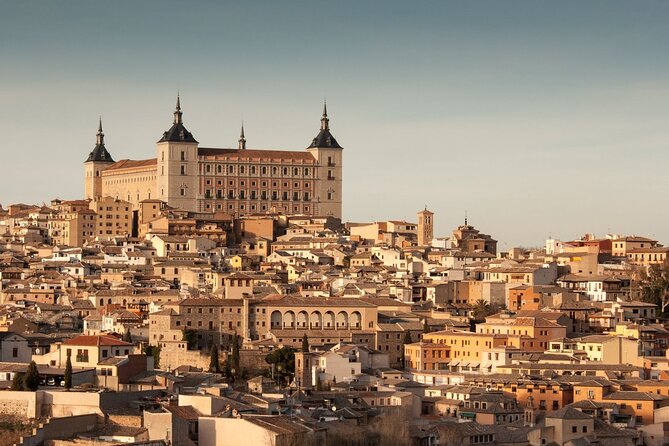
At $114.70 per person, this is not the cheapest way to see Toledo, but the price needs to be judged against the amount of ground covered. You are paying for transport from Madrid, a guide, and a full day that combines three destinations.
The air-conditioned vehicle matters because public transport between all three stops would require more planning and would make the schedule harder to manage. The guide also adds value in Toledo, where the narrow streets can make orientation difficult.
Admission is listed as free at the windmills, Toledo stop, Mirador del Valle, and Alcalá portions. Lunch is not included. That gives you flexibility, but it also means you need to plan how you will eat during a long day. The supplied timing does not identify a specific lunch stop, so do not assume a sit-down meal is built into the schedule.
I would call the price reasonable for someone who wants convenience and a broad overview. It is less compelling if you only want Toledo, prefer to set your own pace, or plan to visit interiors that require separate admission.
Walking, comfort, and family details
This is an active day, even though you spend part of it in the vehicle. Toledo and Alcalá both involve paved streets, narrow passages, and plenty of walking. Wear shoes you can use comfortably for several hours.
The tour requires moderate physical fitness. People with reduced mobility may have trouble completing the full itinerary, and the vehicle may not suit every accessibility need. If this is important for your group, ask the operator specific questions before paying rather than assuming the route is step-free.
Children under 11 must sit in a baby car seat. Amigo Tours does not provide one, so you must bring your own. That is an easy detail to miss and a serious one to handle before departure.
The maximum group size is 30. You should expect a shared group experience, not a private tour. The benefit is the lower cost compared with arranging a private vehicle, while the compromise is less control over stops and walking speed.
Who should book this Madrid day trip?
You should consider this tour if you want to connect Don Quijote and Cervantes with actual places in central Spain. It suits first-time visitors who want a guided introduction to Toledo but also want to see the windmills and Alcalá without arranging several separate trips.
It is also a good fit if you value a clear schedule, air-conditioned transport, and a guide who can explain the links among the stops. The route gives you photographs, city orientation, literary context, and a taste of three different places in one day.
You may want another plan if Toledo is your priority and you want long museum visits, cathedral interiors, or an unhurried lunch. The same goes for anyone who dislikes early starts, long coach days, or paved walking.
The literary content may also feel lighter than expected. The tour brings Don Quijote and Cervantes into the day, but the experience is still mainly sightseeing. One useful improvement would be more discussion of Cervantes, the novel, and Spain’s Golden Age of literature. You can fill that gap by reading a short introduction before you go.
Should you book the Route of Don Quijote?
Book it if you want the windmills, Toledo, and Cervantes’ birthplace city in one organized day from Madrid. The route is well chosen, and the contrast among the stops gives the experience a stronger purpose than a basic Toledo excursion.
Skip it if you need a slow pace, easy accessibility, or several hours inside Toledo’s monuments. For most able walkers who want variety and do not mind an early start, the $114.70 price is fair for the transport, guide, and number of places covered.
FAQ
Where does the tour start and finish?
The tour starts at Calle Alcalá and Calle de Julio Camba in Madrid at 8 a.m. It ends back at the same meeting point.
How long does the experience last?
The tour lasts approximately 11 hours.
What places does the tour visit?
The route includes the windmills of Consuegra, Toledo, Mirador del Valle, and Alcalá de Henares.
Is lunch included?
No. Lunch is not included in the tour price.
Is transportation provided?
Yes. The tour includes transport in an air-conditioned vehicle.
Are admission tickets included?
The listed stops have no admission ticket charge included in the itinerary. The Toledo walk includes passing by the cathedral, rather than a listed interior visit.
Can children under 11 join the tour?
Yes, but children under 11 must use a baby car seat. You must bring your own because the operator does not provide one.
Just added around Madrid
- Visit the National Archaeological Museum in Madrid★ 4.4 · 6 reviews
- From Madrid: Parque Warner Beach Water Park & Transport★ 3.9 · 14 reviews
- Madrid Wine Tasting, Flamenco Class and Pub Crawl★ 4.5 · 6 reviews
- Virtual Reality Experience Fun And Tickets & Imageen★ 5.0 · 12 reviews
- Visit to the Prado Museum★ 4.9 · 6 reviews
- Tuk Tuk Tour with Wine Test in Madrid★ 3.8 · 6 reviews
- Tuktuk historical tour of Madrid 1 Hr in a fun and original way★ 3.7 · 3 reviews
- Prado Museum VIP tour with an art Expert, tickets included★ 5.0 · 11 reviews
Toledo Tours, compared.
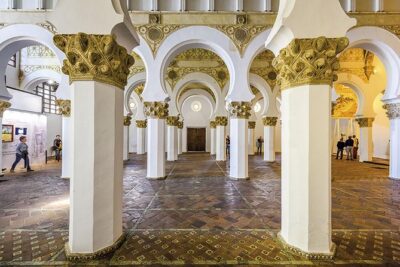
Toledo Tour from Madrid: Cathedral, Synagogue & St. Tome’s Church
Read our review →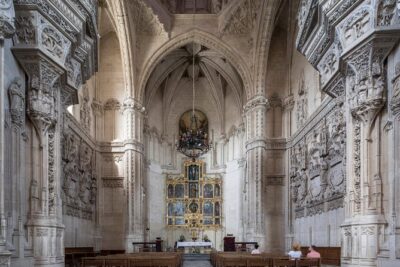
Toledo Half or Full Day Tour with Optional Lunch from Madrid
Read our review →
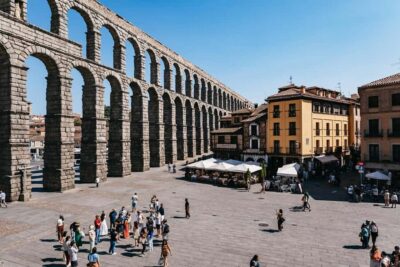
Toledo & Segovia Full Day Guided Tour with Alcázar
Read our review →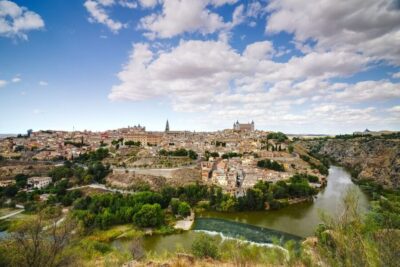

Segovia and Toledo Day Tour from Madrid with Optional Alcazar
Read our review →
Browse the lists this tour appears in