
Reviewed · TOLEDO TOURS
Guided Tour of Underground Toledo
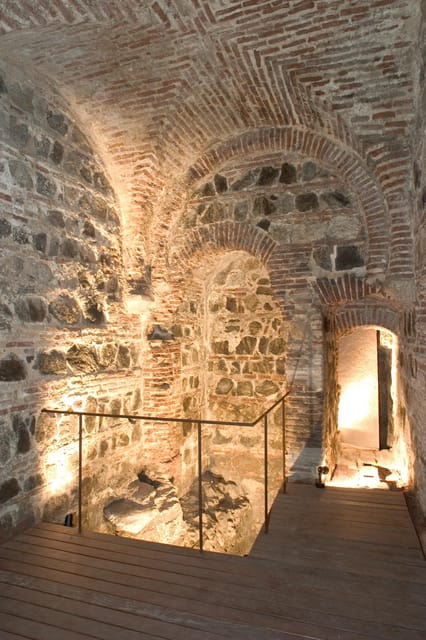
Toledo’s best stories are not all above street level. This two-hour walk takes you below the lanes into five underground sites, including an Arab hammam, a Jewish miqvé, Roman baths, a medieval dungeon, and a water cistern. I like the way the route connects everyday life to the city’s three major cultures, rather than treating Toledo as a parade of grand monuments.
I also like the small, focused route and the chance to enter areas that require an accredited guide. The $15 price is strong value when you consider that five entrances and a live guide are included. The main drawback is practical: the tour is conducted in Spanish and is not suitable for wheelchair users or people with mobility impairments.
Key points at a glance
- Five different underground sites: See a dungeon, Arab baths, a cistern, a Jewish miqvé, and Roman baths in one compact route.
- A look at daily life: The tour explains hygiene, water supply, religious practice, punishment, and social customs.
- Spanish only: The guide speaks Spanish, so limited Spanish may make the explanations harder to follow.
- Monica’s adaptable style: When Monica leads, she is attentive to the group and has taken care with a visitor using a cane.
- A low-cost archaeological outing: At $15 per person, the five included entrances make this a useful addition to a Toledo day.
- Uneven access matters: Expect underground spaces and a walking route that is not designed for wheelchairs or people with mobility limitations.
Why Toledo’s underground matters
Toledo is often presented through its cathedral, Alcázar, synagogues, and old lanes. Those sights matter, but the spaces below the city tell a more ordinary story. They show how people washed, collected water, practiced faith, guarded prisoners, and spent leisure time.
That is the real value here. You are not simply moving from one old room to another. Each stop gives you a different piece of urban life. The Roman baths explain public culture. The Arab baths show ritual washing and social habits. The miqvé brings Jewish religious practice into view. The cistern explains a basic problem of living on Toledo’s high rock. The dungeon shows the darker side of medieval administration.
I like this mix because it keeps the tour grounded. Toledo’s past was not only made by kings, armies, and church officials. It was also shaped by people who needed clean water, private worship, communal bathing, and secure places for prisoners.
The route lasts about two hours. Each of the five main stops receives roughly 20 minutes, with walking between them through the historic center. That timing is brisk but sensible. You get enough explanation to understand each site without spending an entire day underground.
More Toledo Tours:
- Three Cities in One Day: Segovia, Avila and Toledo from Madrid
★ 5.0 · 8,402 reviews - Madrid: Segovia and Toledo Tour, Alcazar, and Cathedral
★ 4.7 · 7,797 reviews - Toledo Tour from Madrid: Cathedral, Synagogue & St. Tome’s Church
★ 5.0 · 6,784 reviews
Meeting beneath the green umbrella in Plaza de Zocodover
The tour begins in Plaza de Zocodover, Toledo’s central meeting point. Look for the guide in the center of the square with a green umbrella. This detail is useful because the plaza can feel busy and open, and a clear marker saves you from wandering around looking for a guide.
Starting here puts you close to the city’s main historic core. Wear shoes suited to old streets and underground access. The supplied information does not specify the exact condition of every floor, so you should be prepared for a walking tour through older spaces rather than a polished museum circuit.
The language is Spanish. This is important to decide before booking. You can still enjoy the atmosphere and architecture with limited Spanish, but the value of the tour lies heavily in the explanations. If you understand Spanish, you will get much more from the stories about customs, religious practices, and the work of keeping Toledo supplied with water.
A guide named Monica has been especially warm and flexible with groups. She has adjusted her approach to different needs and paid attention to a visitor using a cane. That does not change the official accessibility limits, but it does suggest a considerate human touch when she is leading the group.
The Holy Brotherhood dungeons at Posada de la Hermandad
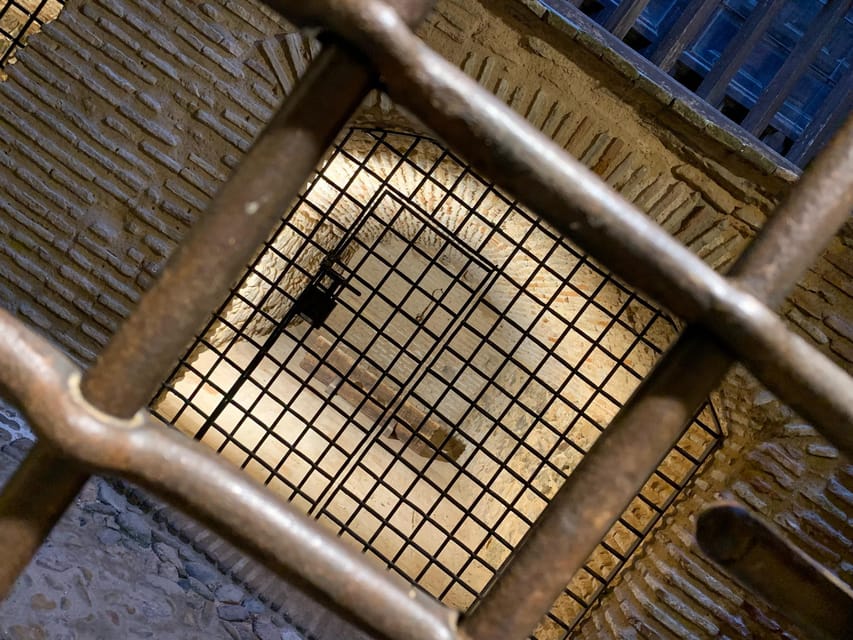
The first stop is Posada de la Hermandad, where you visit the preserved dungeons of the Holy Brotherhood. This section takes you back to the Middle Ages and focuses on imprisonment and control rather than ceremony or art.
The dungeons are described as the only surviving ones of their kind in Toledo. That makes the stop particularly useful for understanding how law and punishment worked in the city. You hear about the prisoners’ daily conditions and the jailers known as the Mangas Verdes.
This is a good opening because it starts with a human story. Instead of beginning with dates and architectural labels, the guide can place you in the world of people waiting in confinement and the officials responsible for them. It also gives you an early reminder that Toledo’s underground spaces were practical places, not just forgotten ruins.
The visit lasts around 20 minutes. That is enough time for a guided explanation and a look at the preserved space, but not enough for a long historical lecture. I prefer that format on a city walking tour. You get a clear idea of what you are seeing, then move on before the subject becomes repetitive.
Cenizal Baths and the Muslim city of Tulaytula
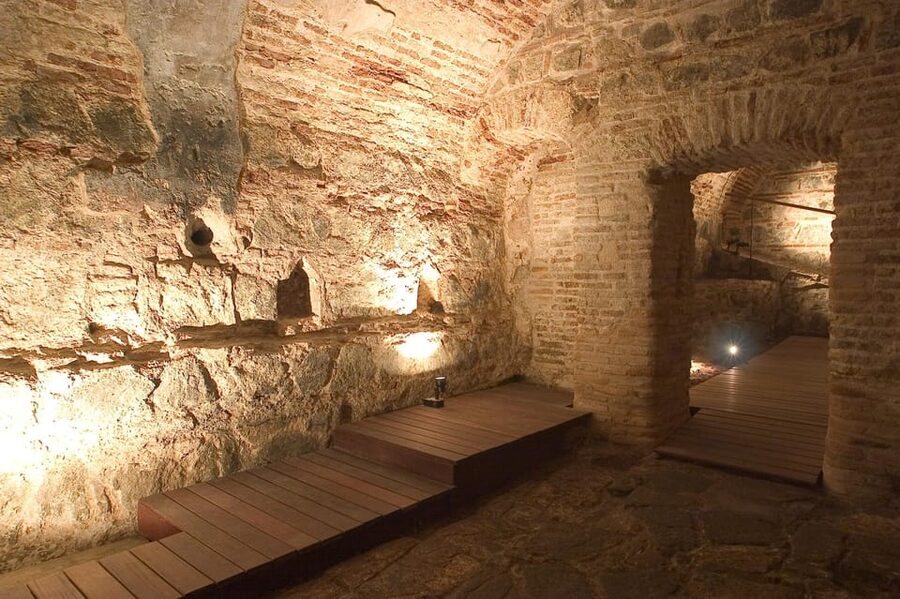
Next, you descend to the Baños árabes del Cenizal, the Arab baths associated with Toledo during its Muslim period, when the city was known as Tulaytula. This is one of the most distinctive parts of the route because a bathhouse reveals several sides of life at once.
The guide discusses hygiene, religious washing, and social activity. Those subjects are closely linked in a hammam. Washing could be practical, spiritual, and social, rather than a private task performed only at home. The room becomes a way to understand how people organized their day and how religious practice shaped ordinary habits.
The site dates to the 10th century. That gives you a direct connection to Muslim Toledo, but the useful point is not simply its age. The bathhouse helps explain the city as a lived place, with routines and shared facilities. It also makes the Three Cultures theme more concrete. You are not just hearing that different communities shaped Toledo. You are seeing the setting for one community’s daily customs.
You receive about 20 minutes here. Underground rooms can be difficult to read without guidance, especially when architectural remains are partial. The official guide is important because the meaning of the space comes from its layout, use, and historical setting, not from decoration alone.
More Guided Tours in Toledo:
- From Madrid: Guided Day Trip to Toledo by Bus
★ 4.1 · 5,280 reviews - Madrid: Toledo & Segovia Full Day Guided Tour with Alcázar
★ 4.6 · 4,394 reviews - From Madrid: Toledo Guided Day Trip
★ 4.3 · 3,501 reviews - Guided Walking Tour of Immortal Toledo
★ 5.0 · 1,116 reviews
The Pozo del Salvador and Toledo’s water problem
At Plaza del Salvador, the tour turns from bathing and belief to a basic question: how did people get drinking water in a city built high on a rocky site?
The stop centers on the Pozo del Salvador. The guide explains the difference between a well and a cistern, two terms that are easy to confuse but represent different ways of collecting and storing water. You also learn how Toledo dealt with shortages during dry periods.
I find this stop valuable because it adds practical sense to the city’s geography. Historic Toledo can look like a maze of steep lanes and stone buildings, but people still needed reliable water every day. The water system shows the planning required to support life on the hill.
This is also a useful contrast with the grander parts of Toledo. A cathedral may show power and wealth, but a well or cistern reveals the infrastructure that allowed a community to function. The 20-minute visit should give you the main distinction and the local context without turning the tour into an engineering lesson.
The stop is in or near the historic street network, so the walk between sites matters. Anyone with mobility concerns should take the warning seriously. The activity is not suitable for wheelchair users or people with mobility impairments, and the underground setting may involve access that is not easy for everyone.
The Casa del Judío and a 14th-century miqvé
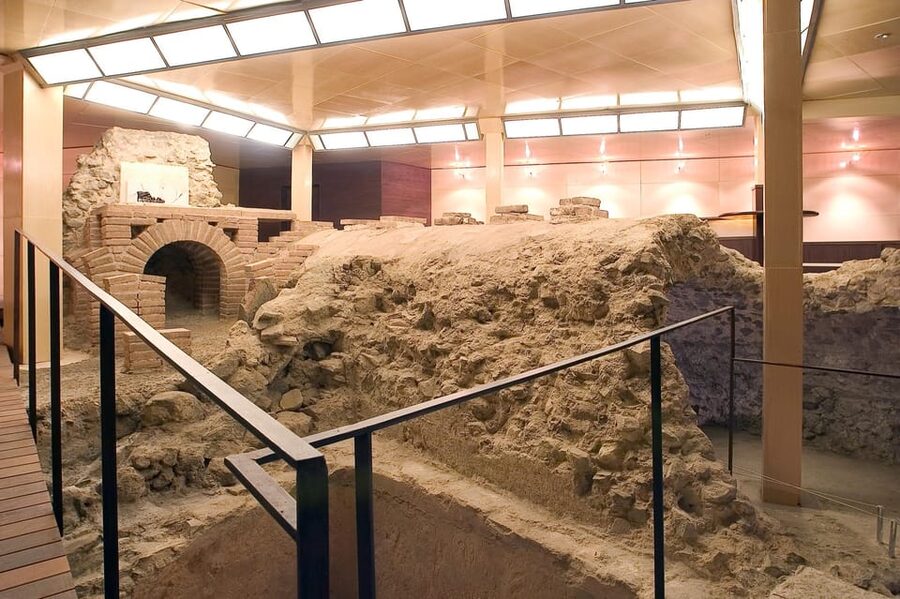
The fourth underground visit takes you into Toledo’s Jewish quarter and the Casa del Judío, home to a miqvé dating from the 14th century. A miqvé is a Jewish ritual bath, and this site offers one of the clearest links between architecture and religious practice on the tour.
The guide brings together legend and documented history here. That combination can be appealing, but it also means you should listen carefully to the distinction between what is known and what belongs to local tradition. The space is presented as a way to understand the Jewish community’s life in medieval Toledo.
This stop broadens the tour beyond public buildings and city infrastructure. The Arab baths concern communal washing and Muslim custom, while the miqvé has a specific role in Jewish religious life. Seeing both on the same route helps you compare how water could carry practical, social, and sacred meaning in different communities.
The miqvé is not just another old chamber. Its importance comes from the practice connected with it. You get a more personal sense of the Jewish quarter, one based on community life rather than only on surviving walls or famous religious buildings.
Again, allow roughly 20 minutes. The site may appeal most to people who want social and religious context rather than a quick list of architectural facts. If you only want Toledo’s largest monuments, this stop may feel modest. If you want to understand how residents practiced their faith, it is one of the stronger parts of the walk.
The Roman baths of ancient Toletum
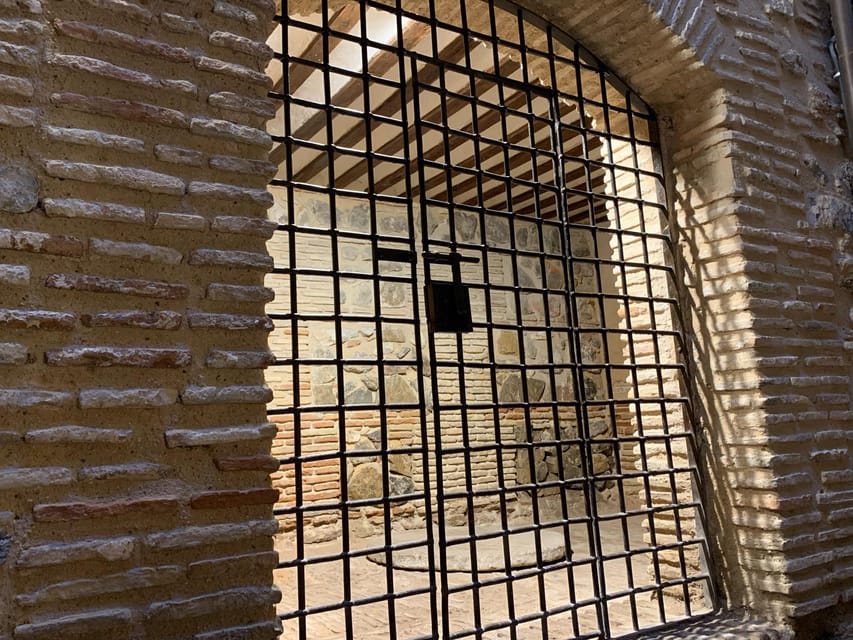
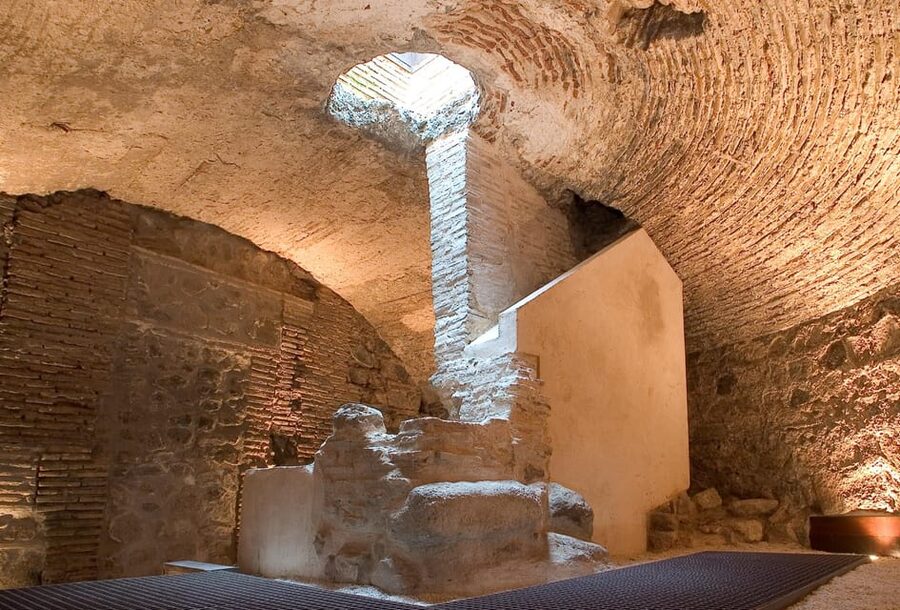
The final underground stop is the Roman baths of Toletum, presented as one of the largest bath complexes in Hispania. This gives the tour a Roman ending and shows that Toledo’s use of underground and partially buried spaces reaches far back before the medieval period.
The baths help you picture Roman public life. The point is not only that Roman builders created large structures. Bathhouses were tied to cleanliness, leisure, social contact, and civic identity. After seeing the Arab baths earlier, you can compare two different periods that both valued bathing but placed it within different religious and cultural settings.
This final stop also gives the tour a broad chronological sweep. You begin with medieval dungeons, move through Muslim and Jewish spaces, and finish in Roman Toledo. The route does not attempt to cover every period of the city, but it gives you several strong windows into the past.
The tour finishes at Plaza Amador de los Ríos. The supplied meeting instructions also say the activity ends back at the meeting point, so it is wise to confirm the exact end arrangement when you book. In practical terms, the published route places the final stop at Plaza Amador de los Ríos.
What the $15 price really covers
At $15 per person, this is a good-value tour for anyone interested in archaeology and local history. You receive an accredited official guide and entrance to five underground sites. Even if each stop is small, five separate admissions plus two hours of interpretation would be difficult to match independently at this price.
The value is strongest if you already plan to spend time in central Toledo. The tour does not require transport between sites, and the stops fit into a compact walking visit through the old city. You are paying for access and explanation, not luxury, a meal, or a long excursion outside Toledo.
The price also makes this a low-risk addition to a sightseeing day. If you have already seen the major monuments, the underground route gives you a different angle. If you are visiting Toledo for only a short time, you need to weigh it against the city’s better-known sights. Two hours below street level means two hours you will not spend inside the cathedral, synagogue, or Alcázar.
Free cancellation is available up to 24 hours before the tour for a full refund, and you can reserve now and pay later. Those terms help if your Toledo plans are still shifting.
Who will enjoy this walk most
I would choose this tour if you like smaller archaeological spaces, local stories, and the practical side of history. It suits people who want to know how residents lived, worshipped, bathed, gathered water, and were punished.
It is also a good choice if you have already visited Toledo’s headline attractions. The underground sites add material that you are unlikely to get from simply walking the main lanes.
Spanish speakers will get the fullest experience because the live guide speaks Spanish. The tour can still work for someone with limited Spanish, especially if the guide is Monica and her attentive style helps bridge the gap, but you should not expect an English presentation or audio translation.
I would not choose it for a wheelchair user or anyone who has trouble with underground access and city walking. Audio recording is not allowed, so plan to listen and take written notes if needed.
Should you book Underground Toledo?
Book it if you want a compact, inexpensive look at the city’s less obvious past. The combination of Roman baths, Arab baths, a Jewish miqvé, a cistern, and medieval dungeons is unusually varied, and the guide gives those spaces a useful human scale.
Skip it if you need English guiding, step-free access, or a relaxed route with little walking. For everyone else, $15 is a fair price for five entrances and two hours of focused interpretation. Bring comfortable shoes, meet the green umbrella in Plaza de Zocodover, and expect Toledo to make more sense once you have seen what lies below its streets.
FAQ
How long does the Underground Toledo tour last?
The tour lasts two hours. Starting times vary, so check availability when booking.
How much does the tour cost?
The listed price is $15 per person.
What language is the tour conducted in?
The live guided tour is conducted in Spanish.
Where does the tour begin?
It begins in the center of Plaza de Zocodover. Look for the guide with a green umbrella.
Which underground sites are included?
The route includes the Holy Brotherhood dungeons at Posada de la Hermandad, the Cenizal Arab baths, the Pozo del Salvador, the Jewish miqvé at Casa del Judío, and the Roman baths of Toletum.
Are entrance fees included?
Yes. The activity includes entrance to five underground sites and a guided visit with an accredited official tour guide.
Where does the tour finish?
The listed route finishes at Plaza Amador de los Ríos. The meeting instructions also state that the activity ends back at the meeting point, so confirm the exact arrangement when booking.
Is the tour suitable for wheelchair users?
No. The activity is not suitable for wheelchair users or people with mobility impairments.
Can I record the guide’s explanations?
No. Audio recording is not allowed.
Can I cancel for a refund?
Yes. You can cancel up to 24 hours in advance for a full refund. You can also reserve now and pay later.
Just added around Toledo
- Hot Air Balloon over Toledo with optional transfers from Madrid★ 4.5 · 23 reviews
- Visit to the Toledo Underground★ 4.5 · 45 reviews
- Underground Visit★ 5.0 · 35 reviews
- Private Jewish Walking Tour in Toledo★ 5.0 · 95 reviews
- Toledo Underground Tour Visit Thermae and Private Basements★ 5.0 · 50 reviews
- Toledo, City of the Three Cultures★ 4.5 · 11 reviews
- Toledo Historical Small Group Tour with Cathedral & Monuments★ 5.0 · 49 reviews
- Toledo Templars Evening Walking Tour★ 5.0 · 24 reviews
Toledo Tours, compared.
Toledo Tour from Madrid: Cathedral, Synagogue & St. Tome’s Church
Read our review →
Toledo Half or Full Day Tour with Optional Lunch from Madrid
Read our review →
Toledo & Segovia Full Day Guided Tour with Alcázar
Read our review →

Segovia and Toledo Day Tour from Madrid with Optional Alcazar
Read our review →
Browse the lists this tour appears in