
Reviewed · MADRID OLD TOWN TOURS
Madrid Historic with an architect : Arabs, Austrias and Bourbons
Madrid’s old center reads like a city built in layers. On this private walk, architect Emilio links the Arab foundations, Habsburg plazas, and Bourbon monuments through buildings you might otherwise pass without a second look. Plans and historic photographs help show how Madrid changed over 12 centuries.
I like the personal format and the range of stops, from the oldest surviving church to the steel-framed San Miguel Market. I also like that the walk explains politics and city planning alongside architectural style. The main consideration is that it is history-heavy: if you expect a technical architecture lecture at every stop, the storytelling may feel broader than the title suggests.
Key points at a glance
- An architect as your guide: Emilio explains buildings through design, history, politics, and urban growth.
- Twelve central Madrid stops: The route covers the Royal Palace, Arab Wall, Plaza Mayor, Puerta del Sol, churches, markets, and historic squares.
- Private format: Only your group takes part, allowing room for questions and a flexible pace.
- Historic images and plans: Visual aids help you compare Madrid’s past with the streets you see today.
- No palace interior visit: You examine every facade, but the Royal Palace admission is not part of this walk.
- A long city stroll: Plan for three to three and a half hours, with comfortable walking shoes and weather protection.
Madrid’s story begins at Teatro Real
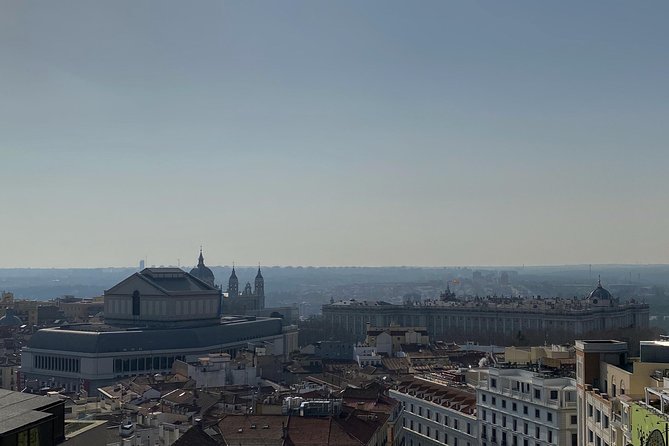
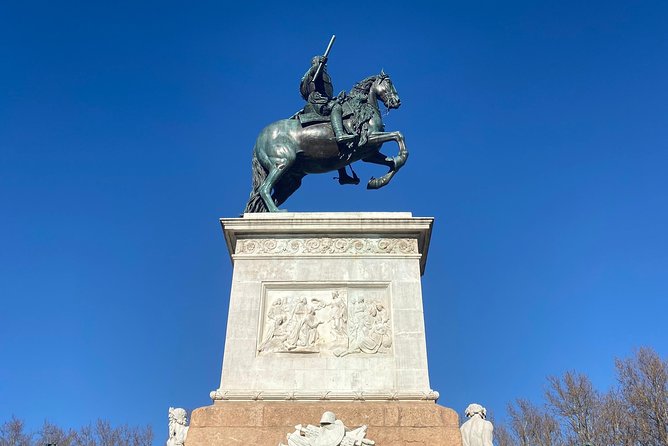
The walk starts at Plaza de Isabel II, beside Teatro Real. The opera house is more than a grand facade for a quick photograph. Here, Emilio sets up the story of Madrid as a royal capital and explains the building’s place in the city’s cultural life.
The stop lasts about 10 minutes, so expect an introduction rather than a full architectural study. Admission is free, and you remain outside while looking at the building and discussing its history.
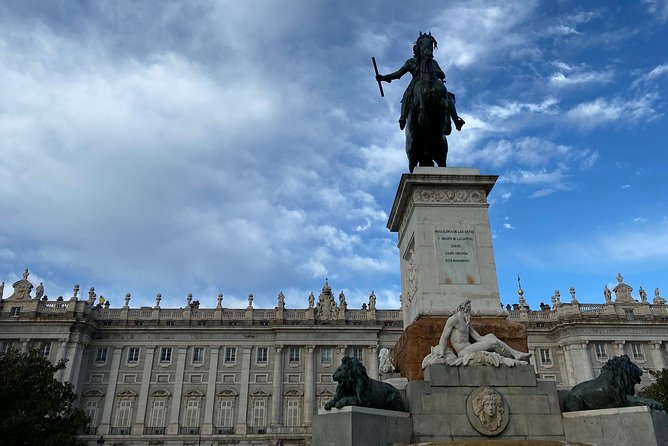
From here, you move into Plaza de Oriente, a square shaped by royal planning and changing ideas about open urban space. The focus reaches back to the Arab period and follows the square’s development to the present day. This is one of the useful features of the walk: you are not simply told what a building is. You are shown how Madrid’s rulers changed the spaces around it.
More Madrid Old Town Tours:
- Madrid Essential: Historic Center, Plaza Mayor & Royal Palace
★ 5.0 · 6,416 reviews - Madrid Old Town & Royal Palace Walking Tour Skip the Line Ticket
★ 4.5 · 1,829 reviews - Madrid Historic Centre Food Tour with Authentic Tapas & Wines
★ 5.0 · 814 reviews
Reading the Royal Palace from the outside
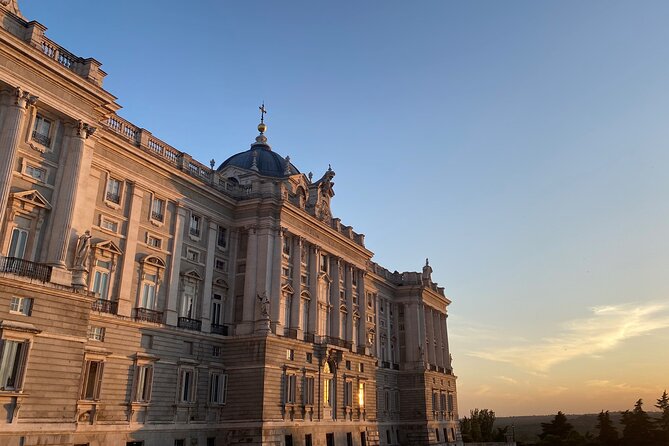
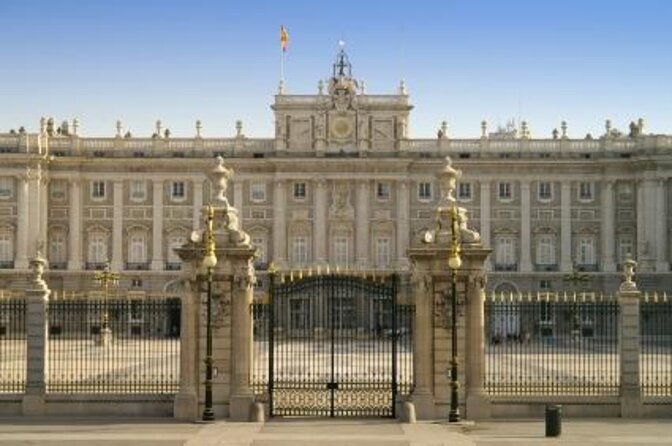
The Royal Palace is the visual center of the early part of the route. You spend about 10 minutes examining its facades and learning about the kings and architects involved in the project.
The palace interior is not included. That matters if you want to see royal rooms, paintings, and furnishings. You will need a separate palace visit for that. On the other hand, skipping the interior keeps this experience focused on the building’s exterior, its scale, and its role in Madrid’s urban plan.
The guide uses the palace to explain changing architectural tastes and royal ambition. For you, the value is not just identifying the facade. You get a clearer sense of how a major royal building shaped the streets and open spaces around it.
Small squares with large historical clues
At Plaza de Ramales, the story becomes more intimate. You see the remains of the Church of San Juan, where the painter Velázquez was buried, along with the Church of Santiago. The ruins do not offer a grand monument to enter, but they show how much of Madrid’s earlier city has disappeared or been rebuilt.
The nearby Real Iglesia Parroquial de Santiago y San Juan Bautista receives a shorter stop of about five minutes. The church honors the apostle Santiago and adds a religious thread to the route. It is a brief look, so do not expect a full interior tour or extended art commentary.
At the Church of St. Nicholas of the Servitas, the scale shifts again. This is described as Madrid’s oldest church, with a Mudejar tower marked by horseshoe arches. For anyone interested in the city’s early architecture, this is one of the most distinctive stops.
The tower connects Madrid to its medieval Islamic and Christian past. The horseshoe arches are a visual clue that makes the period easier to understand than a date on a timeline. Because the visit lasts only about five minutes, listen closely and ask questions while you are there.
La Almudena and the Arab Wall
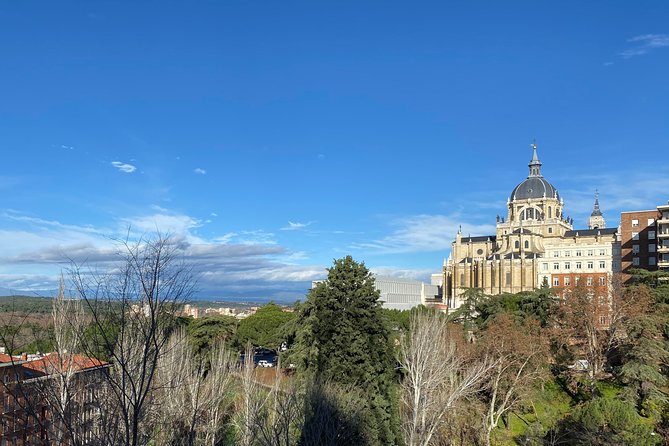
The route then reaches the area around the Cathedral of La Almudena. From a viewpoint, Emilio explains the cathedral’s history rather than taking you through a full cathedral visit. The stop is about five minutes, so treat it as a concise explanation of the building and its place in Madrid’s development.
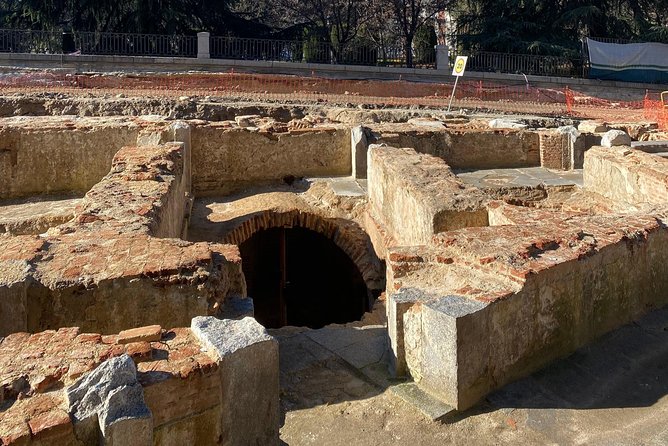
The Arab Wall offers a sharper connection to the city’s earliest known urban beginnings. These are the remaining sections of the ninth-century wall, described as the only rests of Madrid’s old Arab defenses. Here, the city feels less like a royal capital and more like a settlement that grew from a fortified Islamic foundation.
This is where the plans and old photographs become especially useful. The surviving wall is not large, and it can be easy to miss if you do not know what you are looking at. A guide who explains the former shape of the city helps you picture Madrid before its palaces, broad squares, and later avenues.
More History Tours in Madrid:
- Madrid Historical Tour with Local Guide in Eco Tuk Tuk Private
★ 5.0 · 876 reviews - Madrid Historical Walking Tour
★ 5.0 · 721 reviews - Madrid in a Day Tour:Royal Palace, Historic Center & Prado Museum
★ 5.0 · 628 reviews - Madrid Local’s Tapas Tour Dinner with a side of History
★ 5.0 · 530 reviews
Plaza de la Villa and the old city government
Plaza de la Villa brings together several historic buildings around one compact square. You see the old City Hall, Casa de Cisneros, and Casa de los Lujanes.
The appeal here is architectural variety in a small space. Instead of walking past separate buildings without context, you can compare their forms and learn how the square served civic and residential purposes over time. Emilio’s approach links each facade to Madrid’s political and social growth.
This is also a good point to ask questions. The private format means you are not trying to speak over a large group, and the guide can spend more or less time on a subject depending on your interests. The advertised duration is approximate, so the pace may vary.
San Miguel Market and a practical pause
Mercado San Miguel provides a welcome change from churches and royal buildings. Its iron structure makes it Madrid’s only market of this type, and the stop gives you a chance to buy a drink or tapas.
The planned stop is about 10 minutes. That is enough for a quick look or a small purchase, but it is not a dedicated food tour. Food and drinks are not listed as included, so budget separately if you want to eat.
The market can also serve as a natural pause during a three-hour walk. One account describes stopping for coffee and conversation midway through the tour, and the guide’s willingness to pause appears to be part of the experience. Still, do not assume a long café break. If you want one, ask Emilio during the walk.
Plaza Mayor and Madrid’s public life
Plaza Mayor is the route’s grand public stage. For about 10 minutes, you look at the square as Madrid’s social and commercial center for roughly four centuries and as an example of Castilian plaza design.
The square is easy to treat as a photo stop. The better approach is to notice its role in the city. Its enclosed form creates a strong sense of order, while the arcades and surrounding buildings show how commerce, ceremony, and daily life shared one urban room.
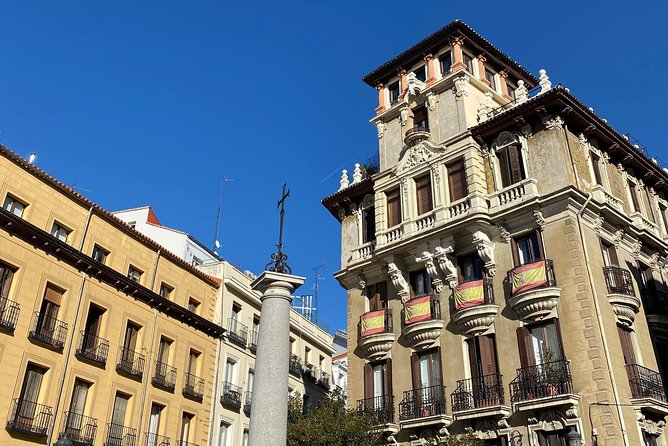
The walk then includes Puerta del Sol and Kilometer 0. Sol is a fitting final marker because it connects Madrid’s historic core with the wider road network of Spain. The stop is brief, about five minutes, but it gives you a clear point from which to understand the city’s central geography.
The meeting information lists the start at Plaza de Isabel II and the end at Plaza Mayor, while the route also includes Puerta del Sol as its final stop. Since the published details contain both locations, confirm the precise ending point when booking or meeting your guide.
What makes the private guide format useful
A private tour changes the feel of a city walk. You are not tied to the interests of a large crowd, and only your group participates. That makes it easier to ask why one church has Mudejar details, how a square changed, or why a royal building sits where it does.
The experience is led by a local architect, and Emilio is repeatedly identified as the guide. His role is not limited to naming styles. He explains historical, political, and social forces behind changes in Madrid. That broader approach is important because architecture rarely makes sense without the people and decisions that shaped it.
The supplied visual material, including plans and historical photographs, adds real value. You can compare the current street plan with earlier versions of the city rather than relying only on spoken description.
The tour has a 4.9 rating from 21 reviews, with 95 percent recommending it. The strongest praise centers on Emilio’s command of Madrid’s history and architecture, his humor, his patience, and his ability to connect the modern city with its past. One account says the guide covered more in several hours than the person expected to learn in a week. That is praise for depth, but it also signals the likely pace: this is not a casual stroll with occasional facts.
The main drawback: architecture or history?
The title places architecture first, but the actual experience combines architecture with history, urban development, politics, and sociology. That combination will suit you if you want to understand why Madrid looks the way it does.
It may disappoint you if you want a technical study of construction methods, materials, floor plans, or detailed stylistic comparison at every stop. One person expected more architecture and found the history emphasis stronger. That is a fair point to consider before booking.
The itinerary’s short stop times also limit how much detail can fit into each location. Some stops last only five minutes. The reward is a wide sweep across the city, but the tradeoff is less time at each building.
Price, timing, and who gets good value
At $65.89 per person, the value depends on your group size and your interest in guided interpretation. Because this is a private activity, the price buys personal attention rather than a standard large-group route. Group discounts are available, which may make the cost more appealing if you are traveling with family or friends.
You are paying for three to three and a half hours with an architect, not for admission to major interiors. The Royal Palace ticket is not included, and the listed stops otherwise have free admission. If you want palace rooms or a longer visit inside La Almudena, plan those separately.
I would choose this early in a Madrid visit if you want a framework for the historic center. Afterward, later visits to the palace, churches, or museums may make more sense because you will have a clearer picture of how the city developed.
The walk is offered in English. It begins near public transportation, and most people can participate. Service animals are allowed. Since the tour requires good weather, bring suitable clothing and footwear, especially for a cooler or rainy day. The guide continued one walk despite rain, but poor weather can lead to a rescheduled experience or refund.
Free cancellation is available up to 24 hours before the start time. Cancellations or changes made inside that window are not refunded or accepted. Confirmation is normally sent at booking, though a reservation made within one day of the start may require availability confirmation.
Should you book Madrid Historic with an Architect?
Book it if you enjoy city history told through buildings and want a private guide who can connect Madrid’s Arab, Habsburg, and Bourbon periods. It is especially useful for first-time visitors who want to understand the old center before exploring it on their own.
Choose a different format if your priority is entering monuments, studying interiors, or sampling food. This route stays mostly outside, the palace interior is excluded, and the history can take as much space as the architecture.
For the right audience, the strongest reason to book is the connection between places. The Arab Wall, Mudejar tower, royal palace, Plaza Mayor, and Kilometer 0 are not isolated sights here. They become parts of one long city story.
FAQ
How long does the tour last?
The tour lasts approximately three to three and a half hours.
Where does the tour start?
It starts at Plaza de Isabel II, 4, in Madrid’s Centro district.
Where does the tour end?
The meeting details list Plaza Mayor as the end point, while the route also includes Puerta del Sol as its final stop. Confirm the exact ending point when booking.
Is the Royal Palace interior included?
No. You examine the palace facades and learn about its architects and kings, but interior admission is not included.
Is this a private tour?
Yes. Only your group participates.
Is the tour offered in English?
Yes. English is the listed tour language.
Are food and drinks included?
No. San Miguel Market is a stop where you can buy tapas or a drink, but these purchases are not included.
What happens if the weather is poor?
The tour requires good weather. If it is canceled because of poor weather, you will be offered another date or a full refund.
Just added around Madrid
- From Madrid: Parque Warner Beach Water Park & Transport★ 3.9 · 14 reviews
- Madrid Wine Tasting, Flamenco Class and Pub Crawl★ 4.5 · 6 reviews
- Visit the National Archaeological Museum in Madrid★ 4.4 · 6 reviews
- Virtual Reality Experience Fun And Tickets & Imageen★ 5.0 · 12 reviews
- Visit to the Prado Museum★ 4.9 · 6 reviews
- Tuk Tuk Tour with Wine Test in Madrid★ 3.8 · 6 reviews
- Tuktuk historical tour of Madrid 1 Hr in a fun and original way★ 3.7 · 3 reviews
- Prado Museum VIP tour with an art Expert, tickets included★ 5.0 · 11 reviews
Madrid Old Town Tours, compared.
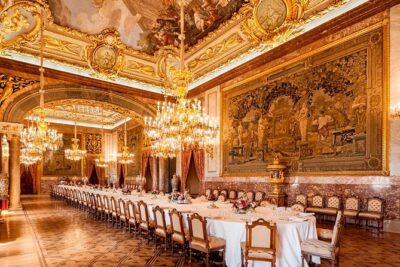
Madrid Old Town & Royal Palace Walking Tour Skip the Line Ticket
Read our review →
Madrid Historic Centre Food Tour with Authentic Tapas & Wines
Read our review →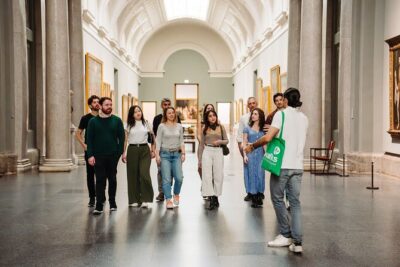
Madrid in a Day Tour:Royal Palace, Historic Center & Prado Museum
Read our review →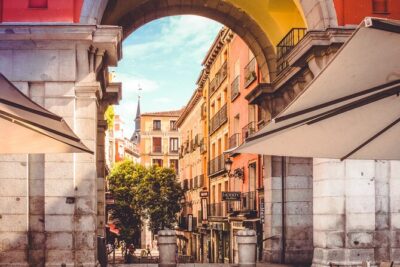
Guided Tour of Madrid of the Austrias and the Historic Center
Read our review →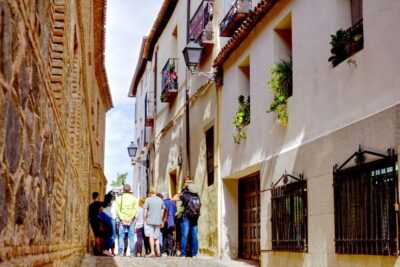
Segway Private Tour in the Historic Center of Madrid
Read our review →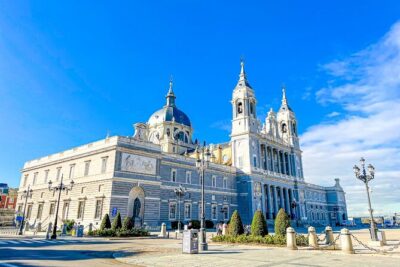
Madrid Historical Centre & Old Town Walking Tour in French
Read our review →Browse the lists this tour appears in