
Reviewed · TOLEDO TOURS
Escorial Monastery and Toledo Afternoon Tour
The most striking feature of this day trip is its reach. From one Madrid departure, you visit El Escorial, the Valley of the Fallen, and Toledo, three places tied to Spain’s monarchy, civil war, faith, and art. The morning feels monumental and formal. The afternoon turns to steep lanes, old churches, and El Greco.
I like the chance to see the Royal Monastery’s basilica, royal tombs, palace rooms, and paintings without arranging separate transport. I also like the contrast between the severe granite complex outside Madrid and Toledo’s intimate medieval streets. The trade-off is plain: 10 and a half hours is a lot, and Toledo gets only part of an afternoon.
Key points to know before booking
- Three major sights in one day: El Escorial, the Valley of the Fallen, and historic Toledo are covered by coach and guided visits.
- The morning has the strongest structure: Admission is included at El Escorial and the Valley of the Fallen Basilica.
- Toledo is a walking tour: Expect cobbles, slopes, stairs, and a quick pace through the old quarter.
- English is offered, but commentary may be bilingual: The quality of English delivery can vary by guide and group.
- Lunch is optional: The paid lunch upgrade is convenient, but several departures leave little time to eat slowly.
- Timed entry matters: Meet at Julià Travel’s office at C. de San Nicolás 15 at 8:30 a.m., and arrive early.
Why combine El Escorial and Toledo?
This excursion is built for you if your Madrid visit is short and you want a broad sweep of Spanish history. El Escorial presents royal power in disciplined Renaissance form. Toledo then supplies a very different experience, with Christian, Jewish, and Islamic influences compressed into a hilltop city of narrow lanes.
The combination is valuable because the sites do not feel alike. You are not spending ten hours looking at similar palaces or churches. Instead, you move from a royal monastery and dynastic burial place to a politically charged civil-war monument, then into one of Spain’s most atmospheric old cities.
The cost is $128.91 per person. That is not bargain-basement pricing, but it includes round-trip coach transport, admission to El Escorial, entry to the Valley of the Fallen and its Basilica, a local guide, and an individual audio system. If you visited both areas independently, you would also have to coordinate regional transport, timed admissions, and the awkward return to Madrid between destinations.
Still, value depends on your style. I would pay for this tour to reduce planning and cover a lot of ground. I would not choose it if you want long museum visits, leisurely meals, or time to wander Toledo without watching the clock.
More El Escorial Day Trips:
- Escorial Monastery and the Valley of the Fallen Tour from Madrid
★ 5.0 · 2,494 reviews - Escorial Monastery and the Valley of the Fallen from Madrid
★ 4.0 · 1,023 reviews - From Madrid: El Escorial and Valley’s Basilica Half Day Tour
★ 4.4 · 638 reviews
El Escorial, Spain’s royal machine in stone
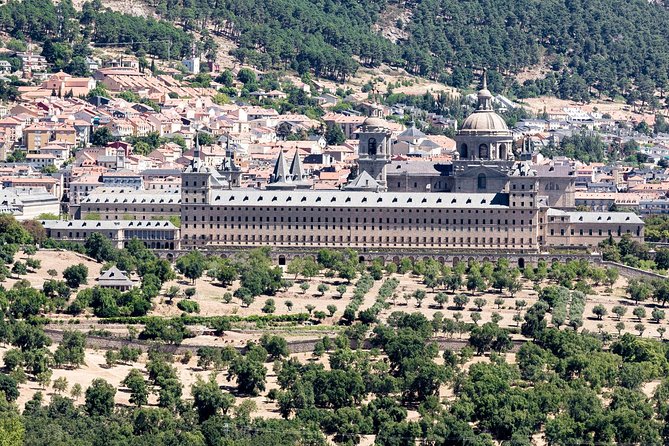
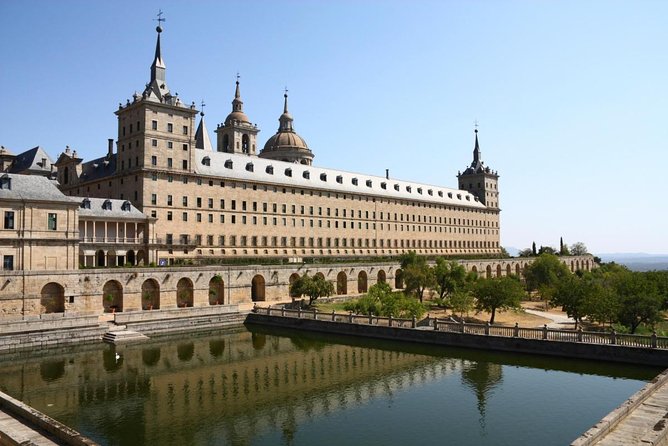
The first stop is the Real Sitio de San Lorenzo de El Escorial, about 2 hours and 30 minutes of the morning program. Philip II commissioned this vast complex to commemorate the Battle of Saint Quentin and to serve as a royal residence, monastery, and mausoleum.
Its power comes from restraint. The building’s Renaissance design relies on symmetry, balance, and severe gray stone rather than decorative excess. For years, it was regarded as the eighth wonder of the world. That old reputation makes more sense once you grasp the scale of the place and its many functions.
Your admission includes the Habsburg Palace, the royal and princes’ mausoleums, the Chapter House, and the Basilica. The Pantheon of Kings is one of the key rooms. It places Spain’s royal burial tradition in a compact, solemn setting, while the palace areas show how royal life fit inside this religious complex.
The Basilica supplies the grandest interior moment. Religious art, architecture, and monarchy are joined here in a way that can feel both impressive and severe. You may also encounter fine original paintings, including a striking Titian in a small chapel, depending on what remains on display.
The guide matters at El Escorial. A clear explanation can help you understand why the monastery was built and how the royal, religious, and military themes connect. Guides named Nuria and Ana have been praised for clear English and useful explanations on different departures, but guide assignments change.
Expect a guided indoor visit rather than free time to inspect every room at your own pace. If you are passionate about art or royal history, the allotted time may feel tight. If you mainly want the essential rooms and a strong overview, it gives you a workable introduction.
The Valley of the Fallen and its difficult story
The Valley of the Fallen is about 9 kilometers from El Escorial and receives roughly 2 hours and 30 minutes in the morning schedule, including transport and the visit. The monument was built from 1940 to 1959 to honor those who died in the Spanish Civil War.
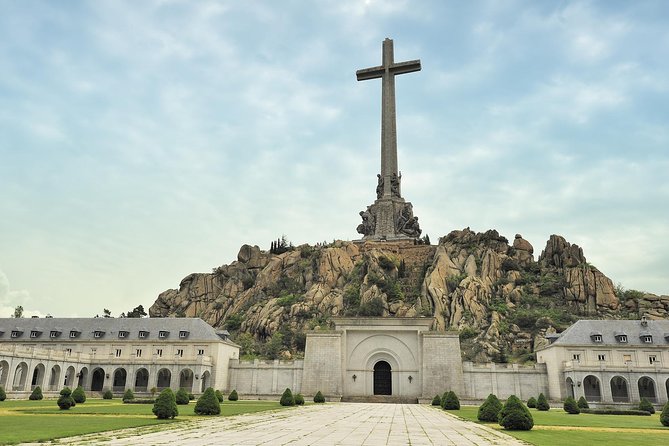
You will see a basilica carved into the mountain at an altitude of 1,350 meters. Above it rises a cross about 150 meters high. The setting is dramatic, with wide views across the mountain area near Madrid. Inside, the scale changes again. The basilica extends into the rock, creating the feeling of a long tunnel cut through the mountain.
This stop deserves more than a quick photo. It is both a religious monument and a piece of Franco-era political history. The meaning is not simple, and the circumstances of its construction deserve careful explanation. The official description focuses on the fallen, but you should be ready for a site linked closely to Francisco Franco and to the memory of the Spanish Civil War.
Guiding inside the Basilica is not allowed, so you will not receive a running explanation once indoors. Your guide can frame the visit outside, but you must take in the interior on your own. That arrangement can be a plus if you prefer quiet time, though it is less useful if you want every symbol explained.
Time management has been a recurring weakness on this part of the day. The scheduled stop looks generous, but driving, organizing the group, and restroom needs can reduce the actual time inside. Bring water and a small snack, particularly if you do not purchase lunch. The morning can feel continuous, with no dependable refreshment break.
The Madrid lunch pause
The standard plan returns to central Madrid between the morning and afternoon excursions. That is the main reason the day feels long. You are not simply moving from El Escorial straight to Toledo. You go back to the city, manage the changeover, and then leave again.
An optional lunch upgrade is available at a traditional restaurant near the tour office. Food quality and portions have varied by departure. Some diners found it good, while others preferred a quick sandwich and more time. The bigger issue is speed. You may have to eat promptly to reach the Toledo departure.
I would choose the lunch upgrade only if you value convenience and do not want to find food in central Madrid during the break. If you want control over what you eat, skip it and use the nearby cafes or shops. Do not count on a long, relaxed meal. The gap between excursions is practical rather than leisurely.
More Toledo Tours:
- Three Cities in One Day: Segovia, Avila and Toledo from Madrid
★ 5.0 · 8,402 reviews - Madrid: Segovia and Toledo Tour, Alcazar, and Cathedral
★ 4.7 · 7,797 reviews - Toledo Tour from Madrid: Cathedral, Synagogue & St. Tome’s Church
★ 5.0 · 6,784 reviews - Toledo Half or Full Day Tour with Optional Lunch from Madrid
★ 4.5 · 5,807 reviews
Toledo on foot, from San Juan de los Reyes to El Greco
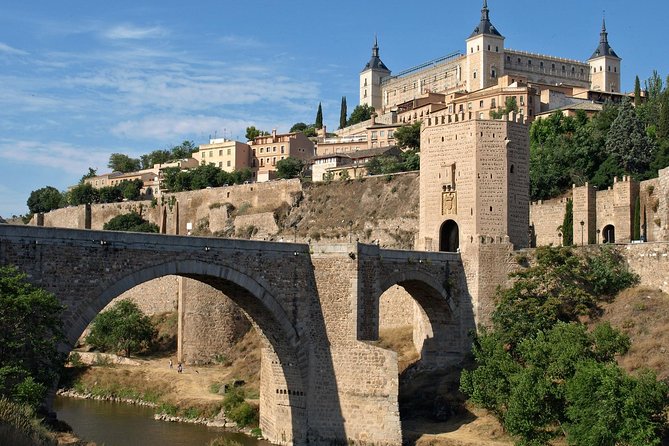
The afternoon gives you about five hours in Toledo, including the journey and guided walking tour. That sounds substantial, but Toledo is larger and more layered than a half-day outline suggests.
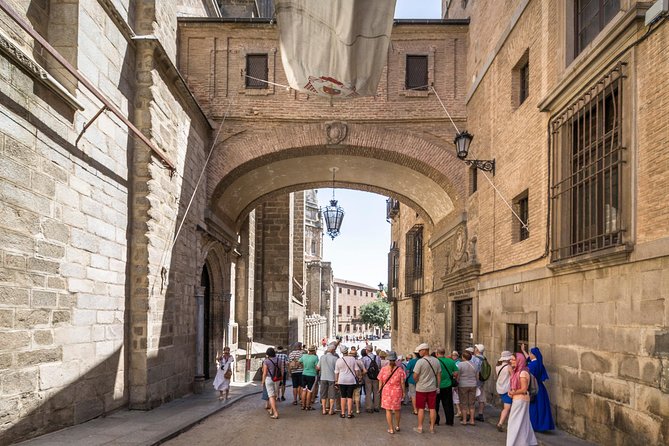
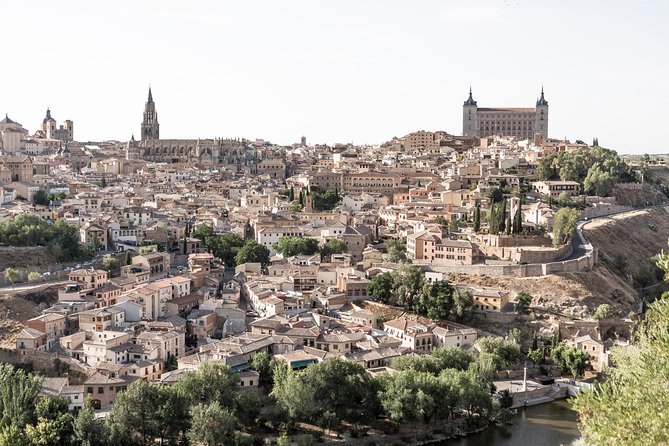
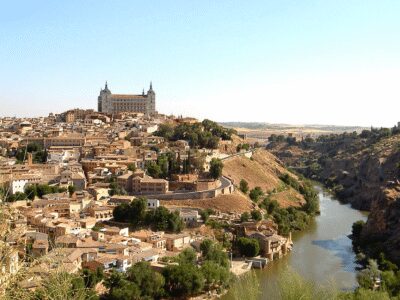
The city was once Spain’s capital and is known for the meeting of Arabic, Jewish, and Christian traditions. That mixture is visible in the streets and buildings, not just in a history lecture. You will walk through narrow, cobbled lanes where the route can turn sharply, rise steeply, or narrow around old stone walls.
The tour includes a visit to the Church of Santo Tomé until March 15, 2026. There you can see El Greco’s The Burial of the Lord of Orgaz, one of the city’s essential works. From March 16, 2026, the included admission changes to Toledo Cathedral instead. Check the date carefully when booking, because this is a meaningful difference.
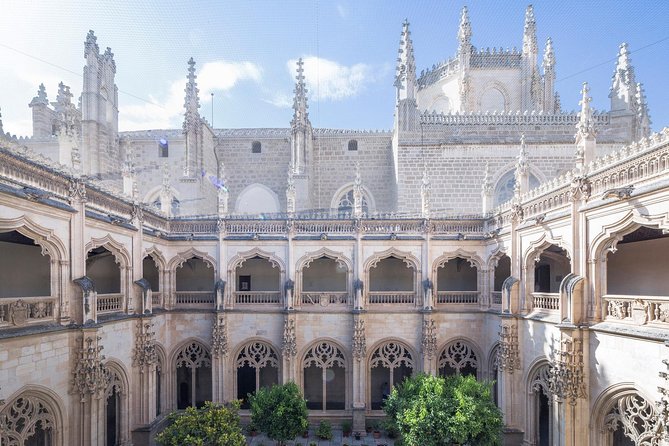
The itinerary also highlights the Monastery of San Juan de los Reyes, a royal building sponsored by Queen Isabella of Castile. Admission to the monastery itself is not included, so you should not assume you will enter. It may be presented from the outside as part of the walking route.
The Cathedral of Toledo is another major sight in the city, but its inclusion depends on the date of your tour. The description also refers to medieval architecture, churches, and El Greco. In practice, this is an orientation to Toledo, not a complete survey of the city’s monuments.
That distinction matters. I would use this afternoon to learn the layout and see one or two major interiors. I would not expect time to visit every church, browse the shops, sit over a long meal, and explore side streets. Toledo deserves a full day if you want to absorb its details.
The pace can be demanding. The old city’s slopes and cobbles are part of its character, but they also make it tiring. Wear shoes with a firm grip and stay aware of the guide’s route. It is easy to lose sight of a group in a maze of lanes, especially when other sightseeing groups are nearby.
Guides have varied sharply here. Manuel has been praised for being helpful, good-humored, and attentive, while Ana has been noted for clear English. Other departures have had guides who walked too quickly, spoke too softly, or offered limited English translation. You are booking an English-offered tour, but it may operate in Spanish and English together, and sometimes in more than two languages.
The bilingual guide question
This is the biggest practical concern. The tour promises guiding in Spanish and English by an official local guide, not an English-only group. If the coach contains many Spanish-speaking participants, the guide may explain points first in Spanish and then in English. That can work well with a patient, clear guide, but it also doubles the commentary and reduces the time available at each stop.
Audio systems are supplied, yet an audio device cannot fix rushed speech, a heavy accent, or poor volume. At Toledo, this matters because the guide is often moving while explaining the streets and buildings. Stand near the guide, check that your audio works, and ask early if you cannot hear.
The morning and afternoon use different guides. That can be an advantage because each person focuses on a smaller portion of the day. It also means the quality and style may change halfway through. Names such as Nuria, Ana, and Manuel have been associated with especially strong departures, but you cannot select a particular guide.
Coach travel, meeting point, and pace
The meeting point is Julià Travel Madrid at C. de San Nicolás 15, in central Madrid. The listed start time is 8:30 a.m. The tour ends at Plaza de Oriente, near the underground bus park on level minus two.
Arrive early. The office can be crowded when several excursions leave at once, and the morning assembly has not always felt obvious. Look for the correct guide and tour sign rather than assuming every staff member is handling the same departure.
The air-conditioned coach is a practical part of the package. The duration includes the round trip to the destinations, so you should count on a full day with substantial road time. A maximum of 25 people is listed, which is more manageable than a huge coach group, but Toledo’s narrow streets can still make the group feel spread out.
This is not a good choice for anyone who has trouble with stairs or extended walking. Accessibility inside the Valley of the Fallen cannot be guaranteed, and the monument contains many stairs. Toledo adds steep cobbled streets and a need to keep up with the walking group.
Who will get the most from this tour?
I would recommend it to a first-time Madrid visitor who wants to see major sights beyond the city without renting a car. It also suits history fans who enjoy moving from royal Spain to Civil War memory and then to medieval religious art in one day.
Families can make good use of it if everyone is comfortable with a long schedule. The coach removes much of the transport worry, and the variety helps prevent the day from feeling repetitive.
I would be cautious if your priority is a calm pace. You may prefer separate excursions, with one full day for Toledo and another for El Escorial. That choice costs more time and may cost more money, but it lets you linger inside the monuments and choose your own lunch.
Book at least a few weeks ahead if your dates are fixed. The experience averages booking about 46 days in advance, which suggests that popular travel periods may fill early. Free cancellation is available up to 24 hours before the start time, but changes or cancellations inside that window are not accepted.
Should you book the Escorial and Toledo day trip?
Book it if you want maximum coverage with minimum planning. El Escorial is the morning highlight, the Valley of the Fallen adds a powerful and complicated modern-history stop, and Toledo delivers medieval streets and El Greco in the afternoon.
Think twice if you need fluent English commentary at every point, dislike bilingual tours, or want unhurried time in Toledo. Before paying, check which Toledo admission applies to your date, decide if the lunch upgrade suits you, and accept that this is two brisk half-day outings joined together.
For a single Madrid day outside the capital, the route is hard to beat. For a deeper visit, split it into separate days.
FAQ
How long does the tour last?
The experience lasts approximately 10 hours and 30 minutes, including transportation to and from the destinations.
Where does the tour begin?
It begins at Julià Travel Madrid, C. de San Nicolás 15, Centro, Madrid. The listed start time is 8:30 a.m.
Where does the tour end?
The tour ends at Plaza de Oriente, near the underground bus park on level minus two.
Is lunch included?
Lunch is available as an optional upgrade. It is not part of the basic inclusions.
Is the tour offered in English?
Yes. The tour is guided in both Spanish and English by an official local guide. The exact balance and clarity of the English commentary can vary by departure.
What Toledo admission is included?
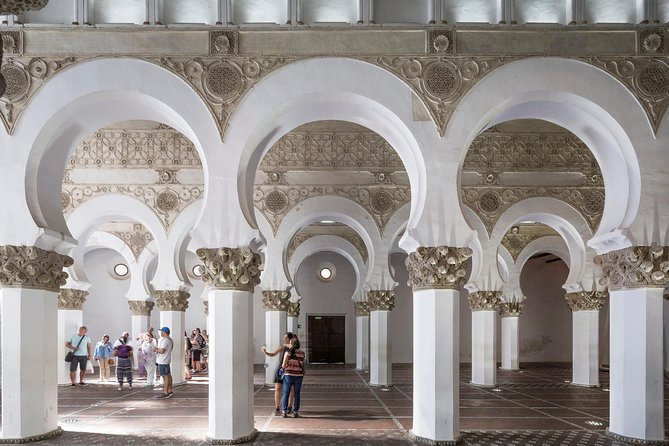
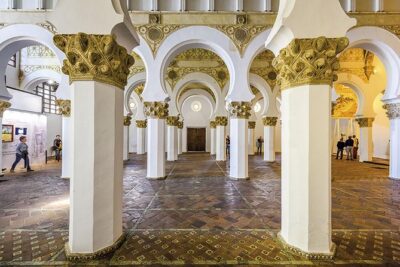
Until March 15, 2026, admission includes the Church of Santo Tomé and the Synagogue of Santa María la Blanca. From March 16, 2026, admission changes to Toledo Cathedral. Admission to the Monastery of San Juan de los Reyes is not included.
Just added around Madrid
- Visit the National Archaeological Museum in Madrid★ 4.4 · 6 reviews
- From Madrid: Parque Warner Beach Water Park & Transport★ 3.9 · 14 reviews
- Madrid Wine Tasting, Flamenco Class and Pub Crawl★ 4.5 · 6 reviews
- Virtual Reality Experience Fun And Tickets & Imageen★ 5.0 · 12 reviews
- Visit to the Prado Museum★ 4.9 · 6 reviews
- Tuk Tuk Tour with Wine Test in Madrid★ 3.8 · 6 reviews
- Tuktuk historical tour of Madrid 1 Hr in a fun and original way★ 3.7 · 3 reviews
- Prado Museum VIP tour with an art Expert, tickets included★ 5.0 · 11 reviews
Toledo Tours, compared.
Toledo Tour from Madrid: Cathedral, Synagogue & St. Tome’s Church
Read our review →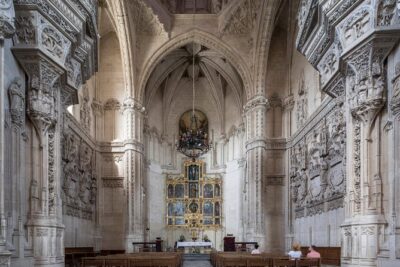
Toledo Half or Full Day Tour with Optional Lunch from Madrid
Read our review →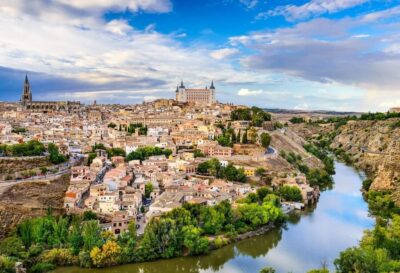
Toledo & Segovia Full Day Guided Tour with Alcázar
Read our review →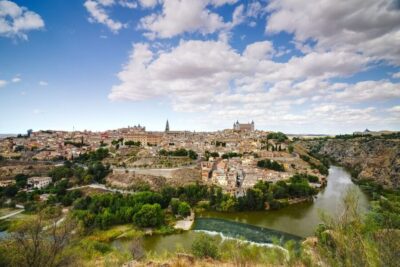
Segovia and Toledo Day Tour from Madrid with Optional Alcazar
Read our review →
Browse the lists this tour appears in