
Reviewed · RETIRO PARK TOURS
Madrid Monumental and Retiro Park : Gran Vía, Cibeles and more
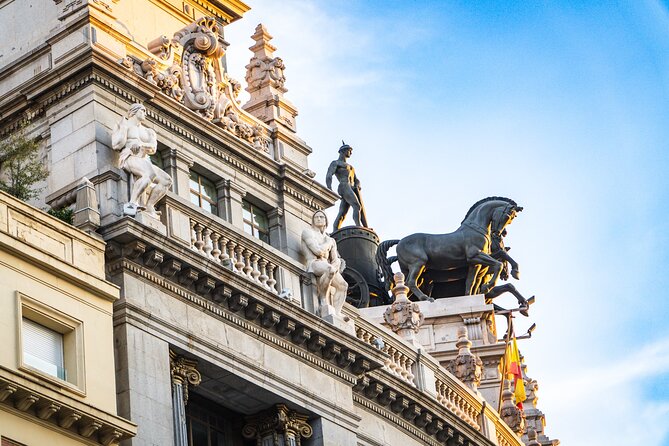
Madrid’s grand center unfolds nicely on this 2.5-hour walk from Puerta del Sol to Retiro Park. You begin at Spain’s symbolic Kilometer 0, pass the lights and theaters of Gran Vía, then move toward Cibeles, the Prado area, and the gardens of El Retiro. I like the clear eastward route and the mix of famous sights with smaller stories, especially the legends around the Bank of Spain and the traditions at Cibeles. The main drawback is simple: you cover a lot of ground, and most stops are exterior views rather than museum visits.
I also like the guide-led storytelling. Stuart is described as funny and a talented photographer, while Carlota, Charlotte, and Paula are praised for making architecture and history easy to follow. The $3.11 group price for up to six people is unusually low, though you should remember that snacks and the guide’s tip are not included.
Key points to know before you book
- A useful cross-town route: The walk links Puerta del Sol, Gran Vía, Cibeles, the Prado area, and Retiro Park without sending you back over the same streets.
- Strong guide element: Stuart, Carlota, Charlotte, and Paula are among the guides associated with the experience, with an emphasis on stories, timelines, anecdotes, and practical recommendations.
- Mostly outdoor sightseeing: Admission is included at the listed stops, but the experience is a guided walk around monuments, fountains, streets, and park sights rather than a museum tour.
- A lively mix of Madrid: You get shopping streets, grand government buildings, football traditions, art institutions, and historic gardens in one outing.
- Good value for a small group: The advertised price covers up to six people, which can make this especially appealing to couples, families, or a group of friends.
- Retiro is the finish: You end near the Crystal Palace and Big Pond, giving you a pleasant place to continue exploring after the guide leaves.
What this Madrid walk is really designed to do
This is a city-orientation tour with a strong monumental focus. It is not built around one palace, museum, or neighborhood. Instead, it connects the central landmarks that define Madrid’s public image, then finishes in its best-known park.
That route matters. Puerta del Sol gives you the city’s political and geographic starting point. Gran Vía shows modern commercial Madrid. Calle de Alcalá and Cibeles bring in grand civic architecture. Paseo del Prado introduces the city’s art institutions. Retiro Park then softens the pace with trees, gardens, water, and open space.
You should expect a steady walk with short explanations at each stop. The stated timing adds up to roughly two and a half hours, though the individual stops range from 15 to 20 minutes. That is enough time for context and photographs, but not enough for long interior visits.
The tour is offered in English and can include up to 25 people. That is still small enough to hear a guide in normal conditions, though it will not feel like a private walk unless your own booking fills the group. With a price of $3.11 per group of up to six, it offers particularly strong value for anyone wanting a first look at Madrid’s core sights.
More Retiro Park Tours:
- Madrid Walking Tour from Puerta del Sol to Retiro Park
★ 5.0 · 2,285 reviews - Madrid: Iconic Retiro Park Segway Tour
★ 4.9 · 848 reviews - Madrid Private Segway tour. Retiro Park – Centro Historico
★ 4.9 · 636 reviews
Puerta del Sol and the meaning of Kilometer 0
The walk begins at Puerta del Sol, one of Madrid’s most energetic squares. This is where you get the basic orientation: the historical origin of the square, the famous Bear and the Strawberry Tree statue, and Kilometer 0, the point used to measure Spain’s radial roads.
These details are more useful than they may first sound. The Bear and Strawberry Tree is a symbol of Madrid, while Kilometer 0 gives you a physical reference for understanding how roads spread from the capital. A good guide can turn what might otherwise be a quick photo stop into a short lesson about the city’s identity.
You will have about 20 minutes here. That is a sensible amount of time for a first visit, especially if you want to take photographs and ask questions. The square can be busy, so stay close to the guide and keep your belongings secure. The tour is designed for most people, but standing in a crowded public square is part of the setting.
Gran Vía, Madrid’s showpiece street
From Sol, you move toward Gran Vía, often described as Madrid’s main roadway. This is the most immediately theatrical part of the route, with broad avenues, tall façades, shops, and historic theaters.
The guide focuses on the stories behind buildings such as the Metropolis Building and Telefónica. That architectural detail gives the walk more depth than simply pointing out attractive façades. You learn how the street developed, why its buildings look so grand, and how it became one of the city’s defining public spaces.
The 20-minute stop is enough to understand the street’s character, but do not expect time for shopping or a theater visit. Gran Vía is best appreciated by looking up, and a guide helps you notice features that are easy to miss when the sidewalks and shop windows compete for your attention.
I especially like this part for first-time visitors because it provides a quick contrast with the older streets near Sol. Madrid is not only royal squares and old churches. Gran Vía shows the capital as a city of entertainment, commerce, and ambitious early twentieth-century architecture.
Calle de Alcalá and the Circle of Fine Arts
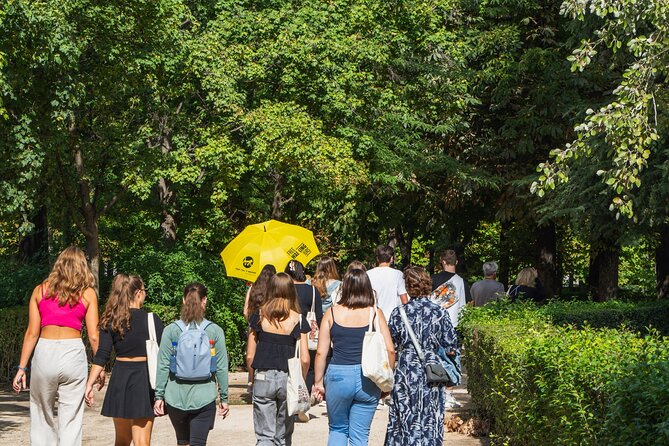
Calle de Alcalá is one of Madrid’s oldest and longest streets. The walk uses it as a bridge between central Madrid and the grand civic area around Cibeles.
Here, the Circle of Fine Arts building becomes an important visual marker. The guide explains the historical role of the street and points out the architectural character of the building. This is the sort of stop where the explanation matters more than the length of the visit. You are not entering for a program or exhibition. You are learning how a major road helped connect different parts of the city over time.
The 20-minute timing works well for a close look at the façades and a little historical context. It also keeps the outing moving. If you like urban design, this may be one of the more rewarding sections because you can see the transition from central commercial Madrid toward its formal boulevards.
More Madrid Tours:
- Madrid: Tour Bernabéu Entry Ticket
★ 4.5 · 21,573 reviews - Madrid: Prado Museum Entry Ticket
★ 4.6 · 17,509 reviews - Madrid: “Emociones” Live Flamenco Performance
★ 4.8 · 12,866 reviews - Madrid: Panoramic Route City Tour
★ 4.1 · 12,259 reviews
The Bank of Spain and its famous legends
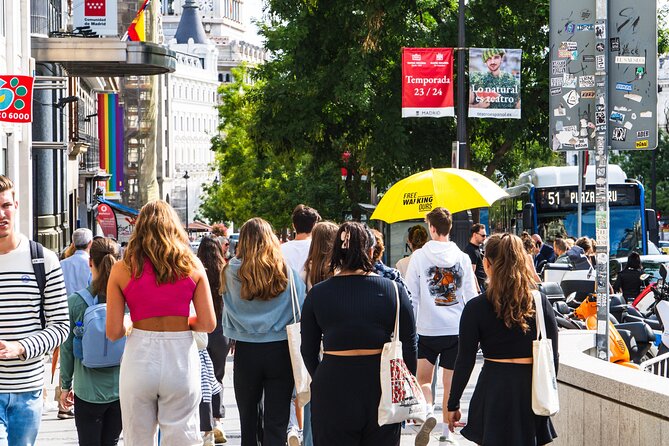
The exterior of the Bank of Spain is one of the tour’s more unusual stops. Rather than treating it as just another grand building, the guide discusses its importance to Spain’s economy, its security arrangements, and the stories surrounding its treasure.
That approach adds a bit of mystery without requiring an interior visit. You get the building’s public face and a sense of why a national bank would need complex protection. The legends give the explanation a lighter touch, which is useful after several architecture-heavy stops.
You spend about 15 minutes here. This is enough for the main story and photographs. Do not expect access inside or a detailed examination of the banking system. The appeal is the combination of imposing architecture, national importance, and urban folklore.
Cibeles, football, and Madrid’s civic center
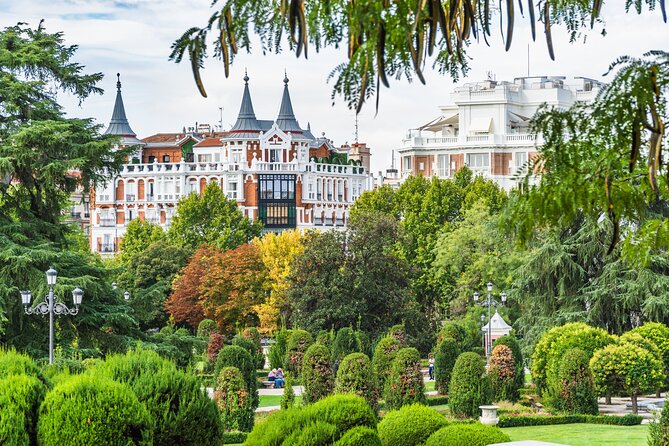
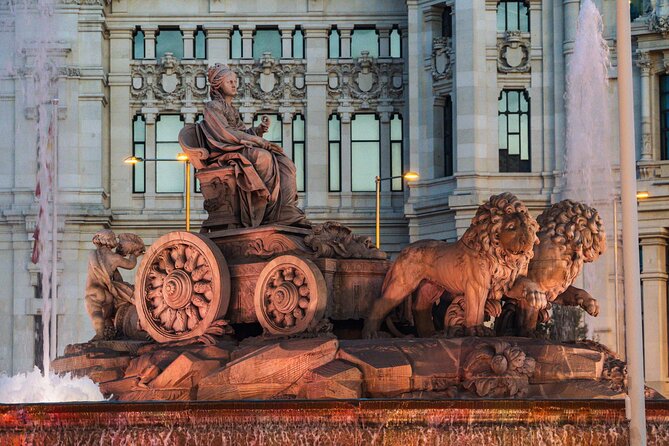
Plaza de Cibeles is one of the essential Madrid photo stops. At its center is the fountain of the goddess Cibeles, surrounded by grand buildings including Madrid’s City Hall and the Palace of Cibeles.
The guide explains why Cibeles has become part of the city’s public celebrations. Football fans use the fountain as a meeting point for major victories, so the site connects classical mythology with modern sporting life. That is a good example of how Madrid’s monuments remain part of everyday civic culture rather than existing only as old decoration.
The stop lasts about 15 minutes. You can photograph the fountain and surrounding buildings, but traffic and the size of the square mean you should listen carefully to find the best viewing angle. The tour gives you the meaning of the site, while a separate visit would allow more time to explore the Palace of Cibeles on your own.
Paseo del Prado and the art corridor
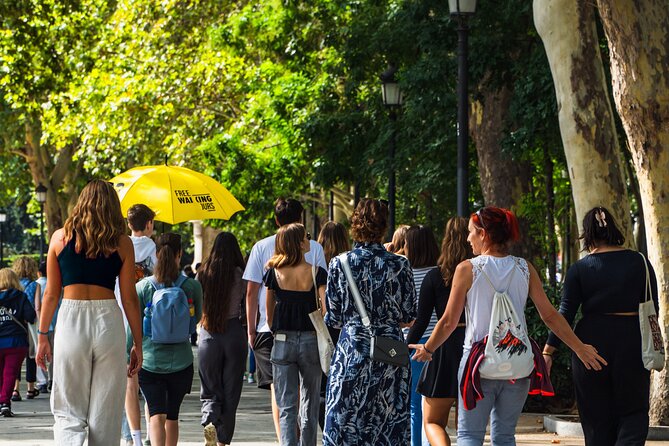
The route continues along Paseo del Prado, the historic avenue often called Madrid’s Art Walk. It is recognized as a World Heritage Site and links several major cultural institutions, gardens, and classical fountains.
The guide connects the avenue with three of Madrid’s important museums. The value here is context. Instead of seeing the museums as separate attractions, you learn how they form part of one cultural district and why this avenue became so important to the city.
The tour does not include a museum visit, so you should not book it expecting to see paintings inside. It is better viewed as preparation for a later museum day. After hearing the guide explain the area, you will have a clearer sense of how to plan your own visit and which buildings deserve more time.
The 15-minute walk along the avenue is fairly brief. If art is your main reason for coming to Madrid, treat this section as an introduction, not a substitute for the museums. If you want a broad city walk, it adds welcome cultural weight without stopping the group for a long indoor session.
Neptune Fountain and the football divide
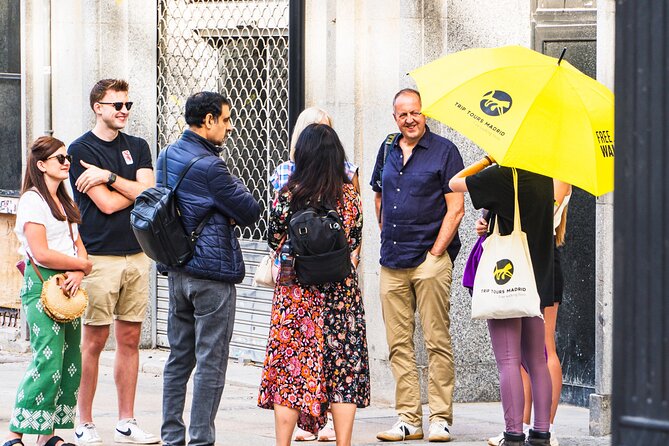
Fuente de Neptuno adds another mythological monument to the route. The fountain depicts Neptune and forms part of the grand sequence along Paseo del Prado.
It also has a very modern role. Atlético Madrid supporters celebrate victories here, while Cibeles is linked with Real Madrid celebrations. That small detail gives you an easy way to understand Madrid’s football culture through its public monuments.
The stop lasts about 15 minutes. It is a quick visit, but the combination of mythology, sports, and civic space makes it memorable. The fountain also helps you see how the monuments along the Prado work together rather than as isolated statues.
The museum exterior and Madrid’s great painters
One stop is devoted to the exterior of one of Madrid’s major museums. The guide discusses the institution’s background and the masterpieces associated with painters such as Velázquez, Goya, and El Bosco.
The available details do not identify the museum by name, so you should think of this as a museum-area introduction rather than a museum admission. The focus is on the building’s place in Madrid’s art story and on the works you may later want to see inside.
This part is valuable if you are planning an art visit but have limited time in the city. A few minutes of orientation can help you recognize the names and choose a sensible route later. It is less satisfying if you hoped to enter during the walk, since the experience remains outdoors.
Retiro Park, Crystal Palace, and the Big Pond
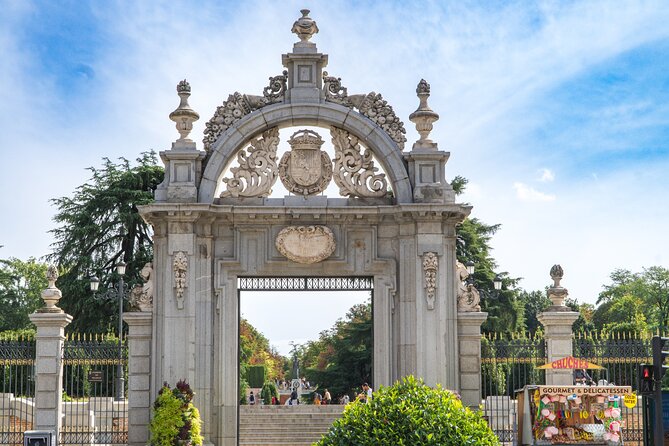
The walk ends in El Retiro, Madrid’s famous green retreat and another World Heritage Site. This is a smart finish. After the traffic, façades, fountains, and city streets, you arrive among historic gardens, water, and open paths.
The guide highlights the Crystal Palace and the Big Pond. These are the park’s signature sights, and both make strong final photo stops. The Crystal Palace has an elegant glass-and-metal appearance, while the pond gives the park a more relaxed public feel.
You have about 20 minutes here, which is enough for an introduction but not enough to explore the entire park. I would plan to stay after the tour if your schedule allows. The end point gives you flexibility: you can continue walking, rest in the gardens, or use the park as a base for your next Madrid activity.
The park also makes the route feel complete. You begin with Kilometer 0, the symbolic center of Spain’s road network, and finish in a place where Madrid residents come to slow down. That change of mood is one of the best features of the experience.
Guides, pace, and the human side of the walk
The guide is the main variable in any walking tour, and the available names here include Stuart, Carlota, Charlotte, and Paula. Stuart is described as funny, friendly, and good at taking photographs. Carlota and Charlotte are associated with detailed explanations, clear storytelling, and a strong grasp of Madrid’s Bourbon-era history. Paula is noted for an expressive style and extra suggestions for food, museums, and activities.
Names may vary by departure, so you should not book on the assumption that one particular guide is guaranteed unless the operator confirms it. Still, the repeated emphasis on storytelling, anecdotes, historical timelines, and practical advice gives you a useful idea of the intended style.
The walk is not presented as a stream of dates and names. The strongest descriptions point to guides who connect the facts and make the route easy to follow. That matters because Madrid’s monumental center can otherwise feel like a series of grand buildings without a clear story.
The tour also has a photography benefit. Stuart is specifically associated with taking good group photos, though you should treat that as a guide-dependent extra rather than a guaranteed service.
Price, group size, and practical planning
At $3.11 per group of up to six, the price is excellent if the rate shown at booking is still available. Even with a tip at the end, the cost remains low for a guided route covering this many central landmarks.
The low price does not mean you should expect private guiding. The maximum group size is 25, and the tour may include people outside your own booking. The benefit is access to a planned route and a professional guide without paying for separate transport between each sight.
You need a mobile ticket, and the tour is offered in English. Public transportation is nearby, and service animals are allowed. Most people can take part, but good walking shoes are sensible because the experience moves through streets, avenues, plazas, and park paths.
Snacks are not included. Bring water and eat before or after the walk, since the schedule is built around sightseeing rather than a meal break. Tips are also separate and are given to the guide at the end.
Bookings are confirmed at the time of purchase. You can cancel for a full refund up to 24 hours before the start time. Changes or cancellations within 24 hours are not accepted for a refund. Bad weather or failure to meet the minimum group size can lead to a new date, another experience, or a full refund.
Who should book this Madrid experience
I would choose this walk if you are visiting Madrid for the first time and want a sensible framework for the city center. It works especially well for people who like architecture, public squares, local legends, football culture, and short historical explanations.
It also suits a small group looking for strong value. The price for up to six makes it attractive for families or friends, provided everyone is comfortable joining a group that may reach 25 people.
You may want something else if your priority is entering museums, spending long periods at each monument, or walking at a very slow pace. This is an overview route. Its strength comes from linking many important places, not from giving you an hour at any single one.
Should you book it?
Book this tour if you want Madrid’s major central sights arranged into one clear, guided story. The route is well chosen, the guide element receives particularly strong praise, and the finish at Retiro Park gives you an easy place to continue your day.
Skip it only if you already know central Madrid well or want a museum-focused experience. For a first orientation, the mix of Sol, Gran Vía, Cibeles, Paseo del Prado, and Retiro is hard to beat at the listed price. Plan for outdoor walking, keep your expectations realistic about interior access, and stay a little longer in Retiro after the official tour ends.
FAQ
How long does the Madrid Monumental and Retiro Park tour last?
The experience lasts approximately 2 hours and 30 minutes.
Where does the tour begin?
It begins at Trip Tours Madrid near Puerta del Sol, in Centro, Madrid.
Where does the tour end?
The tour ends at El Retiro Park in the Retiro district.
Is the tour offered in English?
Yes. The experience is offered in English and uses a mobile ticket.
How many people can join the tour?
The maximum group size is 25 people. The advertised price is for a group of up to six.
Are museum entrances included?
The listed experience focuses on a guided walking tour and exterior sightseeing. It includes information about a major museum and its artworks, but it does not state that museum admission is included.
What happens if the weather is poor?
The experience requires good weather. If it is canceled because of poor weather, you will be offered another date or a full refund.
Just added around Madrid
- From Madrid: Parque Warner Beach Water Park & Transport★ 3.9 · 14 reviews
- Madrid Wine Tasting, Flamenco Class and Pub Crawl★ 4.5 · 6 reviews
- Visit the National Archaeological Museum in Madrid★ 4.4 · 6 reviews
- Virtual Reality Experience Fun And Tickets & Imageen★ 5.0 · 12 reviews
- Visit to the Prado Museum★ 4.9 · 6 reviews
- Tuk Tuk Tour with Wine Test in Madrid★ 3.8 · 6 reviews
- Tuktuk historical tour of Madrid 1 Hr in a fun and original way★ 3.7 · 3 reviews
- Prado Museum VIP tour with an art Expert, tickets included★ 5.0 · 11 reviews
Retiro Park Tours, compared.
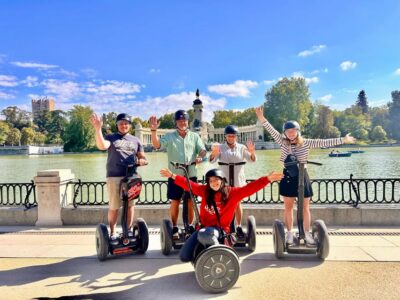
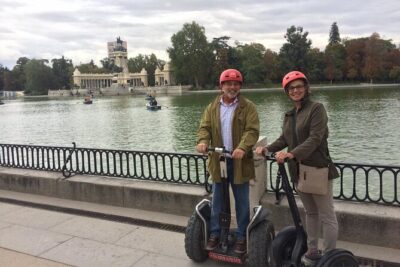
Madrid Private Segway tour. Retiro Park – Centro Historico
Read our review →
Magical and Iconic Retiro Park Segway Tour in Madrid
Read our review →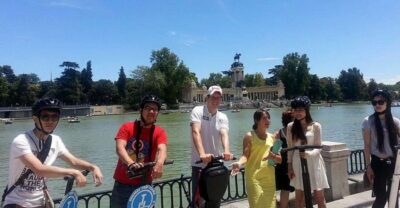

Browse the lists this tour appears in