
Reviewed · WINE TOURS
Cured Meats Gourmet Tasting with Wine Pairing in Madrid
Spain’s famous jamón ibérico is the star here, but it shares the plate with chorizo, lomo, salchichón, olive oil, and wine. The most useful detail is the setting: a historic building on C. del Arenal, close to Madrid’s center, so you can fit this tasting into a sightseeing day without a long ride.
I like the small maximum of 14 people, which should make it easier to hear the host and ask questions. I also like the focus on production, especially the explanation of how acorns affect the flavor of Iberian ham. The main caution is timing: although the experience is advertised at 45 minutes, one account describes a tasting that lasted only 15 to 20 minutes, so expectations matter.
Key points at a glance
- Jamón ibérico leads the tasting: Learn how the ham is made and why acorns matter.
- Four cured meats are included: Expect jamón ibérico, chorizo, lomo, and salchichón.
- Olive oil gets its own place: Taste locally produced oil alongside the meats.
- Wine pairing is compact: The tasting includes wine, but one glass per person has been reported.
- Central Madrid location: The meeting point is C. del Arenal, 17, in Centro.
- Flexible opening hours: You can redeem the experience between 11 AM and 9 PM.
A quick introduction to Spanish charcuterie
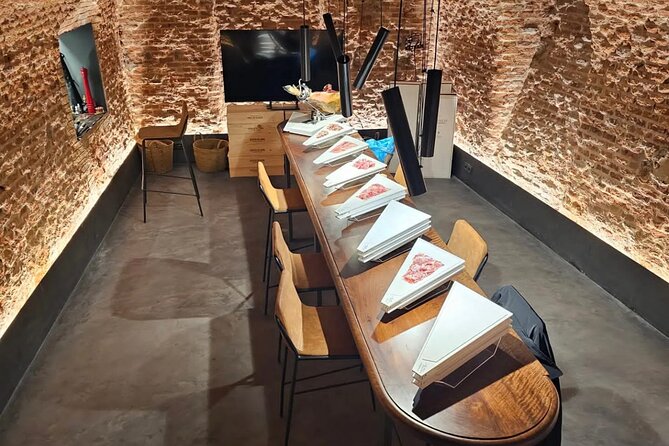
This is a short food lesson built around some of Spain’s best-known cured products. You are not simply handed a plate and left to guess what you are eating. The host is meant to explain how the meats are produced, how the animals are raised, and how the products are aged.
The central subject is jamón ibérico, a prized ham made from Iberian pigs. The tasting highlights the role of acorns in the animals’ diet. That detail matters because the food story is not just about slicing ham thinly. It is also about the connection between the animal, its feeding, and the final flavor.
You will also try chorizo, lomo, and salchichón. Each brings a different texture and seasoning to the plate. Chorizo is the familiar red sausage with paprika and spice. Lomo is cured pork loin, usually milder and leaner. Salchichón is another cured sausage, often seasoned more gently than chorizo.
The selection gives you a useful starting point if Spanish food is new to you. It also helps you decide what to buy later at a market or specialty shop. I would pay attention to which meat you prefer, since the names can blur together when you first encounter them.
More Madrid Food Tours:
- Madrid: Live Flamenco Show with Food and Drinks Options
★ 4.5 · 9,901 reviews - Toledo Tour & Vineyard Walk with Wine Tasting from Madrid
★ 5.0 · 2,546 reviews - Madrid: Tapas & Wine Tasting Tour with Local Guide
★ 4.8 · 2,171 reviews
What happens during the 45-minute tasting
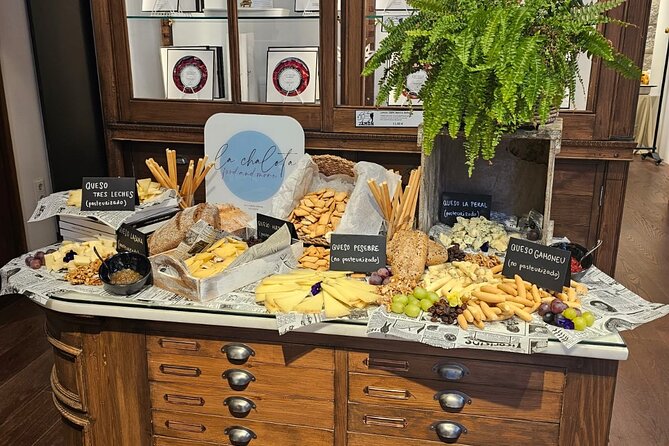
The experience begins at C. del Arenal, 17, in Madrid’s Centro district. This is a practical meeting point near public transportation and in an area that is easy to combine with central Madrid sightseeing.
Inside the historic building, your host introduces the products and guides you through the tasting. The advertised format is a 45-minute session, not a long meal or a full cooking class. You should think of it as a focused stop for food education and sampling.
The order of service may vary, but the main elements are clear. You taste jamón ibérico, then sample chorizo, lomo, and salchichón. Olive oil is included, and wine is paired with the food.
One useful point is that this is a tutored tasting. The host is expected to explain the production process and the way the meats are prepared and aged. Past feedback has praised the information about animal raising, meat preparation, and aging, along with the quality of the oils.
Still, the time can be quite short. One account describes the entire experience as taking only 15 to 20 minutes. That may have been an unusual session, but it is worth keeping in mind. If you want a long conversation about Spanish food, several pours of wine, and a leisurely meal, this may feel brief.
The jamón ibérico lesson
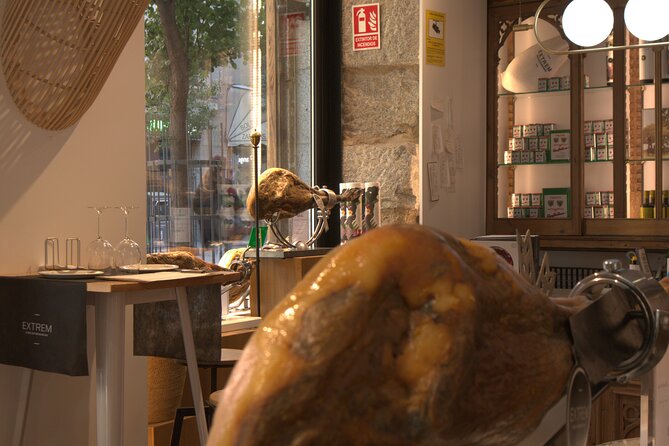
Jamón ibérico is the reason most people book this experience. The host explains the traditional production process and the part played by acorns, the ingredient often treated as the ham’s surprising secret.
The acorn detail is useful, but the depth of the explanation may depend on the host and the session. One account praised the information about how the animals are raised and how the meats are prepared and aged. Another found the explanation too basic, reducing the food story to the fact that the pigs eat acorns.
That difference is important. You should expect an introduction rather than a specialist seminar. If you already know a great deal about Spanish ham, the lesson may cover familiar ground. If you have never learned why Iberian ham costs more than ordinary cured ham, the information can help you understand what you are tasting.
Watch how the ham is presented and note its texture, aroma, and finish. Since the portions are part of a mixed tasting, this is more about comparison than eating a full serving of ham. The experience gives you a chance to identify the style you like before spending more at a shop or restaurant.
Comparing chorizo, lomo, and salchichón

The other meats keep the tasting from becoming a one-note ham sample. Chorizo gives you paprika, seasoning, and a familiar Spanish flavor. Lomo offers a different experience, with cured pork loin rather than sausage. Salchichón rounds out the plate with another seasoned cured meat.
The practical value is in tasting them side by side. You can compare firm and soft textures, stronger and milder seasoning, and the way each meat works with wine. This is a better introduction than ordering one unknown item from a menu and hoping you chose well.
The quantity is the main point to consider. One account describes only a couple of pieces of each of four meats. That can be enough for a tasting, but it is not a substitute for lunch. Come after a light meal if you are hungry, or plan another food stop nearby.
The quality appears to be the strongest part of the food experience. Several comments praise the meats as excellent or very high quality. That is encouraging, but the compact portions mean the price depends on how much value you place on the setting and explanation, not just the amount of food.
More Madrid Wine Tastings and Winery Tours:
- Madrid Tapas & Wine Tour with Rooftop Views and Local Guide
★ 5.0 · 2,047 reviews - Paella Cooking Class in Madrid with Bottomless Wine Pairing
★ 5.0 · 985 reviews - Madrid Historic Centre Food Tour with Authentic Tapas & Wines
★ 5.0 · 814 reviews - Madrid Countryside Wineries Guided Tour with Wine Tasting
★ 5.0 · 740 reviews
Olive oil and wine pairings

The tasting includes locally produced olive oil, described as organic and made in-house. This is a welcome addition because Spanish olive oil deserves more attention than it often gets. You can taste the oil on its own and consider how its flavor changes the cured meats.
The oil also adds variety. Without it, the session would be almost entirely about salty, cured products. A good olive oil offers a different texture and flavor, giving your palate a break from the meats.
Wine is included as well, with pairings chosen to complement the food. The details of the wine selection are not specified, so you should not expect a named vintage or a formal wine class. One account specifically notes that the pairing amounted to one glass per person.
That is enough to make the tasting feel complete, but it is not a wine flight. If you are booking mainly for wine, this is probably not the right choice. If you want a small glass with Spanish charcuterie, it fits the bill.
The alcohol rule is simple: you must be at least 18 to taste the wine. The supplied details do not explain the substitute for anyone who does not drink or cannot drink, so ask at the venue if that affects your plans.
How much food and wine do you get?
This is where the experience needs a clear price discussion. At $58.22 per person, the cost is reasonable for a short, centrally located tasting if you value the product quality, setting, and explanation. It becomes less attractive if you measure value by portion size or expect a full meal.
The tasting includes four types of cured meat, olive oil, and wine. That is a good range for a 45-minute introduction. The small group size, with a maximum of 14 people, may also add value because the host can keep the session more personal than a large food tour.
But the portions appear modest. One account describes a couple of pieces of each meat and one glass of wine. If your idea of a gourmet tasting includes generous helpings and several pours, this price may feel high.
I would treat it as a premium snack with instruction, not as lunch. Book it for the food knowledge and the chance to taste several well-chosen products in one sitting. Do not book it expecting to leave full.
The experience is booked an average of 25 days ahead, which suggests that you should reserve before your visit if your schedule is fixed. You can redeem it at any time during the store’s opening hours, from 11 AM to 9 PM, giving you room to place it before dinner or between central Madrid sights.
The setting and location in Madrid
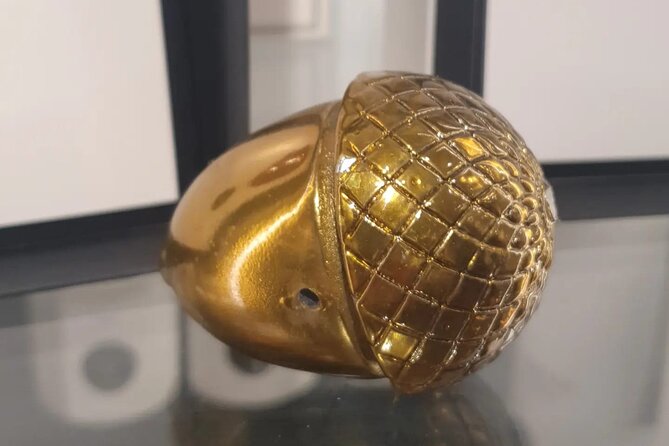
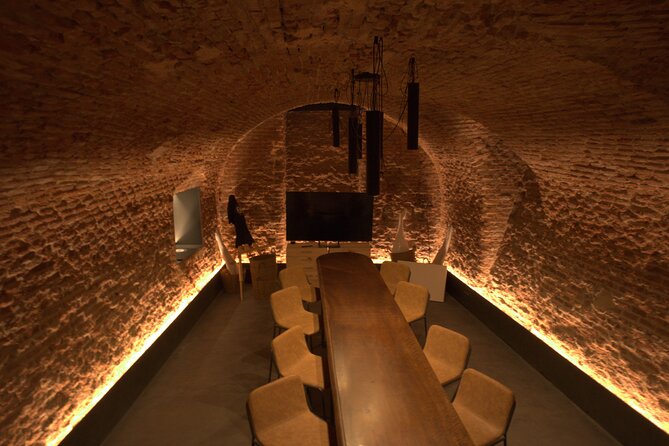
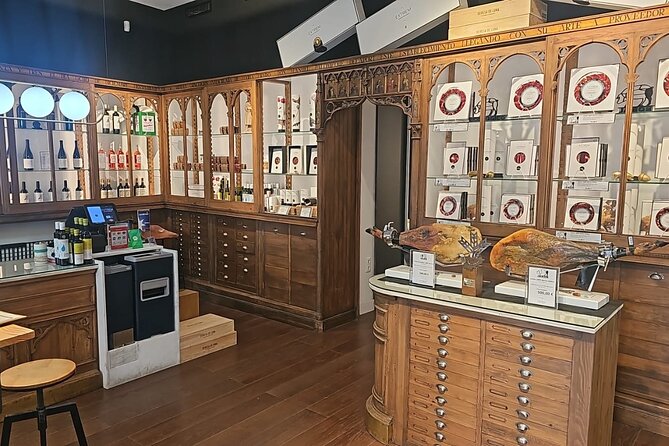
The venue is in a historic building on C. del Arenal, 17. That address places you in central Madrid, near public transportation and within an area suited to walking between major sights.
The location is one of the easiest parts of the plan. You do not need to set aside half a day for transport. You can make the tasting a short food stop during a day in Centro, then continue exploring.
The atmosphere also matters. Feedback has praised the attractive setting and convenient location. A pleasant room can make a small tasting feel more special, especially when the activity itself is brief.
The tradeoff is that a central address can come with a higher price than a neighborhood shop outside the core. You are paying partly for convenience. If you want a more market-like food experience, you may prefer to browse Madrid’s food halls on your own. This tasting is better for having someone explain the products as you sample them.
Group size, language, and the guide
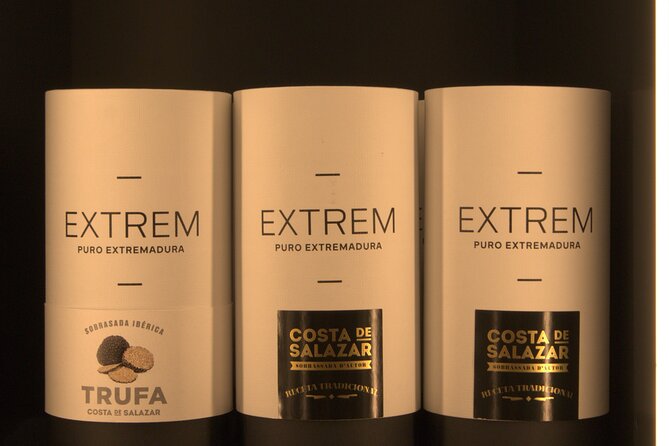
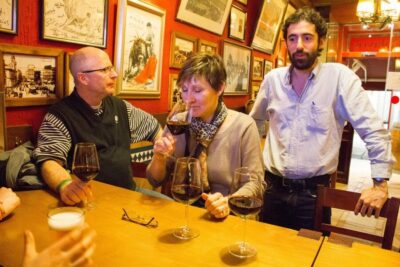
The group can include up to 14 people. That is small enough for a personal feel, though the actual number may vary. A smaller group should make it easier to hear the explanation and ask about the meats, oil, and wine.
No guide names are provided, and the experience depends heavily on the host leading your session. Strong sessions have included clear information on animal raising, preparation, and aging. At least one account, however, found the English difficult to follow and the explanation too thin.
If you need a detailed English-language lesson, this is the main uncertainty. The experience is marketed toward an international audience, but the quality of communication may not be perfectly consistent. You can help yourself by arriving with a few questions ready: What does the ham grade mean? How long was each meat aged? What makes this olive oil different? Those questions may bring out more useful detail.
Who will enjoy this experience most?
I would recommend this tasting to a food-focused visitor who wants a short introduction to Spanish cured meats. It works especially well if you have never tried high-quality jamón ibérico or want help choosing between Spain’s many cured products.
It also suits an itinerary with limited time. The central location and flexible hours make it easy to fit between museums, shopping, and evening plans. The 45-minute format is useful when you want something structured but do not want to commit to a full food tour.
Couples and small groups should enjoy the intimate format. Solo visitors can also benefit because the host provides context that is harder to get when ordering from a menu alone.
I would be cautious if you are very hungry, want a substantial meal, or expect a long wine tasting. I would also think twice if you already know Spanish charcuterie well and want advanced production details. The experience is strongest as an introduction.
Booking, timing, and cancellation
You receive confirmation at the time of booking, and a mobile ticket is accepted. You can redeem the experience during opening hours, from 11 AM to 9 PM, rather than being tied to one narrow departure time.
Free cancellation is available up to 24 hours before the start time. Cancel at least 24 hours ahead for a full refund. Inside that window, the payment is not refunded, and changes are not accepted.
Because the experience can be booked about 25 days ahead on average, reserve early if you want a particular day. The venue is near public transportation, and the activity ends back at the starting point.
Should you book the Madrid jamón tasting?
Book it if you want a compact, central introduction to jamón ibérico and Spanish charcuterie, with olive oil and a glass of wine included. The strongest reasons are the quality of the meats, the attractive historic setting, and the chance to learn why acorns matter to Iberian ham.
Skip it if you want a full meal, several wine pairings, or a long specialist lecture. The $58.22 price is easiest to justify when you value the explanation and convenience. It is harder to justify if your main goal is simply to eat as much ham as possible.
My practical advice is to schedule it earlier in your Madrid stay. You can use what you learn when ordering ham, lomo, or chorizo later. Just keep lunch or dinner plans afterward, and allow for the possibility that your session may finish well before the advertised 45 minutes.
FAQ
Where does the tasting begin?
It begins at C. del Arenal, 17, Centro, 28013 Madrid, Spain.
Where does the activity end?
The activity ends back at the meeting point.
How long does the experience last?
The advertised duration is approximately 45 minutes. One account describes a session lasting 15 to 20 minutes, so the actual timing may be shorter.
What foods are included?
The tasting includes jamón ibérico, chorizo, lomo, salchichón, and Spanish olive oil.
Is wine included?
Yes. Wine tasting is included, with pairings for the cured meats.
How much wine is served?
The provided details do not specify a fixed amount, but one account describes one glass of wine per person.
Is there a minimum age for wine tasting?
Yes. You must be at least 18 years old to taste the wine.
How many people can join?
The maximum group size is 14 people.
What are the opening hours for redeeming the experience?
You can redeem it during the store’s opening hours, from 11 AM to 9 PM.
Can I cancel for a full refund?
Yes. Cancel at least 24 hours before the experience start time for a full refund. Cancellations or changes within 24 hours are not refunded or accepted.
Just added around Madrid
- Visit the National Archaeological Museum in Madrid★ 4.4 · 6 reviews
- From Madrid: Parque Warner Beach Water Park & Transport★ 3.9 · 14 reviews
- Madrid Wine Tasting, Flamenco Class and Pub Crawl★ 4.5 · 6 reviews
- Virtual Reality Experience Fun And Tickets & Imageen★ 5.0 · 12 reviews
- Visit to the Prado Museum★ 4.9 · 6 reviews
- Tuk Tuk Tour with Wine Test in Madrid★ 3.8 · 6 reviews
- Tuktuk historical tour of Madrid 1 Hr in a fun and original way★ 3.7 · 3 reviews
- Prado Museum VIP tour with an art Expert, tickets included★ 5.0 · 11 reviews
Wine Tours, compared.

Madrid Tapas & Wine Tour with Rooftop Views and Local Guide
Read our review →
Paella Cooking Class in Madrid with Bottomless Wine Pairing
Read our review →
Madrid Historic Centre Food Tour with Authentic Tapas & Wines
Read our review →
Madrid Countryside Wineries Guided Tour with Wine Tasting
Read our review →

Old Madrid Tapas and Fine Wine Small Group Tour
Read our review →
Taste of Spain: Tapas Cooking Class with Bottomless Wine Pairing
Read our review →Browse the lists this tour appears in