
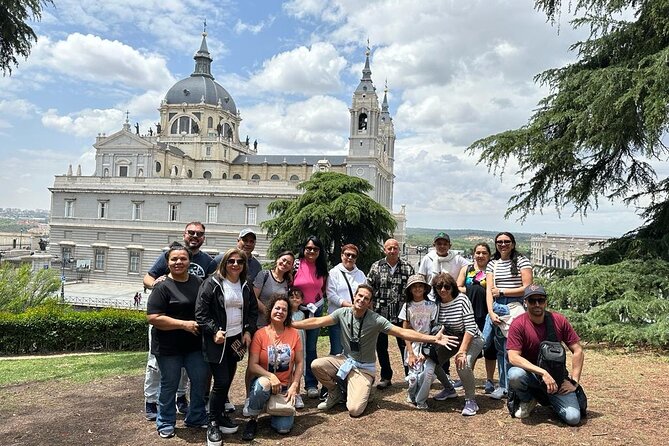
Reviewed · MADRID MYSTERIES AND LEGENDS TOURS
Inquisition, The Executioner, Witches, Expulsion Jews and Muslims
The darkest chapters of Madrid’s past unfold in ordinary city squares on this walking tour. In just over two hours, you follow the Spanish Inquisition from religious suspicion and forced confessions to public punishment, then consider what Jewish and Muslim legacies remain in Spain today.
I like the clear eight-stop route, which connects places such as Plaza de la Provincia, Plaza de la Cruz Verde, and the Almudena Cathedral area. I also like the guide-led format: Jackie has been praised for making the subject easy to follow, while David Onion uses strong dramatic storytelling to keep the group focused. The main drawback is that this is a serious subject, and the tour may feel heavy if you prefer light sightseeing.
Key points to know before you book
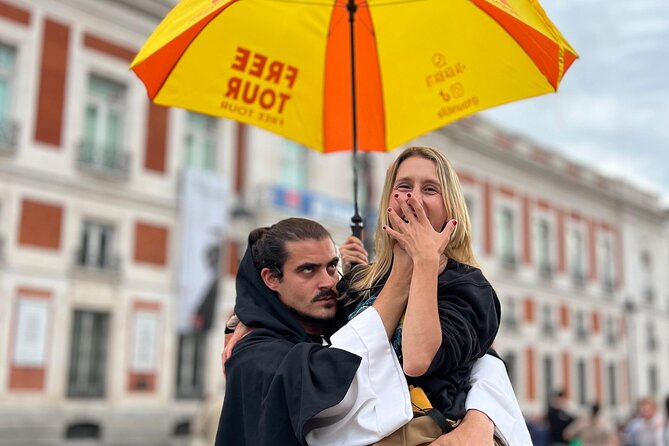
- Eight central Madrid stops: The walk begins at Plaza Mayor and ends near the Royal Palace at Plaza de la Armería.
- A focused look at three faiths: The tour examines the Inquisition’s effect on Christianity, Judaism, and Islam.
- Public punishment is a major theme: Expect discussion of torture, executions, the gallows, the garrote vil, and burning at the stake.
- Guides shape the experience: Jackie and David Onion are named guides associated with engaging, dramatic explanations.
- Good value for a tiny booking price: The listed price is $3.61 per group of up to 15, though tipping is expected at the end.
- Plan for a full 2 hours 15 minutes: Wear comfortable shoes and be ready to listen rather than rush from sight to sight.
Madrid’s Inquisition story starts at Plaza Mayor
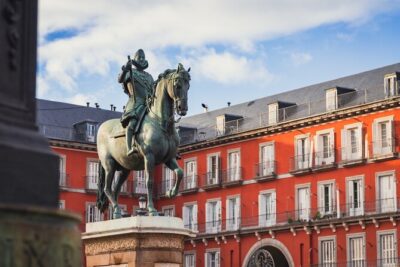
Meet your guide at Plaza Mayor, one of Madrid’s easiest places to find. From there, the walk heads into the old center, where religious control, public shame, and political power once shaped daily life.
The first stop is Iglesia de Santa Cruz. Here, the guide sets up the central question of the tour: how did the Spanish Inquisition relate to Christianity, Islam, and Judaism? This opening is useful because it gives you a frame for the rest of the walk. The subject is not treated as a string of grisly anecdotes. Instead, you begin by looking at how religious identity could become a matter of official suspicion.
The stop lasts about 15 minutes, and there is no admission charge. You will hear about the position of Christianity in Spain and the treatment of people who were accused of practicing Judaism or Islam after conversion or expulsion. For me, this is an important beginning because it places individual suffering inside a larger religious and political system.
More Madrid Mysteries and Legends Tours:
- Madrid: Spanish Inquisition and Legends Evening Walking Tour
★ 4.7 · 1,396 reviews - Madrid Oscuro: Torture, Ghosts, Crimes and Legends
★ 5.0 · 1,363 reviews - Madrid: Entry Ticket to Legends The Home of Football Museum
★ 4.7 · 563 reviews
Plaza de la Provincia explains how accusations became confessions
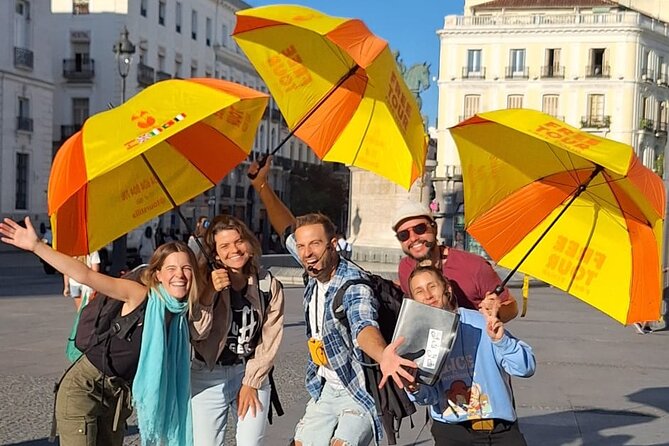
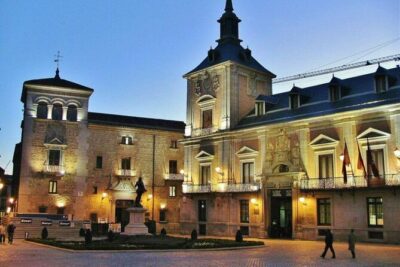
At Plaza de la Provincia, the focus shifts from belief to procedure. The guide explains how investigations worked, how suspects were questioned, and how torture could be used to secure confessions.
This part may be the most useful for anyone who wants to understand how the Inquisition functioned as an institution. Public memory often reduces it to punishments, but the investigation process mattered just as much. Suspicion, testimony, interrogation, and confession created a system in which an accusation could become dangerous long before a sentence was announced.
The 15-minute stop is short, so the explanation needs to be focused. A guide who can tell the story clearly makes a real difference here. Jackie has been praised for making complicated material easy to follow, and David Onion is noted for using dramatic skill to hold attention. That style suits this stop, as long as you are comfortable with theatrical delivery on a difficult topic.
Casa de la Carnicería and the spectacle of public faith
The next stop, Casa de la Carnicería, introduces the autos de fe, or public ceremonies connected with Inquisition judgments. The tour also discusses the major trial and what is described as the most famous painting connected with the subject.
This is where the public side of the Inquisition comes into view. The process was not only about private questioning. Religious judgments could become public events, with ceremony, symbolism, and an audience. The guide’s printed material and teaching tools help make that connection easier to grasp while you stand in the historic center.
You should not expect to enter a series of monuments or museums during this route. The attraction is the interpretation of places and events, not an interior collection. That keeps the cost low, but it also means you need to pay attention to the guide rather than rely on objects or displays to tell the story.
Basilica de San Miguel and the fear of false identity
At Basilica de San Miguel, the discussion turns to identifying a supposed false Jew or false Moorish person. The guide explains proclamations known as Edicts of Faith and the danger of false allegations.
This may be one of the tour’s strongest stops because it shows how religious identity could be judged from the outside. The very idea of a false convert created a climate where private behavior, family background, and rumor could carry serious consequences. The term is disturbing, and the guide’s job is to explain the mechanism without turning the subject into a collection of sensational stories.
The stop lasts about 15 minutes. That is enough time for an introduction and some examples, but not enough for every legal or theological detail. I would treat this as a guided overview, not a specialist seminar. You will leave with a clearer sense of how suspicion worked, while further study would be needed for a complete picture.
More Madrid Tours:
- Madrid: Tour Bernabéu Entry Ticket
★ 4.5 · 21,573 reviews - Madrid: Prado Museum Entry Ticket
★ 4.6 · 17,509 reviews - Madrid: “Emociones” Live Flamenco Performance
★ 4.8 · 12,866 reviews - Madrid: Panoramic Route City Tour
★ 4.1 · 12,259 reviews
Casa Cisneros brings Cisneros and Torquemada into focus
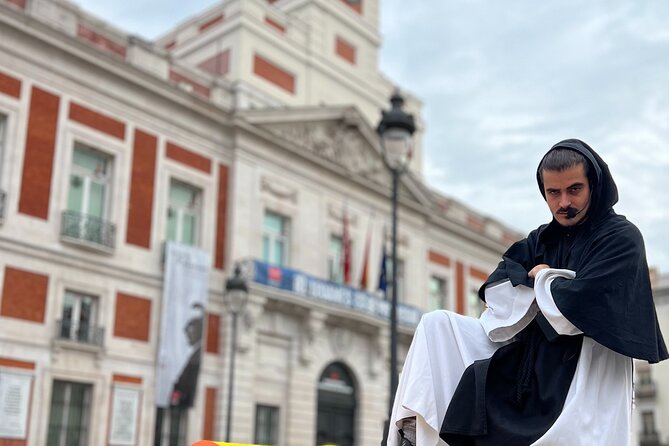
Casa Cisneros provides a shorter 10-minute stop centered on two major names: Cisneros and Torquemada. The guide compares their historical roles and helps place them within the larger development of religious policy in Spain.
This is a helpful pause in the route because it puts faces and political influence onto an otherwise broad subject. Names such as Torquemada can become symbols rather than people in a basic history lesson. By setting Cisneros against Torquemada, the guide gives you a way to think about different forms of authority and religious pressure.
Because this is the shortest stop, expect a compact explanation. It works best as a bridge between the process of accusation and the punishments that follow. If you want a long biography of either man, this walk will not provide it.
Plaza de la Cruz Verde shows the machinery of punishment
Plaza de la Cruz Verde is the tour’s most graphic stop. The guide explains the symbols of the Inquisition, how punishments were carried out, and the use of the gallows, beheading, the garrote vil, and burning at the stake. Bruges is also included in this section.
You should be prepared for plain and direct language. This is not a softened version of the past. The guide connects methods of execution with the public role of punishment, showing how authorities used ceremony and fear to enforce religious conformity.
The stop takes about 20 minutes, making it one of the longer sections. That extra time matters because the subject has several parts, and rushing through them would reduce everything to shock value. I appreciate that this portion is placed within a wider explanation of implementation and symbolism, rather than treated as a macabre highlight.
Still, this is not a good choice for everyone. If descriptions of torture and execution are upsetting for you, you may find this section difficult. The tour’s value comes partly from confronting that history, but you should choose it with open eyes.
Almudena Cathedral connects old persecution with later memory
At Catedral de Santa Maria la Real de la Almudena, the subject moves toward the end of the Inquisition. The guide discusses the Vatican Archives, a pardon associated with John Paul II, the last execution linked to the Inquisition, and the 1974 execution by garrote vil.
This section is especially useful because it makes clear that the legacy of religious persecution did not end with the formal decline of the institution. The inclusion of 1974 places the garrote vil in a much later period and gives you a sharper sense of how long certain forms of state punishment continued.
The guide also returns to the Jewish and Muslim legacies of Spain. That shift broadens the walk. You are not left only with scenes of courts and executions. You also consider what Jewish and Muslim communities contributed to Spanish society and how their presence remains part of the country’s story.
The stop lasts about 20 minutes. Since the tour covers the Vatican Archives, a papal pardon, the end of the Inquisition, a later execution, and cultural legacies, the guide must move briskly. The printed materials and teaching tools are useful here, especially when dates and institutions begin to pile up.
Plaza de la Armería closes with present-day questions
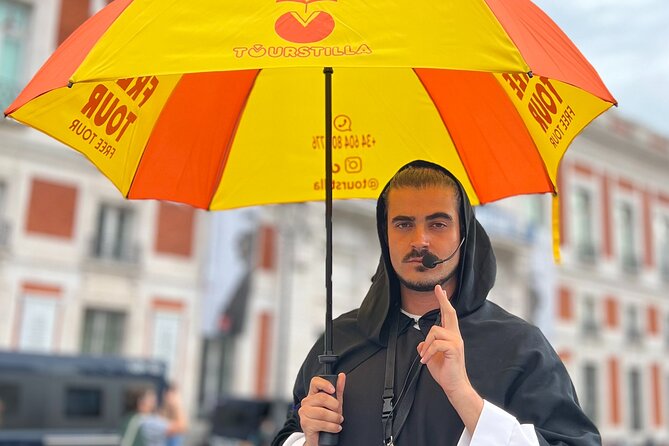
The final stop is Plaza de la Armería, near the Royal Palace. This is about a 10-minute walk from the starting point at Plaza Mayor, and it is also close to Metro Ópera, around three minutes away.
The closing discussion turns to current religious conflicts, the idea of holy wars, and the legacies of Jews and Muslims in Spain. That gives the walk a reflective ending rather than a simple final date. You are encouraged to connect the past with questions about religious authority and conflict today.
I like this choice of ending. A tour about persecution can easily become a closed history lesson, but the final stop asks you to consider how old divisions continue to shape public life. The guide also offers a closing reflection, which helps the route feel like one connected argument instead of eight separate talks.
What the $3.61 price really means
The listed cost is $3.61 per group of up to 15 people, which makes this unusually inexpensive for a guided walk in central Madrid. No paid site entries are required, and the local guide, printed material, and teaching tools are included.
There is an important detail behind that low price. This operates in the style of a tip-supported walking tour. Tips are not included, and you should plan to give something at the end if the guide provides a worthwhile experience. The guide explains the usual tipping procedure without pressuring the group, according to the account of David Onion’s tour.
The price is especially good if you want historical context without paying for museum admission. The tradeoff is that you are paying mainly for the guide’s time and storytelling, not for entry into interiors. If you prefer exhibits, artifacts, or long time inside churches and monuments, you may want to add separate museum visits.
The maximum group size is 30, while the price is described for groups of up to 15. That distinction is worth noticing. A smaller group may feel easier for questions and listening, while a larger group can make it harder to hear in busy streets. Since the experience is guide-led, sound and group management matter.
How the guides shape the experience
This tour depends heavily on the person leading it. Jackie is described as making the subject interesting and easy to follow, while David Onion is praised for dramatic delivery and for keeping the group engaged. Those details tell you something useful: this is not a quiet audio walk or a self-guided route.
You will hear explanations at each location, with printed material and teaching tools used along the way. The best experience will come if you enjoy storytelling, questions, and a guide who interprets the setting rather than simply naming buildings.
The guide also provides a link with personalized suggestions for things to do in Madrid and offers ongoing personalized help after the tour. That is a useful extra if you are still planning your visit. It is not a substitute for a city guidebook, but it can help you choose your next stop.
Who should take this Madrid walking tour?
I would choose this experience if you want to understand how religion, law, public authority, and punishment interacted in Spain. It suits history-minded visitors who prefer walking through actual city spaces instead of reading only inside a museum.
It also works well for people who want a different side of Madrid. The route passes familiar central landmarks, but the focus is on events and ideas that ordinary sightseeing may not explain. You will see the old center with a more serious frame of reference.
I would skip it if you want a relaxed introduction to Madrid, a food walk, or a tour filled with pretty views. The material includes torture, executions, forced religious identity, and false accusations. The subject is meaningful, but it is not light.
The route is suitable for most people, and service animals are allowed. It is near public transportation, with the meeting point at Plaza Mayor and the end at Plaza de la Armería. Since it lasts about 2 hours 15 minutes, comfortable shoes are sensible even though the walking distance itself is not specified.
Booking, timing, and cancellation details
Confirmation is provided at the time of booking. The tour is offered in English, and it is usually booked well ahead, with an average booking lead time of 31 days. If your Madrid dates are fixed, reserving early is sensible.
You can cancel for a full refund up to 24 hours before the scheduled start. Cancellations or changes made less than 24 hours ahead are not refunded or accepted, and the cut-off follows local Madrid time.
One caution is worth noting: a last-minute cancellation has occurred when a guide was unavailable and no replacement could be found. That appears to be an exception rather than the normal pattern, but it is a reminder to keep some flexibility in a tightly planned day.
Should you book it?
Book this tour if you want a direct, serious look at the Spanish Inquisition and its effect on Christians, Jews, and Muslims. The low booking price, central route, printed material, and strong guide-led storytelling make it a good value, especially if you appreciate history explained on location.
Choose another activity if you want interiors, gentle sightseeing, or a broad introduction to Madrid. For the right audience, this is a memorable way to connect familiar squares and churches with difficult questions about faith, power, punishment, and memory.
FAQ
Where does the tour start?
The tour starts at Plaza Mayor in central Madrid.
Where does the tour end?
It ends at Plaza de la Armería, near the Royal Palace area. The final meeting point is about a 10-minute walk from Plaza Mayor.
How long does the tour last?
The experience lasts approximately 2 hours and 15 minutes.
What language is the tour offered in?
The tour is offered in English.
How much does the tour cost?
The listed price is $3.61 per group of up to 15 people.
Are site admission tickets included?
No paid entries are required for the route. The listed stops have no admission charge as part of the walking experience.
Is tipping included?
No. Tips are not included, and you may tip the guide at the end to show appreciation for the service.
What is the maximum group size?
The activity has a maximum of 30 participants. The listed group price applies to groups of up to 15 people.
Can I cancel for a full refund?
Yes. You can cancel at least 24 hours before the start time for a full refund. Changes or cancellations made less than 24 hours before the start are not accepted or refunded.
Just added around Madrid
- Madrid Wine Tasting, Flamenco Class and Pub Crawl★ 4.5 · 6 reviews
- Visit the National Archaeological Museum in Madrid★ 4.4 · 6 reviews
- From Madrid: Parque Warner Beach Water Park & Transport★ 3.9 · 14 reviews
- Virtual Reality Experience Fun And Tickets & Imageen★ 5.0 · 12 reviews
- Visit to the Prado Museum★ 4.9 · 6 reviews
- Tuk Tuk Tour with Wine Test in Madrid★ 3.8 · 6 reviews
- Tuktuk historical tour of Madrid 1 Hr in a fun and original way★ 3.7 · 3 reviews
- Prado Museum VIP tour with an art Expert, tickets included★ 5.0 · 11 reviews
Madrid Mysteries and Legends Tours, compared.
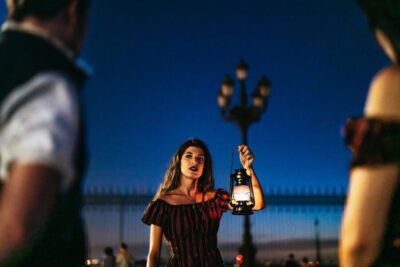
Spanish Inquisition and Legends Evening Walking Tour
Read our review →

Entry Ticket to Legends The Home of Football Museum
Read our review →
Evening Walking Tour: Spanish Inquisition & Legends of Old Madrid
Read our review →
Night Walking Tour of Toledo to learn about Secrets and Legends
Read our review →Browse the lists this tour appears in