
Reviewed · THYSSEN-BORNEMISZA MUSEUM TICKETS
Guided Visit to Thyssen-Bornemisza Museum
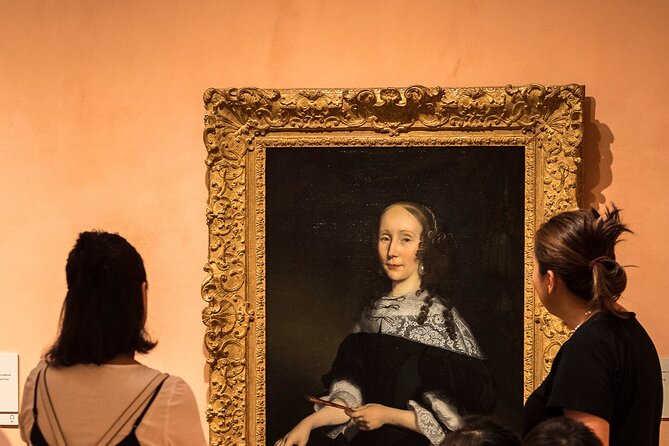
The best thing about this visit is its sweep. In just 90 minutes, you move from early Italian and Flemish paintings through the Renaissance, Impressionism, the avant-garde, Picasso, and Dalí. I like the small group of no more than seven, and I like that the radio guide helps you hear the explanation without crowding around a painting. Guides including Miguel, Ana, Laura, and Erea have been praised for clear, lively teaching.
The trade-off is pace. The Thyssen holds nearly a thousand works, so a guide may cover only 15 to 20 key pieces while explaining the larger story of art. That gives you a useful framework, but some people may find the tour moves too quickly and leaves too little time to look quietly at each canvas.
Key points at a glance
- A broad art timeline: See works from the 13th through the 20th century in one focused visit.
- A genuinely small group: The maximum is seven people, a useful size for questions and clear sightlines.
- Strong guide-led teaching: Miguel, Ana, Laura, Erea, Pablo, and other guides have been praised for their clear explanations and enthusiasm.
- Radio headsets included: You can hear the guide inside the galleries without standing shoulder to shoulder.
- A 90-minute introduction: The format works well before exploring more of Madrid’s Art Triangle.
- Free cancellation until 24 hours ahead: Cancel at least one full day before the start for a full refund.
Madrid’s Thyssen-Bornemisza Museum is not built around one narrow school or one national tradition. Its nearly thousand works cover centuries and many countries. That makes it exciting, but it can also make a first visit feel scattered.
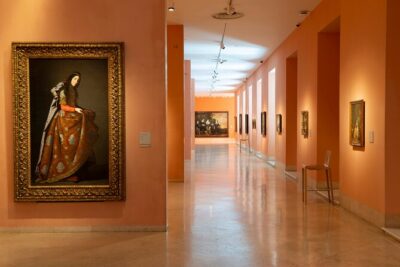
A guide gives the collection a thread. Instead of simply walking past Titian, Rubens, Rembrandt, Caravaggio, Monet, Van Gogh, Kandinsky, Hopper, and Picasso, you can see how artistic ideas change across time. I find that especially useful in a museum where the range is the main attraction.
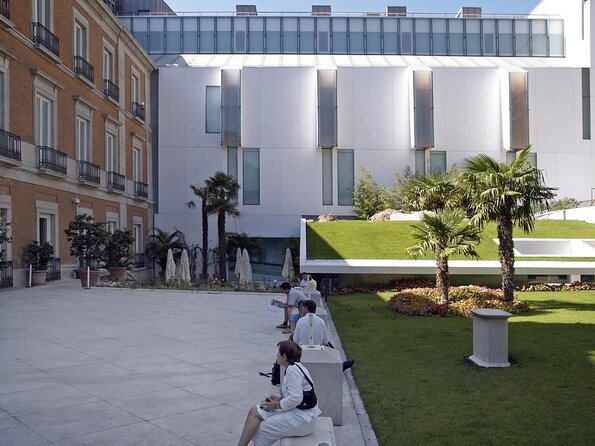
The museum became part of Madrid’s Art Triangle when it opened in 1992. Along the Paseo del Prado, it joins the Prado and Reina Sofía, creating one of Europe’s best areas for seeing major art within a short walk. This tour focuses only on the Thyssen, so it is a manageable choice if you are planning a museum-heavy day.
The stated duration is about one hour and 30 minutes. That is long enough for a serious introduction, but not long enough to cover every room or painting in detail.
The guide may show you around 15 to 20 works. Those stops can represent major periods and movements rather than every important artist in the building. You might begin with Italian and Flemish works, continue through Renaissance painting, and then move toward Impressionism and 20th-century art.
That structure is helpful if you want the big picture. You will learn how painting changes over the centuries, while also seeing important individual works. The downside is that the exact selection matters. A guide who spends too long on one area may need to move fast later.
Several guides have received especially warm praise for their approach. Miguel has been described as patient, clear, and good at allowing time for questions. Ana Cristina Carvajal has led an overview from early Flemish art to modern masterpieces, with a level of detail that suited the 90-minute format. Laura has been praised for energy and passion, while Erea received strong marks for explaining the works and handling the subject with confidence.
Your guide will not necessarily be one of these people, so the experience can vary. Still, the repeated praise for the guide team points to the main value of this activity: the teaching, not simply the admission ticket.
The early part of the collection gives you a look at painters who were less visible in Madrid before the Thyssen opened. Italian Primitives and Flemish artists help establish the museum’s international character.
You may see how religious subjects, detail, color, and technique develop before the Renaissance reaches its full force. A guide can help you notice the difference between simply looking at an old painting and understanding why its method mattered at the time.
The Renaissance section adds major names and a stronger focus on proportion, space, and the human figure. Titian is one of the collection’s headline artists. Rubens, Rembrandt, and Caravaggio extend the story into later European painting, each offering a different answer to questions of light, drama, movement, and human emotion.
This is where a guide earns the admission price. Labels can identify an artist and date, but a well-paced explanation can show why a Caravaggio feels so different from a Renaissance painting, or how Rembrandt uses light in a more personal way. You are not just collecting famous names. You are learning a way to compare what is in front of you.
The Impressionist section is likely to be one of the easiest parts of the visit to enjoy. Monet, Degas, Renoir, Van Gogh, and Gauguin give you a strong set of reference points for the movement and its aftermath.
The guide can explain how artists changed their approach to light, color, movement, and everyday life. A tour that moves from one period to the next helps you see that modern art did not appear out of nowhere. It grew from earlier experiments with brushwork, color, composition, and the choice of subject.
Van Gogh and Gauguin also give the guide a chance to discuss two very different paths beyond Impressionism. That contrast can make the timeline easier to remember, especially if this is your first serious visit to an art museum.
The warning about pace applies here. The collection has enough major names to tempt a guide into covering too much. One Spanish-language assessment noted that the information was professional but the paintings passed by quickly because there were so many of them. If you prefer long periods of quiet looking, tell your guide early that you would rather examine fewer works in greater detail.
The final part of the tour covers a wide range of 20th-century movements, including Fauvism, Expressionism, Surrealism, Abstraction, and Pop Art. This is a lot of ground for one visit.
For many people, the modern galleries are where a guide becomes most useful. Earlier art often gives you recognizable subjects and established techniques. Modern art can demand more explanation. A short introduction to the aims of a movement can help you look with more patience and less confusion.
Kandinsky represents the turn toward abstraction, while Edward Hopper offers a very different kind of modern experience. Picasso and Dalí connect the international collection to two of Spain’s most important painters. Their presence also gives the tour a natural link to the nearby Reina Sofía, though this activity does not include that museum.
The collection’s variety is both its strength and its challenge. You can see many major directions in modern painting, but you will not get a full study of any single movement in 90 minutes. I would treat this as an organized first look, not a final word on the museum.
A group limit of seven is one of the clearest advantages here. In a large museum, a big tour can turn into a slow-moving knot of people. A group this small should make it easier to hear, ask a question, and stay close to the guide without blocking an entire gallery.
The included radio guides add another practical benefit. You do not need to stand directly beside the guide to catch every sentence, which matters when other people are viewing the same works. You can also keep a little space while still following the explanation.
Small does not mean private. The tour is described as semi-private, and other people may be in the museum at the same time. The group limit simply keeps the teaching more personal than a standard large-group visit.
Some people have praised the guides for taking questions and making occasional detours. Miguel, in particular, was noted for allowing questions while keeping a good pace. That balance is important. Ask when a painting catches your attention, but remember that the guide must keep the whole timeline moving.
The listed price is $77.08 per person. That includes museum admission, the guide, and the radio equipment. Group discounts are also listed, though the exact savings are not specified.
The price is not the cheapest way to enter the Thyssen. You are paying for the explanation and the small group as much as for the ticket. If you already know the collection well, or if you prefer to read labels and set your own pace, a guided visit may not offer enough extra value.
For a first visit, the calculation is better. You get a trained guide, a planned route through centuries of art, and a way to make sense of a collection that can otherwise feel broad and uneven. If the tour helps you understand 15 to 20 important works, then continues to shape how you look at the rest of the museum, the fee can be worthwhile.
I would especially consider it if you have limited time in Madrid. Ninety minutes gives you a clear introduction before lunch, dinner, or another museum. It also lets you reserve your energy for the Prado or Reina Sofía rather than trying to master all three institutions at once.
The activity is booked, on average, 31 days ahead. That suggests you should plan early if your Madrid dates are fixed, particularly if the small group is important to you.
The meeting point is Paseo del Prado, 8, in Madrid’s Centro district. The activity begins and ends at the meeting point, and the location is near public transportation.
Since the tour is short and museum-focused, arrive ready to start on time. The museum visit itself is the full experience. There is no separate city walk, transport between sights, or second attraction included.
The timing may affect the atmosphere. One particularly positive account described a 4:00 p.m. visit with very few other tour groups in the museum. That is not a guarantee, but an afternoon departure may sometimes feel calmer than a busy morning. Check the available start time when booking rather than assuming the galleries will be quiet.
I would recommend this visit to someone who wants structure. You may like it if you enjoy art but do not always know what to look for, or if you want a quick timeline before returning to favorite rooms alone.
It also suits couples, families, and small groups who prefer questions to a fixed audio recording. The guide can explain a painting in a different way if you are curious about technique, history, or the artist’s place in a movement.
It may be less suitable for a slow museum browser. If your ideal visit means spending 20 minutes with one painting, 90 minutes with a guide could feel rushed. The best solution is to use the tour as an introduction, then stay afterward to revisit the works that caught your eye, if museum rules and your schedule allow. The provided information does not specify post-tour access, so confirm that point before booking if it matters to you.
Most people can participate, and the activity is near public transportation. No special physical requirement is stated, but the visit involves moving through museum galleries for about 90 minutes.
You receive confirmation at the time of booking. The ticket, guide, and radio equipment are included, while anything not specifically listed is not included.
Free cancellation is available up to 24 hours before the local start time for a full refund. Cancellations or changes made less than 24 hours before the start are not accepted for a refund. This gives you flexibility, but it is worth setting a reminder if your plans in Madrid are still shifting.
Book it if you want a small, well-organized introduction to one of Madrid’s broadest art collections. The combination of a seven-person limit, radio equipment, admission, and a guide-led timeline gives the visit more shape than wandering in without a plan.
I would be most comfortable booking it for a first visit, a short Madrid stay, or a museum day that includes the Prado and Reina Sofía. The strongest guide experiences appear to come from clear teaching, good pacing, and enthusiasm, with Miguel, Ana, Laura, and Erea receiving especially positive attention.
Skip it if you already know the Thyssen well or want complete freedom to linger. The main risk is speed. You may see many important works without having enough time to sit with each one.
For most first-time visitors, the guided format is a sensible way to get oriented. Think of it as a strong opening chapter, not the whole book.
FAQ
More Thyssen-Bornemisza Museum Tickets:
- Museo Nacional Thyssen-Bornemisza with Skip the line ticket
★ 4.5 · 435 reviews - Madrid: Thyssen Museum Guided Tour with Skip-the-Line Entry
★ 4.5 · 165 reviews - Madrid: Thyssen-Bornemisza Museum Guided Tour & Entry Ticket
★ 4.6 · 70 reviews
How long does the Thyssen-Bornemisza guided visit last?
The visit lasts approximately one hour and 30 minutes.
How many people can join the tour?
The maximum group size is seven travelers.
Is the museum admission ticket included?
Yes. The Thyssen-Bornemisza Museum admission ticket is included in the price.
More Museums in Madrid:
- Madrid: Prado Museum Entry Ticket
★ 4.6 · 17,509 reviews - Madrid: Reina Sofía Museum Entrance Ticket
★ 4.5 · 6,889 reviews - Madrid: Small Group of Prado Museum Tour & Optional Tapas
★ 4.6 · 2,437 reviews - Madrid: Prado Museum Guided Tour with Skip-the-Line Ticket
★ 4.5 · 2,018 reviews
Are radio guides provided?
Yes. High-quality radio guides are provided for use inside the museum.
Where does the tour begin and end?
It begins at Paseo del Prado, 8, Centro, 28014 Madrid, Spain, and ends back at the meeting point.
Can I cancel for a full refund?
Yes. You can cancel at least 24 hours before the local start time for a full refund. Cancellations or changes made less than 24 hours before the start are not refunded.
Just added around Madrid
- Visit the National Archaeological Museum in Madrid★ 4.4 · 6 reviews
- From Madrid: Parque Warner Beach Water Park & Transport★ 3.9 · 14 reviews
- Madrid Wine Tasting, Flamenco Class and Pub Crawl★ 4.5 · 6 reviews
- Virtual Reality Experience Fun And Tickets & Imageen★ 5.0 · 12 reviews
- Visit to the Prado Museum★ 4.9 · 6 reviews
- Tuk Tuk Tour with Wine Test in Madrid★ 3.8 · 6 reviews
- Tuktuk historical tour of Madrid 1 Hr in a fun and original way★ 3.7 · 3 reviews
- Prado Museum VIP tour with an art Expert, tickets included★ 5.0 · 11 reviews
Thyssen-Bornemisza Museum Tickets, compared.
Museo Nacional Thyssen-Bornemisza with Skip the line ticket
Read our review →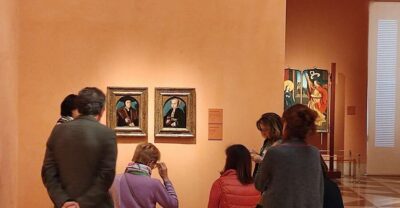
Thyssen Museum Guided Tour with Skip-the-Line Entry
Read our review →
Thyssen-Bornemisza Museum Guided Tour & Entry Ticket
Read our review →
Madrid Thyssen Museum Guided Tour with Small Group
Read our review →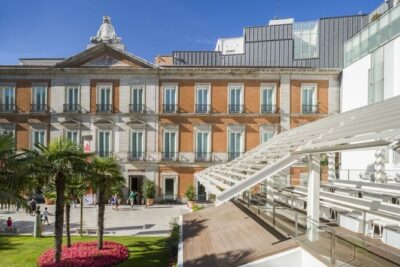

Browse the lists this tour appears in