
Reviewed · MADRID NEIGHBOURHOOD TOURS
Architour through Lavapiés and Rastro with an architect
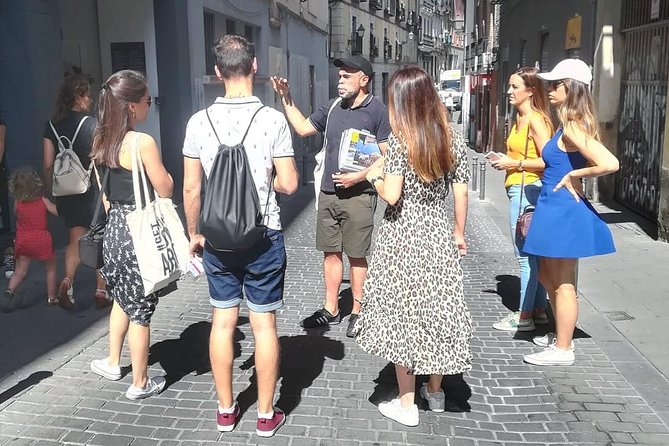
Lavapiés is one of Madrid’s best districts for seeing how old buildings, immigrant life, street markets, politics, and modern design share the same few blocks. On this private walking tour, architect and Lavapiés resident Emilio explains the neighborhood through its buildings, courtyards, theaters, markets, and changing social makeup.
I like the unusually strong architectural focus, especially the stops at the 1930 Municipal Printing Press, the Reina Sofía extension, and the two very different theaters. I also like the local ending at Mercado de San Fernando, where you can discuss Madrid over tapas instead of simply being dropped back at a plaza.
The main drawback is the amount of walking and standing packed into roughly three hours. Wear proper walking shoes, and check the current condition of La Tabacalera before booking, since it is closed for works from July 25.
Key points before you book
- An architect leads the walk: Emilio brings professional insight and personal knowledge of Lavapiés, where he lives.
- The route crosses several centuries: You will see medieval traces, Baroque and Neoclassical forms, Art Deco, and Madrid’s 1930 rationalist architecture.
- El Rastro depends on the day: On Sunday, the route visits the street market. During the rest of the week, it focuses on vintage furniture shops.
- The final stop is social: Mercado de San Fernando is the place for optional tapas, drinks, Madrid tips, and a recap of the walk.
- It is a private experience: Only your group takes part, making it easier to ask questions or adapt the pace.
- The price is high for a walk: At about $210.12 per person, the value depends on how much you want architecture, history, and a local guide rather than a standard sightseeing circuit.
Why Lavapiés works so well for an architecture walk
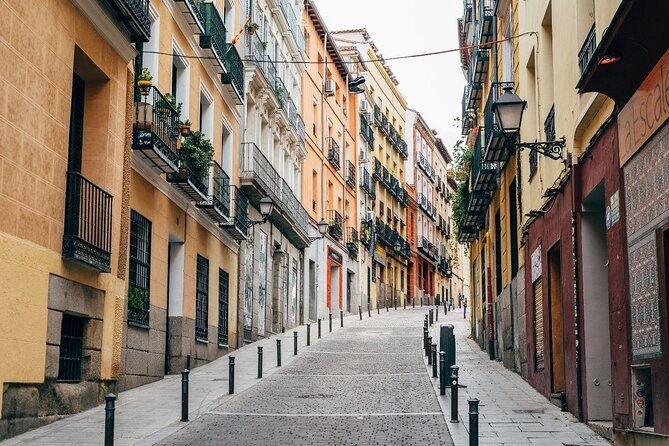
Lavapiés is not a district you understand by looking at one grand monument. Its appeal comes from the way ordinary streets reveal different periods of Madrid in quick succession. A corrala, an old theater, a market, a civic building, and a museum extension can all appear within the same short route.
That makes an architect’s guidance useful. Emilio does not simply point out façades. He connects architectural choices with the city’s history, politics, and daily life. You get a better sense of why the district looks the way it does, and why newer residents and long-established neighbors now share the same public spaces.
The route begins at Plaza de Tirso de Molina, a convenient central meeting point near public transportation. The opening 15 minutes are used to place Lavapiés within Madrid’s wider story. This is a sensible start, since the later stops make more sense once you understand the district’s age and character.
Because the tour is private, you can ask about details that catch your eye. That matters on a route where much of the interest is found above street level, inside courtyards, or in buildings that are easy to pass without context.
More Madrid Neighbourhood Tours:
- Tour “Barrio de las Letras” Spanish Golden Age
★ 5.0 · 72 reviews - Leathercraft Workshop in the Rastro of Madrid
★ 5.0 · 58 reviews - De Tapas in Malasaña: Evening Wine and Tapas Tour
★ 5.0 · 36 reviews
Tirso de Molina and the Inquisition prison
At Plaza de Tirso de Molina, Emilio introduces the neighborhood and Madrid before leading you into its side streets. The plaza gives the group a clear starting point, but the real surprise comes at the next stop.
The Inquisition Jail is described as a prison located beneath a corrala. A corrala is a shared housing form built around an interior courtyard, and it is closely associated with older central Madrid. Here, the point is not a grand museum visit. It is the unsettling contrast between communal domestic life above and a place of imprisonment below.
The stop lasts only about 10 minutes, so expect a focused explanation rather than an extended interior tour. Access to the buildings is included, but the route information does not promise that every stop functions like a conventional museum with long visiting hours. Keep your expectations set for an architectural walk with brief entries and explanations.
El Rastro, Sunday market or vintage shops
El Rastro changes depending on when you take the tour. On Sunday, you visit the famous street market. During the rest of the week, the route turns toward vintage furniture stores.
That flexibility is practical, but it also means the experience differs by day. Sunday brings more market activity and a stronger sense of El Rastro as a public gathering place. A weekday visit may be calmer and more focused on objects, interiors, and older furnishings.
The scheduled stop is about 15 minutes, so this is not a dedicated shopping session. You will not have time to inspect every stall or browse at leisure. Instead, Emilio uses El Rastro as part of the district’s story, showing how trade, reuse, and street life fit into Madrid’s older neighborhoods.
If you hope to shop, plan to return on your own. The tour gives you orientation and context, not an afternoon for serious buying.
El Pavón and Teatro Figaro
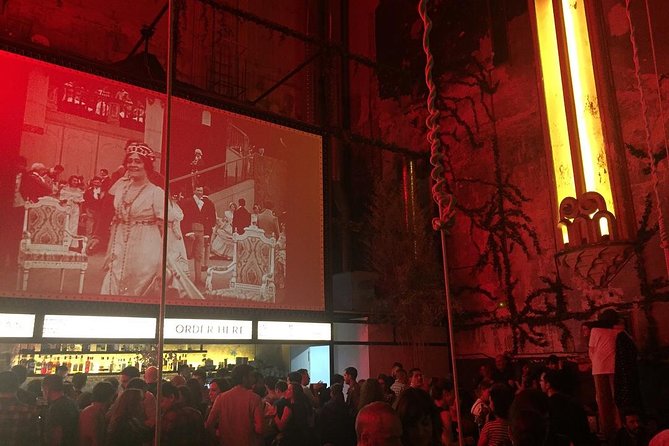
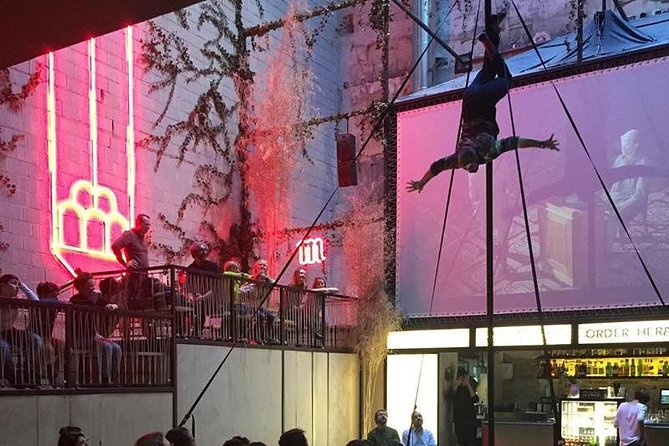
The route includes two theaters, and they offer a useful contrast. At El Pavón Teatro Kamikaze, you stop to examine the façade and its Art Deco clock. There is also the option of pausing for coffee in the theater café, depending on the group and timing.
The stop itself is only about five minutes. That sounds brief, but a short exterior explanation can be enough when the building is part of a larger architectural sequence. The theater gives you a chance to look at design details that could easily disappear into the busy street.
Later, at Teatro Figaro, you see what is described as the first theater built in Spain according to modern movement principles. Again, the stop is short, around five minutes. Together, the two theaters show how entertainment buildings can reflect changing ideas about ornament, function, and modern city life.
I like this pairing because it keeps the tour from becoming a simple parade of old churches and plazas. The route gives theater architecture its due, while also showing that Madrid’s cultural history is written into ordinary streets.
More Madrid Tours:
- Madrid: Tour Bernabéu Entry Ticket
★ 4.5 · 21,573 reviews - Madrid: Prado Museum Entry Ticket
★ 4.6 · 17,509 reviews - Madrid: “Emociones” Live Flamenco Performance
★ 4.8 · 12,866 reviews - Madrid: Panoramic Route City Tour
★ 4.1 · 12,259 reviews
The 1930 Municipal Printing Press
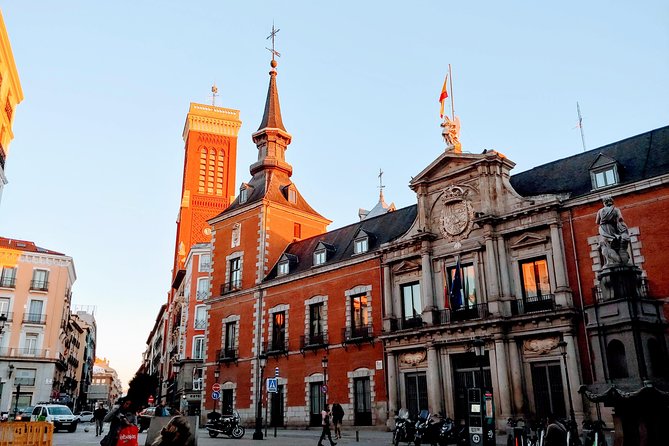
The Municipal Printing Press is one of the strongest stops for anyone interested in twentieth-century architecture. It is described as a lesser-known example of Madrid’s rationalist architecture from 1930.
Rationalist design favors clear structure, practical use, and restrained decoration. That approach can be easy to miss if you are looking only for ornate historic buildings. Emilio’s architectural training should help you read the building as more than a façade, particularly in the way its design responds to municipal work and the needs of a working city.
The visit lasts about 15 minutes, and admission is included. This is one of the places where the tour provides real value over wandering alone. You could pass the building without knowing its importance, but an architect can point out the choices that make it worth stopping for.
For travelers who care about modern architecture, this may be the most distinctive part of the route. For those who prefer major royal or religious monuments, it may feel more specialized. That is not a flaw, but it is an important reason to choose this experience only if buildings and urban history genuinely interest you.
Plaza Lavapiés and a changing neighborhood
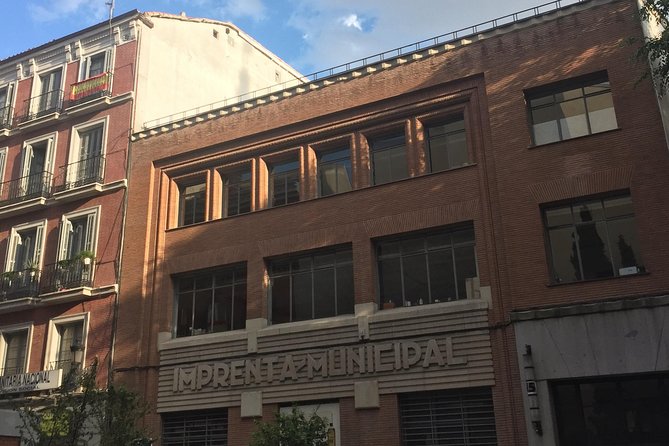
Plaza Lavapiés gives the district its name and serves as a social center. The stop is short, about five minutes, but the subject is larger than the clock suggests.
Here, Emilio explains the mix of cultures and generations that shapes the neighborhood. Long-established residents share the area with newer arrivals, and the district continues to change. This is not presented as a decorative multicultural stop. The value is in seeing how migration, housing, commerce, and public space affect a real neighborhood.
The square also helps connect the architectural discussion to present-day Madrid. Buildings are not isolated objects. They are homes, shops, gathering places, and signs of economic change. That broader view is one of the tour’s strongest qualities.
The brief timing means you may want to ask questions as you walk away from the plaza. Since this is a private tour, you should have room to continue the conversation instead of saving every question for a formal pause.
Reina Sofía’s Jean Nouvel extension
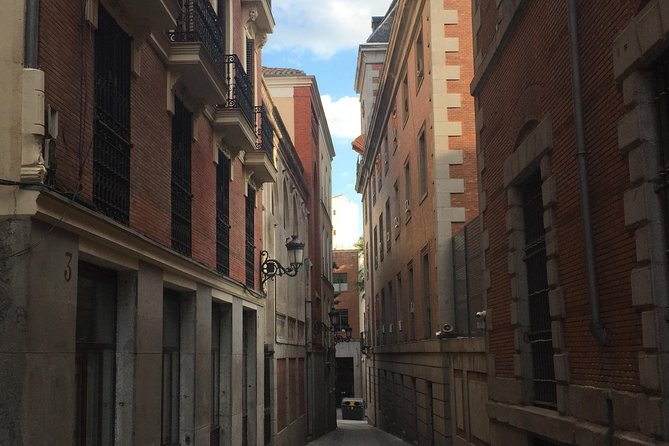
At the Museo Nacional Centro de Arte Reina Sofía, the route focuses on the extension designed by Jean Nouvel. You visit the restaurant, library, and covered patio, and Emilio explains the different proposals considered in the 1999 design competition.
This stop lasts about 10 minutes, so it is not a museum visit centered on the art collection. The focus is the extension and the ideas behind it. That distinction matters. If you want to see Picasso’s Guernica or spend time in the galleries, you will need a separate ticket and a separate visit.
The covered patio and library give you a chance to experience the building rather than merely view it from outside. Learning about the design competition adds another useful layer. Instead of treating the extension as an inevitable object, you see it as the result of competing proposals and choices.
I especially like this stop because it places contemporary architecture beside Lavapiés’s older fabric. You get to consider how a major museum inserts new public spaces into an established central district.
Mercado de San Fernando: tapas and practical Madrid advice
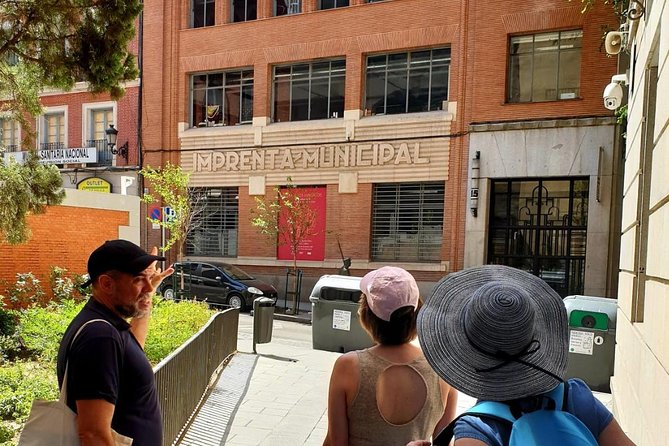
The route ends at Mercado de San Fernando on Calle de Embajadores. This is more than a final landmark. It is where the group sits down for tapas and a drink while Emilio offers suggestions for the rest of your stay and discusses what you have seen.
Drinks are not included, so budget extra for anything you order. The food and drink stop is optional in the sense that you pay for your own refreshments, but it is a useful part of the experience. You can turn the final conversation toward restaurants, neighborhoods, rooftops, decor shops, or other places that fit your interests.
Ending in a market also keeps the tour connected to daily Madrid rather than finishing at a purely monumental site. You are left with a sense of how the neighborhood eats, shops, and spends time together.
The scheduled stop is only about 15 minutes, but some groups may naturally want to linger. If you have a tight timetable, tell Emilio at the start. If you have room in your day, this is a good place to continue on your own after the formal tour ends.
La Tabacalera and a current access warning
La Tabacalera de Lavapiés is a former industrial building now associated with exhibitions, neighborhood-run activity, and urban art. Its walls display work by prominent street artists, making it a strong example of how an old industrial space can gain a new public role.
The planned visit lasts about 15 minutes. The building is closed for works from July 25, so confirm its current status before booking or shortly before the tour. If it remains closed during your date, this part of the experience may change.
That warning is important because La Tabacalera is not just another façade. Its appeal depends on entering and seeing the reused interior and artwork. The rest of the route still contains plenty of material, but you should not assume this stop will be available year-round.
Walking pace, group size, and practical comfort
The tour lasts about three hours, though the experience can run closer to three and a half hours depending on conversation and the final market stop. The route has many short stops, but the walking between them adds up.
Wear your most comfortable shoes. One participant specifically offered that advice, and it is sensible here. You will be on city streets, stopping and starting, looking up at façades, and possibly standing in market areas.
The experience is private, so only your group participates. That is a major advantage for couples, families, or friends with a shared interest in architecture. It also makes the tour workable for a small group of two, as the guide has previously accommodated that format.
The tour is offered in English. Service animals are allowed, public transportation is nearby, and most people can take part. The experience requires good weather, and cancellation may occur if the weather is poor or the minimum number of participants is not met.
You can cancel free of charge up to 24 hours before the start time. A cancellation inside that window is not refundable, and changes made inside 24 hours are not accepted.
Is $210.12 per person fair value?
At $210.12 per person, this is not a budget walking tour. The price makes the most sense if you are booking for a small private group and want a specialist guide rather than a broad introductory walk.
You are paying for Emilio’s architectural training, his connection to Lavapiés, access to the listed buildings, and the ability to ask questions throughout the route. The market drinks and tapas are extra, but the tour does not hide that cost.
The value is weaker if you want a fast list of Madrid’s top sights, a long museum visit, or plenty of free time for shopping. The route is specialized and discussion-led. It works best when you want to understand why the district looks and feels as it does.
Group discounts are available, which may make the cost easier to justify for a larger party. Since the tour is private, compare the total price for your group rather than looking only at the per-person figure.
Who should book this Lavapiés walk?
I would choose this tour early in a Madrid visit if architecture, urban change, and local history are high on your list. It can help you read the city with sharper eyes for the rest of your stay.
It is also a good fit for architecture students, design-minded visitors, and people who prefer neighborhood streets to major attractions. Emilio’s explanations cover architecture, politics, and the social changes affecting Lavapiés, so the experience has more range than a façade-by-façade tour.
You may want another kind of tour if you dislike walking, prefer a large group with a fixed script, or need long visits inside museums and monuments. This route is active, conversational, and sometimes dependent on access to working cultural spaces.
Should you book it?
Book this experience if you want Madrid explained through its buildings and neighborhood life, and if you value a private guide who knows Lavapiés personally. The best parts are the mix of architectural periods, the unusual civic and theater stops, and the relaxed finish at Mercado de San Fernando.
Before paying, check the date for El Rastro, confirm whether La Tabacalera is open, and allow enough time for walking. Bring comfortable shoes and extra money for drinks and tapas. For the right audience, this is a thoughtful way to see a district you might otherwise cross without understanding.
FAQ
Where does the tour begin?
The tour begins at Plaza de Tirso de Molina in central Madrid, near public transportation.
Where does the tour finish?
It finishes at Mercado de San Fernando, Calle de Embajadores 41, where the group can have drinks and tapas together.
How long does the experience last?
The advertised duration is approximately three hours. The final market conversation may make the actual outing somewhat longer.
Is the tour private?
Yes. Only your group participates in the activity.
Are food and drinks included?
Access to the listed buildings is included, but drinks at markets, bars, and restaurants are not included. You pay separately for tapas and beverages at Mercado de San Fernando.
Can I cancel for a full refund?
Yes, if you cancel at least 24 hours before the experience start time. Cancellations made less than 24 hours in advance are not refundable.
Just added around Madrid
- Visit the National Archaeological Museum in Madrid★ 4.4 · 6 reviews
- From Madrid: Parque Warner Beach Water Park & Transport★ 3.9 · 14 reviews
- Madrid Wine Tasting, Flamenco Class and Pub Crawl★ 4.5 · 6 reviews
- Virtual Reality Experience Fun And Tickets & Imageen★ 5.0 · 12 reviews
- Visit to the Prado Museum★ 4.9 · 6 reviews
- Tuk Tuk Tour with Wine Test in Madrid★ 3.8 · 6 reviews
- Tuktuk historical tour of Madrid 1 Hr in a fun and original way★ 3.7 · 3 reviews
- Prado Museum VIP tour with an art Expert, tickets included★ 5.0 · 11 reviews
Madrid Neighbourhood Tours, compared.


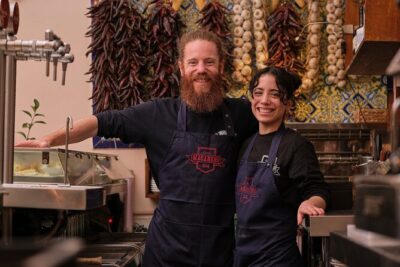
De Tapas in Malasaña: Evening Wine and Tapas Tour
Read our review →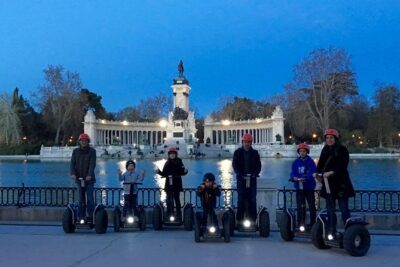
Private Segway Tour Madrid: Lavapiés & Historical Center
Read our review →
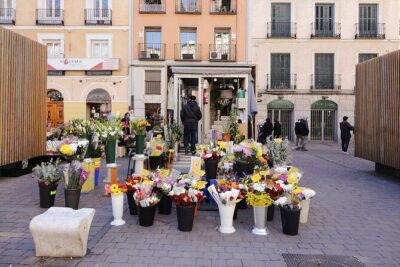

Private Tapas & Wine Food Walking Tour in La Latina
Read our review →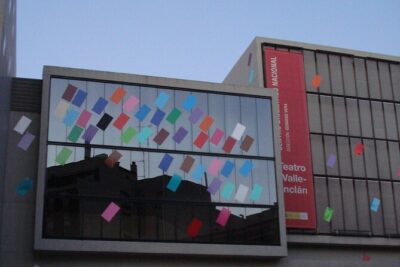
Lavapiés: The most multicultural neighbourhood of Madrid, Private Walking Tour
Read our review →Browse the lists this tour appears in